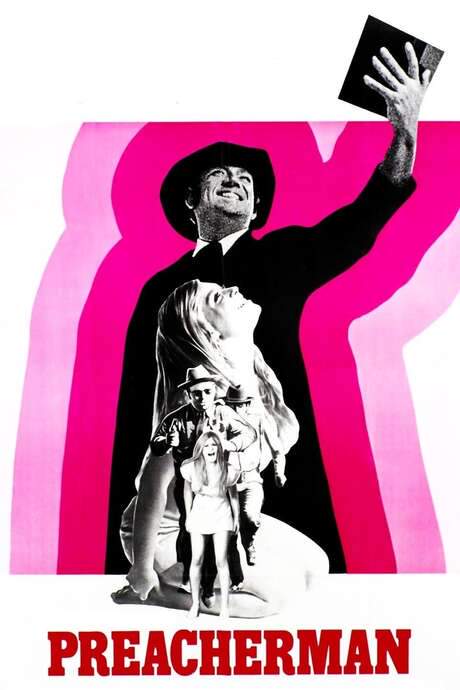
Elmer Gantry is a hard-drinking, fast-talking traveling salesman who weaves biblical passages and fervent rhetoric into his sales pitches to win over crowds and pockets alike. He is drawn to the road show led by Sister Sharon Falconer, a charismatic revivalist whose saintly aura instantly captivates him. When the troupe heads toward Kansas, Gantry smooth-talks Falconer’s naïve assistant, Sister Rachel, into sharing snippets about Falconer’s shadowed past, a move he plans to exploit to gain her trust and influence. He joins the act, preaching “Christ in commerce” and declaring himself a saved salesman, a pairing that feels electric and dangerous at once.
Gantry and Falconer develop a careful, manufactured dynamic—what some would call a “good cop/bad cop” routine. He warns of Hell for sins, she promises salvation for those who repent. Their rising profile attracts the attention of Zenith’s church council in Winnemac, a city wary of turning faith into a televised spectacle. Falconer’s manager, William L. Morgan, doubts whether she’s ready for larger stages, but Gantry convinces them that the church must embrace spectacle and finance to stay open and expand membership. The plan hinges on Gantry’s flame and Falconer’s piety, a combination that lures people into the fold while pulling the duo deeper into the moral gray area of religious revivalism.
Traveling with them is a keen, worldly observer, big-city reporter Jim Lefferts. He wrestles with his own revulsion for religious hustling and admiration for Gantry’s knack for winning crowds. Lefferts writes a string of articles that question the credentials of both Falconer and Gantry, sharply separating showmanship from faith. As the revival grows, Falconer eventually reveals a humbler truth about herself: her real name is Katie Jones, and her origins aren’t as pristine as the image she projects. The admission, and Falconer’s burgeoning romance with Gantry, deepen the complexity of their partnership and set the stage for what comes next.
The public face of the act collides with a private history when Lulu Bains, Lulu Bains, a former lover of Gantry who became a prostitute after their earlier relationship dissolved, re-enters the scene. Lulu’s moralistic stance clashes with the gleam of the revival, and she secretly harbors a plan for revenge. A hidden photographer exposes Gantry’s vulnerability by capturing a private embrace with Lulu, a moment that could topple the whole operation. Lulu tries to leverage the sensational photos, initially offering Lefferts the exclusive, but he passes on the sensationalism, sensing there’s more at stake than a simple scandal. The footage becomes a weapon in Lulu’s hands, and Falconer’s faith is forced to confront the peril of public perception.
When the incriminating pictures reach the front page of the town’s newspapers, a mob erupts around Gantry’s tent, hurling eggs and accusations as the crowd’s fever rises. Lulu, transformed by the event, is shaken by the spectacle she helped unleash and slips back toward the brothel she once left behind. Gantry intervenes to rescue her from danger, and Lulu, in a moment of confession, acknowledges that she set out to ruin him but finds herself drawn back to him in a surprising turn of emotion. Falconer is forced to confront the consequences of their publicity-driven sanctimony, while Lulu’s confession and Push-and-pull between love and risk ripple through the community.
As Falconer’s ministry expands into a grand tabernacle to accommodate a growing follower base, she performs a healing that seems to cure a deafness rumor, intensifying the crowd’s devotion. Yet a smoldering fire erupts within the building, consuming the sacred space. Falconer stays inside, consumed by zeal, and dies in the flames. Gantry, shattered but unmistakably bound to her legacy, leads a posthumous revival for the faithful as Morgan asks him to carry the torch of Falconer’s ministry forward. Instead, he stands at the brink of the podium, a man who has learned the high cost of showmanship in faith, and he quotes the Apostle Paul as he steps away from the pulpit, a valise in one hand and Falconer’s charred Bible in the other.
When the dust settles, the final image is of a man who has seen both the inflated glory and the ruin that can come from it. His closing gesture is a quiet, defiant acceptance of his own humanity, choosing to walk forward with memory and conscience as his guide rather than a manufactured salvation. He moves into the distance, the silhouette of a traveling salesman-turned-spiritual-questioner, leaving the audience to ponder what faith is worth when weighed against fame, money, and the truth that lies beneath both.
> When I was a child, I spake as a child, I understood as a child, I thought as a child: but when I became a man, I put away childish things