





Plot Explained Spoilers guaranteed!
Plot Explained

Browse by genre

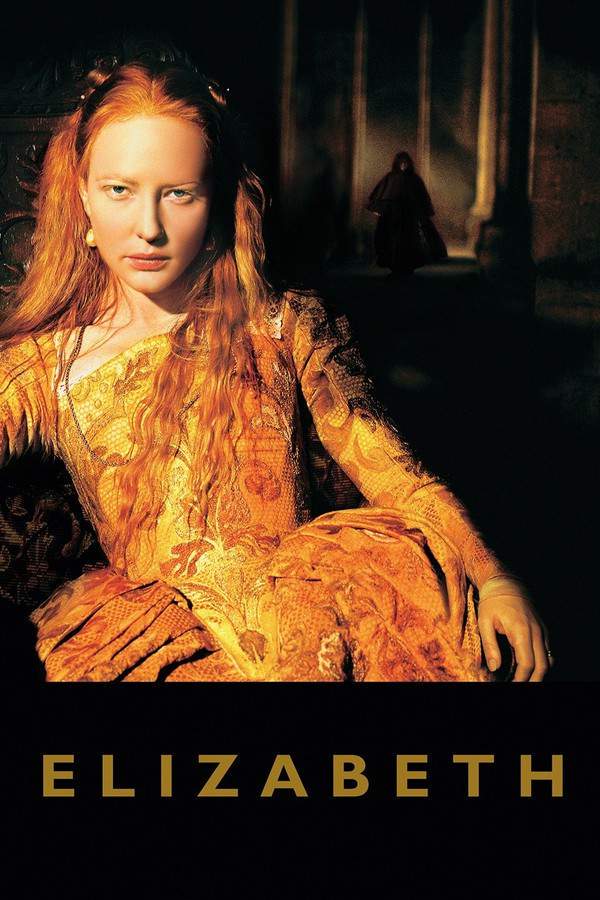
Elizabeth (1998) movie poster

Timeline

Elizabeth (1998) Timeline Explained – Every Event in Order

Release, runtime and language
1998 · 124 min · English
Directed by
Shekhar Kapur
Starring
Cate Blanchett
Budget
$30M

In 1558, Elizabeth Tudor inherits the throne of England, a nation grappling with internal conflicts and dangers from abroad. Guided by William Cecil, she faces pressure to marry, forcing her to consider alliances with shrewd figures like Walsingham and navigate a complex relationship with the intriguing Sir Robert Dudley, all while striving to secure her reign.

On this page (6)
  1. 1 Where to watch
  2. 2 Events in order (14)
  3. 3 Timeline questions answered
  4. 4 Movie threads
  5. 5 Movies like Elizabeth
  6. 6 Every angle

Where to watch

Where to Watch Elizabeth (1998)

Where can you watch Elizabeth? Stream, rent or buy it in the US, including on Amazon Video, Apple TV Store and Fandango At Home: current JustWatch availability with up-to-date prices.

Streaming availability powered by JustWatch

14 events in order · contains spoilers

Elizabeth Timeline: Events in Chronological Order

Every key event of Elizabeth (1998) in order, scene by scene, with when and where it takes place. Use it to untangle flashbacks, time jumps and parallel storylines, to refresh your memory before the sequel or to find the exact scene you are thinking of.

  1. Death of King Henry IV

    In 1554, King Henry IV dies, leading to a devastating power struggle in England. The nation is torn apart by religious conflict, with Catholics and Protestants vying for control, plunging the kingdom into chaos.

    When
    1554
    Where
    England
  2. Queen Mary's Terminal Illness

    By 1558, Queen Mary I, a devout Catholic and childless due to her marriage, is diagnosed with a terminal cancerous tumor. As her health deteriorates, she faces increasing pressure regarding her half-sister Elizabeth's claim to the throne.

    When
    1558
    Where
    England
  3. Elizabeth's Imprisonment

    While Queen Mary plots against her half-sister Elizabeth, the latter is held under house arrest on dubious conspiracy charges. Mary fabricates evidence accusing Elizabeth of conspiratorial activities, leading to her imprisonment in the Tower of London.

    Where
    Tower of London
  4. Mary's Request to Elizabeth

    Before her demise, Queen Mary requests a meeting with Elizabeth, urging her to uphold Catholicism. This emotional confrontation exemplifies the fraught dynamics between the sisters, with Elizabeth firmly rejecting Mary's plea.

  5. Mary's Death and Elizabeth's Ascension

    As Mary dies, Elizabeth ascends the throne as the new Queen of England. Despite the coronation being shrouded in turmoil, she receives the royal insignia and prepares to navigate the challenges of her reign.

    Where
    England
  6. Cecil's Advice to Marry

    William Cecil, Elizabeth's trusted advisor, recommends that she marry to secure her position as queen. However, Elizabeth remains unimpressed by several potential suitors, choosing instead to pursue a discreet relationship with Lord Robert Dudley.

  7. Military Tensions with France

    Amidst rising tensions, Mary of Guise allies with French forces, compelling Elizabeth to act militarily. The campaign ends badly, exposing her forces to defeat by experienced French troops, highlighting her struggles as a new ruler.

    Where
    France
  8. Proposal of the Act of Uniformity

    To unify her divided kingdom, Elizabeth proposes the Act of Uniformity, establishing the Church of England. This bold move aims to sever ties with the Vatican, facing anticipated backlash from powerful nobles like the Duke of Norfolk.

  9. Assassination Attempt

    Following the Act's approval, unrest grows as Pope Pius V sends a priest to incite rebellion against Elizabeth. An assassination attempt is made on her life during a public appearance, underscoring the treachery of those opposing her reign.

  10. Elizabeth Rejects Marriage

    After discovering Lord Robert Dudley's marriage, Elizabeth's feelings wane, leading her to reject a marriage proposal from Henry of France. This marks a pivotal moment in her personal and political life as she navigates complex court dynamics.

  11. Crackdown on Dissent

    As conspiracies against Elizabeth intensify, her advisor Walsingham uncovers plots involving a conspiratorial priest. This leads to a swift crackdown on dissenters, with Norfolk and his co-conspirators facing execution, restoring some stability to her rule.

  12. Elizabeth Becomes the Virgin Queen

    In a transformative decision, Elizabeth draws inspiration from her divine calling, adopting a regal image akin to the Virgin Mary. She declares her marriage to England, solidifying her identity as the Virgin Queen and redefining her reign.

  13. Walsingham's Support

    Throughout her reign, Walsingham remains a steadfast ally to Elizabeth, aiding in her efforts to stabilize the kingdom. His strategic insights and loyal support prove crucial as Elizabeth navigates complex political landscapes.

  14. Emergence of the Golden Age

    As Elizabeth's reign continues, notable transformations reinvigorate England, leading to a flourishing period often referred to as the Golden Age. Her policies and leadership foster peace and prosperity, solidifying her legacy in history.

    Where
    England

Last updated: November 03, 2024 at 13:24

Was this helpful?

Timeline questions answered

Elizabeth Timeline Explained: Your Questions Answered

When does it happen, and why in that order? The questions people ask about the chronology of Elizabeth (1998): time jumps, flashbacks, cause and effect between scenes and the correct order of events, each answered with spoilers.

Q1

Why did Elizabeth refuse Mary's request to uphold Catholicism before she died?

Elizabeth refused because she was a committed Protestant who had suffered greatly under Mary's Catholic rule. Her mother Anne Boleyn's legacy and her own religious convictions made her unwilling to promise to maintain Catholicism. Additionally, Elizabeth had been imprisoned on fabricated conspiracy charges and nearly executed, making her unlikely to honor a request from the sister who had tried to kill her.

Foreshadowing: Earlier in the film, Elizabeth's Protestant faith was established as a key reason for Mary's desire to eliminate her.

  • elizabeth
  • mary i
  • catholicism
  • religion
  • queen
  • succession
Q2

Why did Elizabeth choose not to marry any of her suitors?

Elizabeth rejected multiple suitors including the French Prince Henry, the Duke of Anjou, and King Philip II of Spain for political and personal reasons. She was deeply involved in a secret relationship with Lord Robert Dudley, which she hoped could lead to marriage. However, after discovering Robert was already married, she could not forgive the deception. Ultimately, she chose to remain unmarried to maintain political independence and avoid being controlled by a foreign power.

Foreshadowing: Cecil's repeated advice to marry for security established this as a central tension throughout the film.

  • elizabeth
  • marriage
  • suitors
  • robert dudley
  • politics
  • independence
Q3

Why did the English military campaign against Mary of Guise fail?

The campaign failed because Elizabeth's forces were inexperienced and poorly prepared against seasoned French troops. As a new queen with limited military resources and a bankrupt treasury, she underestimated the strength of Mary of Guise's alliance with France. This defeat exposed the weakness of England's military state following years of neglect under previous rulers.

Foreshadowing: Cecil's briefing about the bankrupt treasury and neglected navy hinted at England's military vulnerabilities.

  • mary of guise
  • france
  • military defeat
  • england
  • army
  • war
Q4

What was the significance of the Act of Uniformity?

The Act of Uniformity was Elizabeth's way of establishing the Church of England as the official religion, breaking away from the Vatican's authority. This religious settlement was crucial for consolidating her power as a Protestant ruler in a divided nation. It created a middle path between Catholicism and extreme Protestantism, uniting her Protestant supporters while limiting Catholic influence.

Foreshadowing: The ongoing religious conflict between Catholics and Protestants since Henry IV's death set up this pivotal legislation.

  • act of uniformity
  • church of england
  • religion
  • protestant
  • catholic
  • vatcian
  • parliament
Q5

Who was behind the assassination attempt on Elizabeth?

The assassination attempt was orchestrated by Pope Pius V, who sent a priest named John Ballard to England with a promise of divine absolution for anyone who killed Elizabeth. This was part of a broader Catholic plot to remove the Protestant queen and potentially install Mary, Queen of Scots. The plot represented the Vatican's direct intervention against Elizabeth's Protestant reign.

Foreshadowing: The Pope's opposition was foreshadowed by the religious tensions surrounding the Act of Uniformity.

  • pope pius v
  • john ballard
  • assassination
  • catholic plot
  • pope
  • england
Q6

Why did Elizabeth spare Lord Robert Dudley after the conspiracy was uncovered?

Elizabeth spared Robert Dudley because despite his involvement in the conspiracy, she still harbored feelings for him. Additionally, keeping him alive served as a personal reminder of her own perilous journey from imprisonment in the Tower to the throne. His life symbolized how far she had come and the dangers she had overcome. Unlike Norfolk and other conspirators, Robert was not executed.

Foreshadowing: Elizabeth's persistent romantic involvement with Robert despite warnings from her advisors built throughout the narrative.

  • robert dudley
  • norfolk
  • conspiracy
  • execution
  • mercy
  • elizabeth
  • relationship
Q7

Why did Elizabeth declare herself the Virgin Queen?

Elizabeth declared herself the Virgin Queen as a political strategy that combined religious symbolism with political independence. By adopting the image of the Virgin Mary and claiming marriage to England itself, she effectively removed herself from marriage politics while gaining divine legitimacy. This decision also prevented foreign powers from using marriage alliances to control England, cementing her authority as a ruler married only to her kingdom.

Foreshadowing: Her earlier refusal to marry any suitor, combined with the religious themes throughout the film, set up this defining transformation.

  • virgin queen
  • marriage
  • england
  • crown
  • political strategy
  • elizabeth i
Q8

What happened to the Duke of Norfolk in the film?

The Duke of Norfolk was executed for treason. As a powerful Catholic nobleman, he conspired against Elizabeth, particularly considering a marriage to Mary, Queen of Scots. When Walsingham uncovered the plot involving the conspiratorial priest, Norfolk and his co-conspirators were arrested and executed. His death eliminated a major threat to Elizabeth's Protestant reign.

Foreshadowing: Norfolk's repeated attempts to have Elizabeth executed and his opposition to the Act of Uniformity established him as a constant danger.

  • duke of norfolk
  • execution
  • treason
  • conspiracy
  • mary queen of scots
  • walsingham
Q9

Why did Elizabeth reject Henry of France after learning about his cross-dressing?

Elizabeth rejected Henry of France after discovering he enjoyed cross-dressing, which she found repulsive and untrustworthy. This discovery came after she had already learned that her beloved Lord Robert Dudley was married, leaving her disillusioned with both potential political matches. The revelation about Henry's cross-dressing provided her with a decisive reason to refuse the French alliance.

Foreshadowing: Robert's hidden marriage had already damaged Elizabeth's trust in romantic and political partnerships.

  • henry france
  • cross-dressing
  • marriage proposal
  • rejection
  • elizabeth
  • france
Q10

Why did Mary imprison Elizabeth in the Tower of London?

Mary imprisoned Elizabeth on fabricated conspiracy charges involving Sir Thomas Wyatt. Despite lacking evidence, Mary desperately wanted to eliminate her Protestant half-sister as a threat to the Catholic succession. However, Elizabeth's powerful allies in Parliament prevented her execution. This imprisonment in the Tower, where her mother Anne Boleyn had been executed, was a significant psychological ordeal.

Foreshadowing: Mary's terminal illness and her intense commitment to Catholicism drove her desperate measures against Elizabeth.

  • elizabeth
  • mary i
  • tower of london
  • imprisonment
  • conspiracy
  • wyatt
  • anne boleyn
Q11

How did Walsingham protect Elizabeth from her enemies?

Walsingham protected Elizabeth by acting as her chief intelligence officer and enforcer. He strategically detained dissenters before the parliamentary debate on the Act of Uniformity to prevent opposition. He uncovered the Catholic assassination plot involving John Ballard and the Pope, leading to a swift crackdown on conspirators. His loyal service as Elizabeth's protector continued throughout her reign.

Foreshadowing: Cecil's recruitment of Walsingham from exile established him as Elizabeth's primary security asset.

  • walsingham
  • protection
  • intelligence
  • conspiracy
  • elizabeth
  • security
  • espionage
Q12

What motivated the Duke of Norfolk's conspiracy against Elizabeth?

Norfolk's conspiracy was driven by his Catholic faith and political ambition. As a powerful Protestant-turned-Catholic nobleman, he opposed Elizabeth's Protestant reign and sought to replace her with a Catholic ruler. He contemplated marrying Mary, Queen of Scots to strengthen the Catholic cause. His execution marked the end of major Catholic noble resistance to Elizabeth's Protestant government.

Foreshadowing: Norfolk's earlier plea to Mary to sign Elizabeth's death warrant established his persistent hostility.

  • norfolk
  • conspiracy
  • catholic
  • mary queen of scots
  • treason
  • religion
  • politics

Movie threads

More Movies Like Elizabeth, by Mood & Story

Curated lists built around what makes Elizabeth tick: the same mood, the same kind of story or the same emotional payoff. Each list explains why these movies belong together.

Movies about leaders sacrificing for duty like Elizabeth

Leaders who must sacrifice personal happiness for the sake of their people. If you liked Elizabeth's theme of personal sacrifice for the throne, you'll find similar stories here. These movies explore the heavy burden of leadership, where characters must choose between their heart's desires and their duty to a nation, an ideal, or their people.

  • solemn
  • tragic
  • regal
  • burdened
  • sacrificial
  • triumphant
  • Tone: tense, solemn, tragic
  • Pacing: steady, deliberate
Why these movies?

The story pattern: Stories in this thread typically follow a protagonist ascending to a position of great power, only to discover its isolating nature. A key personal relationship, often romantic, becomes a test of their commitment. The narrative arc culminates in a moment of profound choice, where the protagonist consciously sacrifices their own happiness to secure a greater good, resulting in a bittersweet or triumphant yet lonely victory.

Why they belong together: These films are grouped by their shared exploration of the 'leader's dilemma.' They blend high-stakes political drama with deeply personal emotional journeys, creating a heavy, solemn mood. The tone is consistently tense and the emotional weight is heavy, as they focus on the ultimate cost of power and the consolidation of a legacy built on personal loss.

Political intrigue and survival movies like Elizabeth

Navigating a treacherous world of loyalties, betrayals, and deadly plots. Fans of Elizabeth's deadly court politics and religious conspiracies will enjoy these films. Discover movies filled with sophisticated schemes, shifting alliances, and characters fighting to secure their position in a beautiful but treacherous world of power.

  • tense
  • anxious
  • deceptive
  • regal
  • conspiratorial
  • treacherous
  • Tone: tense, anxious, deceptive
  • Pacing: steady, suspenseful
Why these movies?

The story pattern: The narrative pattern involves a protagonist, often a new or vulnerable leader, entering a complex web of established factions and hidden agendas. The plot is driven by a series of reveals, deceptions, and often assassination attempts, forcing the protagonist to learn quickly who to trust. The journey is one of hardening, as innocence is lost and strategic cunning is developed to outmaneuver rivals and consolidate power against all odds.

Why they belong together: These movies share a specific vibe of anxious tension within a regal setting. They combine a steady, deliberate pacing with high intensity stemming from constant mortal and political threats. The mood is defined by deception and the need for survival, making the audience feel the pervasive danger lurking behind every elegant facade.

If you liked this

Movies Like Elizabeth

Similar movies to Elizabeth: the same genre, themes or kind of story. Each one comes with its own plot summary, timeline and ending explained.

Browse all movie summaries

Every angle

Elizabeth (1998) Explained: Plot, Timeline & Characters

Everything about Elizabeth in one place: what happens in the plot summary, the timeline in chronological order, the characters and meaning and a spoiler-free summary. What's After the Movie adds the cast, box office and post-credit scenes.

Coming soon on iOS and Android

The Plot Explained Movie Summary App

Plot summaries, endings explained and timelines on your phone. Catch up on any movie in minutes, save your favorites and never miss a twist again.

Be the first to know when we launch. Your email stays private, always.

Learn more about the app