Plot Explained Spoilers guaranteed!
Plot Explained

Browse by genre

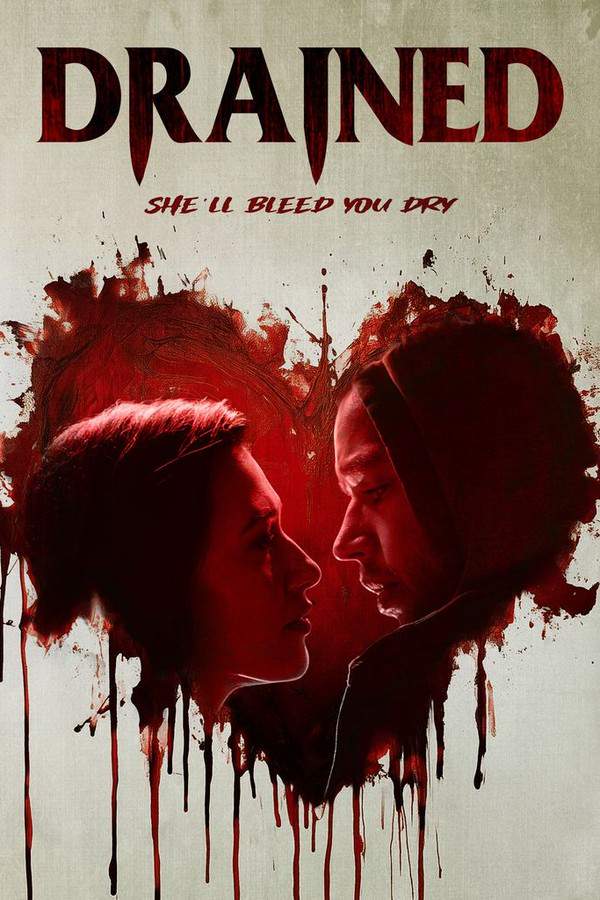
Drained (2025) movie poster

Plot Summary

Drained (2025) Plot Summary & Ending Explained

Release, runtime and language
2025 · 1 h 47 m · British english
Loading streaming availability…
Starring
Craig Conway, Ayvianna Snow, Natasha Patel, Andrew Lee Potts, Timothy Blore, Sean Earl McPherson
Budget
$1.5M

In the vibrant, neon-lit streets of London, Thomas, a jobless concept artist living with his mother, finds himself drawn to Rhea, a captivating and enigmatic woman who is secretly a vampire. Their passionate romance quickly develops into a complex and codependent relationship, examining the intoxicating blend of love and addiction. As Thomas becomes increasingly captivated by Rhea, he willingly participates in her needs, exploring the allure of their unusual connection.

On this page (7)
  1. 1 Where to watch
  2. 2 What happens: full plot
  3. 3 Plot questions answered
  4. 4 How it ends
  5. 5 Movie threads
  6. 6 Movies like Drained
  7. 7 Every angle
Loading streaming availability…

Full plot summary · contains spoilers

What Happens in Drained: Full Plot Summary

The whole story of Drained (2025) explained, from the opening scene to the final frame: every key event, every twist and what it all adds up to. Read it as a quick recap before the sequel, to check a scene you missed, or to finally understand what really happened.

Thomas is a reclusive and disillusioned post-graduate concept artist residing in London, leading a life filled with monotony and darkness. Struggling with his overbearing mother and her domineering boyfriend, John, who recently moved in, Thomas finds his once bearable home life increasingly unbearable. Their frequent shouting matches propel him to seek refuge in a grim, damp apartment located in a decaying neighborhood—an environment that reflects his own internal turmoil.

One evening, while wandering through a dimly lit jazz bar, Thomas encounters Rhea, a strikingly beautiful yet elusive woman. Their instant connection draws him in, and he invites her back to his flat, where they eventually fall asleep together on the couch. However, his peaceful slumber is interrupted by a strange, tingling pain; he awakes to find Rhea silently feeding on his wrist. Her eyes shimmer with an uncanny glow, and blood smears her lips as she licks the wound closed, reassuring him that it will heal. While apprehensive, Thomas strangely feels exhilarated and does not resist.

In the days that follow, Rhea reappears, and Thomas begins to welcome her dark visits. She explains that she can only take small amounts of his blood to avoid causing him irreparable harm. Yet, the nature of their interactions escalates as the feeding sessions grow longer and more intense. Thomas finds himself increasingly captivated, to the point where he craves the pleasure of being drained, neglecting his art, friends, and even basic self-care. His once vibrant demeanor fades, leaving him pale and thin, while Rhea flourishes with an almost supernatural vitality.

Rhea shares her haunting tales of immortality, revealing that she was turned during the Victorian era. She narrates her experiences of witnessing the world change while remaining stagnant, detailing the torment of relying on others for sustenance. In a particularly chilling account, she recounts a brutal encounter with an abusive nobleman, describing how she drained him slowly, savoring each moment as “therapeutic.”

Tensions escalate when John follows Thomas to his new flat, bursting in one night to confront him and Rhea. In a fit of rage and disgust, he attacks Thomas and demands Rhea to leave. However, Rhea retaliates with supernatural strength, restraining John and brutally attacking him, causing blood to spill onto Thomas’s sketches. After slitting John's wrists to stage a suicide, she comforts Thomas, suggesting that John's demise was inevitable, thus freeing him.

As Thomas’s mother discovers John's lifeless body, she plots to have Thomas committed, believing he has lost his mind. Rhea intervenes once more but with a far more theatrical approach. One evening, she stealthily breaks into the kitchen while Thomas's mother prepares dinner, slashing her Achilles tendons with fatal precision before finishing the job by biting into her carotid artery. Rhea whispers haunting words to the stricken woman, “You always tried to mold him into something hollow,” leaving a gruesome scene behind.

Thomas is later found catatonic beside his mother’s corpse and is subsequently institutionalized. Within the confines of the psychiatric hospital, he begins to hallucinate Rhea, with her shadow lurking in his padded cell, perpetually smiling at him. Upon being released, he becomes fixated on understanding the nature of Rhea, creating intricate drawings and diagrams related to vampire anatomy, feeding behaviors, and surreal murals depicting blood-soaked love.

An investigating officer, Sergeant Kade, soon warns him to refrain from probing deeper into this dark world. In a shocking twist, Kade reveals himself as a vampire, cautioning that there are others who may not tolerate Rhea’s reckless behavior. He ominously intones, “You’re still food to most of us. Don’t forget your place."

Disregarding the warning, Thomas persists in searching for Rhea, tracking her down to an abandoned flat where he discovers her feeding on his former friend Dano, whose life hangs by a thread. The scene before him is a horrifying bloodbath, walls smeared with desperate handprints, while Rhea savors her meal. In a moment of dark desperation, she slices open her chest, exposing her still-beating heart to Thomas.

In an act of irreversible devotion, Thomas kneels and uses a shard of broken mirror to carve out her heart, consuming it raw. As he gives in to this visceral act, his screams echo through the desolate building as he begins a harrowing transformation: his veins darken, his senses heighten, and he undergoes a profound change.

By the time the authorities arrive, the flat is empty, leaving behind only traces of blood. The final shot captures a transformed Thomas: now polished, confident, and sharply dressed. He gazes out from a café, watching a young couple with a knowing smile, hinting at the profound shift within him as he embraces both the beauty and horror of his newfound existence.
Last updated: September 18, 2026 at 08:59

Was this helpful?

Plot questions answered

Drained Plot Explained: Your Questions Answered

The questions people ask most about Drained (2025): what happens in the confusing scenes, why the characters do what they do, the twists, hidden details and what the ending means. Each answer contains spoilers.

Q1

Why does Thomas allow Rhea to feed on him without resisting?

When Thomas wakes to find Rhea drinking from his wrist in Drained, he is momentarily terrified, but the experience produces an unexpected rush of exhilaration that overrides his fear. The painless, intimate sensation triggers a psychological high that mirrors intoxication, which is why he chooses not to fight back or flee. This first encounter establishes the addictive pattern that defines the rest of the film, as Thomas becomes a willing participant rather than a victim.

Foreshadowing: Thomas's earlier sketches of dark, surreal imagery hint at a subconscious pull toward danger before he ever meets Rhea.

  • thomas
  • rhea
  • feeding
  • first bite
  • wrist
  • addiction beginning
Q2

What causes Thomas to become addicted to being drained?

Thomas's addiction develops because each feeding session combines physical pleasure with emotional intimacy, creating a feedback loop he cannot replicate elsewhere. As Rhea returns night after night, the draining becomes tied to feelings of being desired, chosen, and needed, filling the void left by his absent friendships and neglected art. The longer sessions intensify both the euphoric sensation and the codependency, leading Thomas to crave the bite even as it visibly destroys his health.

  • thomas
  • addiction
  • codependency
  • feeding sessions
  • euphoria
Q3

Why does Rhea kill John in Drained?

Rhea kills John because he storms into Thomas's flat and violently attacks Thomas, threatening both of them in a moment of explosive rage. Once John draws blood and endangers her partner, Rhea responds with her full supernatural power, subduing him and draining him to eliminate the immediate threat. After staging the death as a suicide by slitting his wrists, she reframes the murder as an act of liberation for Thomas, cementing her role as both lover and protector.

Foreshadowing: Rhea's earlier 'therapeutic' story about slowly draining an abusive nobleman foreshadows how she will justify killing John.

  • rhea
  • john
  • murder
  • suicide staging
  • confrontation
Q4

Why does Rhea kill Thomas's mother?

Rhea kills Thomas's mother because the mother plans to have Thomas committed to a psychiatric facility, which would permanently separate her from him and expose their secret. Viewing the mother as the original source of Thomas's repression and misery, Rhea justifies the murder as another act of liberation, whispering that the woman 'always tried to mold him into something hollow.' The killing is also retaliatory, since the mother's domineering presence mirrors the abusive nobleman Rhea once punished in her Victorian past.

Foreshadowing: Rhea's haunting dialogue about the mother 'molding' Thomas echoes the Victorian-era nobleman she punished for similar cruelty.

  • rhea
  • mother
  • achilles tendons
  • carotid artery
  • commitment plot
Q5

How does Thomas end up in a psychiatric hospital?

Thomas is found in a catatonic state beside his mother's mutilated body, unable or unwilling to explain what really happened. With John already staged as a suicide and no evidence of Rhea's involvement, authorities interpret the scene as a psychotic break rather than a crime. Thomas is committed for observation, where his hallucinations of Rhea and obsessive vampire sketches are interpreted as symptoms of severe mental illness rather than truth.

Foreshadowing: Thomas's earlier neglect of basic self-care and his increasingly erratic behavior hint at the breakdown to come.

  • thomas
  • psychiatric hospital
  • catatonic
  • commitment
  • hallucinations
Q6

Why does Sergeant Kade reveal himself as a vampire?

Sergeant Kade reveals his vampire nature to warn Thomas that his obsessive search for Rhea is drawing attention from a larger, hidden vampire community. By exposing himself, Kade demonstrates the scale of danger Thomas is in and reminds him that humans are 'food' to most vampires who would not hesitate to kill him. The warning is meant to intimidate Thomas into abandoning his quest, but it instead fuels his determination to understand the world Rhea belongs to.

Foreshadowing: Kade's earlier attempt to discourage Thomas from probing deeper hints he knows far more than a standard investigation warrants.

  • sergeant kade
  • vampire reveal
  • warning
  • vampire community
Q7

Why does Thomas keep searching for Rhea after being warned?

Thomas's refusal to stop searching is driven by a blend of obsession, love, and a need to understand the vampire world that has consumed his life. After months of sketching vampire anatomy and dreaming of Rhea, he cannot return to normalcy because his entire identity has been rebuilt around her. Ignoring Kade's warning is his final act of agency, choosing the dangerous truth over a safe, hollow recovery.

Foreshadowing: Thomas's hospital sketches of vampire feeding behavior and blood-soaked murals foreshadow his inevitable return to Rhea.

  • thomas
  • obsession
  • searching
  • rhea
  • warning ignored
Q8

What does consuming Rhea's heart do to Thomas?

When Rhea slices open her chest and offers Thomas her still-beating heart, she initiates a ritualistic turning that transforms him from human prey into a vampire. As Thomas consumes the heart raw, his veins darken, his senses sharpen, and his body undergoes a permanent physical metamorphosis. The act severs his human life entirely, replacing his weakness and deterioration with predatory power, but at the cost of his humanity.

Foreshadowing: Thomas's earlier anatomical sketches of vampire physiology and heart imagery hint at his subconscious fixation on this very moment.

  • rhea heart
  • transformation
  • vampire turning
  • consuming heart
Q9

Why does Rhea offer Thomas her own heart?

Rhea offers Thomas her heart because she recognizes that he has already surrendered everything to her and that the only way to keep him is to make him immortal like herself. The gesture is both an act of dark devotion and a way to bind him permanently into her world, ensuring he can never leave or be taken from her. It also mirrors the feeding dynamic in reverse, with Thomas now consuming her rather than the other way around.

  • rhea
  • offering heart
  • devotion
  • eternal bond
  • ritual
Q10

What happens at the end of the film?

After Thomas consumes Rhea's heart and completes his transformation, the authorities arrive at the abandoned flat to find it empty except for traces of blood. The final scene jumps forward to show a transformed Thomas sitting in a café, now polished, confident, and sharply dressed, watching a young couple with a knowing smile. The ending confirms he has fully become a vampire, and his predatory gaze suggests the cycle of seduction and feeding will continue with new victims.

Foreshadowing: Thomas's early sketches of a shadowy figure watching from windows anticipate his final role as a hunter rather than prey.

  • ending
  • transformation
  • café
  • cycle
  • vampire
Q11

Why does Thomas become obsessed with drawing vampire anatomy?

While institutionalized, Thomas turns to art as the only outlet through which he can process the impossible reality he has lived through. His detailed diagrams of vampire feeding behavior, circulatory systems, and blood-soaked murals serve as both a coping mechanism and a desperate attempt to prove that what happened to him was real. The obsession also reflects his addiction to Rhea, since studying her world keeps her psychologically present even when she only appears in hallucinations.

  • thomas
  • vampire anatomy
  • drawings
  • obsession
  • art
Q12

What is the significance of Rhea's Victorian-era backstory?

Rhea's revelation that she was turned during the Victorian era explains her detachment from modern life and frames her as a centuries-old predator who has long since lost her moral compass. Her account of slowly draining an abusive nobleman frames violence as 'therapeutic,' establishing that she views killing as both justice and pleasure. The backstory also highlights the extreme power imbalance between her and Thomas, since she has had lifetimes to perfect her seduction tactics while he is a vulnerable, isolated young man.

Foreshadowing: Rhea's chilling calm when describing her past murders foreshadows how casually she will later kill John and Thomas's mother.

  • rhea
  • victorian era
  • immortality
  • backstory
  • abusive nobleman
Q13

How does the film frame love as addiction?

Drained parallels romance with substance addiction by showing Thomas's relationship with Rhea following the same escalation pattern: initial intoxication, growing tolerance, withdrawal from ordinary life, and eventual self-destruction. Each feeding session becomes his 'fix,' and the euphoric sensation replaces genuine human connection until he neglects his art, friends, and health entirely. The film ultimately suggests that Thomas was never truly loved but rather consumed, mirroring how addiction offers the illusion of fulfillment while hollowing out the addict.

  • love
  • addiction
  • codependency
  • toxic relationship
  • metaphor
Q14

What does Thomas's transformation into a vampire symbolize?

Thomas's transformation symbolizes the final stage of his addiction, in which he no longer merely accepts the predator's bite but becomes a predator himself. By consuming Rhea's heart, he crosses the threshold from victim to mirror image, gaining power but losing the last traces of his humanity. The final café scene implies that the cycle of seduction, dependency, and violence will repeat with new victims, suggesting that addiction, once fully embraced, transforms the consumed into the consumer.

  • transformation
  • symbolism
  • predator
  • cycle
  • humanity loss

Ending explained

What Happens at the End of Drained?

How Drained (2025) ends, in short: the final scene, the last twist and what it means for the characters. The full ending explained, with every spoiler, lives on its own page.

Read the full ending explained

The ending of "Drained" reveals a dark transformation for Thomas. After his health deteriorates from the constant blood loss and the violence that ensues, he ends up in an asylum, where he's released after no concrete evidence of his alleged crimes. During the police investigation, one officer, who is himself a vampire, warns Thomas not to dig too deeply into the supernatural truth. Ignoring this warning, Thomas eventually breaks into John’s flat and finds Rhea feeding on Dano. Rhea, now tired of her vampiric existence, asks Thomas to kill her so she can be freed from her immortal hunger. In a desperate act, Thomas obliges and drinks her heart, which transforms him into a vampire himself. This act of final surrender not only blurs the line between victim and villain but also grants Thomas a new, eternal life beyond human existence. The police stumble upon the scene—Dano dead, Rhea lifeless, and Thomas now a vampire—signaling his irreversible transformation. The film ends with Thomas embracing his new existence, stepping into a shadowy world where he will forever crave blood, caught between his past humanity and his eternal curse. This conclusion underscores the movie’s exploration of obsession, despair, and the seductive danger of giving in to primal impulses. It leaves viewers contemplating whether Thomas’s choice is a tragic escape or an eternal damnation.**

Drained ending explained in full

Movie threads

More Movies Like Drained, by Mood & Story

Curated lists built around what makes Drained tick: the same mood, the same kind of story or the same emotional payoff. Each list explains why these movies belong together.

Toxic romance horror like in Drained

When passion becomes possession and intimacy turns into a slow, beautiful surrender. Movies like Drained that frame love as addiction, obsession, and slow consumption. If you liked the way Drained turns intimacy into horror, these gothic, codependent, and psychologically intense films will scratch the same itch. Expect dark seductions, manipulative partners, and characters who lose themselves inside someone else's appetite. Perfect for fans of vampire love stories where the bite is also a kiss.

  • seductive
  • codependent
  • gothic
  • addictive
  • predatory
  • bleak
  • Tone: dark, seductive, bleak
  • Pacing: variable, slow burn to escalation
Why these movies?

The story pattern: A lonely, often struggling protagonist meets someone electrifying and otherworldly. The early scenes feel tender, hypnotic, even transcendent. But small surrenders stack up: skipped meals, abandoned friends, dimming ambitions, blurred boundaries. The lover reveals a need the protagonist cannot meet without sacrificing pieces of themselves, and the romance hardens into ritual, obligation, and eventually addiction. The story ends not with rescue but with transformation, the protagonist either consumed or reborn as a mirror of the one who took them.

Why they belong together: These films share a predator-and-prey dynamic dressed in the language of romance, where affection is the lure and dependency is the trap. They lean on heavy emotional weight, gothic or moody aesthetics, high intensity, and bleak or bittersweet endings. Themes of codependency, manipulation, psychological deterioration, and love-as-addiction recur across the group, and the tone is almost always dark, seductive, and suffocating rather than sweet.

Gothic transformation horror like in Drained

Atmospheric horror where the soul quietly gives way to something older and darker. If you liked Drained's atmospheric descent into psychological collapse and monstrous transformation, these gothic horror movies will deliver the same bleak, hypnotic experience. Expect moody urban or mythic settings, graphic violence, slow-burn dread, and endings where the protagonist gains power only by losing their humanity. Ideal for fans of body horror, vampire cinema, and character-driven horror with heavy emotional weight.

  • gothic
  • atmospheric
  • transformation
  • nightmarish
  • hypnotic
  • deteriorating
  • Tone: dark, gothic, nightmarish
  • Pacing: slow atmospheric build to chaotic climax
Why these movies?

The story pattern: The story opens on a character stuck in a grey, unglamorous life, then introduces an irresistible pull toward something darker, older, or supernatural. Atmosphere thickens as the protagonist experiments, surrenders, and is rewarded with intensity and transformation. Violence escalates in parallel with the character's unraveling, and by the final act the audience realizes the protagonist is no longer the victim. The ending is bleak and cyclical, suggesting the corruption will continue through them rather than be cured.

Why they belong together: These films share a gothic visual language, heavy emotional weight, and a preoccupation with transformation as both escape and damnation. They pair variable, atmospheric pacing with high intensity bursts of graphic violence, and they almost always frame horror as a personal metamorphosis rather than an external threat. Recurring elements include nightmarish imagery, hypnotic rhythms, predatory mentors, and endings where the monster is born from the person we were rooting for.

If you liked this

Movies Like Drained

Similar movies to Drained: the same genre, themes or kind of story. Each one comes with its own plot summary, timeline and ending explained.

Browse all movie summaries

Every angle

Drained (2025) Explained: Plot, Ending, Timeline & Characters

Everything about Drained in one place: what happens in the plot summary, the timeline in chronological order, the characters and meaning, the ending explained and a spoiler-free summary. What's After the Movie adds the cast, box office and post-credit scenes.

Coming soon on iOS and Android

The Plot Explained Movie Summary App

Plot summaries, endings explained and timelines on your phone. Catch up on any movie in minutes, save your favorites and never miss a twist again.

Be the first to know when we launch. Your email stays private, always.

Learn more about the app