Year: 1999
Runtime: 50 mins
Language: English
Director: Genndy Tartakovsky
After a squad of robots declares they will destroy “the one who saved the future,” Dexter uses his lab’s time machine to learn how he earned that title. He easily defeats the robots, then jumps forward, encountering a frail adult version of himself working in an office where Mandark is his wealthy boss. Unaware, child Dexter reveals the Neurotomic Protocore blueprints, which Mandark steals as the two Dexters travel through time.
Warning: spoilers below!
Haven’t seen Dexter’s Laboratory: Ego Trip yet? This summary contains major spoilers. Bookmark the page, watch the movie, and come back for the full breakdown. If you're ready, scroll on and relive the story!
Read the complete plot breakdown of Dexter’s Laboratory: Ego Trip (1999), including all key story events, major twists, and the ending explained in detail. Discover what really happened, and what it all means.
Dexter Christine Cavanaugh is deep in his lab, guarding the Neurotomic Protocore when his rival Mandark makes a bold move to steal the invention. Dexter thwarts the heist and heads back to his workbench, only to be irritated by his sister, Dee Dee. In a rare moment of exasperation, he tells her to go away, and she wanders into a time machine tucked away in the lab. Moments later, mysterious robots slip through the same device, and Dexter wastes no time in destroying them. The sequence leaves him convinced he’s “The One Who Saved the Future” the machines mentioned, and curiosity about his own legend pushes him to test time travel to see how he becomes so impressive.
Driven by a wish to understand his rising fame, Dexter and his older, wiser self set out into the streams of time. They quickly discover that the future version of Dexter is not the confident hero he imagined; he is weak-willed and, in fact, living under the shadow of Mandark, now a powerful corporate boss. In this future, the Neurotomic Protocore sits idle inside a cubicle, stored away in a box. The younger Dexter is persuaded to journey further ahead, to glimpse how their shared fate is really secured, leaving the Protocore resting on the floor of the cubicle as they push onward into unknown eras.
Far in the distance, they find a utopian society where Dexter is revered as an omnipotent leader, while Mandark has been reduced to nothing more than a brain in a jar. When they encounter their senior self, they learn he is too old and senile to recall the specifics of how the future was saved. The trio then jumps back to a period between Dexter’s corporate life and this glittering utopia, only to confront a dystopian reality where humans have lost much of their intelligence and society lies in ruin. Drone-like robots threaten everyday life, and it is up to a muscular, bearded, quick-witted fourth Dexter to help the survivors regain a foothold.
The investigation reveals who is behind this bleak timeline: Mandark, who uncovers the Protocore within the cubicle and triggers a chain of events that spirals into chaos. In response, the Dexters unite to build a colossal robot from the ruins of Dexter’s laboratory, aiming to end Mandark’s iron reign. Mandark counters with a cadre of his own counterparts plucked from different timelines, sparring in a four-on-four clash that tests every genius among the group. The battle is intense, and the small, determined child Dexter is weighed down by the sheer number of versions arrayed against him, unable to reach the switch that would flip the Protocore’s output from negative to positive.
Amid the chaos, Dee Dee materializes via the time machine and presses the correct button, tipping the scales and saving the future. Her action infuriates the Dexters, who had hoped to be the ones to save the day themselves, and they order the machines to destroy “The One Who Saved the Future.” The act of saving creates a causal loop, as child Dexter looks on and realizes the consequences of his own meddling. He bids farewell to his future selves and returns to his own era, only to find himself locked in a familiar confrontation with the same robots he just built. The experience leaves him bewildered by time travel, and he ultimately resigns himself to a simple, ordinary craving—a quiet moment to eat something and regroup.
Last updated: October 07, 2025 at 09:09
Explore frequently asked questions about Dexter’s Laboratory: Ego Trip (1999) with spoiler-rich answers covering the full plot summary, major story beats, character motivations, hidden details, and ending meaning. This movie summary FAQ helps explain confusing scenes, plot twists, and narrative decisions in clear, searchable detail.
The robots were built by the future Dexters themselves. After Dee Dee saved the future by pressing the button, the angry Dexters constructed these robots to destroy her, since she stole their moment of glory. However, due to the causal time loop, the robots traveled back to the present and attacked the child Dexter, the same one who would eventually build them. The phrase refers to Dee Dee, the actual saver, though the robots were sent back in time before that was fully resolved.
The robots first appear immediately after the time machine is activated, setting up the time loop that closes at the end.
In the timeline shown, the young adult Dexter left the Neurotomic Protocore sitting on a cubicle floor when traveling further into the future. Mandark found it there, used it to gain power, and built his technological empire. By the time Dexter returns as an adult, Mandark has become his wealthy boss, ruling over a dystopian society where the Protocore's misuse has caused widespread intelligence loss.
The timeline shows Mandark finding the Protocore in the cubicle, which directly enables his rise to power.
Young adult Dexter convinced his younger self to travel further into the future to see how they'd become the great savior. They left the Protocore on the cubicle floor, planning to retrieve it on their return journey. This decision was meant to be temporary but ended up creating the opportunity for Mandark to find and weaponize the device, directly causing the dystopian timeline.
The timeline explicitly shows them deciding to leave the Protocore behind to return later.
During the 4-on-4 battle, child Dexter was weighed down and couldn't reach the switch that would flip the Protocore's output from negative to positive. Dee Dee arrived through the time machine at that critical moment, saw the situation, and pressed the correct button. Her intervention was possible precisely because she wasn't involved in the battle, she arrived as an outsider with a clear view of what needed to be done.
Dee Dee earlier accidentally activated the time machine, showing she knows how to use it.
Mandark discovered the Neurotomic Protocore that Dexter had left in the cubicle. He weaponized it, which triggered a chain of events that devastated humanity. The Protocore's negative output destroyed human intelligence on a massive scale, reducing people to a primitive state while Mandark's robot drones controlled the ruins of society.
The timeline shows Mandark finding the Protocore again in the cubicle, then cuts to the dystopian city.
The multiple Dexters had been fighting specifically to be the ones who would save the timeline and prove their worth. They were determined to be the heroes who fixed everything through their own genius. When Dee Dee arrived and pressed the button first, they felt robbed of their destiny, they had done all the fighting and planning, only for their sister to get the glory. Their anger led them to build the robots to destroy her.
The answer explains their motivation: proving themselves as the saviors throughout the entire journey.
Child Dexter returns to his own time after saying goodbye to his future selves, only to find himself fighting the exact same robots he and his future versions built. This is because the Dexters' plan to destroy Dee Dee created a causal loop: they built robots in the future, those robots traveled back to the present, and child Dexter destroyed them, only to grow up and eventually build those same robots. The loop closes on itself, with Dexter stuck fighting enemies he will eventually create.
The timeline shows robots appearing at the beginning and ending in the same way, completing the loop.
The eldest Dexter they encounter in the utopian future is extremely old, appearing ancient and frail. By the time the Dexters reach him, he has lived for centuries as an omnipotent leader and is now suffering from dementia or extreme age-related cognitive decline. His memory of exactly how he saved the future has faded, which is why he can't explain the specifics to his younger selves.
The timeline describes him as "too old and senile to recall the specifics."
The timeline convergence brought together four versions of Dexter: child Dexter (the original), his slightly older self, the old senile Dexter from the utopia, and a muscular bearded Dexter from the dystopian timeline who had adapted to survive in that harsh world. Each represented a different outcome of the timelines they'd inhabited, and they united to fight Mandark's multiple versions.
The dystopian future shows a fourth Dexter who is muscular and bearded, adapted to that harsh reality.
In the far utopian future, Mandark has been defeated and reduced to a brain preserved in a jar, presumably by Dexter's actions or the natural outcome of their rivalry. This represents total victory for Dexter, who is worshiped as an omnipotent leader in that timeline. However, this utopian version exists separately from the dystopian timeline where Mandark succeeded.
The timeline shows Mandark's brain in a jar as the ultimate symbol of Dexter's victory in that timeline.
The Protocore had two output modes: negative and positive. In negative mode (as Mandark used it), it drained intelligence and caused the dystopian collapse. Flipping it to positive mode reversed the damage, restored human intelligence, and saved the future from Mandark's rule. The switch was the key to stopping the dystopia and restoring order.
Child Dexter is described as trying to reach the switch to flip the output during the battle.
After experiencing the confusion of the time loop, fighting robots he would eventually build, seeing multiple versions of himself, and being unable to understand how his meddling created the paradox, child Dexter is completely overwhelmed and bewildered. He gives up on trying to figure it all out and simply wants to retreat to something normal and comforting: eating a snack. It's a humorously ordinary end to an extraordinary adventure.
The entire movie shows Dexter's frustration with time travel complexities building to this moment.
Discover curated groups of movies connected by mood, themes, and story style. Browse collections built around emotion, atmosphere, and narrative focus to easily find films that match what you feel like watching right now.
Chaotic journeys through time that play with cause and effect in fun, cartoonish ways.If you liked the chaotic time-hopping adventure in Dexter’s Laboratory: Ego Trip, you'll enjoy these movies. They blend sci-fi concepts with a family-friendly, cartoonish sensibility, offering fun stories about paradoxes, alternate futures, and meeting yourself without getting too dark or serious.
The narrative pattern involves a character, often a brilliant but flawed inventor or scientist, creating or stumbling upon a time machine. Their journey through different eras or timelines is less about precision and more about causing a cascade of humorous, unintended consequences, leading to encounters with exaggerated future selves and a final resolution that embraces the chaos.
Movies are grouped here for their shared approach to time travel as a source of whimsical fun rather than grim consequence. They feature fast pacing, a light emotional weight, and a core theme of self-discovery through ridiculous, paradoxical situations.
Stories of young prodigies whose brilliant creations are constantly challenged by rivals and chaos.For fans of the scientist rivalry and secret lab antics in Dexter’s Laboratory: Ego Trip, this list features movies about brilliant young inventors. These stories mix sci-fi action with comedy, focusing on the endless battle between a prodigy's grand plans and the interference of a nemesis or silly sibling.
The narrative follows a highly intelligent but socially awkward young protagonist dedicated to their inventions. Their work is constantly threatened by a specific rival—often equally smart but more arrogant—and the innocent, disruptive energy of a family member. The conflict is a cycle of creation, sabotage, and frantic problem-solving, driven by a mix of ego and a desire to prove oneself.
These films are united by their focus on the specific dynamic of a child prodigy's life. They share a tone that balances scientific curiosity with cartoonish slapstick, a medium intensity from the rivalry, and a light emotional core where the stakes feel high to the characters but remain fun for the audience.
Don't stop at just watching - explore Dexter’s Laboratory: Ego Trip in full detail. From the complete plot summary and scene-by-scene timeline to character breakdowns, thematic analysis, and a deep dive into the ending - every page helps you truly understand what Dexter’s Laboratory: Ego Trip is all about. Plus, discover what's next after the movie.
Track the full timeline of Dexter’s Laboratory: Ego Trip with every major event arranged chronologically. Perfect for decoding non-linear storytelling, flashbacks, or parallel narratives with a clear scene-by-scene breakdown.
Discover the characters, locations, and core themes that shape Dexter’s Laboratory: Ego Trip. Get insights into symbolic elements, setting significance, and deeper narrative meaning - ideal for thematic analysis and movie breakdowns.
Discover movies like Dexter’s Laboratory: Ego Trip that share similar genres, themes, and storytelling elements. Whether you’re drawn to the atmosphere, character arcs, or plot structure, these curated recommendations will help you explore more films you’ll love.
Dexter’s Laboratory: Ego Trip (1999) Scene-by-Scene Movie Timeline
Dexter’s Laboratory: Ego Trip (1999) Movie Characters, Themes & Settings
Dexter’s Laboratory: Ego Trip (1999) Spoiler-Free Summary & Key Flow
Movies Like Dexter’s Laboratory: Ego Trip – Similar Titles You’ll Enjoy
Next Gen (2018) Movie Recap & Themes
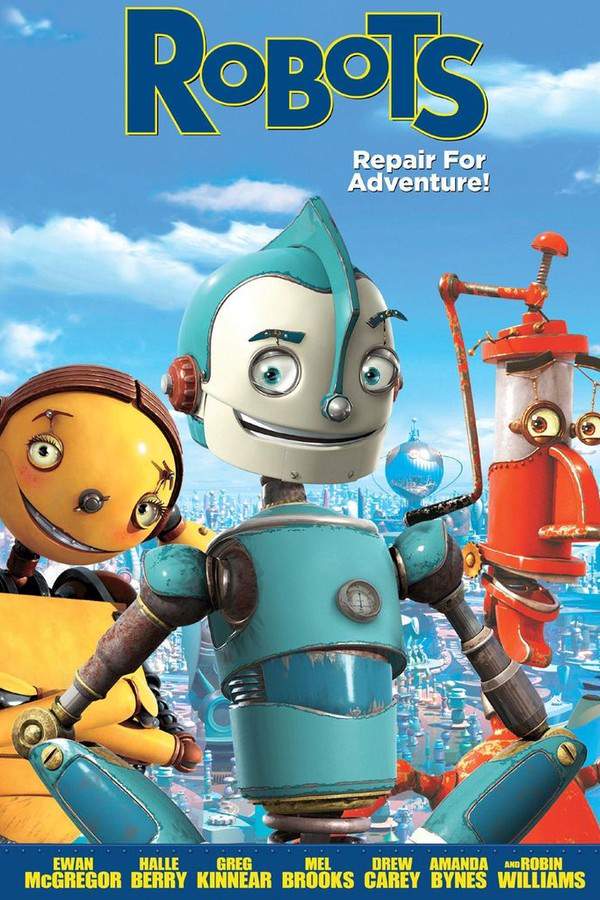
Robots (2005) Film Overview & Timeline
Inspector Gadget (1999) Ending Explained & Film Insights
Digimon Adventure tri. Part 6: Future (2018) Story Summary & Characters
Time Toys (2016) Film Overview & Timeline
Dexter’s Laboratory: Chicken Scratch (2002) Complete Plot Breakdown
Transformers: Energon (1000) Movie Recap & Themes
Robotix (1990) Complete Plot Breakdown
The Grim Adventures of the Kids Next Door (2007) Detailed Story Recap
D.A.R.Y.L. (1985) Movie Recap & Themes
Dexter’s Laboratory: “Changes” (1995) Plot Summary & Ending Explained
Dual! Parallel Trouble Adventure (1000) Ending Explained & Film Insights
Dexter’s Laboratory: The Big Sister (1996) Detailed Story Recap
Ed, Edd n Eddy’s Big Picture Show (2009) Detailed Story Recap
RoboCop: The Future of Law Enforcement (1994) Ending Explained & Film Insights