
























Plot Explained Spoilers guaranteed!
Plot Explained

Browse by genre

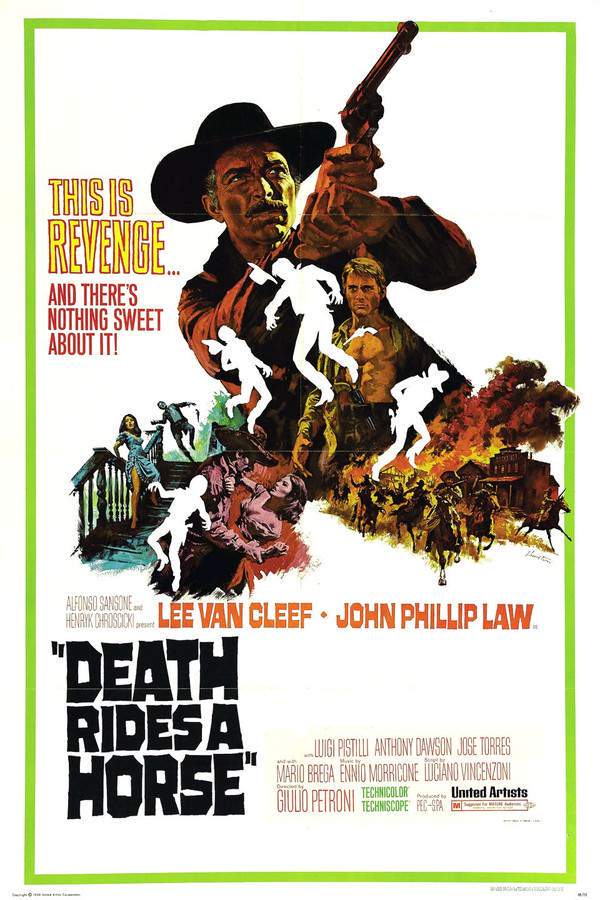
Death Rides a Horse (1969) movie poster

Timeline

Death Rides a Horse (1969) Timeline Explained – Every Event in Order

Release, runtime and language
1969 · 120 min · Italian
JustWatch #18,160 4
Directed by
Giulio Petroni
Starring
Lee Van Cleef, Luigi Pistilli, John Phillip Law, Mario Brega, Anthony Dawson, Bruno Corazzari

In a grim Western, Bill Meceita embarks on a quest for vengeance fifteen years after his family was murdered by outlaws. He joins forces with a seasoned gunslinger named Ryan to hunt down the ruthless gang leader, Walcott. As Bill gets closer to achieving his revenge, he discovers a surprising connection between Ryan's intentions and the painful events of his own past, forcing him to confront uncomfortable truths about both men.

On this page (6)
  1. 1 Where to watch
  2. 2 Events in order (15)
  3. 3 Timeline questions answered
  4. 4 Movie threads
  5. 5 Movies like Death Rides a Horse
  6. 6 Every angle

Where to watch

Where to Watch Death Rides a Horse (1969)

Where can you watch Death Rides a Horse? Stream, rent or buy it in the US, including on Amazon Prime Video, Artiflix and FlixFling: current JustWatch availability with up-to-date prices.

Streaming availability powered by JustWatch

15 events in order · contains spoilers

Death Rides a Horse Timeline: Events in Chronological Order

Every key event of Death Rides a Horse (1969) in order, scene by scene, with when and where it takes place. Use it to untangle flashbacks, time jumps and parallel storylines, to refresh your memory before the sequel or to find the exact scene you are thinking of.

  1. Tragic Beginning

    Bill, a young boy, witnesses the brutal murder of his father and the horrific gang-rape and murder of his mother and sister. This traumatic experience marks the beginning of his journey fueled by vengeance.

  2. Transformation into a Marksman

    Over the next fifteen years, Bill dedicates himself to becoming a skilled marksman, using his pain and anger as motivation. This training prepares him for the confrontation he seeks with those who destroyed his family.

    When
    Fifteen years later
  3. Identifying the Outlaws

    During his quest for revenge, Bill remembers the unique marks of each outlaw involved in his family's murder. He recalls a tattoo of four aces, a distinctive scar, an earring, and a skull necklace, but the fifth man remains unknown.

  4. Ryan's Release from Prison

    Ryan, wrongfully imprisoned for a robbery he did not commit, is released after fifteen years. His life takes an unexpected turn as he encounters Bill, who is consumed by vengeance.

    When
    Fifteen years later
  5. Encounter Between Bill and Ryan

    Bill and Ryan cross paths, revealing Bill's intense rage for revenge. Despite Bill's desire to harm him, Ryan chooses to non-violently engage with Bill, showing he understands the boy's pain.

  6. First Duel: Cavanaugh

    While searching for his target, Bill learns about Cavanaugh, the first outlaw on his list. An intense duel ensues, and Bill successfully kills Cavanaugh, but Ryan cautions him about the remaining dangers ahead.

  7. Confrontation in Lyndon City

    Ryan heads to Lyndon City to confront Walcott, a banker tied to the past robbery. Bill realizes that he has inadvertently helped Ryan avoid being framed for a crime he didn’t commit during this encounter.

    Where
    Lyndon City
  8. Second Kill: The Man with the Earring

    While traveling to a Mexican town, Bill spots the second outlaw marked by a big earring. He confronts and manages to kill him, driving him deeper into his cycle of vengeance.

    Where
    Mexican town
  9. Buried Alive by Remaining Outlaws

    After his confrontation, Bill is captured by the remaining outlaws, who punish him by burying him alive from the neck down. Just when hope seems lost, Ryan arrives for a dramatic rescue.

  10. The Shocking Revelation

    After the rescue, Bill notices that Ryan is wearing the skull necklace. This discovery shocks him, leading to a confrontation about Ryan's presence during the original murders, despite his insistence of non-involvement.

  11. Teaming Up Against the Outlaws

    Despite the revelation, Ryan offers to stand with Bill in confronting the remaining outlaws. This partnership signifies a shift in their relationship, moving from suspicion to camaraderie.

  12. The Final Showdown

    A fierce gunfight erupts during a sandstorm, isolating Bill as the last of his family's killers corner him. Ryan intervenes at a crucial moment, demonstrating loyalty and sacrifice in the heat of battle.

  13. The Tension of Choice

    In a moment of extreme tension, both Bill and Ryan confront the last outlaw but are left with only one bullet each. Ryan challenges Bill, leading to a decision that will define their fates and alliances.

  14. Bill's Decision and Departure

    Bil decides to fire at the surviving outlaw instead of Ryan, choosing vengeance over friendship. In the aftermath, while acknowledging his scars, Bill rides off into the horizon, leaving behind both the past and Ryan.

  15. Hope and Emotional Scars

    As the dust settles from the confrontation, Ryan watches Bill ride away, grateful yet emotionally impacted. Both men carry the weight of their experiences, marked by their losses but hopeful for a chance at redemption.

Last updated: November 15, 2024 at 18:51

Was this helpful?

Timeline questions answered

Death Rides a Horse Timeline Explained: Your Questions Answered

When does it happen, and why in that order? The questions people ask about the chronology of Death Rides a Horse (1969): time jumps, flashbacks, cause and effect between scenes and the correct order of events, each answered with spoilers.

Q1

Why was Ryan wearing the skull necklace from the original murder?

Ryan wore the skull necklace because he was the fourth outlaw, the one who saved young Bill from the burning house. While he was present during the brutal murder of Bill's family, he insists he did not participate in the killings or the gang-rape. He kept the necklace as proof of his presence and possibly as a reminder of his guilt for not intervening. When Bill discovers this during the rescue, it creates the film's central moral conflict.

Foreshadowing: The summary hints at this when it mentions a mysterious fifth man and that one outlaw 'saved young Bill from the flames.'

  • ryan
  • skull necklace
  • outlaws
  • family murder
  • rescue
Q2

Who was the fifth man Bill couldn't identify?

The fifth man remains unidentified in the story. Bill only saw four outlaws clearly, the one with the four aces tattoo, the one with the scar, the one with the earring, and the one wearing the skull necklace. The fifth man's face was never visible to young Bill during the attack, leaving this mystery unresolved. This gap in identification haunts Bill throughout his quest.

Foreshadowing: The summary explicitly mentions that 'the face of the mysterious fifth man remains a mystery.'

  • fifth man
  • outlaws
  • identification
  • mystery
Q3

Why did Ryan help Bill after being framed by the same outlaws?

Ryan helped Bill because he felt guilt for not stopping the murder of Bill's family, despite being present. After serving 15 years in prison for a crime he didn't commit, frame by those same outlaws, Ryan wanted redemption. He saw Bill's quest as a way to finally bring justice to the men who destroyed both their lives. His offer to stand with Bill against the remaining outlaws was his attempt at making things right.

Foreshadowing: Ryan's choice not to harm Bill when they first meet, despite Bill's aggressive behavior, shows his protective instinct.

  • ryan
  • redemption
  • framed
  • outlaws
  • help
Q4

Why did Bill choose not to kill Ryan at the end?

Bill chose not to kill Ryan because despite discovering Ryan's connection to his family's murder, he recognized that Ryan had genuinely changed and was trying to help him. When both men were left with only one bullet and Ryan challenged him, Bill realized that killing Ryan wouldn't bring true justice. Instead, he used his single bullet to kill the surviving outlaw, showing he could distinguish between those who deserved death and someone seeking redemption.

Foreshadowing: Ryan wearing the skull necklace and claiming he didn't participate sets up Bill's moral dilemma in the finale.

  • bill
  • ryan
  • choice
  • vengeance
  • redemption
  • finale
Q5

Why was Ryan framed and sent to prison for 15 years?

Ryan was framed because he was a witness to the murder of Bill's family and the subsequent robbery. The outlaws needed to silence him, so they arranged for him to be arrested for a robbery he didn't commit. This sent him to prison for 15 years, coinciding with Bill's own 15-year journey to become a skilled marksman. When Ryan is finally released, he immediately seeks the same outlaws to get his share of the stolen money and clear his name.

Foreshadowing: Ryan's release after exactly 15 years mirrors Bill's transformation period, suggesting parallel journeys.

  • ryan
  • framed
  • prison
  • 15 years
  • outlaws
Q6

What happened to the outlaws who buried Bill alive?

The outlaws who buried Bill alive were killed by Ryan during his dramatic rescue. After Bill was captured and buried from the neck down in the desert sun, Ryan tracked down the remaining outlaws, eliminated their guards, and rescued Bill. This act solidifies their partnership and leads to the revelation about Ryan wearing the skull necklace.

Foreshadowing: This event occurs after Bill kills the man with the earring, marking another step in his revenge quest.

  • buried alive
  • outlaws
  • rescue
  • ryan
Q7

What was Walcott's scheme to frame Ryan in Lyndon City?

In Lyndon City, Walcott, the wealthy banker tied to the past robbery, devised a plan to frame Ryan for a crime he didn't commit. However, Bill inadvertently helped Ryan escape from this trap. Bill realized during this confrontation that he had accidentally helped someone connected to his own quest for vengeance, adding complexity to his journey.

Foreshadowing: Walcott is identified as the gang leader Bill seeks, making this encounter a key step toward the final showdown.

  • walcott
  • lyndon city
  • frame
  • banker
Q8

How did Bill become a skilled marksman over 15 years?

Over fifteen years, Bill dedicated himself entirely to becoming an expert marksman, using his trauma and anger as motivation. The summary indicates this was a deliberate transformation, he trained to be ready to confront the four outlaws responsible for his family's murder. This extended period of preparation explains his lethal efficiency in the duels that follow.

Foreshadowing: Bill's training is referenced early in the summary as the foundation for his revenge capability.

  • bill
  • marksman
  • training
  • 15 years
  • revenge
Q9

If Ryan was present during the murders, why does he claim he didn't participate?

Ryan claims he didn't participate in the actual murders or the gang-rape of Bill's mother and sister. He was present as part of the outlaw group but chose not to take part in the violence. His most significant action was saving young Bill from the burning house, which is why he kept the skull necklace as both a memento and a burden of guilt. This ambiguous position makes him neither fully guilty nor innocent in Bill's eyes.

Foreshadowing: The summary states the outlaw with the skull necklace 'saved young Bill from the flames,' directly foreshadowing this revelation.

  • ryan
  • present
  • murders
  • didn't participate
  • saved bill
Q10

Why did the final confrontation happen during a sandstorm?

The sandstorm in the final showdown served as a dramatic and symbolic setting for the climactic battle. It isolated Bill with the last of his family's killers, creating a visually striking and tense environment. The storm added to the moral intensity of the moment when both Bill and Ryan were left with only one bullet each, forcing Bill to make his defining choice between vengeance and mercy.

Foreshadowing: The timeline marks this as 'The Final Showdown' with a fierce gunfight during extreme weather conditions.

  • sandstorm
  • final showdown
  • bill
  • ryan
  • climax

Movie threads

More Movies Like Death Rides a Horse, by Mood & Story

Curated lists built around what makes Death Rides a Horse tick: the same mood, the same kind of story or the same emotional payoff. Each list explains why these movies belong together.

Gritty Westerns with Moral Ambiguity like Death Rides a Horse

Vengeance-driven tales where allies and enemies are not so clearly defined. If you enjoyed the complex partnership and moral questioning in Death Rides a Horse, you'll find similar themes in these movies. This collection features gritty Westerns and revenge stories where the line between right and wrong is blurred, and characters are forced to confront difficult truths about themselves and their allies.

  • vengeful
  • grim
  • morally complex
  • suspenseful
  • melancholic
  • atmospheric
  • Tone: dark, morally complex
  • Pacing: steady, methodical
Why these movies?

The story pattern: Stories typically begin with a clear goal, often revenge, but the journey introduces a partner or catalyst whose motives are suspect. The narrative unravels the connection between this character and the protagonist's past, leading to a climax where the protagonist must make a heavy moral choice that redefines their quest.

Why they belong together: Movies are grouped here for their shared focus on morally complex relationships within a dark, vengeance-driven plot. They combine a steady, methodical pace with high emotional weight and a tone that is more interested in questioning justice than delivering it simply.

Relentless Vengeance Stories like Death Rides a Horse

Stories driven by a singular, brutal quest for retribution against unforgiving odds. For viewers who appreciated the grim, single-minded quest for revenge in Death Rides a Horse, this list features similar movies. Discover other stories where characters embark on a brutal, sustained hunt for justice or retribution, facing suspenseful action and a heavy emotional toll in a harsh world.

  • relentless
  • brutal
  • vengeful
  • suspenseful
  • grim
  • atmospheric
  • Tone: dark, brutal
  • Pacing: steady, relentless
Why these movies?

The story pattern: The narrative pattern involves a catalyzing traumatic event, followed by a long-spanning, methodical hunt. The protagonist tracks down each target one by one, leading to regular, intense action sequences. The journey is emotionally heavy and psychologically taxing, with the resolution often being bittersweet or bleak, as the cost of vengeance is fully realized.

Why they belong together: These films share a high-intensity, dark tone and a steady pacing that methodically follows a quest. The core experience is one of brutal determination and suspense, with a heavy emotional weight derived from trauma and loss, making the vibe feel cohesive and relentless.

If you liked this

Movies Like Death Rides a Horse

Similar movies to Death Rides a Horse: the same genre, themes or kind of story. Each one comes with its own plot summary, timeline and ending explained.

Browse all movie summaries

Every angle

Death Rides a Horse (1969) Explained: Plot, Timeline & Characters

Everything about Death Rides a Horse in one place: what happens in the plot summary, the timeline in chronological order, the characters and meaning and a spoiler-free summary. What's After the Movie adds the cast, box office and post-credit scenes.

Coming soon on iOS and Android

The Plot Explained Movie Summary App

Plot summaries, endings explained and timelines on your phone. Catch up on any movie in minutes, save your favorites and never miss a twist again.

Be the first to know when we launch. Your email stays private, always.

Learn more about the app