Plot Explained Spoilers guaranteed!
Plot Explained

Browse by genre

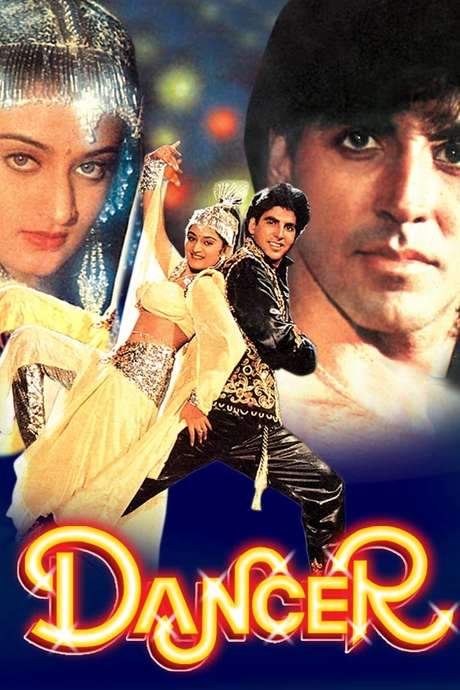
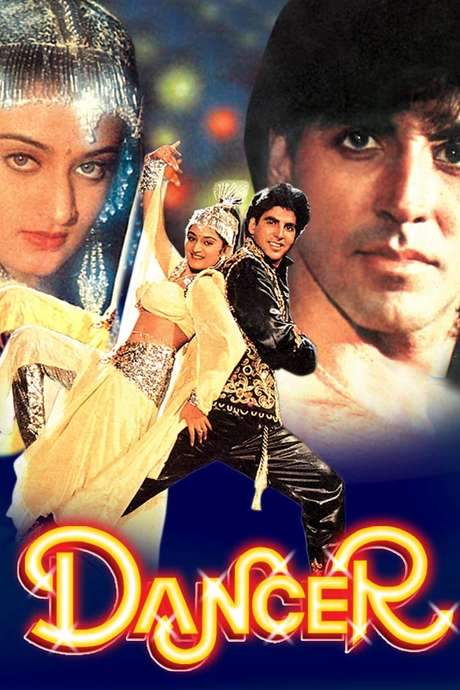
Dance Dance (1987) movie poster

Plot Summary

Dance Dance (1987) Plot Summary Explained

Release, runtime and language
1987 · 153 mins · Hindi
Directed by
Babbar Subhash
Starring
Dalip Tahil, Mithun Chakraborty, Shakti Kapoor, Amrish Puri, Yunus Parvez, Mandakini

Radha and Ramu, orphaned siblings after their singer parents are murdered by the powerful A.M. Singh, grow up homeless before achieving fame as popular singers. Ramu falls for Janita, while Radha marries Resham. When Janita must perform in Jalpaiguri, Singh targets her, forcing Ramu to confront his past and protect both Janita and his mother.

On this page (5)
  1. 1 What happens: full plot
  2. 2 Plot questions answered
  3. 3 Movie threads
  4. 4 Movies like Dance Dance
  5. 5 Every angle

Full plot summary · contains spoilers

What Happens in Dance Dance: Full Plot Summary

The whole story of Dance Dance (1987) explained, from the opening scene to the final frame: every key event, every twist and what it all adds up to. Read it as a quick recap before the sequel, to check a scene you missed, or to finally understand what really happened.

Radha [Smita Patil] and Ramu [Mithun Chakraborty] come from a family of singers, but their lives are shaped by hardship from the start. Their parents, Shyam [Satish Kaul] and Sita [Sarla Yeolekar], travel to Jalpaiguri to perform in hopes of earning enough to cover the monthly rent. The family’s precarious poverty is laid bare as Shyam and Sita pour their hearts into songs, even as the work is grueling and the days grow long. During one particularly bold performance, the pair push boundaries with their stage presence, and in that moment the life of the family is forever altered. A powerful man named A.M. Singh [Amrish Puri] notices Sita, and what follows is a brutal turning point: Singh stops them on the way home, murders Shyam, and assaults Sita. The siblings are suddenly orphaned, evicted by the house proprietor, and left homeless with the weight of the past pressing down on them.

Despite the dramatic tragedy, Radha and Ramu persevere. Years pass, and both siblings rise to prominence as celebrated singers, their voices carrying memories of their parents’ sacrifice. The two forge a path in the world of performance, each finding their own footing in a business that can be as unforgiving as it is exhilarating. Ramu discovers love with Janita [Mandakini], a fellow performer who shares his stage lights and dreams. Meanwhile, Radha enters into a life with Resham [Shakti Kapoor], a member of their troupe who becomes her life partner. They perform together with growing confidence, building a reputation that stands shoulder to shoulder with the family’s lost past.

However, a shadow looms over Radha’s happiness. Resham’s behavior grows increasingly abusive, and Ramu, drawn into the danger, struggles to intervene. Radha’s resilience and love for her unborn child become the quiet center of the story, even as she faces the threat of violence. The pregnancy brings a fragile hope, but heartbreak follows when Radha discovers her husband with another woman in their bed. The revelation shatters Radha, and the betrayal leaves her vulnerable to a cruel outcome that culminates in a hospital bed and Radha’s death. The tragedy reverberates through Ramu, who watches his world crumble, and even the steady support of Janita cannot immediately lift him from the depths of despair.

As the dust begins to settle, a new danger arises on the road to Jalpaiguri, where the next concert is planned. Janita is attacked by a minion of Singh, but Sita steps in to protect her daughter-in-law, underscoring the ties that bind the family beyond tragedy. When Ramu and his troupe reach Jalpaiguri, the truth resurfaces: his mother reveals what happened so long ago, illuminating the path toward justice and healing. Ramu decides to honor Radha by staging a grand concert dedicated to her memory, a tribute that also rekindles his own will to live and perform.

Their journey intersects with the very man who caused so much pain. Singh reappears, attempting to kill Ramu in a bid to erase the family’s past. In a moment of reckoning, Resham’s guilt and love intersect with Radha’s memory to save Ramu, though she pays a dear price and is shot in the process. The confrontation ends with justice catching up to Singh, who is arrested by the police, while Ramu’s resolve hardens into a vow of protection for Janita and the family’s legacy.

Throughout the film, music is both a solace and a rallying cry: it binds siblings, unites lovers, and becomes the vehicle through which they seek and sometimes demand justice. The emotional arc is anchored by the enduring strength of family ties—Radha’s courage, Ramu’s devotion to his sister’s memory, and Janita’s unwavering support—set against a backdrop of fame, betrayal, and the relentless pursuit of dignity. The story moves from intimate tragedy to public tribute, and in its final act, Ramu channels his grief into the art that first brought him together with his sister, turning pain into performance, memory into motive, and the past into a renewed resolve to safeguard the truth and those he loves.

Last updated: October 09, 2025 at 14:37

Was this helpful?

Plot questions answered

Dance Dance Plot Explained: Your Questions Answered

The questions people ask most about Dance Dance (1987): what happens in the confusing scenes, why the characters do what they do, the twists, hidden details and what the ending means. Each answer contains spoilers.

Q1

Why did A.M. Singh attack Shyam and Sita in Jalpaiguri?

A.M. Singh noticed Sita during her performance in Jalpaiguri and became obsessed with her. After the show, he stopped the couple on their way home, murdered Shyam, and assaulted Sita. This brutal attack was motivated by Singh's desire for Sita, setting in motion the tragedy that would orphaned Radha and Ramu.

Foreshadowing: The summary mentions Sita attracting Singh's attention during a bold performance, which directly leads to the attack.

  • a.m. singh
  • shyam
  • sita
  • jalpaiguri
  • murder
  • assault
Q2

Why did Resham become abusive toward Radha?

After marrying Radha, Resham became increasingly possessive and abusive. The timeline indicates his abusive behavior began after their marriage, though the exact psychological cause is not detailed. His violence escalates to the point where he beats Radha so severely that she dies in the hospital, particularly after discovering her pregnancy and finding him with another woman.

  • resham
  • radha
  • abuse
  • domestic violence
Q3

How did Radha die in the hospital?

Radha discovered she was pregnant and went home to share the news with her husband Resham. Instead, she found him in bed with another woman. In the violent confrontation that followed, Resham beat Radha severely. She was taken to the hospital where she ultimately died from her injuries.

Foreshadowing: The timeline shows Resham's abuse escalating over time, building to this tragic confrontation.

  • radha
  • resham
  • death
  • hospital
  • pregnancy
  • betrayal
Q4

Why did Resham sacrifice himself to save Ramu at the concert?

Despite his abusive behavior toward Radha, Resham was consumed by guilt over what he had done. When Singh attempted to kill Ramu during the concert, Resham's conflicting feelings of guilt and his lingering love for Radha compelled him to step in and take the bullet meant for Ramu. His sacrifice represents his attempt at redemption for his past actions.

Foreshadowing: Resham's guilt over Radha's death is established earlier, making his sacrifice a turning point in his character arc.

  • resham
  • ramu
  • sacrifice
  • concert
  • redemption
  • guilt
Q5

Why did Sita intervene to save Janita from Singh's minion?

When Janita was attacked by Singh's minion on the road to Jalpaiguri, Sita stepped in to protect her daughter-in-law. This demonstrates the enduring strength of family bonds, as Sita chose to defend Janita despite the danger to herself. The attack was clearly orchestrated by Singh to harm Ramu's loved ones.

  • sita
  • janita
  • attack
  • jalpaiguri
  • protection
  • family
Q6

Why did Ramu become depressed and stop performing after Radha died?

Ramu was devastated by his sister Radha's death. The two had grown up together as orphans, pursued music as a team, and shared a deep bond throughout their rise to fame. Losing Radha, especially in such tragic circumstances involving her husband's betrayal and violence, completely broke Ramu's spirit, causing him to withdraw from music and life.

  • ramu
  • radha
  • depression
  • music
  • grief
  • loss
Q7

What did Ramu's mother reveal about the past in Jalpaiguri?

When Ramu arrived in Jalpaiguri with his troupe, his mother Sita told him the full truth about what happened to his parents years earlier. She recounted how A.M. Singh had murdered his father Shyam and assaulted her after noticing her during a performance. This revelation explained the origins of the family's tragedy and provided Ramu with the motive needed to pursue justice against Singh.

Foreshadowing: The earlier tragedy in Jalpaiguri is referenced throughout, building to this moment of revelation.

  • sita
  • ramu
  • jalpaiguri
  • truth
  • past
  • a.m. singh
Q8

Why was the concert in Jalpaiguri significant for Ramu?

Ramu organized a grand concert in Jalpaiguri as a tribute to his dead sister Radha. The concert served multiple purposes: it honored Radha's memory, rekindled Ramu's will to perform after his depression, and brought the story full circle by returning to the exact location where the original tragedy occurred. It became a turning point where Ramu channeled his grief into music.

Foreshadowing: The story begins in Jalpaiguri with the parents' performance, making the return significant.

  • concert
  • jalpaiguri
  • radha
  • tribute
  • ramu
  • memory
Q9

Why did A.M. Singh try to kill Ramu during the concert?

Singh appeared at the concert attempting to kill Ramu to erase his family's past and silence the truth about what he had done to Shyam and Sita. With Ramu now successful and seeking justice, Singh saw him as a threat to his reputation and freedom. The concert became the stage for their final confrontation.

  • a.m. singh
  • ramu
  • concert
  • confrontation
  • justice
Q10

How did Ramu rescue Janita from Singh's kidnapping attempt?

After the confrontation at the concert where Resham was shot, Singh attempted to kidnap Janita. Ramu arrived just in time to stop the kidnapping and confronted Singh directly. He took revenge for his father's death and his mother's honor before the police arrived to arrest Singh.

  • ramu
  • janita
  • singh
  • kidnapping
  • rescue
  • arrest
Q11

Why did Radha and Ramu's parents travel to Jalpaiguri to perform?

Shyam and Sita traveled to Jalpaiguri to perform because they needed to earn enough money to cover their family's monthly rent. Their precarious poverty forced them to take on grueling performances in distant locations, ultimately leading them to cross paths with A.M. Singh.

  • shyam
  • sita
  • jalpaiguri
  • performance
  • rent
  • poverty
Q12

Why did Ramu fall in love with Janita?

Ramu discovered love with Janita, who was a fellow performer sharing his stage lights and dreams. As they performed together, they developed a connection that grew into a romantic relationship. Janita later became his stage partner and lover, providing him crucial support during his darkest moments after Radha's death.

  • ramu
  • janita
  • love
  • performance
  • stage partner

Movie threads

More Movies Like Dance Dance, by Mood & Story

Curated lists built around what makes Dance Dance tick: the same mood, the same kind of story or the same emotional payoff. Each list explains why these movies belong together.

Tragic Family Revenge Sagas like in Dance Dance

A cycle of violence and vengeance ignited by a devastating family tragedy. For viewers who liked Dance Dance, this section features movies about families shattered by violence who seek justice. These films share a heavy emotional weight, a dark tone, and a steady narrative drive focused on revenge and survival, often concluding with a complex, bittersweet feeling.

  • revengeful
  • tragic
  • tense
  • dramatic
  • emotional
  • grief-stricken
  • Tone: dark, revengeful, dramatic
  • Pacing: steady, methodical
Why these movies?

The story pattern: These stories typically begin with a catastrophic act of violence against a family, establishing a clear antagonist. The narrative then follows the survivors, often over years, as they grapple with their trauma while plotting or executing a plan for revenge. The journey is linear and character-driven, focusing on the psychological toll and the ultimate confrontation.

Why they belong together: Movies in this thread are grouped by their core narrative engine: a family-centered tragedy that fuels a relentless quest for vengeance. They share a high-intensity, dramatic mood, a dark tone punctuated by moments of hope, and a focus on the heavy emotional consequences of violence and loss.

Movies where Music is a Weapon of Survival like in Dance Dance

Art and performance become a lifeline and a form of resistance against oppression. If you enjoyed the role of music in Dance Dance, explore these films where performance is key to the protagonist's journey. These movies blend music or art with heavy dramatic themes, showing characters using their talent to survive, fight back, and find hope amidst dark circumstances, similar to the vibe of Dance Dance.

  • emotional
  • hopeful
  • dramatic
  • tragic
  • resilient
  • melancholic
  • Tone: dramatic, emotional, hopeful
  • Pacing: steady, performance-driven
Why these movies?

The story pattern: The narrative pattern involves a protagonist whose artistic ability is intrinsically linked to their identity and struggle. Their art serves as both a personal escape from trauma and a public platform to challenge their oppressors. The story intertwines musical performance with high-stakes dramatic conflict, where the stage becomes a battlefield.

Why they belong together: These films are united by the powerful theme of art as resistance. They share a mix of musical elements with intense, often dark, dramatic plots. The vibe is a unique blend of emotional performance and heavy thematic weight, where the pacing is steady and the ending is emotionally complex.

If you liked this

Movies Like Dance Dance

Similar movies to Dance Dance: the same genre, themes or kind of story. Each one comes with its own plot summary, timeline and ending explained.

Browse all movie summaries

Every angle

Dance Dance (1987) Explained: Plot, Timeline & Characters

Everything about Dance Dance in one place: what happens in the plot summary, the timeline in chronological order, the characters and meaning and a spoiler-free summary. What's After the Movie adds the cast, box office and post-credit scenes.

Coming soon on iOS and Android

The Plot Explained Movie Summary App

Plot summaries, endings explained and timelines on your phone. Catch up on any movie in minutes, save your favorites and never miss a twist again.

Be the first to know when we launch. Your email stays private, always.

Learn more about the app