Plot Explained Spoilers guaranteed!
Plot Explained

Browse by genre

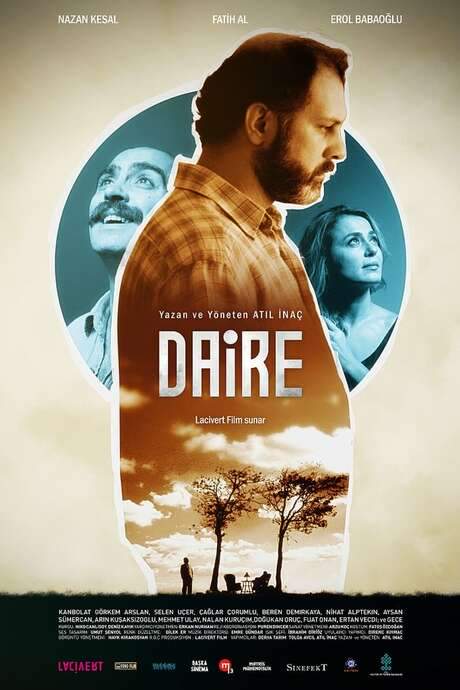
Circle (2014) movie poster

Timeline

Circle (2014) Timeline Explained – Every Event in Order

Release, runtime and language
2014 · 108 mins · Turkish
Loading streaming availability…
Directed by
Atıl İnaç
Starring
Nalan Kuruçim, Selen Uçer, Çağlar Çorumlu, Kanbolat Görkem Arslan, Fuat Onan, Fatih Al

Caught between an unexpected romance and a rapidly changing world, an ordinary man finds himself navigating a disturbing reality. Beneath a veneer of progress lies a clandestine system of control and a subtle decay of traditional values. As social safety nets erode and a disturbing new order emerges, he must confront a harsh truth about the direction society is taking, and his place within it.

On this page (5)
  1. 1 Where to watch
  2. 2 Events in order (13)
  3. 3 Timeline questions answered
  4. 4 Movie threads
  5. 5 Every angle
Loading streaming availability…

13 events in order · contains spoilers

Circle Timeline: Events in Chronological Order

Every key event of Circle (2014) in order, scene by scene, with when and where it takes place. Use it to untangle flashbacks, time jumps and parallel storylines, to refresh your memory before the sequel or to find the exact scene you are thinking of.

  1. Awakening in the Dark Room

    Fifty people awaken in a darkened room arranged on two concentric circles around a black dome. Any attempt to move or touch others triggers alarms and a deadly beam that kills those who break formation. A calm man tries to soothe the panic, but the beam kills him mid sentence, setting the tone for the room's deadly game.

    When
    Opening moment
    Where
    Dark chamber
  2. The Rules Arrive: Voting via Gestures

    As fear grows, the room reveals a brutal voting mechanism: participants can vote for who dies using hand gestures, while arrows on the floor show each person's own vote but hide the others'. Every two minutes another person dies, forcing them to weigh loyalty, bias, and strategy under pressure. The group tries to boycott the process, but the executions continue regardless of their attempts.

    When
    Minutes after start
    Where
    Dark chamber
  3. Early Stalling and Alien Rumors

    A college student suggests stalling by agreeing in advance to eliminate the elderly in upcoming rounds, hoping for a more humane selection. Eric recalls his own abduction story, including fleeing Los Angeles and waking in a red room with others, hinting at aliens behind the ordeal. An older man beside him claims he has seen aliens too, but the others dismiss him and he is killed.

    When
    Early phase
    Where
    Dark chamber
  4. Targeting the Elderly

    The student targets a 52-year-old cancer survivor, provoking objections that she is not elderly enough to justify removal. The vote proceeds and the woman is killed, illustrating how prejudice and fear are shaping who dies. The room's veneer of impartiality collapses under personal agendas.

    When
    Early phase
    Where
    Dark chamber
  5. Personal Histories Surface

    People begin recognizing others they thought they knew, with a man identifying the woman beside him as his wife and another admitting an affair with the doctor. A tattooed man is eliminated after he confesses to a history of domestic violence, showing how past sins are used against participants. These revelations deepen paranoia as the game reveals intimate connections among captives.

    When
    Mid-confinement
    Where
    Dark chamber
  6. Accusations of Racism and the Cop's Rant

    After several minority deaths, an African-American man argues that the process has become racist. The debate rages on, but when a cop among them launches a racist tirade, he is selected next, exposing the brutal arbitrariness of the mechanism. The clash underscores how identities used to separate people become the reasons they die.

    When
    Mid-to-late
    Where
    Dark chamber
  7. Voting Mechanics Tested: The Non-Self Vote

    They experiment with the voting rules, discovering that self-votes are forbidden and that they can try to give one vote to every person. A man secretly receives a second vote for a pregnant woman, triggering a tie in the runoff, and Eric votes for that man; the result is a death, showing how even small tactics can alter outcomes. The death emphasizes how fragile fairness remains inside the game.

    When
    During voting trials
    Where
    Dark chamber
  8. Self-Sacrifices and Theological Tactics

    To buy time for consideration, several captives take actions that sidestep the rules. An atheist taunts the theists who praise the volunteers' faith, and though he is briefly spared, he is killed after mocking a girl about her boss paying for her breast enlargement. The sequence demonstrates how personal attacks become lethal tools in the game.

    When
    Late phase
    Where
    Dark chamber
  9. The Homophobic Lawyer and the Lesbian Target

    A homophobic lawyer targets a lesbian, triggering his own removal as the vote lands on him. The death underscores how prejudice makes someone a target, and how the system punishes bigotry in unpredictable ways.

    When
    Late phase
    Where
    Dark chamber
  10. The Schism: Two Factions Form

    The group splits into two factions: Eric's bloc, led by a Marine and a one-armed man, argues for sacrifice to protect a pregnant woman and a little girl; the other bloc, led by a bearded man and a banker, wants to eliminate perceived threats immediately and denies special protections. The tension escalates when a Spanish translator is eliminated, and a tie arises between a Hispanic immigrant and the little girl, prompting the bearded man to sacrifice himself to preserve his side.

    When
    Late phase
    Where
    Dark chamber
  11. The Husband, the Lie, and Voting Pressure

    The husband among the captives is forced to vote with Eric's faction after the others threaten to eliminate his wife. During interrogation, the couple admit they concocted their relationship to gain favor, and the husband is eliminated as a result. The manipulation reveals how deception fuels the death game.

    When
    Late phase
    Where
    Dark chamber
  12. The Final Faction War and Aftermath

    Eric's faction sustains heavy losses but manages to wipe out the opposing group, leaving only Eric, the pregnant woman, the little girl, and a silent man who has never voted. The silent man is eliminated, tightening the noose around the remaining players. The survivors confront the grim realization that the game will demand a final, tragic sacrifice.

    When
    Final stretch
    Where
    Dark room
  13. Endgame, Twist, and Los Angeles Awakening

    In the endgame, Eric and the girl agree to sacrifice themselves, but when the girl dies by suicide, Eric makes a last-second vote to kill the pregnant woman instead. He soon learns that the unborn child counts as a person, so he votes to kill the child. He wakes up in Los Angeles, joining a community of children and pregnant women watching a fleet of alien ships hover over the city, suggesting humanity has been studied for a cosmic experiment.

    When
    Conclusion
    Where
    Los Angeles

Last updated: October 09, 2025 at 16:05

Was this helpful?

Timeline questions answered

Circle Timeline Explained: Your Questions Answered

When does it happen, and why in that order? The questions people ask about the chronology of Circle (2014): time jumps, flashbacks, cause and effect between scenes and the correct order of events, each answered with spoilers.

Q1

Why does Eric vote to kill the pregnant woman at the end?

Eric votes to kill the pregnant woman because he and the little girl had agreed to sacrifice themselves together. When the girl kills herself instead, Eric changes his vote at the last second to condemn the pregnant woman. He then realizes the unborn child counts as a second person, so he votes to kill the child as well. This ensures he becomes the sole survivor, fulfilling what he believes is the aliens' experiment goal of studying who values others over themselves.

Foreshadowing: Earlier, Eric theorizes that the aliens are studying humanity's deepest values and priorities.

  • eric
  • pregnant
  • unborn child
  • sacrifice
  • experiment woman
  • final vote
Q2

How does the voting mechanism work in Circle?

Every two minutes, participants must vote for who they want to die using hand gestures. The arrows on the floor show each person their own vote but hide everyone else's. The person with the most votes is killed by the deadly beam. Key rules include: participants cannot vote for themselves, each person must cast exactly one vote per round, and ties result in a random death. Boycotting the process doesn't stop the executions, someone still dies when time runs out.

  • voting
  • rules
  • death
  • beam
  • gestures
  • tie
Q3

Why does the group decide to eliminate the elderly first?

A college student proposes sacrificing the elderly as a strategic stalling tactic, arguing older people have already lived their lives while younger people have more potential. This plan gains traction because it provides a seemingly logical framework for the brutal decisions ahead, though it quickly reveals how fear and prejudice shape the voting. The first targeted victim is a 52-year-old cancer survivor, demonstrating how the group rationalizes eliminating those they deem less valuable.

  • elderly
  • college student
  • sacrifice
  • strategy
  • age
Q4

What do the aliens want from the humans in Circle?

The aliens appear to be conducting a psychological experiment to study how humans make moral decisions under extreme pressure. Eric theorizes this during the game when he notes the aliens are studying humanity's values and priorities. The final scene confirms this: Eric wakes up in Los Angeles among survivors (children and pregnant women) watching alien ships hover over the city, suggesting the aliens wanted to observe which humans would prioritize the most vulnerable.

Foreshadowing: Eric's mid-film theory about the aliens studying humanity's values.

  • aliens
  • experiment
  • study
  • humanity
  • values
  • observation
Q5

What happens to Eric at the end of Circle?

After Eric votes to kill both the pregnant woman and her unborn child, he suddenly wakes up back in Los Angeles. He joins a group of people, primarily children and pregnant women, who are watching a fleet of alien ships hovering over the city. This reveals the entire dark room experience was an alien abduction and experiment, with the survivors being returned to witness the aliens' arrival on Earth.

Foreshadowing: Eric earlier recalls being lifted into the air in Los Angeles before waking in the red room.

  • eric
  • los angeles
  • aliens
  • ships
  • wakes up
  • ending
Q6

Why does the bearded man sacrifice himself for the little girl?

When a tie develops between the little girl and a Hispanic immigrant, the bearded man steps out of formation to sacrifice himself. He does this to preserve his faction's philosophy that no one deserves special treatment regardless of vulnerability. His sacrifice ensures the girl lives while demonstrating his commitment to equality, though it also highlights the arbitrary nature of who survives.

Foreshadowing: Earlier debates about whether pregnant women and children deserve special protection.

  • bearded man
  • little girl
  • sacrifice
  • tie
  • Hispanic immigrant
Q7

Why can't participants vote for themselves in Circle?

The voting rules explicitly forbid self-votes, which forces participants to choose someone else to die each round. This rule prevents people from voting for themselves to trigger a self-inflicted death that might end the cycle, and it ensures the group must actively participate in selecting victims rather than simply abstaining. When time runs out without a majority, the system randomly selects someone, making boycotting futile.

  • self-vote
  • forbidden
  • rules
  • boycott
  • random death
Q8

Why does the unborn child count as a person in Circle?

When Eric votes to kill the pregnant woman, he suddenly realizes the unborn child inside her also counts as a separate person in the alien counting system. This is why he then casts an additional vote to kill the child. The revelation suggests the aliens consider any potential life as equal to a fully developed human, making the pregnant woman's survival impossible since two votes would be needed to eliminate both her and the fetus.

  • unborn child
  • fetus
  • pregnant woman
  • vote
  • person
  • two votes
Q9

How do the two factions in Circle differ?

Eric's faction, led by the Marine and a one-armed man, believes in sacrificing themselves to protect the most vulnerable, specifically the pregnant woman and little girl. The opposing faction, led by a bearded man and a banker, argues everyone is equal and no one deserves special protection, preferring to eliminate perceived threats immediately. This ideological split mirrors the broader ethical debate about utilitarian survival versus moral equality.

  • factions
  • eric
  • bearded man
  • pregnant woman
  • little girl
  • sacrifice
  • equality
Q10

Why does the silent man never vote in Circle?

The silent man never casts a vote throughout the entire game, remaining completely passive. When reduced to the final four (Eric, the pregnant woman, the girl, and him), he's eliminated. Eric theorizes that the aliens may be studying those who refuse to participate in moral decisions, suggesting the silent man's non-voting was itself a strategic or philosophical stance that ultimately failed to protect him.

  • silent man
  • no vote
  • passive
  • final four
  • eliminated
Q11

Why does the homophobic lawyer die in Circle?

The lawyer explicitly targets a lesbian participant because of his homophobia, pushing for her elimination. The group turns the vote against him instead, killing him for his prejudice. This moment illustrates how the game punishes bigotry unpredictably, those who use the system to attack vulnerable groups often become targets themselves.

  • homophobic lawyer
  • lesbian
  • dies
  • prejudice
  • vote
Q12

What does Eric remember about his abduction?

Eric recalls fleeing Los Angeles during what appears to be an alien abduction event, remembering being lifted into the air before waking up in a red room with other humans. This memory establishes that the participants were taken from their normal lives and brought to the dark room as part of the alien experiment. His recollection is one of the few concrete details about how the abduction occurred.

Foreshadowing: The ending returns Eric to Los Angeles with alien ships overhead.

  • eric
  • abduction
  • los angeles
  • aliens
  • red room
  • memory

Movie threads

More Movies Like Circle, by Mood & Story

Curated lists built around what makes Circle tick: the same mood, the same kind of story or the same emotional payoff. Each list explains why these movies belong together.

Brutal Social Experiment Movies like Circle

Stories where characters are pushed to their limits in a controlled, high-stakes game. If you liked the high-stakes moral dilemmas and claustrophobic setting of Circle, explore these other movies about brutal social experiments. These films often feature survival ethics, a fast pace, and a tense, bleak tone, examining how people behave when pushed to the absolute edge.

  • claustrophobic
  • anxious
  • suspenseful
  • morally charged
  • desperate
  • bleak
  • Tone: tense, bleak, oppressive
  • Pacing: fast, relentless
Why these movies?

The story pattern: The narrative pattern typically involves a group of people placed in an artificial, high-pressure situation with a strict set of rules, often involving life and death. The story unfolds as alliances form and shatter, prejudices surface, and characters are systematically eliminated, leading to a commentary on human nature.

Why they belong together: Movies in this thread share a core premise of a manipulative experiment, a claustrophobic and anxious mood, fast pacing driven by a ticking clock, and a heavy emotional weight derived from forcing characters to confront their own morality and survival instincts.

High-Pressure Survival Movies similar to Circle

Claustrophobic tales of survival where every decision carries immense weight. For viewers who enjoyed the relentless tension and survival-centric plot of Circle, this list features movies with a similar pressure-cooker vibe. These stories emphasize fast pacing, high emotional stakes, and a sense of desperate claustrophobia as characters fight for their lives.

  • suspenseful
  • anxious
  • claustrophobic
  • desperate
  • nerve-wracking
  • bleak
  • Tone: tense, desperate, bleak
  • Pacing: fast, nerve-wracking
Why these movies?

The story pattern: The narrative is linear and straightforward, driven by a constant, immediate threat. There is little room for character backstory or subplots; the journey is purely about reacting to the present danger. The structure often involves a cyclical or countdown element that heightens the urgency and narrows the options for escape.

Why they belong together: These films are grouped by their shared experience of near-constant suspense and a fast-paced, unforgiving narrative. They create a visceral feeling of being trapped and force the audience to share the characters' anxiety and desperate fight for survival, with little to no comic relief.

Every angle

Circle (2014) Explained: Plot, Timeline & Characters

Everything about Circle in one place: what happens in the plot summary, the timeline in chronological order, the characters and meaning and a spoiler-free summary. What's After the Movie adds the cast, box office and post-credit scenes.

Coming soon on iOS and Android

The Plot Explained Movie Summary App

Plot summaries, endings explained and timelines on your phone. Catch up on any movie in minutes, save your favorites and never miss a twist again.

Be the first to know when we launch. Your email stays private, always.

Learn more about the app