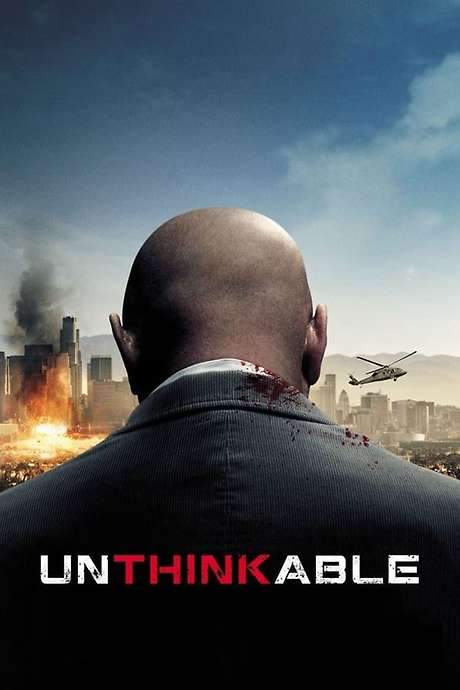
Fifty people awaken in a dim, unfamiliar space, arranged in two neat concentric circles around a stark black dome. The moment anyone steps off their assigned platform or reaches toward the person beside them, a sharp alarm pierces the air. When someone ignores the warning and moves, a fatal beam from the dome claims them, and their body is swiftly removed from the room. As panic ripples through the group, one man tries to soothe everyone with calm words, but he is cut off by the device, killed in mid-sentence. The room’s deadly rhythm soon becomes clear: every two minutes, another life ends, a relentless schedule that nobody can dodge.
Amid the mounting fear, the captives uncover a chilling mechanism: they can vote for who dies using hand gestures, and arrows etched on the floor reveal each person’s vote to them alone. They discover they cannot vote for themselves, and any attempt to disrupt or boycott the process only deepens the sense of helpless inevitability. An attempt at sabotage gives way to a grim, random selection when time runs out for that round, and someone else is chosen to die. The group struggles to understand the purpose of this brutal system as the body count climbs.
To buy themselves precious time, they settle on a controversial plan proposed by a college student: sacrifice the elderly in forthcoming rounds. The discussion broadens into questions about who they are, how they arrived here, who has abducted them, and why. A young man named Eric recollects a failed escape from Los Angeles and a strange memory of being lifted into the air, later waking in a red room with other humans. An old man in line claims to have seen and heard aliens, but the rest dismiss him. The tension between belief and skepticism sharpens as the group weighs who should live or die based on age, experience, and perceived vulnerability.
As the rounds continue, intense moral debates erupt. The college student presses hard on a ruthless prioritization of life, targeting a 52-year-old cancer survivor despite protests that age does not determine worth. The room fills with whispers about knowing the others: a man believes the woman next to him is his wife, another recognizes the doctor with whom he once had an affair, and a tattooed man is eliminated after admitting to a cop’s accusation of domestic violence. Minority groups face swift judgment, and an African-American man protests that the process has turned racist; the argument escalates until the cop’s racist tirade lands him next in line for the beam.
The captives experiment with voting tactics, discovering they cannot cast a vote for themselves and that they must distribute one vote to each person. A second vote arises when one participant gives a second vote to a pregnant woman, triggering a dramatic chain reaction: Eric casts a vote for that man, producing a tie and his death in a later runoff. Some captives sacrifice themselves by stepping out of formation to buy time for others, while an atheist challenges theists who celebrate the volunteers’ faith. The atheist is briefly spared, but a flippant insult about a woman’s cosmetic procedures seals his fate. A homophobic lawyer targets a lesbian, and his own death follows swiftly. The group begins to grasp that, in the end, the winner will be decided by who refrains from voting at the crucial moment.
A visible schism forms within the captive community. One faction, led by Eric (a Marine) and a one-armed man, argues for sacrificing themselves to protect the pregnant woman and the little girl. The other faction, led by a bearded man and a banker, argues for immediate elimination of the perceived threats to their survival, maintaining that everyone is equal and no special privileges should be granted. After a Spanish translator and a Hispanic immigrant are eliminated, the little girl’s life depends on a tied vote that ends with the bearded man sacrificing himself. The husband claims to be married to the woman under threat, but the group reveals the marriage was staged to gain sympathy, resulting in the husband’s elimination.
Eric’s faction suffers heavy losses as a six-way tie thins the field, and eventually they eliminate the other faction, leaving just Eric, the pregnant woman, the little girl, and a silent man who has never cast a vote. Eric begins to theorize that the aliens are using the process to study humanity’s deepest values and priorities. When the silent man is eliminated, the remaining trio must confront an impossible choice: to sacrifice themselves in unison or to alter the course of the game in a final, devastating way.
In a climactic turn, the remaining pair—the pregnant woman and the girl—either die by their own hands or are forced to die by the others’ decisions. The girl dies by suicide, and Eric makes a last-second decision to cast a vote that condemns the pregnant woman. He soon discovers that the unborn child within her counts as a person too, and with that realization he votes to kill the child. The action abruptly shifts from the enclosed room to a waking scene: Eric finds himself back in Los Angeles, joining a group of people—primarily children and pregnant women—watching a fleet of alien ships looming over the city. The experience leaves him with a stark new awareness of humanity’s values and the unsettling possibility that the aliens may be observing humanity through such cruel tests. The film closes on this unsettling transition, leaving the audience to ponder what the aliens are truly seeking to learn and what it means for the lives of those left behind in the wake of such a test.