

Plot Explained Spoilers guaranteed!
Plot Explained

Browse by genre

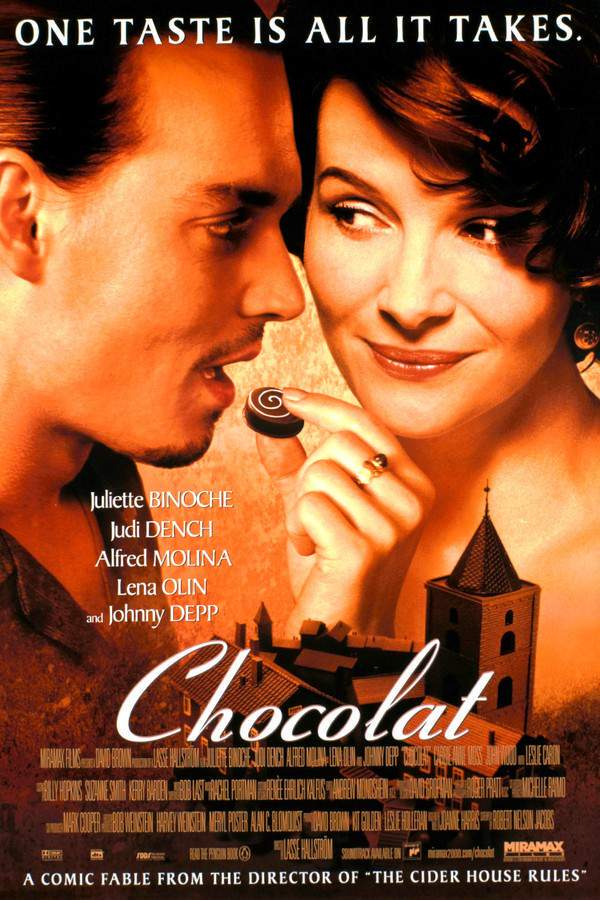
Chocolat (1989) movie poster

Characters & Themes

Chocolat (1989) Characters, Setting & Themes Explained

Release, runtime and language
1989 · 105 min · English
JustWatch #31,448 1
Directed by
Claire Denis
Starring
Kenneth Cranham, Isaach De Bankolé, François Cluzet, Emmanuelle Chaulet, Giulia Boschi, Jacques Denis

In a small French village in 1959, the arrival of Vianne Roch and her daughter brings a surprising change as winter approaches. Vianne opens a chocolate shop, directly challenging the strict traditions of the local priest and the conservative villagers. Her tempting treats awaken long-repressed desires and passions, stirring up secrets and creating a sweet rebellion against the somber mood of Lent and the community’s established order.

On this page (8)
  1. 1 Where to watch
  2. 2 Characters explained (6)
  3. 3 Where & when it takes place
  4. 4 Themes & meaning (3)
  5. 5 Character & meaning questions
  6. 6 Movie threads
  7. 7 Movies like Chocolat
  8. 8 Every angle

Where to watch

Where to Watch Chocolat (1989)

Where can you watch Chocolat? Stream, rent or buy it in the US: current JustWatch availability with up-to-date prices.

Streaming availability powered by JustWatch

6 main characters · contains spoilers

Chocolat Characters Explained: Who Is Who

The main characters of Chocolat (1989), heroes and villains: what drives them, how they change over the course of the story and what each of them reveals about the film's bigger ideas.

  • France (adult)

    The central figure seen through a child's memory, France is a woman who bears witness to the colonial world she inhabits. Her experiences blend nostalgia and growing awareness of the power dynamics surrounding Protée and Aimée. The character embodies memory, introspection, and a dawning understanding of how boundaries are formed and enforced by class, race, and gender.

    • 🎭 Protagonist
    • 🧠 Memory
    • 🌗 Perspective
  • Protée

    played by Isaach De Bankolé

    The Dalens' houseboy, Protée navigates the delicate balance of service and desire within a colonial household. His presence triggers conflicts that test loyalty, power, and restraint, and his confrontation with Luc Segalen marks a turning point in the household's dynamics. He is portrayed as strong and perceptive, aware of the social lines that define him.

    • 🧍‍♂️ Servant
    • 🔥 Tension
    • ⚖️ Power dynamics
  • William J. Park (Kenneth Cranham)

    An African American who has moved to Africa, Park is traveling with his son toward Limbe and gives France a ride. He serves as an outsider's frame for the film's events, observing the colonial setting from a distance and prompting reflections on boundaries and belonging.

    • 🚶‍♂️ Outsider
    • 🚗 Traveler
    • 🌍 Witness
  • Luc Segalen

    A Western drifter who stays with the Dalens after a small plane crash, Segalen embodies the disruptive gaze of the outsider. He recognizes Aimée's attraction to Protée in the presence of other black servants, catalyzing the house's tensions. His presence exposes the fragility of the household's control.

    • 🧭 Drifter
    • 🗣️ Outsider
    • 💬 Catalyst
  • Aimée

    France's mother, married into the colonial household, whose attraction to Protée destabilizes the family boundary between master and servant. Her secret advances and the ensuing conflict reveal the personal costs of desire within a rigid social order. Aimée's actions drive part of the film's central tension.

    • 💃 Woman
    • 🔥 Desire
    • ⚖️ Boundaries
  • France's Father

    The colonial administrator and father figure whose explanation of the horizon frames the film's central metaphor. He embodies the rationalized authority that maintains social divisions, even as personal dramas unfold around his household. His discourse about lines that exist but cannot be crossed anchors the narrative's critique of empire.

    • 👨‍⚖️ Authority
    • 🧭 Horizon
    • ⚖️ Boundary

Last updated: February 18, 2026 at 23:05

Was this helpful?

Setting

Where and When Does Chocolat Take Place?

The setting of Chocolat (1989): the year and time period, the places and locations, and how they shape the characters, the mood and the tension of the story.

Time period

1957

The narrative threads through a pivotal year in the late colonial era: Mindif in 1957, when Cameroon was part of the French Empire, and a subsequent journey toward Douala. The flashbacks to the young France juxtapose childhood innocence with the rigid social hierarchies of that era. The film uses memory to show how the era's rules govern present tensions. Time in Chocolat thus oscillates between a remembered childhood and an adult's encounter with a coerced social horizon.

Location

Mindif, Douala, Limbe, Cameroon

The film moves between Mindif, a northern town in the former French Cameroon, and the coastal cities of Douala and Limbe. Mindif's rural setting frames the childhood memories of France, while Douala and Limbe reveal the urban, port-side face of colonial power. The landscape—dust, roads, and the looming presence of colonial authority—serves as the backdrop for intimate power struggles inside the Dalens household. Through these spaces, the movie maps the social boundaries that separate rich from poor, master from servant, and white from black.

  • 📍 Mindif
  • 🌍 Cameroon
  • 🌊 Douala
  • 🌊 Limbe

Last updated: February 18, 2026 at 23:05

Was this helpful?

3 major themes

Chocolat Meaning: Themes & Message Explained

What is Chocolat (1989) really about? The emotional, social and philosophical themes the film keeps returning to, its symbolism and the message beneath the surface.

  • Power, Colonialism

    The film dissects how colonial authority shapes daily life in Cameroon and within a settler family. A French administrator and his household enact an order that relies on labor, obedience, and racial separation. The tension between master and servant exposes the fragility of empire when desire and distrust intrude on formal roles. The horizon motif later underscores the stubborn persistence of these lines.

  • Sexuality, Taboo

    Within the Dalens household, attraction crosses racial and gender boundaries, unsettling the privilege hierarchy. Aimée's attraction to Protée surfaces in secret, challenging normative behavior and the frame of respectable colonial life. Protée's awareness of these expectations highlights how power and desire traverse boundaries. The film uses these tensions to reveal the costs of crossing social borders.

  • Boundaries, Horizon

    The horizon is a literal and metaphorical boundary: a line that exists but cannot be crossed. France's father explains it as a symbol of the divisions that keep colonizer, colonised, rich, and poor apart. Characters confront, resist, or reinforce these limits as they move toward Douala and Limbe. The motif recurs, reminding viewers that distance may alter appearance but not the underlying separation.

Last updated: February 18, 2026 at 23:05

Was this helpful?

Character & theme questions

Chocolat Characters & Meaning: Your Questions Answered

The questions people ask about Chocolat (1989): who the characters really are, their relationships, what the symbols mean, where it takes place and what the movie is really about. Each answer contains spoilers.

Q1

Where is the movie set?

The film is set in Cameroon, primarily in the northern town of Mindif, with scenes also taking place in the coastal cities of Douala and Limbe. Mindif serves as a rural, dusty backdrop for the colonial household, while Douala and Limbe reveal the urban, port-side face of colonial power.

  • cameroon
  • mindif
  • douala
  • limbe
  • setting
  • colonial
Q2

When does the story take place?

The narrative unfolds in 1957, during the final years of French colonial rule in Cameroon. The story uses flashbacks to the main character's childhood, contrasting the innocent perspective of youth with the rigid social hierarchies of the colonial era.

  • 1957
  • colonial era
  • cameroon
  • time period
  • 1950s
Q3

How does the movie portray colonial authority?

The film depicts colonial authority as a system that shapes everyday life through labor, obedience, and racial separation. The French administrator's household enforces an ordered world where power flows from colonizer to colonized, but this authority becomes fragile when desire and distrust disrupt the formal roles.

  • colonialism
  • power
  • authority
  • colonial household
  • french empire
Q4

Who is the main character France?

France is the central figure seen through a child's memories of the colonial household. She bears witness to the world around her, gradually developing an awareness of the power dynamics between Protée, Aimée, and the household. Her perspective embodies both nostalgia and a growing understanding of how boundaries of class, race, and gender are formed and enforced.

  • france
  • protagonist
  • main character
  • child perspective
Q5

Who is Protée and what is his role?

Protée is the Dalens' houseboy who navigates the delicate balance between service and desire within the colonial household. He is portrayed as strong and perceptive, acutely aware of the social lines that define his position. His presence triggers conflicts that test loyalty, power, and restraint, making him a central figure in the story's tensions.

  • protée
  • houseboy
  • servant
  • colonial servant
  • desire
Q6

What does the horizon symbolize in Chocolat?

The horizon represents a literal and metaphorical boundary, a line that exists but cannot be crossed. France's father explains it as a symbol of the divisions that keep colonizer and colonised, rich and poor, apart. Characters confront, resist, or reinforce these limits throughout the film, and the motif recurs to remind viewers that distance may alter appearances but not the underlying social separation.

  • horizon
  • boundaries
  • symbolism
  • metaphor
  • colonial divisions
Q7

What role does forbidden attraction play in the story?

Within the Dalens household, attraction crosses racial and gender boundaries, unsettling the privilege hierarchy. Aimée's attraction to Protée surfaces in secret, challenging normative behavior and the expectations of respectable colonial life. These tensions reveal the personal costs of crossing social borders in a world built on rigid separation.

  • desire
  • attraction
  • taboo
  • sexuality
  • racial boundaries
Q8

Who is Aimée and what drives her actions?

Aimée is France's mother, married into the colonial household, whose attraction to Protée destabilizes the family boundary between master and servant. Her secret advances create conflict that reveals the personal costs of desire within a rigid social order. Her actions drive much of the film's central tension.

  • aimée
  • mother
  • desire
  • colonial wife
  • transgression
Q9

What is Luc Segalen's function in the story?

Luc Segalen is a Western drifter who arrives at the Dalens' household after a small plane crash. He embodies the disruptive gaze of the outsider, recognizing Aimée's attraction to Protée in the presence of other black servants. His presence exposes the fragility of the household's control and catalyzes the tensions that follow.

  • luc segalen
  • outsider
  • drifter
  • disruption
Q10

Who is William J. Park and what is his significance?

William J. Park is an African American traveler who moves to Africa with his son, journeying toward Limbe. He gives France a ride and serves as an outsider's frame for the film's events, observing the colonial setting from a distance and prompting reflections on boundaries and belonging from a perspective outside the colonial hierarchy.

  • william park
  • outsider
  • american
  • journey
  • limbe
Q11

How does Chocolat depict racial boundaries?

The film maps the social boundaries that separate rich from poor, master from servant, and white from black within the colonial setting. These lines are maintained through the father's rationalized authority, yet the film shows how personal dramas constantly test and reveal the fragility of these divisions.

  • racial hierarchy
  • social boundaries
  • colonialism
  • separation
  • racism
Q12

What is the emotional tone of the film?

The film's tone is predominantly melancholic and tense, dealing directly with racism, power dynamics, and rejection. The ending is bittersweet, Protée is punished for a transgression he didn't initiate, symbolizing the unbreachable nature of the colonial line. This leaves a sense of loss and injustice, tinged with the young protagonist's dawning awareness of the world's divisions.

  • ending
  • bittersweet
  • melancholy
  • colonial injustice
  • emotional tone

Movie threads

More Movies Like Chocolat, by Mood & Story

Curated lists built around what makes Chocolat tick: the same mood, the same kind of story or the same emotional payoff. Each list explains why these movies belong together.

Movies about forbidden desire like Chocolat

Stories where unspoken attraction simmers under the surface of oppressive societies. If you were captivated by the tense, unspoken attraction in Chocolat, explore more movies like it. These dramas feature similar stories of repressed longing and bittersweet romance set within strict social hierarchies.

  • tense
  • melancholic
  • uncomfortable
  • atmospheric
  • repressed
  • longing
  • Tone: melancholic, tense, bittersweet
  • Pacing: slow, deliberate
Why these movies?

The story pattern: These narratives typically follow characters drawn together by a powerful but forbidden attraction. The plot revolves around the tension between their personal desires and the societal or cultural norms that forbid them, often leading to a climax of confrontation or loss, and a bittersweet resolution.

Why they belong together: These films are grouped together because they share a core focus on the agony and ecstasy of taboo relationships. They create a similar mood of melancholic tension through slow pacing, heavy emotional weight, and a focus on internal conflict rather than external action.

Movies with a child's perspective like Chocolat

Complex adult dramas filtered through the innocent but perceptive gaze of a child. For viewers who appreciated the unique viewpoint in Chocolat, this thread finds more movies like it. Discover other powerful dramas where a child's innocent observations reveal complex adult conflicts and social injustices.

  • nostalgic
  • reflective
  • uncomfortable
  • atmospheric
  • coming of age
  • innocence lost
  • Tone: nostalgic, reflective, tense
  • Pacing: slow, observational
Why these movies?

The story pattern: The story is told primarily from a child's point of view, often looking back as an adult (a framing device). The plot involves the child witnessing and slowly understanding adult conflicts—such as racial tension, class divides, or marital strife—that they are too young to fully grasp, but which shape their worldview.

Why they belong together: These movies are linked by their distinctive narrative voice. The child's perspective creates a specific atmosphere of nostalgia, discovery, and uncomfortable reflection, making heavy themes more accessible and emotionally resonant through the lens of innocence lost.

If you liked this

Movies Like Chocolat

Similar movies to Chocolat: the same genre, themes or kind of story. Each one comes with its own plot summary, timeline and ending explained.

Browse all movie summaries

Every angle

Chocolat (1989) Explained: Plot, Timeline & Characters

Everything about Chocolat in one place: what happens in the plot summary, the timeline in chronological order, the characters and meaning and a spoiler-free summary. What's After the Movie adds the cast, box office and post-credit scenes.

Coming soon on iOS and Android

The Plot Explained Movie Summary App

Plot summaries, endings explained and timelines on your phone. Catch up on any movie in minutes, save your favorites and never miss a twist again.

Be the first to know when we launch. Your email stays private, always.

Learn more about the app