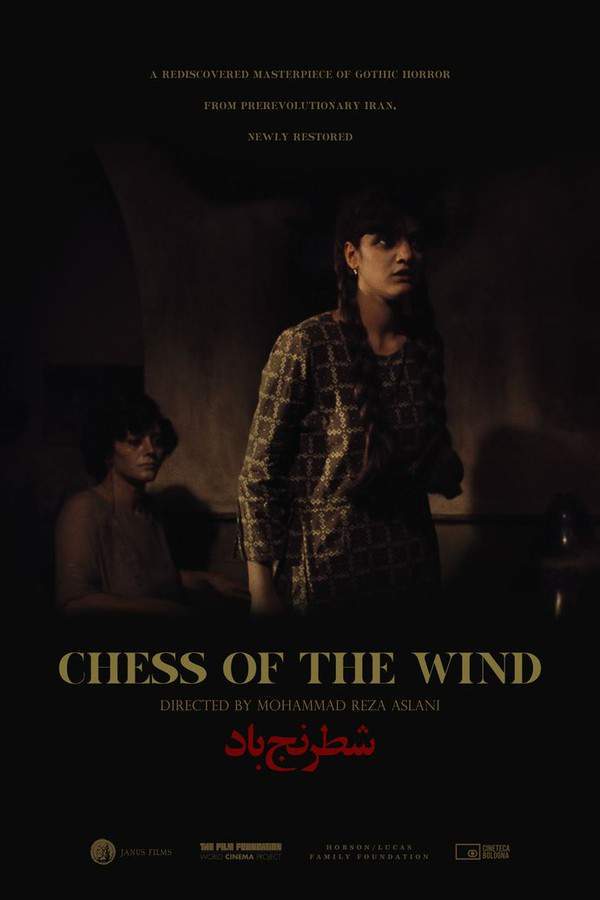
Chess of the Wind (1976)

Chess of the Wind (1976)

Year: 2021

Runtime: 1 h 39 m

Language: Persian

Director: Mohammad Reza Aslani

Echo Score: 84
DramaMysteryThriller

Following the departure of the manor's mysterious mistress, a complex and dangerous struggle for control of her substantial estate begins. Power-hungry relatives and questionable allies engage in a deadly game of chess, maneuvering for advantage and revealing long-held secrets. Allegiances shift as the inheritance sparks bitter rivalries and exposes a tangled web of intrigue.

Warning: spoilers below!

Haven’t seen Chess of the Wind (1976) yet? This summary contains major spoilers. Bookmark the page, watch the movie, and come back for the full breakdown. If you're ready, scroll on and relive the story!

Chess of the Wind (1976) (2021) – Full Plot Summary & Ending Explained

Read the complete plot breakdown of Chess of the Wind (1976) (2021), including all key story events, major twists, and the ending explained in detail. Discover what really happened, and what it all means.

In a stately aristocratic house, the death of Khanom Bozorg leaves her wheelchair-bound daughter, Aghdas, to mourn within the vast halls of the Moshir ad-Dowleh Mansion. She shares the space with her mother’s widower, Hadji Amoo, and his two nephews, Ramezan and Shaban. The arrangement is uneasy from the start: Ramezan is betrothed to Aghdas, but the marriage promises more wealth than affection, and Aghdas quickly becomes wary of her fiancé’s true intentions. The household is completed by a devoted maid, Kanizak, who looks after Aghdas and quietly forms a bond with Shaban. Intercut scenes of washerwomen gossiping weave a social undercurrent, filling in the history of Aghdas and Hadji Amoo with rumors, memories, and whispered judgments.

As the days unfold, both Aghdas and Hadji Amoo grow certain they are entitled to inherit Khanom Bozorg’s house. A shared sense of grievance fuses into a reckless plan: one evening, Aghdas and Kanizak slip into Hadji Amoo’s private room and burn the house deeds, removing his name from the documents. The act sets off a sequence of confrontations between stepfather and stepdaughter, each clash underscoring a deeper hunger for control and survival. Aghdas, emboldened or desperate, hatches a more drastic scheme: she privately signals to Ramezan her intention to kill Hadji Amoo, masking it as something else and letting him believe he remains in the family’s good graces.

The air grows heavier as Hadji Amoo prays in his chamber, and Aghdas is wheeled in by Kanizak. With a silver flail, she strikes Hadji Amoo, and the household descends into a grim sequence of actions—Kanizak and Ramezan drag the fallen man to the cellar and stash his body in a bottomless jar, a macabre plan to dissolve it later with nitric acid at Aghdas’s command. The home shivers with the potential of discovery, yet the immediate threat seems contained, at least for a moment.

Weeks later, two creditors arrive with a police commissar to press Hadji Amoo for a debt. Aghdas insists she has seen nothing of him for days, but the commissar’s sharper memory tells a different tale: he saw Hadji Amoo on the street only recently. Panic flares as Kanizak and Ramezan escort the men down to the cellar. They search the jars for a body and come up empty-handed, and the pair leave as quietly as they came. The tension intensifies: is Hadji Amoo truly dead, or has he found a way to loom over the house from some shadowed corner?

Aghdas’s paranoia deepens. The rumor mill returns in the form of a traveling musical troupe, who claim to have seen Hadji Amoo in public, and her fear snowballs into illness. Kanizak persuades Aghdas to travel briefly away from the mansion to visit a nearby holy site, hoping distance will ease the danger. Yet the quiet outside cannot silence the murmur inside: at night, laughter echoes from the cellar, and Aghdas, driven by a mixture of resolve and dread, fetches an antique pistol and descends to the basement. There, she discovers Hadji Amoo and Kanizak relaxing together in the bath. In a decisive act, she shoots Hadji Amoo, but the shock proves too much for her, and she collapses from a heart attack.

With Hadji Amoo dead and the plan seemingly undone, Kanizak and Shaban plot to live off the inheritance together. It appears they had staged Hadji Amoo’s death to reap the rewards in concert, their partnership a fragile cooperation built on shared ambition. However, the alliance fractures when Kanizak learns that Shaban does not intend to marry her, and the two argue upstairs. Returning to the cellar, Ramezan discovers the tangled bodies and the betrayal of his cousin. Enraged by Shaban’s treachery, he climbs the stairs and shoots him dead, fracturing the would-be family further.

In the closing moments, Kanizak leaves the mansion behind, carrying only a young boy and Aghdas’s elderly nanny. The camera lingers on the city beyond the walls, a quiet, lingering reminder of lives consumed by greed, fear, and the fragile threads that hold a family together. The film ends on a note of haunting consequence, suggesting that the inheritance, rather than securing a future, has already rewritten the fates of everyone involved.
Last updated: December 04, 2025 at 15:33

Was this helpful?

Chess of the Wind (1976) (2021) Plot Questions Answered – Summary FAQ

Explore frequently asked questions about Chess of the Wind (1976) (2021) with spoiler-rich answers covering the full plot summary, major story beats, character motivations, hidden details, and ending meaning. This movie summary FAQ helps explain confusing scenes, plot twists, and narrative decisions in clear, searchable detail.

Q1

Why did Aghdas kill Hadji Amoo?

A.

Aghdas killed Hadji Amoo because she believed she was entitled to inherit her mother's estate. After Khanom Bozorg's death, both Aghdas and Hadji Amoo claimed ownership of the mansion. To secure her claim, Aghdas burned the house deeds with Kanizak's help, removing Hadji Amoo's name from the documents. When this failed to stop his demands, she viewed murder as the only solution to remove him permanently and claim the inheritance.

Earlier confrontations between Aghdas and Hadji Amoo revealed their competing claims to the house, foreshadowing the violent resolution.

aghdashadji amoomurderinheritanceestate
Q2

How did Hadji Amoo survive being placed in the jar?

A.

Hadji Amoo never actually died from Aghdas's initial attack. When Aghdas struck him with the silver flail, he was knocked unconscious but not killed. Kanizak, who was secretly working with him, helped stage his death. She and Ramezan placed his unconscious body in the jar, but Kanizak later freed him and concealed him in the basement, where he lived secretly alongside Kanizak.

The creditors searched the jars and found no body, hinting that Hadji Amoo had been removed from them.

hadji amoojarcellarsurvivalbody
Q3

Why was Kanizak helping Hadji Amoo?

A.

Kanizak was helping Hadji Amoo because they had formed a romantic relationship. When Aghdas discovered them together in the basement bath, it became clear that Kanizak had been secretly collaborating with Hadji Amoo throughout the scheme. This betrayal explains why she helped stage his death and kept his survival hidden from Aghdas.

Kanizak's unusual access to both Aghdas and Hadji Amoo, and her separate bond with Shaban, suggested a more complex allegience.

kanizakhadji amoorelationshipbetrayal
Q4

Why did Ramezan kill Shaban?

A.

Ramezan killed Shaban after discovering that Shaban and Kanizak had betrayed him. When Ramezan returned to the cellar, he found the bodies of Hadji Amoo (whom Aghdas had shot) and Kanizak (who had died from a heart attack or was killed in the chaos). More importantly, he learned that Shaban had been plotting with Kanizak to claim the inheritance together, using Ramezan as a pawn. Enraged by this treachery, Ramezan shot Shaban dead.

Tensions between Ramezan and Shaban had been building as Shaban's separate dealings with Kanizak came to light.

ramezanshabankillingbetrayal
Q5

Why did Aghdas burn the house deeds?

A.

Aghdas burned the house deeds to remove Hadji Amoo's name from the property documents. Both she and her stepfather claimed entitlement to Khanom Bozorg's estate. By burning the deeds, which contained Hadji Amoo's name, Aghdas hoped to destroy the legal proof of his ownership and secure the mansion for herself.

The burning of the deeds marked the first major escalation in the conflict between Aghdas and Hadji Amoo.

deedshousepropertyinheritanceaggression
Q6

What was Kanizak's plan with Shaban?

A.

Kanizak and Shaban planned to claim the inheritance together after eliminating the other claimants. They had secretly collaborated throughout the scheme, with Kanizak helping stage Hadji Amoo's false death. Their plan was to live off the inheritance as a couple once the others were out of the way. However, when Kanizak learned Shaban did not intend to marry her, their alliance fractured.

Kanizak's separate relationships with both Hadji Amoo and Shaban hinted at her duplicitous nature.

kanizakshabaninheritanceplanalliance
Q7

Why did Aghdas shoot Hadji Amoo a second time?

A.

Aghdas shot Hadji Amoo a second time after discovering him alive in the basement with Kanizak. Her paranoia had been fueled by rumors that she had seen him in public, and when she descended to the cellar expecting to find evidence of his murder, she instead found them together in the bath. In that moment of shock and rage, she shot him, though the exertion triggered a fatal heart attack that killed her as well.

The traveling musical troupe's claim that they saw Hadji Amoo in public planted the seed of doubt in Aghdas's mind.

aghdasshootingheart attackbasementdiscovery
Q8

Why couldn't the creditors find Hadji Amoo's body in the cellar?

A.

The creditors couldn't find the body because Kanizak had already removed Hadji Amoo from the jar. After staging his death, Kanizak freed him and concealed him elsewhere in the basement. When the creditors searched the jars with Kanizak and Ramezan present, the body was no longer there, allowing the conspirators to maintain the illusion that Hadji Amoo had vanished.

This mysterious disappearance heightened Aghdas's paranoia about whether Hadji Amoo was truly dead.

creditorsbodycellarjarmissing
Q9

Why did Kanizak help Aghdas kill Hadji Amoo if she was working with him?

A.

Kanizak's loyalty was entirely self-serving. She initially helped Aghdas murder Hadji Amoo because she was also motivated by greed for the inheritance. However, she secretly saved Hadji Amoo and continued working with him behind the scenes, creating a backup plan with Shaban. This double-dealing allowed Kanizak to hedge her bets and potentially profit regardless of which side won.

Kanizak's willingness to participate in the murder while simultaneously saving the victim revealed her duplicitous nature.

kanizakbetrayaldouble crossloyalty
Q10

What happened to Kanizak at the end?

A.

At the end of the film, Kanizak survived the violence in the mansion but left with nothing. After Ramezan killed Shaban and Aghdas died from a heart attack, Kanizak departed the mansion carrying only a young boy and Aghdas's elderly nanny. She escaped into the city, leaving the estate empty, a hollow victory for all who schemed for the inheritance.

The final shot of the city beyond the mansion walls emphasizes how the pursuit of wealth led to destruction for everyone involved.

kanizakendingdeparturemansionescape
Q11

Why was Aghdas in a wheelchair?

A.

Aghdas was wheelchair-bound, which made her physically vulnerable and dependent on others within the mansion. This disability increased her isolation and vulnerability, though it also gave her motivation to secure the inheritance, she needed wealth to ensure her future care. Her wheelchair-bound state also made her reliance on Kanizak for physical assistance crucial to the plot.

Aghdas's physical dependence on Kanizak made the betrayal more devastating when Kanizak's true allegiances were revealed.

aghdaswheelchairdisabilitydependence
Q12

What was the purpose of the washerwomen scenes?

A.

The washerwomen served as a narrative device to provide background context and social commentary. Through their gossip, viewers learned details about Aghdas and Hadji Amoo's history, the family's secrets, and the social judgments surrounding the household. These intercut scenes added depth to the film's world while creating an atmospheric undercurrent of rumor and speculation.

The gossip provided hints about the family's troubled dynamics before the main conflicts unfolded.

washerwomengossipsocialrumorsatmosphere
Mobile App Preview

Coming soon on iOS and Android

The Plot Explained Mobile App

From blockbusters to hidden gems - dive into movie stories anytime, anywhere. Save your favorites, discover plots faster, and never miss a twist again.

Sign up to be the first to know when we launch. Your email stays private, always.

Explore Movie Threads

Discover curated groups of movies connected by mood, themes, and story style. Browse collections built around emotion, atmosphere, and narrative focus to easily find films that match what you feel like watching right now.

Gothic family power struggles like in Chess of the Wind (1976)

Dark tales of inheritance and betrayal within a decaying, oppressive manor.If you liked the dark inheritance drama and claustrophobic atmosphere of Chess of the Wind, explore more movies like it. This thread gathers similar gothic thrillers and dramas centered on family betrayal, greed, and power dynamics within a decaying manor setting.

gothicclaustrophobicdeceptiveoppressivesuspensefultreacherousdecaying

Narrative Summary

The narrative pattern typically involves the death or departure of a patriarch or matriarch, leaving behind a valuable estate. This triggers a ruthless competition among heirs and hangers-on, where old secrets are unearthed, loyalties are tested, and characters are often destroyed by their own avarice in a confined, atmospheric location.

Why These Movies?

Movies are grouped here for their shared focus on familial conflict in a gothic setting, a tone of dark cynicism, and a steady pacing that builds suspense through psychological tension rather than action. They explore universal themes of corruption, class, and the destructive nature of greed.

Claustrophobic psychological thrillers like Chess of the Wind (1976)

Stories where confined spaces and psychological pressure lead to bleak outcomes.For viewers who enjoyed the suspenseful and paranoid vibe of Chess of the Wind, this collection highlights similar movies with a claustrophobic feel. Discover psychological thrillers focused on manipulation, deceptive characters, and a steady build-up of tension towards a bleak conclusion.

suspensefulclaustrophobicparanoiddeceptiveoppressivepsychologicaltreacheroustense

Narrative Summary

The narrative follows a group of characters whose conflicting interests create a pressure cooker environment. Trust is a liability as alliances are constantly tested and broken. The story methodically escalates the psychological stakes, often culminating in a violent confrontation or a revelation that leaves the characters morally or physically devastated.

Why These Movies?

These films are united by a high-intensity, suspenseful mood generated from psychological rather than physical danger. They share a dark tone, steady pacing that builds dread, and a focus on the dynamics of power and deception within a tight-knit, often trapped, group of people.

Unlock the Full Story of Chess of the Wind (1976)

Don't stop at just watching - explore Chess of the Wind (1976) in full detail. From the complete plot summary and scene-by-scene timeline to character breakdowns, thematic analysis, and a deep dive into the ending - every page helps you truly understand what Chess of the Wind (1976) is all about. Plus, discover what's next after the movie.

Chess of the Wind (1976) Timeline

Track the full timeline of Chess of the Wind (1976) with every major event arranged chronologically. Perfect for decoding non-linear storytelling, flashbacks, or parallel narratives with a clear scene-by-scene breakdown.

Chess of the Wind (1976) Timeline

Characters, Settings & Themes in Chess of the Wind (1976)

Discover the characters, locations, and core themes that shape Chess of the Wind (1976). Get insights into symbolic elements, setting significance, and deeper narrative meaning - ideal for thematic analysis and movie breakdowns.

Characters, Settings & Themes in Chess of the Wind (1976)

Chess of the Wind (1976) Spoiler-Free Summary

Get a quick, spoiler-free overview of Chess of the Wind (1976) that covers the main plot points and key details without revealing any major twists or spoilers. Perfect for those who want to know what to expect before diving in.

Chess of the Wind (1976) Spoiler-Free Summary

More About Chess of the Wind (1976)

Visit What's After the Movie to explore more about Chess of the Wind (1976): box office results, cast and crew info, production details, post-credit scenes, and external links - all in one place for movie fans and researchers.

More About Chess of the Wind (1976)