Plot Explained Spoilers guaranteed!
Plot Explained

Browse by genre

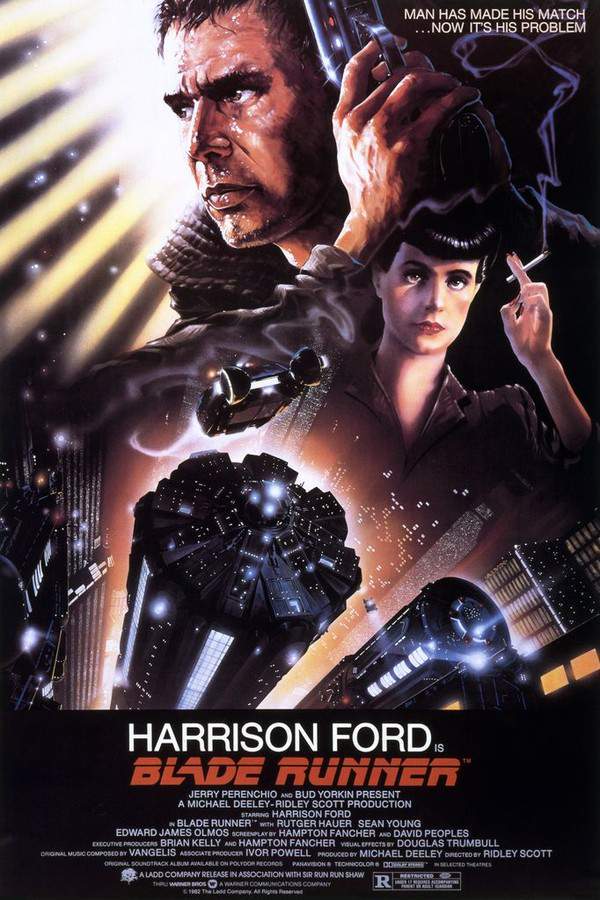
Blade Runner (1982) movie poster

Timeline

Blade Runner (1982) Timeline Explained – Every Event in Order

Release, runtime and language
1982 · 117 min · English
Loading streaming availability…
Directed by
Ridley Scott
Starring
Harrison Ford, Rutger Hauer, Sean Young

In a dystopian future, former blade runner Rick Deckard is reactivated to hunt down four dangerous Replicants. These advanced androids have escaped and returned to Earth, seeking information about their origins. As Deckard pursues them through a visually stunning, neo-noir world, he encounters Rachel, a mysterious Replicant whose presence challenges his understanding of humanity and blurs the lines between hunter and hunted.

On this page (8)
  1. 1 Where to watch
  2. 2 Events in order (14)
  3. 3 Timeline questions answered
  4. 4 The book behind the movie
  5. 5 Movie threads
  6. 6 Movies like Blade Runner
  7. 7 Categories
  8. 8 Every angle
Loading streaming availability…

14 events in order · contains spoilers

Blade Runner Timeline: Events in Chronological Order

Every key event of Blade Runner (1982) in order, scene by scene, with when and where it takes place. Use it to untangle flashbacks, time jumps and parallel storylines, to refresh your memory before the sequel or to find the exact scene you are thinking of.

  1. Creation of Nexus-6 Models

    In 2019, the Tyrell Corporation successfully develops the Nexus-6 models, advanced robots that are strikingly lifelike and often indistinguishable from humans. These replicas are designed for off-world explorations and labor but lead to significant ethical concerns as their existence becomes contested.

    When
    2019
  2. Replicant Rebellion

    A rebellion breaks out among a group of Nexus-6 replicas, prompting the Tyrell Corporation to declare them illegal on Earth. As a result of the uprising, any Nexus-6 found on Earth faces execution, leading to the establishment of the Blade Runner unit.

  3. Deckard's Return

    In November 2019, former Blade Runner Rick Deckard is reluctantly brought back into action by Officer Gaff and his former superior, Bryant. He is assigned the task of hunting down four illegal Nexus-6 replicas that have arrived on Earth.

    When
    November 2019
    Where
    Los Angeles
  4. Voight-Kampff Test Incident

    Deckard observes footage of his predecessor, Holden, administering the Voight-Kampff test on Leon, a Nexus-6 model. The test ends tragically when Leon fatally attacks Holden, underscoring the dangers of identifying replicants.

  5. Hunting the Replicants

    After receiving a direct request from Bryant, Deckard begins his search for Leon and his three companions: Roy, Zhora, and Pris. He faces moral dilemmas about retiring beings designed to mimic humans, thereby questioning the nature of life.

  6. Meeting Rachael

    Deckard’s investigation leads him to the Tyrell Corporation, where he meets Rachael, an experimental replicant with implanted memories. Unaware of her true nature, Rachael struggles with her identity and the implications of her engineered past.

    Where
    Tyrell Corporation
  7. Search for Tyrell

    While attempting to extend their lifespans, Roy and Leon discover a Replicant manufacturing facility. They seek out J.F. Sebastian, who can connect them to Dr. Tyrell, the only one they believe can help them.

  8. Confronting Zhora

    Deckard follows a lead to a strip club where Zhora performs, ultimately confronting and killing her. This brutal act serves to highlight Deckard’s internal conflict as he grapples with the reality of eliminating beings that resemble humans.

  9. Rachael's Disappearance

    After losing track of Rachael, Deckard learns he must retire her as well. In a shocking turn of events, Rachael saves Deckard from Leon, killing the replicant with his own weapon and deepening their complex relationship.

    Where
    Deckard's Apartment
  10. Confrontation with Tyrell

    Roy and Pris infiltrate Tyrell's penthouse, hoping for a way to extend their lives. After learning that such an extension is impossible, Roy tragically kills Tyrell in an emotional outburst, solidifying his desperation.

    Where
    Tyrell's Penthouse
  11. Final Chase

    Sebastian is brutally killed by Roy, who soon finds Deckard and engages him in a life-or-death chase. This encounter pushes Deckard to the brink and challenges his beliefs about replicants even further.

    Where
    Sebastian's Home
  12. Roy's Redemption

    As Deckard teeters on the edge of a rooftop, Roy surprises him by saving his life in a moment of unexpected compassion. In his final moments, Roy reflects on the transient nature of existence, imparting a poignant message about life.

  13. Gaff's Message

    Gaff reveals the fragility of life with a haunting remark about Rachael's fate, reinforcing the inevitability of mortality. This moment encapsulates the poignant themes of existence that echo throughout the film.

  14. Escaping Together

    After the tumultuous events, Deckard returns home to find Rachael safe in his bed. The two escape together, signifying hope amidst despair, but Deckard is left pondering the meaning of their lives through an origami unicorn left by Gaff.

    Where
    Deckard's Apartment

Last updated: November 16, 2024 at 11:19

Was this helpful?

Timeline questions answered

Blade Runner Timeline Explained: Your Questions Answered

When does it happen, and why in that order? The questions people ask about the chronology of Blade Runner (1982): time jumps, flashbacks, cause and effect between scenes and the correct order of events, each answered with spoilers.

Q1

Why does Bryant force Deckard to come out of retirement?

Bryant forces Deckard back into service because four dangerous Nexus-6 Replicants have illegally returned to Earth. As a former top Blade Runner, Deckard is the best candidate for the job. When Deckard initially refuses, Bryant delivers a thinly veiled threat, implying harm will come to him if he doesn't comply. The urgency is heightened by the fact that Nexus-6 models only have a four-year lifespan, suggesting the Replicants are desperately seeking a way to extend their lives.

Foreshadowing: Earlier in the film, Bryant mentions that Holden was put in the hospital by a Replicant, establishing how dangerous this mission is.

  • bryant
  • deckard
  • blade runner
  • retirement
  • replicants
  • nexus-6
Q2

Why doesn't Rachael know she's a Replicant?

Rachael is an experimental Replicant with implanted memories from an unknown human source. These fabricated memories, including childhood experiences and a family photograph, serve as an emotional cushion to make her more compliant and indistinguishable from humans. Dr. Tyrell designed this to help Replicants better integrate into society. Rachael genuinely believes she is human until Deckard reveals the truth using the Voight-Kampff test, which causes her profound emotional distress.

Foreshadowing: When Deckard first meets Rachael at Tyrell's office, she seems unusually uncertain about basic personal history, hinting at her manufactured nature.

  • rachel
  • replicant
  • memories
  • tyrell
  • implanted memories
  • identity
Q3

Why does Roy kill Tyrell?

Roy kills Tyrell after learning that the man who created him and could extend his life refuses to help. When Roy demands a way to extend his four-year lifespan, Tyrell coldly explains it's biologically impossible, his eyes were modified to enhance his intelligence but at the cost of his lifespan. After a brief, unsettling kiss on the mouth, Roy smotherly kills Tyrell with his bare hands, expressing both rage and despair over his maker's indifference to his mortality.

Foreshadowing: Earlier, Roy tells Pris that they must find Tyrell and make him help them, establishing the desperation behind his mission.

  • roy
  • tyrell
  • kills
  • death
  • nexus-6
  • lifespan
  • creator
Q4

Why does Roy save Deckard at the end?

Roy saves Deckard despite being his hunter because, in his final moments of life, Roy experiences a profound realization about the value of human life. After killing Tyrell and Sebastian, Roy chases Deckard across rooftops, but when Deckard hangs precariously between buildings about to fall, Roy chooses compassion over vengeance. This act of mercy demonstrates that Replicants can possess genuine humanity and empathy, even in their final moments. Roy then delivers his famous monologue about all his experiences being lost in time.

Foreshadowing: Roy's earlier conversations with Pris show his growing awareness of mortality and his desire to prove he has something meaningful to offer.

  • roy
  • deckard
  • save
  • rescue
  • mercy
  • redemption
  • death
  • tears in rain
Q5

What does the origami unicorn mean at the end?

The origami unicorn that Gaff leaves in Deckard's apartment is a symbolic message suggesting Deckard himself may be a Replicant. Since only Gaff knew about Deckard's dream of a unicorn, the origami implies Gaff either Dreams of unicorns too, or has knowledge of Deckard's true nature. This connects to the film's open-ended theme about identity and whether Deckard is human or a Replicant who has been given implanted memories, just like Rachael.

Foreshadowing: Gaff tells Deckard earlier that he's had dreams about unicorns, establishing this as a shared symbol between them.

  • unicorn
  • origami
  • gaff
  • deckard
  • identity
  • dream
  • replicant
Q6

Why do Nexus-6 Replicants only live 4 years?

The four-year lifespan was deliberately designed into Nexus-6 Replicants as a control mechanism. Tyrell explains to Roy that while they increased the Replicants' intelligence by modifying their eyes, this came at the cost of their lifespan. The short lifespan prevents Replicants from developing too much independence or emotional attachment that might lead to rebellion, making them easier to manage as disposable labor for off-world work.

Foreshadowing: Bryant mentions at the beginning that the Replicants' limited lifespan is why they likely came to Earth, to find a way to extend their lives.

  • nexus-6
  • lifespan
  • four years
  • tyrell
  • replicant
  • biology
  • control
Q7

What is the Voight-Kampff test?

The Voight-Kampff test is a Blade Runner interrogation technique designed to identify Replicants by measuring emotional responses through pupil dilation and autonomic reactions. The test asks subjects emotionally charged questions about topics like animal cruelty or their mothers to detect whether they have genuine emotional responses or are mimicking them. Humans typically show delayed but authentic reactions, while Replicants, lacking true emotional depth, respond differently, often with no reaction at all, like Leon showing nothing when asked about his mother.

Foreshadowing: The test is first shown with Holden and Leon, where Leon's lack of reaction to questions about his mother eventually triggers his violent response.

  • voight-kampff test
  • replicant detection
  • blade runner
  • pupil
  • emotions
  • holden
  • leon
Q8

Why does Rachael kill Leon?

Rachael kills Leon to save Deckard's life. After Deckard discovers the photograph in Leon's hotel room and confronts Zhora at the strip club, Leon ambushes Deckard in an alley and attacks him. When Deckard's weapon falls nearby, Rachael, who had been following Deckard, picks it up and shoots Leon, killing him. This act surprises Deckard and marks a turning point in their relationship, as Rachael demonstrates genuine emotional investment in Deckard's survival.

Foreshadowing: Rachael had been secretly following Deckard throughout the film, showing her growing attachment to him even before she understood her own feelings.

  • rachel
  • leon
  • kills
  • deckard
  • save
  • ambush
  • weapon
Q9

What does Gaff mean by "It's too bad she won't live, but then again, who does"?

Gaff's line refers to Rachael's fate as a Replicant with a limited lifespan. Since she is a Nexus-6 model, she shares the same four-year lifespan as the other Replicants, meaning she will eventually die just like any human. The statement is both a warning about her mortality and a philosophical observation about life itself: no one truly lives forever. It also foreshadows Deckard's discovery that Rachael may be a Replicant, adding weight to their uncertain future together.

Foreshadowing: Earlier, Gaff consistently implies he knows more about Deckard and Rachael's true natures than he reveals.

  • gaff
  • rachel
  • lives
  • death
  • mortality
  • quote
  • fate
Q10

How did Roy and Pris find J.F. Sebastian?

Roy and Pris find Sebastian by tracing leads from a Replicant manufacturing facility they discovered. Sebastian works closely with Dr. Tyrell as a genetic designer, making him the key to reaching Tyrell himself. When Leon and Roy explore the old facility, they find evidence pointing to Sebastian's involvement with the Replicant program. Pris then goes to Sebastian's apartment building, posing as a homeless person, and strategically gains his trust and sympathy by pretending to be a 'user' in need of help.

Foreshadowing: The timeline shows Roy and Leon discovering the manufacturing facility before approaching Sebastian, establishing their investigative path.

  • roy
  • pris
  • sebastian
  • tyrell
  • apartment
  • manufacturing facility
  • search
Q11

Why does Zhora work at a strip club?

Zhora works at a strip club as cover while hiding on Earth. After the Replicants escaped and returned to Earth, they needed to blend in and avoid detection by Blade Runners. Zhora's job at the strip club provides her with a legitimate identity and allows her to move around Los Angeles unnoticed while she and the other Replicants pursue their goal of finding Tyrell. Deckard eventually tracks her there using evidence found in Leon's hotel room, a snake scale that leads him to her performance.

Foreshadowing: Deckard's discovery of the synthetic snake scale in Leon's possession directly points him to Zhora's location.

  • zhora
  • strip club
  • hide
  • cover
  • deckard
  • snake scale
  • performance
Q12

Why does Leon attack Holden during the Voight-Kampff test?

Leon attacks Holden when the questioning becomes too personal, specifically when Holden asks about his mother. As a Replicant with implanted memories, Leon has been programmed to believe he has a mother, but when pressed about her, the emotional contradiction becomes unbearable. Rather than admit he doesn't have a real mother or reveal his true nature, Leon responds violently by shooting Holden, putting him in the hospital. This establishes both the danger of Replicants and the limitations of the Voight-Kampff test.

Foreshadowing: The film opens with this incident, showing the stakes Deckard will face in his own interrogations.

  • leon
  • holden
  • voight-kampff
  • attack
  • shoot
  • hospital
  • mother
Q13

Why does Deckard hesitate to retire the Replicants?

Deckard hesitates because the Replicants are nearly indistinguishable from humans, making their execution morally troubling. After watching Holden's test go wrong and learning about Rachael's situation, Deckard begins to question whether killing beings that think, feel, and fear death is justified. His growing relationship with Rachael further complicates his mission, as he comes to see Replicants as sentient beings rather than mere machines. This internal conflict defines his character arc throughout the film.

Foreshadowing: Deckard's reluctance is established early when he initially refuses Bryant's offer, showing his moral conflict from the start.

  • deckard
  • hesitation
  • retire
  • replicants
  • morals
  • conscience
  • humanity
  • mission
Q14

Why does Roy kiss Tyrell before killing him?

Roy's kiss before killing Tyrell is a moment of bitter irony and emotional complexity. After Roy pleads for his life and learns Tyrell will not help him, Tyrell touches Roy's face with apparent paternal affection, calling him 'prodigy' and seemingly comforting him. Roy responds with a kiss, perhaps representing love-hate for his creator, then kills him. This kiss can be seen as a final act of intimacy between creator and creation, or a symbolic rejection of the false paternal relationship Tyrell offered.

Foreshadowing: Roy's earlier dialogue shows deep desire to meet his creator, building to this confrontational meeting.

  • roy
  • tyrell
  • kiss
  • kill
  • maker
  • creator
  • father
  • prodigy

Movie threads

More Movies Like Blade Runner, by Mood & Story

Curated lists built around what makes Blade Runner tick: the same mood, the same kind of story or the same emotional payoff. Each list explains why these movies belong together.

Cyberpunk Noir Movies Like Blade Runner

Neon-lit futures where humanity is questioned under perpetual rain. If you loved the rain-soaked, neon-drenched aesthetic of Blade Runner, this thread gathers movies with a similar cyberpunk noir vibe. Discover other stories set in high-tech, low-life futures where the line between human and machine blurs, all captured in a visually stunning and atmospheric style.

  • atmospheric
  • neo-noir
  • rain-soaked
  • dystopian
  • philosophical
  • oppressive
  • Tone: melancholic, oppressive
  • Pacing: steady, atmospheric
Why these movies?

The story pattern: Stories often follow a lone figure—a detective, a hunter, or a fugitive—navigating a corrupt, technologically advanced metropolis. The plot is typically a mystery or chase that serves as a vehicle to explore deeper philosophical themes about consciousness, autonomy, and what it means to be alive in a dehumanizing world.

Why they belong together: These films are grouped by their shared commitment to a specific, immersive world-building aesthetic. They prioritize atmosphere and mood, using their cyberpunk settings not just as backdrop but as a central element to drive thematic exploration and create a consistent feeling of melancholic tension.
Existential Hunter and Hunted Stories Like Blade Runner

Pursuits that force both hunter and prey to question their own existence. For viewers who appreciated the deep philosophical conflict in Blade Runner, this thread finds movies where a chase plot evolves into an existential crisis. Explore similar stories where the hunter's mission forces a confrontation with themes of identity, mortality, and the very definition of life.

  • existential
  • philosophical
  • tense
  • morally ambiguous
  • heavy
  • thought-provoking
  • Tone: melancholic, philosophical, tense
  • Pacing: steady, deliberate
Why these movies?

The story pattern: The journey typically begins with a clear objective: capture or eliminate a target. As the hunt progresses, the protagonist is confronted with the humanity, consciousness, or tragic circumstances of their quarry. This forces a moral and existential reckoning, often culminating in a climax where the roles are reversed or redefined, leaving the hunter forever changed.

Why they belong together: These films are connected by a specific narrative and thematic pattern. They share a high emotional weight and complex themes, using the structure of a chase to explore heavy questions about life, soul, and exploitation, resulting in a bittersweet or melancholic tone.

If you liked this

Movies Like Blade Runner

Similar movies to Blade Runner: the same genre, themes or kind of story. Each one comes with its own plot summary, timeline and ending explained.

Browse all movie summaries

Categories

Movie Lists Featuring Blade Runner

Blade Runner appears in these hand-built movie categories. Each one groups movies by a specific mood, theme or story type, with their plot summaries and endings explained.

View all movie categories

Every angle

Blade Runner (1982) Explained: Plot, Timeline & Characters

Everything about Blade Runner in one place: what happens in the plot summary, the timeline in chronological order, the characters and meaning and a spoiler-free summary. What's After the Movie adds the cast, box office and post-credit scenes.

Coming soon on iOS and Android

The Plot Explained Movie Summary App

Plot summaries, endings explained and timelines on your phone. Catch up on any movie in minutes, save your favorites and never miss a twist again.

Be the first to know when we launch. Your email stays private, always.

Learn more about the app