








Plot Explained Spoilers guaranteed!
Plot Explained

Browse by genre

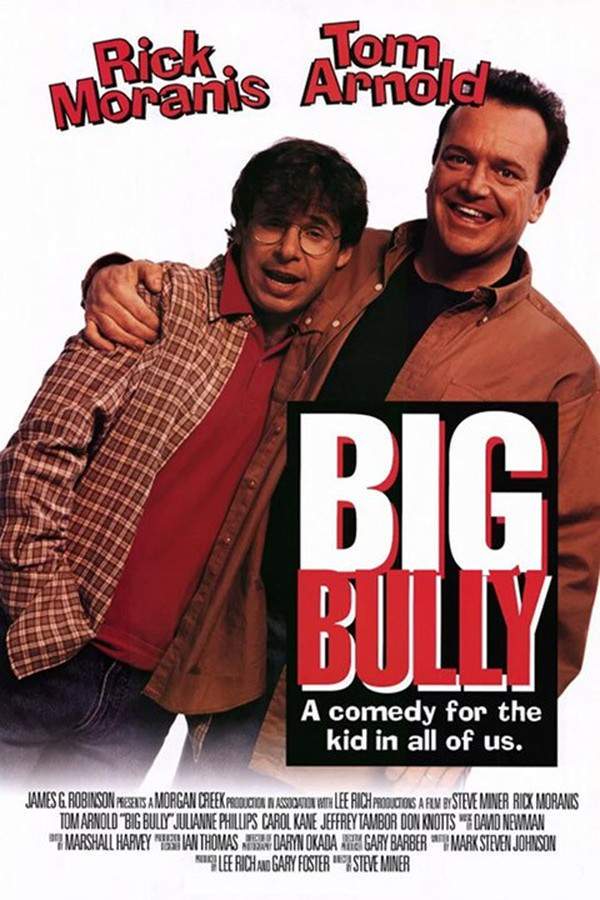
Big Bully (1996) movie poster

Timeline

Big Bully (1996) Timeline Explained – Every Event in Order

Release, runtime and language
1996 · 90 min · English
JustWatch #11,692 6
Directed by
Steve Miner
Starring
Rick Moranis, Tom Arnold

A writer-turned-teacher, David Leary, played by Rick Moranis, returns to his hometown and finds himself facing his former bully, Fang. The decades-old rivalry is unexpectedly rekindled, forcing both men to confront their past actions and the responsibilities they have as fathers. Through a journey of reflection and reconciliation, they must address the impact of their past and find a path toward understanding and growth.

On this page (6)
  1. 1 Where to watch
  2. 2 Events in order (12)
  3. 3 Timeline questions answered
  4. 4 Movie threads
  5. 5 Movies like Big Bully
  6. 6 Every angle

Where to watch

Where to Watch Big Bully (1996)

Where can you watch Big Bully? Stream, rent or buy it in the US, including on Amazon Prime Video, YouTube Free and Amazon Video: current JustWatch availability with up-to-date prices.

Streaming availability powered by JustWatch

12 events in order · contains spoilers

Big Bully Timeline: Events in Chronological Order

Every key event of Big Bully (1996) in order, scene by scene, with when and where it takes place. Use it to untangle flashbacks, time jumps and parallel storylines, to refresh your memory before the sequel or to find the exact scene you are thinking of.

  1. Fang's bullying and the Moon rock incident

    Young David Leary is tormented by Roscoe 'Fang' Bigger. David actually reports Fang's theft of a Moon rock to his teachers, setting in motion Fang's arrest. The incident marks a pivotal early clash between them.

    When
    1970
    Where
    Hastings, Minnesota
  2. Move to Oakland

    David's parents announce a move to Oakland, and he is openly ecstatic about leaving behind Fang and starting fresh. The relocation signals a new chapter in his life and future. The move shapes the trajectory of his adulthood.

    When
    early 1970s
    Where
    Oakland, California
  3. Back at school as a writer-teacher (1996)

    Twenty-six years pass and David is now divorced, raising his son Ben. He accepts a teaching gig in creative writing at his old school, hoping to reestablish himself professionally and personally. The new job plunges him back into school life and its currents.

    When
    1996
    Where
    Oakland, California
  4. Neighbors and romance rekindled

    David meets the eccentric Lundstrums, Art and Betty, and begins rekindling a relationship with his old flame Victoria. The new social circle adds pressure and color to his daily life as a teacher and father. The sequence deepens his involvement in the community.

    When
    1996
    Where
    Neighborhood around school
  5. Green Eggs and Ham returns referenced by Mrs. Rumpert

    Librarian Mrs. Rumpert remains a fixture, still waiting for David to return Green Eggs and Ham. The situation becomes a running, light-hearted motif as he juggles writing, teaching, and family life. Her waiting creates a tiny, humorous through-line in the semester.

    When
    1996
    Where
    School library
  6. Ben bullies Kirby; meeting Ross Bigger

    Ben starts picking on Kirby, drawing David into a tense encounter with Kirby's father, Ross Bigger. The office meeting marks the return of old tensions in a new generation. The dynamic between the two families quickly intensifies.

    When
    1996
    Where
    School
  7. Barroom revelations about Ross's past

    After a fire drill, David talks with Ulf, and at a bar he, Alan, and Gerry reveal that Ross grew up in an orphanage after his family vanished following juvenile hall. The disclosure casts Ross in a more sympathetic but intimidating light. It helps explain the power dynamics at the school.

    When
    1996
    Where
    Bar
  8. Ross's intimidation and David's paranoia

    As Ross escalates his bullying at school and at home, David grows increasingly paranoid. A colleague named Clark worries that David is cracking under pressure. The tension tightens around David's professional and personal life.

    When
    1996
    Where
    School; workplace
  9. Ben and Kirby's reconciliation

    David's son Ben and Ross's son develop a cautious friendship after a frank discussion, suggesting that younger generations can break the cycle of bullying. The family dynamics begin to shift as the kids find common ground. The change foreshadows a broader resolution between the two households.

    When
    1996
    Where
    School
  10. Night see-saw confrontation and confession

    David and Ross meet by the old see-saw where Ross accuses David of never standing up for himself. David admits snitching to get Ross into Juvenile Hall, revealing a long-buried guilt. The confrontation marks a turning point in their feud.

    When
    1996
    Where
    Old see-saw site
  11. Cave chase, waterfall, and driftwood strike

    In a tense game of cat-and-mouse after hours, David flees to his childhood hiding place in a cave. Ross chases him onto a waterfall where David strikes with a piece of driftwood, sending Ross into the river. Fearing what happened, David contemplates turning himself in.

    When
    1996
    Where
    Cave and waterfall
  12. Moon rock confession and new beginnings

    During their fight, Ross's obsession is laid bare when he reveals he stole the Moon rock to become an astronaut, and his fang is chipped in the struggle. The two men reconcile, and their families begin to plan anew. At semester's end, David prepares to move to New York as Victoria returns Green Eggs and Ham, and Ross's family follows, hinting at a shared future.

    When
    1996
    Where
    Oakland to New York; home

Last updated: November 22, 2025 at 15:58

Was this helpful?

Timeline questions answered

Big Bully Timeline Explained: Your Questions Answered

When does it happen, and why in that order? The questions people ask about the chronology of Big Bully (1996): time jumps, flashbacks, cause and effect between scenes and the correct order of events, each answered with spoilers.

Q1

Why did David report Fang for stealing the Moon rock?

David reported Fang because he was being tormented by him throughout their childhood. When David discovered Fang had stolen a Moon rock from the school, he saw an opportunity to get rid of his bully for good by informing the teachers, which led to Fang's arrest and being sent to juvenile hall.

  • moon rock
  • fang
  • snitching
  • juvenile hall
  • bullying
Q2

Why did Ross resume bullying David after all these years?

When Ross learned that the new teacher at the school was David Leary, his childhood tormentor, he felt the old power dynamic resurface. Ross had spent his entire life feeling powerless after being arrested and abandoned by his parents, so bullying David again was a way to regain the sense of control and importance he never had as a child.

Foreshadowing: The movie establishes early that Ross was abandoned by his parents after juvenile hall, setting up his psychological need for power.

  • ross bigger
  • fang
  • bullying
  • david leary
  • power dynamic
Q3

Why did Ross steal the Moon rock in the first place?

Ross stole the Moon rock because he wanted to become an astronaut. The Moon rock represented his dream of space travel and escape from his difficult life in Hastings. This revelation comes during the final confrontation, showing that Ross's theft was driven by ambition rather than malice.

Foreshadowing: The Moon rock incident is the pivotal event that split their paths in childhood.

  • moon rock
  • astronaut
  • dream
  • ross bigger
  • childhood
Q4

What happened to Ross after he got out of juvenile hall?

After Ross got out of juvenile hall, his parents abandoned him and skipped town. He grew up in an orphanage, which shaped his bitter outlook on life. This abandonment explains why Ross became so desperate for power and control, and why he latched onto bullying David as a way to feel significant.

Foreshadowing: David learns about Ross's orphanage background at the bar, which adds sympathy to Ross's character.

  • ross
  • orphanage
  • parents
  • abandonment
  • juvenile hall
Q5

Why did David Lee's son Ben start picking on Ross's son Kirby?

Ben began bullying Kirby as a reflection of the escalating feud between his father and Ross. When Ross started intimidating David at school, the tensionrippled down to their children. However, after a frank discussion between Ben and Kirby, the boys reconciled and became friends, breaking the cycle of retaliation.

Foreshadowing: The children's conflict mirrors the adults' rivalry from the start.

  • ben
  • kirby
  • bullying
  • sons
  • cycle of violence
Q6

What happened when David hit Ross with driftwood at the waterfall?

During the cave chase, Ross cornered David on a waterfall. When Ross attacked him, David struck back with a piece of driftwood, chipping Ross's fang and sending him into the river below. David believed he might have killed Ross and considered turning himself in to the police, but Ross survived their subsequent encounter.

Foreshadowing: The waterfall confrontation is set up by their earlier cat-and-mouse game through the school.

  • waterfall
  • driftwood
  • fight
  • river
  • fang
Q7

Why did David become so paranoid after Ross started bullying him again?

David's paranoia stemmed from unresolved childhood trauma. Since he was never able to stand up to Fang as a child, Ross's return triggered deep-seated anxiety. David's inability to confront his bully led to increasingly erratic behavior, making his coworker Clark worry he was on drugs.

Foreshadowing: The see-saw confrontation reveals that David never stood up for himself as a child.

  • david
  • paranoia
  • anxiety
  • ptsd
  • childhood trauma
Q8

Why did Ross and his family follow David to New York at the end?

After they reconciled, Ross decided to follow David to New York because their families had become connected and he wanted to maintain their new friendship. Ross hooks up his mobile home to his truck, telling his family they were 'invited' to come, which is why he calls it a 'mobile home' - a play on the word 'invited.'

  • ross
  • new york
  • mobile home
  • reconciliation
  • family
Q9

What was the deal with the Green Eggs and Ham library book?

Mrs. Rumpert, the school librarian, had been waiting for David to return the Green Eggs and Ham book he borrowed back in the 1970s. It became a running comedic motif throughout the film, representing unfinished business from David's past. Victoria finally returns the book for him at the end, symbolizing David finally clearing his debts and moving forward.

  • green eggs and ham
  • library
  • mrs rumpert
  • book
  • unfinished business
Q10

What happened at the see-saw confrontation between David and Ross?

David and Ross met at their old childhood see-saw spot where Ross accused David of never standing up for himself. In response, David finally admitted the truth - that he had snitched to get Ross sent to juvenile hall. This confession was the turning point that forced both men to confront their shared past and begin the healing process.

  • see-saw
  • confession
  • snitching
  • juvenile hall
  • confrontation
Q11

Why did Fang target David for bullying in the first place?

Fang bullied David because of his pointed tooth, which made David different from the other kids. The physical characteristic became the target for Fang's aggression, setting up the decades-long rivalry. The fang became a defining symbol of their conflict, even culminating in Ross chipping his tooth during the final fight.

Foreshadowing: The tooth/fang connection is established in the opening childhood scenes.

  • fang
  • tooth
  • bullying
  • childhood
  • david

Movie threads

More Movies Like Big Bully, by Mood & Story

Curated lists built around what makes Big Bully tick: the same mood, the same kind of story or the same emotional payoff. Each list explains why these movies belong together.

Movies about confronting past trauma like Big Bully

Middle-aged characters revisit unresolved childhood conflicts for a cathartic resolution. If you liked Big Bully's story of a man facing his childhood bully, you'll enjoy these movies about adults reckoning with their past. This list features similar dramas and comedies where characters return home to resolve old wounds, find reconciliation, and achieve personal catharsis.

  • nostalgic
  • cathartic
  • reconciliatory
  • reflective
  • uneasy
  • playful
  • Tone: reflective, cathartic, whimsical
  • Pacing: steady, character-driven
Why these movies?

The story pattern: Stories in this thread typically begin with a protagonist reluctantly returning to their hometown or a significant place from their youth. A confrontation with a figure from their past—a bully, a rival, a lost love—trigers a re-examination of long-buried feelings. The journey blends flashbacks with present-day interactions, culminating in a climactic moment of truth that allows for healing and a more hopeful future.

Why they belong together: Movies are grouped here because they share the specific narrative arc of an adult confronting a formative childhood conflict. They balance the emotional weight of past trauma with the potential for comedy and catharsis, often set against the nostalgic backdrop of a familiar place, creating a distinct vibe of reflective reconciliation.
Whimsical dark comedies with heart like Big Bully

Stories that tackle weighty topics with a light touch and humorous spirit. Fans of Big Bully will appreciate this collection of movies that blend serious themes with playful comedy. These films similarly balance darker subject matter, like bullying or past regrets, with a lighthearted tone, slapstick humor, and a ultimately hopeful and cathartic resolution.

  • whimsical
  • playful
  • cathartic
  • uneasy
  • hopeful
  • reconciliatory
  • Tone: light, whimsical, hopeful
  • Pacing: steady
Why these movies?

The story pattern: The narrative pattern involves a protagonist facing a significant personal challenge or unresolved issue. The conflict is real and carries emotional weight, but the story's execution relies on comedic situations, quirky characters, and often slapstick or farcical elements to diffuse the tension. The journey is one of growth and understanding, achieved through laughter as much as through drama.

Why they belong together: These films are grouped together because they masterfully mix a medium emotional weight with a light tone. They create a unique viewing experience that is both thoughtful and entertaining, proving that comedies can meaningfully address serious themes while leaving the audience feeling uplifted.

If you liked this

Movies Like Big Bully

Similar movies to Big Bully: the same genre, themes or kind of story. Each one comes with its own plot summary, timeline and ending explained.

Browse all movie summaries

Every angle

Big Bully (1996) Explained: Plot, Timeline & Characters

Everything about Big Bully in one place: what happens in the plot summary, the timeline in chronological order, the characters and meaning and a spoiler-free summary. What's After the Movie adds the cast, box office and post-credit scenes.

Coming soon on iOS and Android

The Plot Explained Movie Summary App

Plot summaries, endings explained and timelines on your phone. Catch up on any movie in minutes, save your favorites and never miss a twist again.

Be the first to know when we launch. Your email stays private, always.

Learn more about the app