Plot Explained Spoilers guaranteed!
Plot Explained

Browse by genre

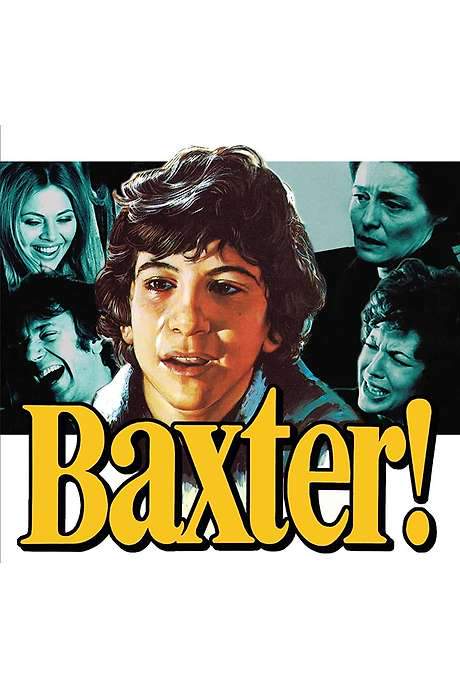
Baxter (1989) movie poster

Timeline

Baxter (1989) Timeline Explained – Every Event in Order

Release, runtime and language
1989 · 82 mins · French
Loading streaming availability…
Directed by
Jérôme Boivin
Starring
Evelyne Didi, Jacques Spiesser, Léa Gabriele, Sabrina Leurquin, Maxime Leroux, Jean-Paul Roussillon

A white Bull Terrier named Baxter is given as a gift to an elderly woman by her daughter. Over time the seemingly gentle dog grows increasingly hostile, staging violent and murderous acts to force a new family to adopt him. He manipulates the household, turning ordinary moments into dangerous confrontations, all driven by his selfish desire for a different home.

On this page (6)
  1. 1 Where to watch
  2. 2 Events in order (13)
  3. 3 Timeline questions answered
  4. 4 Movie threads
  5. 5 Movies like Baxter
  6. 6 Every angle
Loading streaming availability…

13 events in order · contains spoilers

Baxter Timeline: Events in Chronological Order

Every key event of Baxter (1989) in order, scene by scene, with when and where it takes place. Use it to untangle flashbacks, time jumps and parallel storylines, to refresh your memory before the sequel or to find the exact scene you are thinking of.

  1. Baxter is taken from the pens and given to an old woman

    Baxter is removed from the kennels and handed to an elderly woman. He immediately treats her bland routine with contempt, seeking stimulation beyond her world. This marks the start of his calculated adjustment to a new home.

    When
    Early in the film
    Where
    Old woman's house
  2. Baxter fixates on the couple across the street

    From the window, Baxter watches the young couple's nightly lovemaking and becomes obsessed with their vitality. He interprets their closeness as a sign of a livelier life he craves. This fixation pulls him away from the old woman's world and into a competing dynamic.

    When
    Nightly
    Where
    Across the street
  3. Baxter's failed attempt to dominate the old woman

    He tries to assert control by causing the old woman to stumble, hoping to show her who is in charge. Instead, the plan backfires as her health deteriorates and he becomes more entangled in her decline. The attempt reveals his capacity for manipulation and marks a turning point.

    When
    Early in the film
    Where
    Old woman's house
  4. Baxter murders the old woman to be adopted by the couple

    The old woman's condition worsens until Baxter kills her. The murder is framed as a bid to be free and adopted by the young couple across the street. This act immediately shifts him into a new household and escalates his appetite for power.

    When
    Mid-film
    Where
    Old woman's house
  5. Life with the couple; presents dead animals

    Baxter enjoys his life with the young couple, moving between the sensual woman and earthy man. He brings them dead animals as gifts, testing their boundaries and asserting his dominance. The idyll seems to suit him until signs of neglect begin to surface.

    When
    After adoption
    Where
    Couple's home
  6. The baby arrives; Baxter hates the baby; attempted killing; given to neighborhood boy

    The couple has a baby, and Baxter becomes convinced the child is weak and a threat. He hatches plans to harm the infant, but those plans backfire as the baby is unharmed and the couple remains oblivious. Eventually the couple give Baxter to a neighborhood boy.

    When
    After baby's birth
    Where
    Couple's home
  7. Baxter under the boy's control; the boy's sociopathy and Hitler fascination

    Under the boy's management, Baxter finds a new, darker environment. The boy, a budding sociopath and Hitler fanatic, seeks power through Baxter's obedience. He even notices a schoolgirl who reminds him of Eva Braun.

    When
    Early stage with boy
    Where
    Boy's home
  8. Baxter impregnates the girl's spaniel

    Baxter and the girl's spaniel form an unusual bond that results in pregnancy. This incident adds a layer of perverse complexity to the power dynamic between Baxter and the boy. The event underscores Baxter's confusion about his own sexuality.

    When
    During the period with the boy
    Where
    Girl's home
  9. Baxter kills a stray dog to show the boy who he is

    To assert his ruthlessness, Baxter kills a stray dog, demonstrating the extent of his loyalty to the boy's brutal vision. The act deepens the dangerous bond between master and pet.

    When
    Mid-stage
    Where
    Neighborhood
  10. The boy commands Baxter to kill a classmate; Baxter refuses

    The boy orders Baxter to kill a classmate, but Baxter refuses to carry out the act, realizing the boy does not truly understand him. This rejection foreshadows an eventual betrayal and power struggle.

    When
    Climax buildup
    Where
    Boy's home
  11. Puppies born; the boy kills them; Baxter decides the boy must die

    The spaniel gives birth to puppies, and the boy's imitation of Hitler leads him to kill them. Baxter decides that the boy must die as retribution for this cruelty. The tension between them reaches a boiling point.

    When
    After birth
    Where
    Girl's home
  12. Final confrontation; Baxter is killed when the boy forces him to heel

    The boy attacks Baxter, and a struggle ensues. Baxter gains the upper hand but cannot disobey when the boy commands him to heel, allowing the boy to kill him. This marks the end of Baxter's violent arc.

    When
    Climax
    Where
    Boy's home
  13. The boy breaks into the old lady's abandoned house; final monologue

    Later the boy breaks into the old lady's abandoned house and observes the young couple from afar. He delivers a monologue echoing Baxter's, planning to kill his parents and be adopted by the couple. The ending signals a chilling replication of Baxter's desire for belonging.

    When
    Final scene
    Where
    Old lady's abandoned house

Last updated: October 09, 2025 at 14:32

Was this helpful?

Timeline questions answered

Baxter Timeline Explained: Your Questions Answered

When does it happen, and why in that order? The questions people ask about the chronology of Baxter (1989): time jumps, flashbacks, cause and effect between scenes and the correct order of events, each answered with spoilers.

Q1

Why does Baxter kill the elderly woman?

Baxter kills the old woman to orchestrate his own adoption by the young couple across the street. After she begins to recover health, he accelerates her decline and ultimately murders her, believing her death will free him to be taken in by the couple he has been obsessively watching. This act reveals his capacity for calculated violence when he perceives a barrier between himself and the life he desires.

Foreshadowing: Baxter's earlier attempt to cause the old woman to stumble, which backfired and worsened her health, foreshadows his willingness to harm her directly.

  • baxter
  • old woman
  • murder
  • adoption
  • manipulation
Q2

Why does Baxter bring dead animals to the couple?

Baxter brings dead animals as gifts to assert his identity and dominance within the new household. Unlike a typical pet offering trophies, these presents serve as stark reminders of his capacity for violence, a message to his new owners that he is not a ordinary dog but a dangerous entity they have welcomed into their home. The gifts test their acceptance of his true nature while establishing his position as something other than a passive companion.

  • dead animals
  • gifts
  • dominance
  • baxter
  • couple
Q3

Why does Baxter want to harm the baby?

Baxter perceives the newborn as a threat to his position within the household. With the baby's arrival, he senses neglect creeping in and views the vulnerable infant as a weakness in the couple's dynamic that could destabilize his own standing. He hatches a plan to eliminate what he sees as a rival for attention and power, miscalculating that removing the child would restore his primacy in the home.

  • baxter
  • baby
  • threat
  • neglect
  • household
Q4

Why does Baxter refuse to kill the boy?

Baxter refuses to kill the classmate when ordered because he realizes the boy does not truly understand him or his nature. Throughout their relationship, Baxter has been testing the boy's limits and observing his capacity for true ruthlessness. When the boy orders him to kill another child, Baxter recognizes this as a test of obedience rather than an acknowledgment of his own violent identity, and he rejects serving as a mere tool for the boy's power fantasies.

Foreshadowing: Baxter's earlier killing of a stray dog to demonstrate loyalty to the boy had already revealed his willingness to act violently on command, making his refusal here a significant turning point.

  • baxter
  • boy
  • refuse
  • kill
  • classmate
  • obedience
Q5

Why does the boy kill the puppies?

The boy kills the puppies as a demonstration of power and control, mirroring the fascist ideology he emulates. After the spaniel gives birth to the puppies fathered by Baxter, the boy sees an opportunity to assert dominance through cruelty, replicating what he perceives as the brutal methodology of Hitler. The act cements his vision of himself as a ruthless leader willing to destroy even those connected to him to maintain absolute control.

  • boy
  • puppies
  • kill
  • hitler
  • power
  • control
Q6

Why does Baxter obey the boy's heel command during their fight?

Baxter submits to the boy's heel command because despite gaining the upper hand in their physical struggle, he cannot override his fundamental programming as a trained dog. The boy exploits this deeply ingrained obedience, calling out the command precisely when Baxter is about to kill him. This moment exposes the tragic irony of Baxter's rebellion against domestication, he possesses the will to dominate but cannot escape the conditioned response that ultimately dooms him.

Foreshadowing: The boy's earlier assertion of control over Baxter establishes his understanding of the dog's training and his willingness to use it as a weapon.

  • baxter
  • boy
  • heel
  • command
  • obedience
  • death
Q7

What does the ending imply about the cycle of violence?

The ending suggests that the boy's adoption of Baxter's dark philosophy completes a disturbing cycle of replication. After killing Baxter, the boy breaks into the old woman's abandoned house and watches the couple from afar, delivering a monologue that echoes Baxter's own desires, killing his parents to be adopted by them. The film closes with the boy resolved to repeat Baxter's trajectory, implying that violence and manipulation are transferable ideologies that propagate through influence rather than dying with their originator.

Foreshadowing: The boy's earlier fascination with Hitler and his observation that the girl reminds him of Eva Braun established his receptivity to dangerous ideologies and role models.

  • ending
  • cycle
  • violence
  • boy
  • baxter
  • monologue
  • adoption
Q8

Why is the boy obsessed with Hitler and Eva Braun?

The boy's fixation on Hitler represents his aspiration to total power and control, seeking an ideological framework for his emerging sociopathy. He sees himself as a would-be dictator who must prove ruthlessness to attain dominance, and Hitler serves as his blueprint. His observation that Veronique resembles Eva Braun reflects his tendency to draw women into his fantasy of power, both as subordinate figures and as trophies of his eventual conquest. This obsession underscores the film's exploration of how dangerous ideologies take root in vulnerable minds.

  • boy
  • hitler
  • eva braun
  • sociopathy
  • power
  • fixation
Q9

Why does Baxter become fixated on the couple across the street?

Baxter fixates on the couple because he craves vitality and stimulation beyond the stagnant routine of the old woman's life. Through the window, he observes their intimacy and energy, interpreting their closeness as a sign of the livelier existence he desires. This fixation drives his subsequent manipulation of the old woman's decline and his calculated path toward their household, as he believes their life holds the excitement and control he deserves.

  • baxter
  • couple
  • fixation
  • vitality
  • window
  • desire
Q10

Why does Baxter impregnate the girl's spaniel?

Baxter's impregnation of the spaniel reflects his confused and unsettling sexuality within the human world. It represents his attempt to assert his identity and power through physical dominance, blurring the lines between animal instinct and human social constructs. The act adds perverse complexity to his character, showing that his desire for control extends beyond psychological manipulation into biological assertion of selfhood.

  • baxter
  • spaniel
  • puppies
  • sexuality
  • dominance
Q11

Why does the boy plan to kill his parents?

The boy plans to kill his parents to replicate Baxter's strategy of eliminating those who restrict his freedom in pursuit of a desired life. Having absorbed Baxter's philosophy that murder can reshape one's circumstances, the boy sees his parents as obstacles to being adopted by the couple he now watches from the abandoned house. This final monologue reveals the complete transmission of Baxter's methodology, the boy has learned that violence can be a pathway to belonging.

Foreshadowing: The boy's earlier obsession with power and his identification with Hitler established his willingness to consider extreme acts to achieve his goals.

  • boy
  • parents
  • kill
  • adoption
  • plan
  • baxter

Movie threads

More Movies Like Baxter, by Mood & Story

Curated lists built around what makes Baxter tick: the same mood, the same kind of story or the same emotional payoff. Each list explains why these movies belong together.

Unsettling domestic horror movies like Baxter

Stories where the familiar comfort of home becomes a source of menace. If you were fascinated by the domestic terror in Baxter, explore more movies that find horror within the home. These stories often feature psychological manipulation, fractured families, and a steady erosion of safety, delivering a uniquely intimate and unsettling viewing experience.

  • unsettling
  • oppressive
  • menacing
  • clinical
  • cold
  • disturbing
  • Tone: dark, clinical, oppressive
  • Pacing: steady, deliberate
Why these movies?

The story pattern: Narratives in this thread typically follow a steady, methodical build-up of tension within a household. The conflict is often internal, focusing on psychological manipulation, hidden malevolence, or a gradual realization that the people or environment one trusts are the source of danger.

Why they belong together: Movies are grouped here based on their shared ability to turn the ordinary setting of a home into a place of dread. They share a dark tone, a focus on psychological rather than supernatural horror, and a palpable sense of oppressive, clinical unease.

Movies from a monstrous perspective like Baxter

Narratives told from the unsettling viewpoint of a manipulative or sociopathic character. If you appreciated the unique narrative viewpoint of Baxter, this thread features other films told from the perspective of a manipulative or sociopathic character. These movies offer a chilling look into a distorted psyche, creating complex and morally ambiguous stories similar to Baxter.

  • cold
  • brutal
  • disturbing
  • sociopathic
  • manipulative
  • clinical
  • Tone: dark, cold, disturbing
  • Pacing: steady, character-driven
Why these movies?

The story pattern: The defining pattern is a first-person or heavily focalized narrative from a character devoid of conventional empathy. The story unfolds through their cold, calculating logic, often revealing their justifications for manipulation and violence, which creates a uniquely unsettling and morally complex journey.

Why they belong together: These films are grouped by their shared narrative technique of adopting a monstrous point of view. They create a distinct, uncomfortable vibe by aligning the audience with a protagonist whose motives and actions are antithetical to normal morality, resulting in a heavy emotional weight and often bleak conclusions.

If you liked this

Movies Like Baxter

Similar movies to Baxter: the same genre, themes or kind of story. Each one comes with its own plot summary, timeline and ending explained.

Browse all movie summaries

Every angle

Baxter (1989) Explained: Plot, Timeline & Characters

Everything about Baxter in one place: what happens in the plot summary, the timeline in chronological order, the characters and meaning and a spoiler-free summary. What's After the Movie adds the cast, box office and post-credit scenes.

Coming soon on iOS and Android

The Plot Explained Movie Summary App

Plot summaries, endings explained and timelines on your phone. Catch up on any movie in minutes, save your favorites and never miss a twist again.

Be the first to know when we launch. Your email stays private, always.

Learn more about the app