Plot Explained Spoilers guaranteed!
Plot Explained

Browse by genre

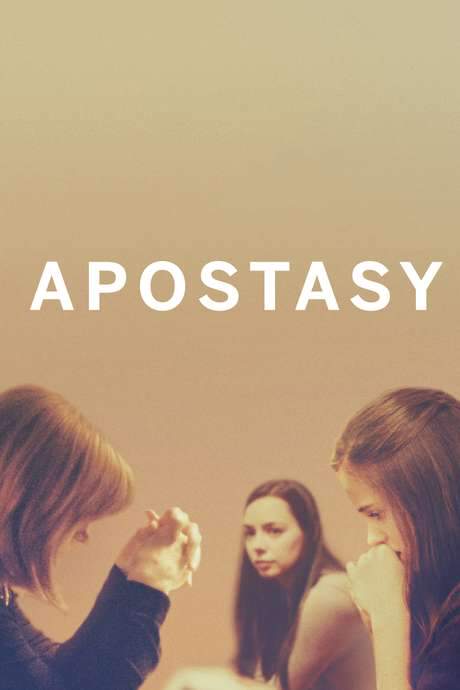
Apostasy (2017) movie poster

Characters & Themes

Apostasy (2017) Characters, Setting & Themes Explained

Release, runtime and language
2017 · 94 mins · English
Loading streaming availability…
Directed by
Daniel Kokotajlo
Starring
James Quinn, Robert Emms, Siobhan Finneran, Sacha Parkinson, Molly Wright, Jessica Baglow

A devout Jehovah’s Witness faces a painful crisis when she is compelled to disown her own sister due to a violation of religious doctrine. As the forced separation continues, she grapples with profound doubts and begins to question the very essence of divine love and the principles she has always held dear.

On this page (9)
  1. 1 Where to watch
  2. 2 Characters explained (5)
  3. 3 Character relationship map
  4. 4 Where & when it takes place
  5. 5 Themes & meaning (2)
  6. 6 Character & meaning questions
  7. 7 Movie threads
  8. 8 Movies like Apostasy
  9. 9 Every angle
Loading streaming availability…

5 main characters · contains spoilers

Apostasy Characters Explained: Who Is Who

The main characters of Apostasy (2017), heroes and villains: what drives them, how they change over the course of the story and what each of them reveals about the film's bigger ideas.

  • Ivanna Whitling (Siobhan Finneran)

    A devout Jehovah's Witness who lives with her two daughters and upholds strict adherence to church rules. She exerts firm control over family life, often shaping decisions to fit doctrinal expectations. Her love for her children is tempered by a willingness to manipulate situations to preserve the congregation's standards. She embodies the elder-led authority that drives conflict within the family.

    • 🙏 Religion
    • 👪 Family
    • 🗺️ Control
  • Alex Whitling (Molly Wright)

    Eighteen-year-old gardener who has just come of age and balances faith with a desire for independence. She battles a medical condition that makes a blood transfusion a life-or-death issue, highlighting the real-world impact of religious doctrine on health. Her position within the family and her future plans (college) show the pull between personal growth and communal expectations.

    • 🙏 Religion
    • 👪 Family
    • 🌱 Growth
  • Luisa Whitling (Sacha Parkinson)

    Luisa becomes pregnant and is disfellowshipped after a relationship outside the faith, isolating her from family and community. She navigates the emotional fallout of shunning while trying to assert some autonomy within the constraints of the religion. Her conflict with the elders and Ivanna drives the narrative toward questions of love, loyalty, and the possibility of reinstatement.

    • 🙏 Religion
    • 👪 Family
    • 💔 Heartbreak
  • Steven (Robert Emms)

    A newly arrived elder who appears friendly but uses church authority to guide and restrain relationships within the congregation. He courts Alex, then directs Ivanna to minimize contact with Luisa, illustrating how new leadership can influence family dynamics. His role exposes the coercive side of religious governance and its impact on personal choices.

    • 🏛️ Authority
    • 🙏 Religion
    • 👥 Leadership
  • Elder Brian (James Quinn)

    A veteran member of the church elders who upholds the group’s policies, including disfellowshipping practices. He represents the institutional voice that can override individual needs in the name of doctrinal purity. His presence reinforces the power structure at the heart of the family’s crisis.

    • 🏛️ Authority
    • 🙏 Religion
    • 👥 Leadership

Last updated: October 27, 2026 at 13:29

Was this helpful?

5 characters · 7 connections · contains spoilers

Apostasy Character Relationship Map

Who is connected to whom in Apostasy: family, love, friendships, rivalries and hidden ties, colour-coded. Pick a character to see their side of the story, or a connection to see what brings two characters together.

How much of the story to show
IWIvanna WhitlingAWAlex WhitlingMolly WrightLWLuisa WhitlingSacha ParkinsonSStevenRobert EmmsLLeanne

Last updated: October 27, 2026 at 13:29

Was this helpful?

Setting

Where and When Does Apostasy Take Place?

The setting of Apostasy (2017): the year and time period, the places and locations, and how they shape the characters, the mood and the tension of the story.

Time period

Location

Oldham, England

Oldham, a town in Greater Manchester, serves as the backdrop for a story about faith, family, and conflict within a close-knit religious community. The film centers on a Jehovah's Witness household whose beliefs govern daily life, social ties, and personal choices. The urban setting juxtaposes everyday city life with the insular world of the Kingdom Hall and its rituals.

  • ❄️ Religion
  • 🧭 Belief & Freedom
  • 🎭 Family & Community

Last updated: October 27, 2026 at 13:29

Was this helpful?

2 major themes

Apostasy Meaning: Themes & Message Explained

What is Apostasy (2017) really about? The emotional, social and philosophical themes the film keeps returning to, its symbolism and the message beneath the surface.

  • Religion

    Religion frames every choice and action in Apostasy. The Jehovah's Witness faith dictates family obligations, social contact, and even who may be trusted within the community. The film shows how doctrine can become a tool for control, shaping loyalties and fueling conflict between mothers and daughters. It also reveals the emotional toll of shunning and the struggle for personal belief versus communal obedience. The plot uses the clash between faith and individual love to drive the drama.

  • Shunning

    Shunning is depicted not simply as punishment but as a relational system that redefines family bonds. Luisa's disfellowshipping isolates her from Ivanna and the wider congregation, intensifying loneliness and conflict. Ivanna's attempts to maintain contact and to 'save' her granddaughter propels the drama toward a potential breach of the group's rules. The film highlights the emotional cost of reinstatement, where faith seeks to reconcile with love, but authority remains wary.

Last updated: October 27, 2026 at 13:29

Was this helpful?

Character & theme questions

Apostasy Characters & Meaning: Your Questions Answered

The questions people ask about Apostasy (2017): who the characters really are, their relationships, what the symbols mean, where it takes place and what the movie is really about. Each answer contains spoilers.

Q1

Where is the movie set?

Apostasy is set in Oldham, a town in Greater Manchester, England. The film uses this urban English setting to contrast everyday city life with the insular world of the Kingdom Hall and its religious rituals, creating a backdrop where a Jehovah's Witness household navigates faith and family tensions.

  • oldham
  • greater manchester
  • england
  • setting
  • kingdom hall
  • jehovah's witness
Q2

What is the religious setting of the film?

The film centers on a Jehovah's Witness community in Oldham, where the faith governs every aspect of daily life, from family obligations to social contacts and personal choices. The Kingdom Hall serves as the hub of this insular world, with strict doctrinal rules shaping relationships and loyalty to the congregation.

  • jehovah's witness
  • kingdom hall
  • religious community
  • oldham
  • faith
Q3

What is the main theme of Apostasy?

The primary theme explores how religion frames every choice and action within the Jehovah's Witness faith. The film shows how doctrine can become a tool for control, shaping loyalties and fueling conflict between mothers and daughters. It reveals the emotional toll of shunning and the struggle between personal belief and communal obedience.

  • religion
  • doctrine
  • control
  • faith
  • shunning
  • family conflict
Q4

What does shunning mean in the context of the film?

Shunning in Apostasy refers to disfellowshipping, a practice that isolates individuals from the congregation and family members who remain in the faith. The film depicts this not merely as punishment but as a relational system that redefines family bonds, creating profound loneliness and emotional conflict for those cast out.

  • shunning
  • disfellowshipping
  • religious isolation
  • family separation
  • congregation
Q5

Who is Ivanna Whitling and what is her role?

Ivanna Whitling is the matriarch of the Whitling family, a devout Jehovah's Witness who enforces strict adherence to church rules. She controls family life based on doctrinal expectations and is willing to manipulate situations to preserve the congregation's standards, embodying the elder-led authority that creates conflict within her family.

  • ivanna whitling
  • mother
  • family authority
  • jehovah's witness
  • elder
Q6

Who is Alex Whitling and what challenges does she face?

Alex Whitling is the 18-year-old daughter who has just come of age and works as a gardener. She balances her faith with a desire for independence while pursuing college education. Her most pressing challenge is a serious medical condition that makes a blood transfusion a life-or-death issue, highlighting the real-world impact of religious doctrine on health decisions.

  • alex whitling
  • blood transfusion
  • medical condition
  • independence
  • college
Q7

Who is Luisa Whitling and why was she disfellowshipped?

Luisa Whitling becomes pregnant following a relationship outside the faith, which leads to her disfellowshipping. This action isolates her from her family and the wider congregation. Her storyline explores the emotional fallout of shunning while she attempts to assert autonomy within the constraints of her religion.

  • luisa whitling
  • pregnancy
  • disfellowshipping
  • shunning
  • religious punishment
Q8

Who is Elder Steven and what is his role in the congregation?

Elder Steven is a newly arrived church elder who appears friendly but uses religious authority to guide and restrain relationships within the congregation. He courts Alex while directing Ivanna to minimize contact with Luisa, illustrating how new leadership can influence family dynamics and expose the coercive side of religious governance.

  • elder steven
  • church authority
  • congregation leadership
  • religious governance
Q9

What is the significance of the blood transfusion issue?

Alex's medical condition creates a critical conflict because Jehovah's Witness doctrine prohibits blood transfusions. This situation highlights how religious beliefs directly impact life-or-death decisions, forcing characters to choose between doctrinal adherence and survival, and serving as a powerful symbol of the faith's control over personal lives.

  • blood transfusion
  • medical refusal
  • doctrine
  • jehovah's witness
  • life or death
Q10

What is the central conflict between faith and love in the film?

The film dramatizes the tension between religious faith and familial love, particularly through Ivanna's struggle to reconcile her devotion to doctrine with her love for her daughters. The narrative explores whether faith can coexist with love when authority views personal affection as a threat to doctrinal purity.

  • faith vs love
  • doctrine
  • family loyalty
  • religious conflict
  • emotional toll
Q11

What does reinstatement mean for the characters?

Reinstatement refers to the process by which a disfellowshipped individual may be accepted back into the congregation. In the film, this becomes a central tension as Ivanna attempts to help Luisa return, but church elders remain wary. The struggle for reinstatement forces characters to choose between authentic belief and mere compliance with authority.

  • reinstatement
  • church elders
  • disfellowshipping
  • return to faith
  • religious authority
Q12

What is the emotional tone of the film?

Apostasy carries a consistently bleak tone with slow pacing that builds tension through the gradual, crushing weight of doctrinal enforcement. The narrative deals directly with grief, forced separation, and the trauma of religious control. It offers little hope, with the emotional weight being heavy and focused on the destructive power of rigid belief systems.

  • bleak tone
  • emotional impact
  • religious trauma
  • grief
  • family separation

Movie threads

More Movies Like Apostasy, by Mood & Story

Curated lists built around what makes Apostasy tick: the same mood, the same kind of story or the same emotional payoff. Each list explains why these movies belong together.

Movies about oppressive belief systems and family fractures like Apostasy

Stories where rigid doctrine forces heartbreaking family fractures and sacrifices. If you were moved by the way Apostasy portrays a family torn apart by religious dogma, you'll find similar devastating stories here. These movies like Apostasy focus on the painful conflict between personal love and rigid belief, often resulting in tragic separation and profound loss.

  • claustrophobic
  • oppressive
  • heartbreaking
  • somber
  • despairing
  • anxious
  • Tone: bleak, oppressive
  • Pacing: slow, deliberate
Why these movies?

The story pattern: The narrative pattern follows a family or close-knit group whose lives are dictated by a strict set of beliefs. A conflict arises when a member challenges or breaks the rules, forcing others to choose between their loyalty to the individual and their obedience to the ideology, typically culminating in isolation and grief.

Why they belong together: Movies are grouped here because they share a focus on the psychological and emotional toll of ideological extremism within domestic settings. They create a similar sense of claustrophobia and despair, using slow-burn tension to highlight the unbearable weight of doctrinal enforcement on human relationships.


Slow-burn tragic dramas with heavy emotional weight like Apostasy

Narratives where a sense of dread builds towards an inescapable, devastating conclusion. For viewers seeking the same soul-crushing, inevitable sorrow found in Apostasy, this collection features movies with a slow build to tragic endings. These similar dramas focus on heavy themes like grief and loss, offering a cathartic but emotionally draining viewing experience.

  • melancholic
  • somber
  • grieving
  • heartbreaking
  • despairing
  • heavy
  • Tone: bleak, melancholic
  • Pacing: slow burn
Why these movies?

The story pattern: Stories in this thread are defined by a linear, character-driven progression towards a tragic outcome that feels fated. There is little narrative relief or hope; instead, the focus is on the emotional journey of accepting or being broken by an unavoidable loss, leaving a lasting impact of sorrow.

Why they belong together: These films are united by their shared commitment to a slow, heavy, and bleak emotional journey. They prioritize a consistent tone of melancholy and despair, using a straightforward narrative to make the tragic events feel direct and powerful, resonating with viewers seeking deeply moving, cathartic stories.

If you liked this

Movies Like Apostasy

Similar movies to Apostasy: the same genre, themes or kind of story. Each one comes with its own plot summary, timeline and ending explained.

Browse all movie summaries

Every angle

Apostasy (2017) Explained: Plot, Timeline & Characters

Everything about Apostasy in one place: what happens in the plot summary, the timeline in chronological order, the characters and meaning and a spoiler-free summary. What's After the Movie adds the cast, box office and post-credit scenes.

Coming soon on iOS and Android

The Plot Explained Movie Summary App

Plot summaries, endings explained and timelines on your phone. Catch up on any movie in minutes, save your favorites and never miss a twist again.

Be the first to know when we launch. Your email stays private, always.

Learn more about the app