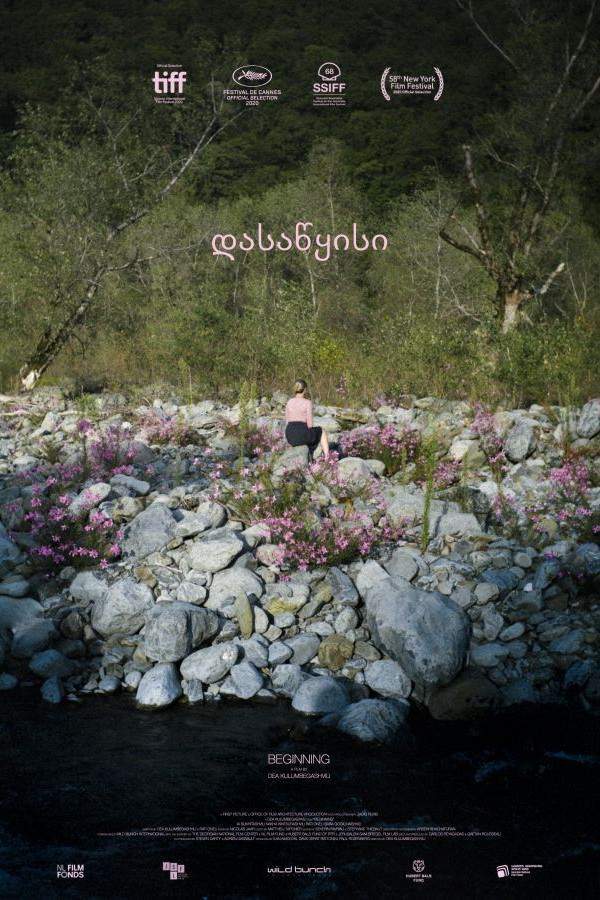
[Ia Sukhitashvili] as Yana, the wife of a Jehovah's Witness religious leader, [Rati Oneli] as David, finds herself increasingly unsettled by life inside a rigid, patriarchal religious community after their Kingdom Hall is firebombed by violent extremists. The event acts as a catalyst for a quiet, painful unraveling, seen through Yana’s interior life as she tries to voice her distress while David repeatedly tells her that something is wrong with her. The shock of the attack exposes a widening gap between her private reality and the world she shares with her husband, who struggles to understand her perspective and to acknowledge the depth of her fear and pain.
A police investigation begins, but the investigation quickly becomes tangled in doubts and pressure. David reports the incident to the authorities, yet they urge him to delete the security footage of the fire. He chooses to approach the church elders to seek funding for a new Kingdom Hall, a decision that leaves Yana alone with their son Giorgi, navigating a growing emotional isolation within their family life. The sense of being unheard or misread deepens as she moves through a sequence of rituals and ordinary days that feel increasingly hostile to her truth.
The trouble intensifies when a detective from Tbilisi, [Kakha Kintsurashvili], arrives at Yana’s door under the guise of questioning about the church fire. His inquiries grow intrusive and personal, probing not only the event but Yana’s private life with her husband. He asks if she feels scared, to which she responds with a clear, prepared honesty:
> Yes
The encounter quickly escalates from uncomfortable to threatening, culminating in a moment where he uses coercive tactics that leave Yana feeling violated and vulnerable. She seeks help at the police station, but is met with bureaucratic ambiguity—the officer cannot confirm the detective’s presence, and Yana is told there is no record of such a visit. Later that night, the same assailant ambushes her near a river and sexually assaults her. The cruelty of the act is underscored by the looming possibility of violence, though he ultimately leaves her unharmed in the moment, continuing to cast a shadow over her trust in others.
Seeking solace, Yana visits her mother and sister, and her mother recounts a harrowing childhood memory of a father who drank and frightened them into hiding, a tale that echoes Yana’s own sense of fragility and fear within the present. When David comes home, he discovers an audio recording of the questions Yana was subjected to, a device that further complicates their already fragile relationship. He listens, and Yana must confront the possibility that he might doubt her account due to the deception embedded in the recording, a doubt that compounds the sense of isolation.
The couple attends a sequence of baptisms, among them Giorgi’s, as they lean into ritual pauses that feel both hopeful and hollow. On the drive back home, David suggests they try to start anew in Tbilisi, a plan that promises escape but also signifies another kind of disconnection from the life they have built. Back at home, Yana makes a drastic and tragic choice: she blends a large number of pills into a smoothie and makes Giorgi drink it. When David asks what happened, she tells him that she has killed their child and refuses to look at him, leaving both of them in a stunned, haunted silence.
In a final, ominous note, the detective from earlier—with the same violent impulse that marked his encounter with Yana—appears elsewhere, hunting with a group and then seems to fade into dust, a stark image that lingers as the film closes.