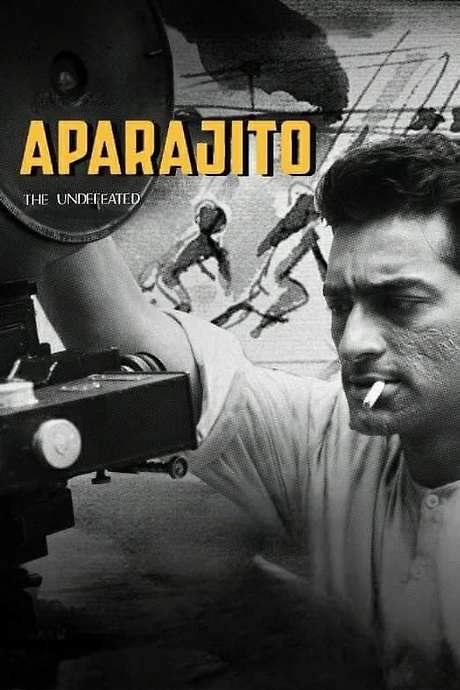
In 1920, Apu and his parents leave their rural Bengal home and start anew in a small apartment in Varanasi, where Harihar works as a priest, devoting himself to prayer, song, and rituals along the ghats of the sacred Ganges. The family’s quiet world is upended when Harihar falls ill with a fever and soon dies, leaving Sarbajaya to shoulder the heavy burden of work as a maid to keep them afloat.
With the help of a kind, supportive great-uncle, Apu and his mother return to Bengal and settle in the village of Mansapota. There, Apu apprentices as a priest, but his heart is moved by a different calling: an education that could expand his future. His mother’s encouragement and persuasive kindness allow him to attend the local school, and he quickly proves himself capable, excelling in his studies and catching the eye of a visiting dignitary and, more importantly, the village headmaster who takes a personal interest in his talent.
As years pass, the teenage Apu earns a scholarship to continue his studies in Kolkata. Sarbajaya, though frightened by the idea of separation and the looming distance between them, supports him with quiet love, packing his suitcase with care. Apu travels by train to the city and begins to work at a printing press after school to help fund his education, gradually growing more used to the bustle and life of the metropolis while the village life he left behind feels increasingly distant. He hopes for visits from his mother, but they come only sporadically, and her loneliness becomes a weight she bears in silence.
Sarbajaya’s health declines, though she keeps her illness hidden to avoid disturbing Apu’s studies. When Apu finally realizes how unwell she is, he returns to Mansapota, only to learn that his mother has died. The loss marks a turning point, as the family’s quiet, stubborn endurance is tested to its limit. In the wake of her death, the question of where Apu belongs—between the village’s familiar rhythms and the city’s restless pull—intensifies.
Soon after, Bhabataran, Apu’s great-uncle, asks him to stay in the village to perform the last rites for his mother. Yet Apu makes a decisive choice: he will carry out the rites in Kolkata and begin his journey back toward the city, where a new chapter of his life and education awaits. The film’s arc lingers on the tension between duty and ambition, between home’s intimate memories and the inexorable draw of the wider world, as Apu moves forward with quiet resolve.