Plot Explained Spoilers guaranteed!
Plot Explained

Browse by genre

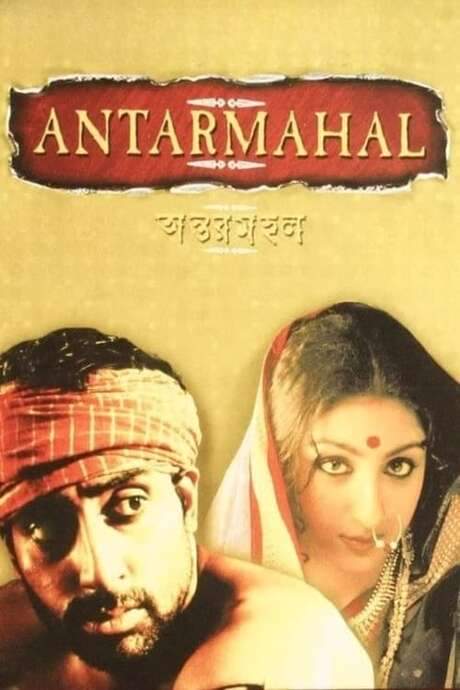
Antarmahal (2005) movie poster

Plot Summary

Antarmahal (2005) Plot Summary Explained

Release, runtime and language
2005 · 118 mins · Bengali, Bangla
Directed by
Rituparno Ghosh
Starring
Abhishek Bachchan, Jackie Shroff, Raima Sen, Biswajit Chakraborty, Roopa Ganguly, Shantilal Mukherjee

Set in late‑19th‑century Bengal, wealthy squire Bhubaneswar Chowdhury (Jackie Shroff) is obsessed with producing an heir and outshining rivals by commissioning the most magnificent Durga Puja effigy. He decides to give the goddess Queen Victoria’s face. While his two wives, Mahomaya and the younger Jashomati, try to protect each other, Chowdhury begins nightly assaults on Jashomati. Isolated, she becomes dangerously attracted to the young sculptor hired for the statue.

On this page (4)
  1. 1 What happens: full plot
  2. 2 Plot questions answered
  3. 3 Movie threads
  4. 4 Every angle

Full plot summary · contains spoilers

What Happens in Antarmahal: Full Plot Summary

The whole story of Antarmahal (2005) explained, from the opening scene to the final frame: every key event, every twist and what it all adds up to. Read it as a quick recap before the sequel, to check a scene you missed, or to finally understand what really happened.

Bhubaneswar Chaudhury [Jackie Shroff] is a zamindar of Bakuldanga in late 19th-century Bengal who plots to win the prestigious Raibahadur title by pleasing the British. To stand out amid a crowd of contenders, he engineers a provocative royal tribute: placing Queen Victoria’s face on the body of the goddess Durga, a clay idol crafted anew each year for the Durga Puja festival, a bold display that unsettles tradition and power alike.

In his relentless bid for an heir, he blames his elder wife for the family’s misfortunes and takes a much younger wife, Jashomati [Soha Ali Khan], who becomes embroiled in a tense ego contest with Mahamaya. The feud between the two women plays out under the shadow of Bhubaneswar’s obsession with succession, as he coaxes conception through a blend of ritual hymns administered by a priest and coercive control.

The troubling marriage routines unfold with brutal insistence: Bhubaneswar rapes Jashomati each night, while a priest recites hymns to aid conception, and Mahamaya—drugged—appears compelled to satisfy the carnal desires of five Brahmin priests. The brutality of these acts underscores the harsh grip of power and domination that threads through the household, even as the household’s public facade seeks prestige and alliance with imperial authority.

Although Jashomati narrowly escapes the worst fate, the trauma of these events lingers, leaving her isolated and vulnerable. In this vulnerable space, she is drawn toward a young sculptor, the figure played by Abhishek Bachchan, whose presence becomes central to the evolving drama. He channels the turmoil into his art, turning the moment into a potent, silent tribute that resonates beyond personal grievance.

As the sculptor’s masterpiece takes shape, it embodies the complex mix of desire, power, guilt, and memory that defines the narrative, casting a long shadow over Jashomati’s fate and the family’s standing. The story draws from Protima, Tarashankar Bandopadhyay’s esteemed work, weaving a dense tapestry of love, ambition, and the costs of colonial-era ambition on intimate lives. The result is a work that remains faithful to its historical milieu while offering a sobering meditation on power, artistry, and the human price of political ambition.

Last updated: February 20, 2026 at 18:43

Was this helpful?

Plot questions answered

Antarmahal Plot Explained: Your Questions Answered

The questions people ask most about Antarmahal (2005): what happens in the confusing scenes, why the characters do what they do, the twists, hidden details and what the ending means. Each answer contains spoilers.

Q1

Why does Bhubaneswar put Queen Victoria's face on the Durga idol?

Bhubaneswar puts Queen Victoria's face on the Durga idol to impress the British and win the prestigious Raibahadur title. With many rivals competing for the honor, he needed a sensational gesture that would stand out. By combining the goddess Durga with Queen Victoria's likeness, he creates a provocative tribute that bridges colonial authority with local religious tradition, demonstrating his willingness to merge power structures for personal gain.

Foreshadowing: Earlier, Bhubaneswar is established as someone who plots and schemes to curry favor with the British colonial administration.

  • queen victoria
  • durga idol
  • raibahadur
  • title
  • colonial
  • bribes
  • favor
Q2

Why does Bhubaneswar marry Jashomati?

Bhubaneswar marries Jashomati specifically to produce an heir and continue his family line. He blames his elder wife Mahamaya for failing to bear him a son, viewing her as the cause of the family's misfortunes. The younger Jashomati is seen as a means to fulfill his obsession with succession and inheritance.

Foreshadowing: The story establishes early that Bhubaneswar is obsessed with producing an heir to maintain his family status.

  • jashomati
  • marriage
  • heir
  • succession
  • mahamaya
  • wives
Q3

What happens to Mahamaya in the film?

Mahamaya, Bhubaneswar's elder wife, is drugged and forced to satisfy the sexual desires of five Brahmin priests as part of a coercive ritual. This brutal practice is tied to Bhubaneswar's desperate attempt to secure an heir, highlighting the extent of his patriarchal control and the household's corruption.

Foreshadowing: The narrative establishes early that Bhubaneswar uses both wives as tools for his obsession with succession.

  • mahamaya
  • priests
  • abuse
  • drugged
  • ritual
  • brahmin
Q4

Why is Jashomati drawn to the sculptor?

Jashomati becomes drawn to the young sculptor because she is traumatized and isolated after the nightly sexual assaults by Bhubaneswar. In her vulnerable and lonely state, she finds emotional connection and understanding through the sculptor, who is creating the Durga idol with Queen Victoria's face. Their relationship develops from this shared artistic space and her desperate need for human kindness.

Foreshadowing: Earlier scenes establish Jashomati's isolation and trauma from the abuse she endures.

  • jashomati
  • sculptor
  • attraction
  • trauma
  • isolation
  • art
Q5

What does the sculptor's artwork represent?

The sculptor's masterpiece embodies the complex mix of desire, power, guilt, and memory that defines the narrative. Created as a tribute to Jashomati, the sculpture channels her turmoil and suffering into a potent, silent tribute. It becomes a tangible monument to her experiences, transforming personal trauma into art.

Foreshadowing: The sculptor's presence becomes central precisely after Jashomati's traumatic experiences unfold.

  • sculpture
  • artwork
  • tribute
  • jashomati
  • masterpiece
  • meaning
Q6

What happens to Jashomati at the end?

The film ends with Jashomati's fate becoming inseparable from the sculpture's creation and reception. The artwork becomes both a metaphorical and literal culmination of the story's tragedy. The ending is ambiguous, focusing on the lingering resonance of trauma and art rather than providing clear resolution about her ultimate fate.

Foreshadowing: The narrative shifts focus to Jashomati's personal resilience and the consequences of the household's actions after she escapes immediate danger.

  • jashomati
  • ending
  • fate
  • death
  • sculpture
  • ambiguous
Q7

Why is Bhubaneswar so desperate for the Raibahadur title?

Bhubaneswar is desperate for the Raibahadur title because it represents the highest honor a zamindar can receive from the British colonial administration. As a wealthy squire in late 19th-century Bengal, acquiring this title would elevate his status above his rivals and cement his legacy. His entire scheme with the Queen Victoria Durga idol is calculated to impress British officials and secure this honor.

Foreshadowing: The opening establishes Bhubaneswar as a zamindar who plots to win favor with the British.

  • raibahadur
  • title
  • ambition
  • colonial
  • british
  • status
  • zamindar
Q8

What is the rivalry between Mahamaya and Jashomati about?

The rivalry between Mahamaya and Jashomati stems from Bhubaneswar's manipulation and the pressure his ambition places on both women. As he pursues an heir, the two wives are forced into an ego contest for power, affection, and influence over his plans. Their conflict plays out under the shadow of his obsession with succession, making them adversaries even as they both suffer under his control.

Foreshadowing: The narrative establishes early that Bhubaneswar blames Mahamaya and encourages competition between his wives.

  • mahamaya
  • jashomati
  • rivalry
  • wives
  • conflict
  • power
Q9

What does the title Antarmahal mean?

Antarmahal translates to 'Inner Palace' or 'Palace Within,' referring to the inner workings of the household where Bhubaneswar's brutal schemes unfold. The title symbolizes the hidden world of domestic oppression, sexual violence, and power dynamics that occur behind the public facade of a respectable zamindari family seeking colonial honors.

Foreshadowing: The story contrasts the household's public pursuit of prestige with its private brutality.

  • antarmahal
  • title
  • meaning
  • inner palace
  • household
Q10

Why is Durga Puja important to the story?

Durga Puja is central to the plot because Bhubaneswar uses the annual festival as a platform for his political maneuvering. The clay idol is crafted anew each year, giving him the opportunity to alter it with Queen Victoria's face. This act of merging colonial power with religious tradition is the centerpiece of his scheme to win favor, making the festival both a religious event and a political statement.

Foreshadowing: The timeline establishes early that Bhubaneswar's plot centers on the Durga idol for the festival.

  • durga puja
  • festival
  • idol
  • queen victoria
  • tradition
  • politics

Movie threads

More Movies Like Antarmahal, by Mood & Story

Curated lists built around what makes Antarmahal tick: the same mood, the same kind of story or the same emotional payoff. Each list explains why these movies belong together.

Claustrophobic period dramas like Antarmahal

Stories where domestic walls become prisons under strict patriarchal rule. If you were captivated by the oppressive atmosphere of Antarmahal, explore more movies that depict the brutal realities of patriarchal control in historical settings. These slow-burn dramas focus on the psychological suffocation and resilience of women confined by societal and domestic structures.

  • claustrophobic
  • oppressive
  • melancholic
  • tragic
  • somber
  • tense
  • Tone: dark, oppressive, tragic
  • Pacing: slow burn
Why these movies?

The story pattern: Narratives in this thread typically follow characters, often women, trapped within a rigid household hierarchy. The plot is driven by the constant pressure of societal expectations and the struggle for autonomy, where moments of quiet rebellion contrast with the overwhelming force of tradition.

Why they belong together: Movies are grouped here based on their shared, intensely claustrophobic atmosphere rooted in historical patriarchy. They share a slow pacing that allows the oppressive setting to become a central character, a dark tone, and a heavy emotional weight derived from the characters' systemic powerlessness.

Movies about art as rebellion like Antarmahal

Where artistic expression becomes a fragile act of defiance against overwhelming power. For viewers who appreciated the theme of dangerous artistic expression in Antarmahal, this list features films where creativity emerges as a beacon of hope or defiance amidst dark and traumatic circumstances. Discover stories where art becomes a character's sole means of reclaiming their humanity.

  • tragic
  • melancholic
  • poignant
  • somber
  • tense
  • artistic
  • Tone: tragic, melancholic, poignant
  • Pacing: slow, contemplative
Why these movies?

The story pattern: These stories often follow a protagonist enduring a harsh reality who finds a sliver of agency through an artistic pursuit. The artistic process runs parallel to the main narrative of suffering, creating a poignant contrast and offering a potential, though often ambiguous, path to psychological survival.

Why they belong together: These films are connected by their central theme of art's role in the face of adversity. They share a mix of dark, traumatic themes with moments of delicate, poignant beauty, creating a complex emotional landscape defined by the tension between destruction and creation.

Every angle

Antarmahal (2005) Explained: Plot, Timeline & Characters

Everything about Antarmahal in one place: what happens in the plot summary, the timeline in chronological order, the characters and meaning and a spoiler-free summary. What's After the Movie adds the cast, box office and post-credit scenes.

Coming soon on iOS and Android

The Plot Explained Movie Summary App

Plot summaries, endings explained and timelines on your phone. Catch up on any movie in minutes, save your favorites and never miss a twist again.

Be the first to know when we launch. Your email stays private, always.

Learn more about the app