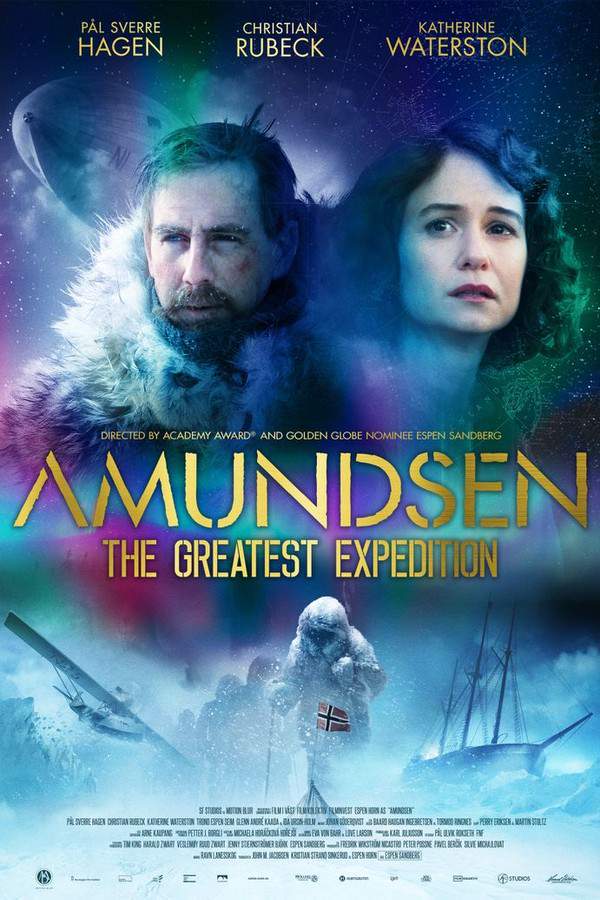
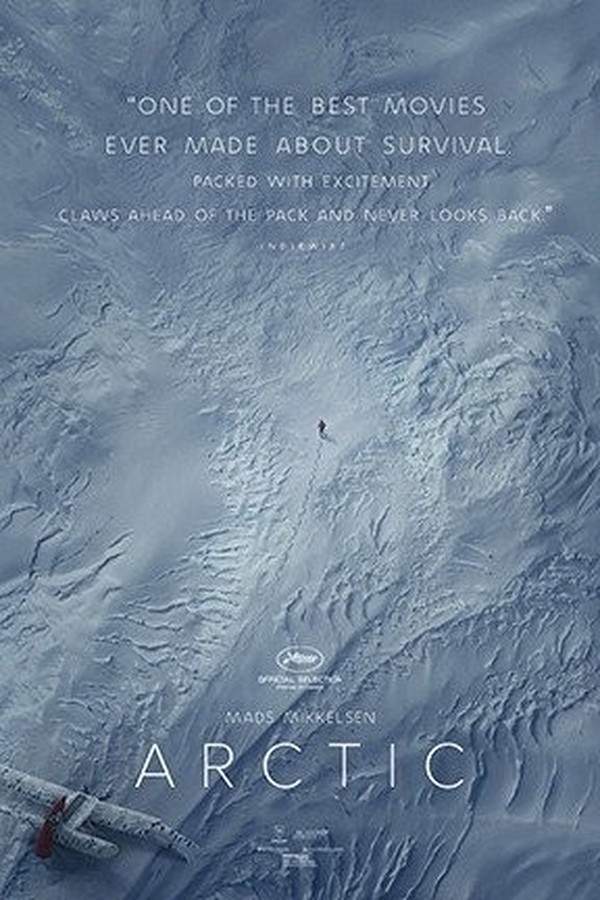
In a fierce Arctic storm, the elderly Roald Amundsen crashes his plane, stranding him and a small group of companions. As the world assumes he has perished, his brother Leon Amundsen recounts the explorer’s life to Roald’s Alaskan lover, Bess Magids, weaving together memory and myth to keep his legacy alive. The tale moves between past and present, letting Roald hear again the choices that defined a career built on daring and doubt.
From boyhood fascination to fearless exploration, Roald and Leon are drawn to the poles on a globe, their imaginations sparked by the unknown at the world’s edge. As young men they push into the Northwest Passage, charting a course that earns respect even as some peers question the cost. Among the voices of the era, their ambition stands out: a stubborn blend of scientific curiosity and a hunger for achievement. The film quietly situates these early impulses against a backdrop of competing heroics and the political currents of the era, painting a portrait of a man who could be both genius and too quick to take risks.
When the chance arises to join a race to the North Pole, Amundsen and his team secure funding by pledging that science will take precedence over speed. News arrives that Frederick Cook has claimed the Pole, a claim many dismiss as dubious but enough to unsettle his plans. Rather than chase an unproven triumph, Roald contemplates the South Pole, a bold pivot kept close to the chest until the moment of departure. In 1910 he reveals the truth to his crew, and a formal letter to the King signals that a promised scientific expedition to the North may still come to pass. The expedition to Antarctica follows, where Roald’s relentless drive to advance knowledge appears reckless to some and inspirational to others.
In the frozen continent, Roald dismisses some crew members who doubt his methods, while the rest press on and eventually reach the Pole. They plant a Norwegian flag and leave a courteous note for Scott, a gesture that stirs mixed reactions back home. In Europe, the memory of Scott’s obituary-like heroism contrasts with a widely held view of Amundsen as something of an ungentlemanly trickster. Yet Roald finds a warmer welcome in Norway, where his personal life with Kiss Bennett Kiss Bennett brings a fragile normalcy to the storm of his public reputation. That balance is interrupted when he learns he must honor his promise to sail toward the North Pole by drifting on sea ice, a demand that unsettles his colleagues and tests his resolve.
Three years into a five-year mission, Roald abandons his shipmates and heads to Alaska, chasing a new, almost quixotic dream: to fly to the Pole. The pursuit inflames his brother Leon, who struggles with the expense and the risk of such a journey. Eventually Roald’s dream overtakes the old plan and catastrophe follows—a plane crash that eerily mirrors the opening scene and seems to seal the circle of his adventures. Yet Roald and his copilots salvage something of a return, building a makeshift runway and making it home to Norway to a public that both celebrates and questions him. Leon and Bess experience relief, even as Roald staunchly resists reconciliation with his brother while proposing marriage to Bess, who agrees to wed him only after he reaches the North Pole, a goal he achieves in a dramatic moment aboard Umberto Nobile’s airship.
Back on solid ground, Roald publishes an autobiography that many find blunt and abrasive, further alienating some supporters even as it solidifies his place in history. In a final, desperate bid to repair his standing, he sets out to rescue Nobile, whose airship has crashed in a storm. The rescue mission culminates in another plane crash, the very moment the film opened on—yet this time Roald’s fate is sealed. In the quiet aftermath, Leon smashes the glass Earth globe they once admired as children, a small, aching gesture of closure that underscores the bittersweet truth at the heart of Amundsen’s legend: ambition can carry a life to grand heights and dark depths alike.
- Bess Magids plays a pivotal emotional bridge between Roald’s private life and his public feats, offering a steadying counterpoint to his volatile career.
- Leon Amundsen remains a constant chorus in Roald’s life, his memory guiding the narration and shaping the storytelling frame as the audience watches decades unfold.
- Kiss Bennett embodies the personal cost of a life spent chasing impossible horizons, providing intimate moments that ground the larger-than-life journey in human connection.
- Sverre Hassel and Helmer Hanssen appear as colleagues whose fates mirror the film’s themes of loyalty, risk, and resilience in the face of uncertainty.
This cinematic portrait blends archival ambition with intimate relationships, tracing how a charted life becomes a deeply personal saga. It invites viewers to weigh the price of pioneering spirit against the glow of achievement, inviting reflection on what it means to chase the Pole—and what must be left behind when a life’s work demands everything.