Plot Explained Spoilers guaranteed!
Plot Explained

Browse by genre

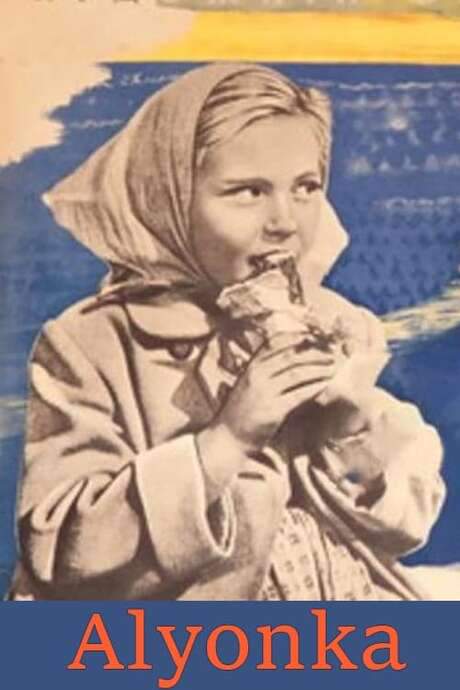
Alyonka (1962) movie poster

Plot Summary

Alyonka (1962) Plot Summary Explained

Release, runtime and language
1962 · 86 mins · Russian
Loading streaming availability…
Directed by
Boris Barnet
Starring
Natalya Seleznyova, Vasiliy Shukshin, Nikolay Kryuchkov, Yevgeni Shutov, Anatoli Grachyov, Erast Garin

During the 1955 Soviet resettlement to Kazakhstan’s steppes, a caravan of settlers heads back from the frontier to the canal. Thirteen‑year‑old Alenka persuades chief mechanic Dmitry Prokovich to give up his truck seat for a young mother, and they share the open‑truck with a dental graduate, hitchhiker Stefan and his dog, and Vasselina Petrovolka, returning after a river accident. The film offers a warm portrait of ordinary people on the road.

On this page (5)
  1. 1 Where to watch
  2. 2 What happens: full plot
  3. 3 Plot questions answered
  4. 4 Movie threads
  5. 5 Every angle
Loading streaming availability…

Full plot summary · contains spoilers

What Happens in Alyonka: Full Plot Summary

The whole story of Alyonka (1962) explained, from the opening scene to the final frame: every key event, every twist and what it all adds up to. Read it as a quick recap before the sequel, to check a scene you missed, or to finally understand what really happened.

Set against the Kazakh steppes in the mid-1950s, the film follows the people who answer the call of the Virgin Lands Campaign. During harvest season, nine-year-old Alyonka, Natalya Ovodova leaves her parents and travels 500 kilometers to the district center to continue her schooling, as the newly established state farm in the Virgin Lands area has no school yet. Along the way, her fellow travelers share stories of their lives and loves during the long journey. The film unfolds as a tapestry of vignettes, with each tale recounted through Alyonka’s childlike perspective, turning personal memories into a broader portrait of a nation trying to redefine itself in a harsh but hopeful landscape.

One thread follows Elsa Kalnyn, a young dentist who moves from Riga to work in the Virgin Lands after graduating from medical school. Facing challenges such as the lack of a proper office and dental chair in the state farm’s medical post, Elsa sets off on an adventurous trip to the district center Aryk to procure the necessary equipment, illustrating the improvisation and resilience that life on the frontier demanded.

Alyonka herself recounts a humorous episode where she decides to earn five failing grades at school, nearly driving her kind and elderly teacher Vitaminych, Erast Garin, to despair. The moment highlights both the lighthearted mischief of a curious child and the patient, steady presence of an educator trying to keep pace with changes sweeping the region.

Another tale features Lida, Maya Menglet, a city girl from Moscow who grows bored with life on a Komsomol construction site in Belogorsk, where her tractor-driver husband, Stepan Revun, Vasily Shukshin, had taken her. The couple moves to the Virgin Lands, but their marital struggles persist, further complicated by the absence of a registry office (ZAGS) in the state farm, underscoring the bureaucratic and social hurdles that accompany personal upheaval in a rapidly expanding settlement.

Lastly, the story of Vasilysa Petrovna, Irina Zarubina, a kindhearted Russian woman, is marked by tragedy. Her daughter Liza, Natalya Seleznyova, dies heroically while trying to save the seed reserves. Despite the loss, Vasilysa’s other daughter, living in a Siberian village, resolves to take her late sister’s place and come to the Virgin Lands, a testament to family loyalty and the stubborn hope that sustains people when faith in a collective project is tested by sorrow and distance.

Together, these intertwined stories form a moral and emotional map of the Virgin Lands Campaign, showing how young and old alike navigate ambition, danger, and everyday grace. The film uses Alyonka’s fresh, observant lens to connect intimate moments with sweeping historical change, offering a compassionate, human-centered view of a monumental chapter in the region’s history.

Last updated: October 05, 2025 at 12:06

Was this helpful?

Plot questions answered

Alyonka Plot Explained: Your Questions Answered

The questions people ask most about Alyonka (1962): what happens in the confusing scenes, why the characters do what they do, the twists, hidden details and what the ending means. Each answer contains spoilers.

Q1

Why does Alyonka travel alone to the district center?

Alyonka travels 500 kilometers alone because the newly established state farm in the Virgin Lands has no school yet. At nine years old, she leaves her parents to continue her schooling at the district center, reflecting how frontier settlements had to adapt quickly to accommodate families and education.

  • alyonka journey
  • virgin lands school
  • frontier education
  • child travel alone
Q2

Why does Elsa travel to Aryk?

Elsa, a young dentist who moved from Riga to work in the Virgin Lands, travels to the district center of Aryk because the state farm's medical post lacks proper equipment. She has no dental chair or office, so she makes the trip to procure the necessary tools for her practice, illustrating the improvisation required in frontier healthcare.

  • elsa kalnyn
  • dentist
  • aryk
  • dental equipment
  • frontier healthcare
Q3

Why does Alyonka get five failing grades?

Alyonka deliberately earns five failing grades as a humorous episode of childhood mischief. She decides to test the school system, nearly driving her elderly teacher Vitaminych to despair. The moment showcases both the lighthearted curiosity of a child navigating new educational systems and the challenges frontier teachers faced.

  • alyonka grades
  • vitaminych teacher
  • school failing
  • frontier education
  • child mischief
Q4

Why can't Lida and Stepan register their marriage at the state farm?

Lida and Stepan cannot register their marriage at the state farm because there is no ZAGS, the Soviet registry office, in the Virgin Lands settlement. This absence creates legal and bureaucratic complications for their marriage, highlighting the infrastructural gaps that accompanied rapid frontier expansion.

  • lida stepan
  • zags registry
  • virgin lands bureaucracy
  • marriage registration
  • frontier infrastructure
Q5

Why does Liza die heroically?

Liza, Vasilysa Petrovna's daughter, dies while trying to save the seed reserves during an accident. Her heroic death underscores the high stakes of agricultural work in the Virgin Lands Campaign, where protecting the season's planting materials was crucial for the community's survival and success.

  • liza death
  • seed reserves
  • vasilysa petrovna
  • heroic sacrifice
  • virgin lands danger
Q6

Why does Vasilysa's other daughter decide to come to the Virgin Lands?

After Liza's death, Vasilysa's other daughter, living in a Siberian village, resolves to take her late sister's place and come to the Virgin Lands. This decision embodies family loyalty and the stubborn hope that sustains people, showing how tragedy strengthens rather than breaks the family's commitment to the collective project.

  • vasilysa petrovna
  • daughter comes
  • siberian village
  • family loyalty
  • virgin lands promise
Q7

Why is the film told through Alyonka's perspective?

The film uses Alyonka's childlike perspective as a framing device, with each character's story told as a vignette she narrates. This structure allows the audience to experience the Virgin Lands Campaign through innocent eyes, turning personal memories into a broader, compassionate portrait of a nation redefining itself.

  • alyonka narrator
  • perspective frame
  • vignettes
  • child viewpoint
  • storytelling structure
Q8

Why do so many different people come to the Virgin Lands?

People come to the Virgin Lands from across the Soviet Union to participate in the Virgin Lands Campaign, a massive effort to cultivate the Kazakh steppes. The film shows young dentists, city girls, tractor drivers, and families all drawn by the promise of new opportunities, each facing different challenges in building a collective future.

  • virgin lands campaign
  • soviet resettlement
  • kazakh steppes
  • frontier life
  • migration

Movie threads

More Movies Like Alyonka, by Mood & Story

Curated lists built around what makes Alyonka tick: the same mood, the same kind of story or the same emotional payoff. Each list explains why these movies belong together.

Hopeful group journey stories like Alyonka

Stories about disparate people finding connection and strength on a shared path. If you enjoyed the compassionate portrait of travelers in Alyonka, you'll like these other movies about groups on a journey. Find similar films exploring community, resilience, and the small human connections that form when people share a common path.

  • hopeful
  • compassionate
  • human
  • reflective
  • community
  • perseverance
  • Tone: hopeful, compassionate
  • Pacing: steady, observational
Why these movies?

The story pattern: Narratives in this thread typically follow a group of characters, often strangers or acquaintances, brought together by a shared journey. The plot unfolds through vignettes and character interactions, emphasizing personal growth, collective effort, and the emergence of a makeshift family or community bond.

Why they belong together: Movies are grouped here because they share a hopeful tone, a steady pacing that allows for character observation, and a central theme of finding light and human connection even in difficult circumstances, all framed by a journey that serves as a unifying narrative device.

Gentle observational coming-of-age films like Alyonka

Character-driven stories where a young protagonist learns about life by watching the adults around them. For viewers who liked Alyonka's perspective through a child's eyes, this list features similar gentle coming-of-age movies. Discover films where a young character's growth is shown through their quiet observation of the world and the adults in it, often set against a backdrop of everyday life or historical change.

  • gentle
  • reflective
  • nostalgic
  • compassionate
  • warm
  • coming of age
  • Tone: hopeful, reflective, gentle
  • Pacing: steady, character-driven
Why these movies?

The story pattern: The narrative pattern focuses on a young protagonist who is more of an observer than an active driver of the plot. Their personal growth arc is subtle, built from witnessing the joys, sorrows, and moral choices of the adult characters around them, leading to a quiet but significant shift in their understanding of the world.

Why they belong together: These films share a low-intensity, hopeful mood, a steady pacing that allows for reflection, and a specific narrative lens: the maturation of a young person achieved not through dramatic action, but through empathetic observation and the accumulation of life's small lessons.

Every angle

Alyonka (1962) Explained: Plot, Timeline & Characters

Everything about Alyonka in one place: what happens in the plot summary, the timeline in chronological order, the characters and meaning and a spoiler-free summary. What's After the Movie adds the cast, box office and post-credit scenes.

Coming soon on iOS and Android

The Plot Explained Movie Summary App

Plot summaries, endings explained and timelines on your phone. Catch up on any movie in minutes, save your favorites and never miss a twist again.

Be the first to know when we launch. Your email stays private, always.

Learn more about the app