Plot Explained Spoilers guaranteed!
Plot Explained

Browse by genre

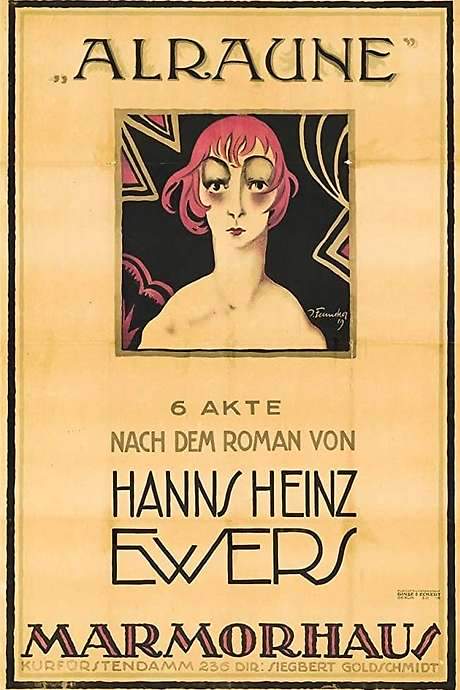
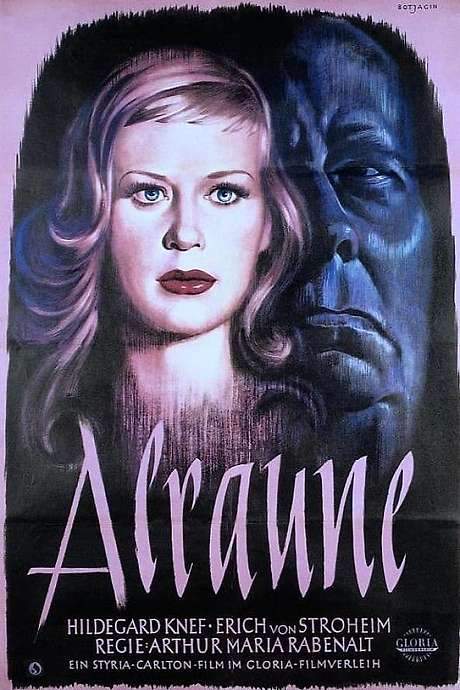
Alraune (1952) movie poster

Plot Summary

Alraune (1952) Plot Summary Explained

Release, runtime and language
1952 · 92 mins · German
Loading streaming availability…
Directed by
Arthur Maria Rabenalt
Starring
Hildegard Knef, Erich von Stroheim, Karlheinz Böhm, Rolf Henniger, Trude Hesterberg, Willem Holsboer

In the 1800s, a tempestuous romance ignites between a young medical student and a woman who believes she is the daughter of his scientist uncle—a man the student has never met. Neither knows that she is actually the product of the uncle's illegal artificial insemination experiments, existing outside the laws of God and man.

On this page (6)
  1. 1 Where to watch
  2. 2 What happens: full plot
  3. 3 Plot questions answered
  4. 4 Movie threads
  5. 5 Movies like Alraune
  6. 6 Every angle
Loading streaming availability…

Full plot summary · contains spoilers

What Happens in Alraune: Full Plot Summary

The whole story of Alraune (1952) explained, from the opening scene to the final frame: every key event, every twist and what it all adds up to. Read it as a quick recap before the sequel, to check a scene you missed, or to finally understand what really happened.

In a moody, early 20th-century Gothic tale, Professor Jacob ten Brinken, Erich von Stroheim, loses his university teaching post because of an obsession with artificial insemination. He secretly uses the sperm of a male murderer condemned to death by hanging to artificially impregnate a female prostitute, and then raises the child as his own. The result is Alraune, a name that evokes both the mandrake root and a troubling lineage, foreshadowing the peculiar blend of beauty and danger she embodies. The film follows her growth from a peculiar, almost mythic presence into a woman who disrupts the lives of everyone around her.

As a medical student, Frank Braun, Karlheinz Böhm, arrives at the ten Brinken estate seeking a loan. He is drawn to Alraune, now a striking and intelligent young woman, and the pair quickly fall in love. Alraune announces she plans to leave her father to join Frank in Paris, but Ten Brinken warns Frank that she can “lure men to their demise.” Frightened and enthralled, Frank travels to Paris without her, leaving her devastated and angry. Her sense of morality slips, and she begins to operate in a world that seems to reward manipulation and desire rather than conscience.

Back at the estate, Alraune’s charm becomes a weapon she wields to test and torment men who cross her path. She goes horseback riding with Gerald, Harry Meyen, during a rainstorm, enjoys a carriage ride with Mathieu, Hans Cossy, and poses for Ralph as he paints her. When a necklace goes missing, she accuses Mlle. Duvaliere, Denise Vernac, a made-up theft that costs her mentor a job—an accusation that is later unmasked as a calculated move by Doctor Mohn, Harry Halm, who stole the piece to push himself into Alraune’s orbit and to attract her attention.

Months pass and Frank returns from his studies, now ready to begin a life with Alraune. Yet he remains wary of her power. Although she loves him, she discovers that love cannot easily reconcile with the destruction she has caused in others’ lives. Feeling betrayed and increasingly isolated, Alraune pleads for Frank’s help and even sheds real tears, prompting Frank to reevaluate the “unnatural being” he was told to fear. He realizes there may be genuine emotion beneath her carefully crafted facade, and he agrees to rekindle their romance and plan an elopement.

Yet Ten Brinken stands in the way, convinced that Alraune’s very presence will ruin both her life and his. Meanwhile, a dwindling sulfur spring on the land becomes a metaphor for dwindling hope; Dr. Mohn threatens to expose Ten Brinken’s illegal experiments if he does not flee with Alraune and the remaining money from the land deal. Alraune grapples with her own sense of worth and destiny, convinced that she is nothing more than “the bringer of destruction” born of a cruel experiment.

Frank, however, speaks to Alraune of a more nuanced truth: good and evil coexist within every person, regardless of their origins. He urges her to believe that her capacity for love can prevail over the darker impulses she has learned to wield. Together, they return to the estate, where Ten Brinken prepares to stop their plan by any means necessary. He shoots Alraune, uttering, Now the toy is broken—the crime against nature that God didn't want. The act is fatal for Alraune, who dies and dissolves into a mandrake root, the embodiment of her double-edged nature.

In the aftermath, Ten Brinken is arrested for murder and is ultimately hanged for the crime against his own child. The film ends on a haunting note about creation, conscience, and the ambiguous line between science and humanity, leaving the question of whether Alraune’s power was ever truly “evil” or merely a mirror reflecting the fears of those who tried to control her.

Characters and performances color this complex tragedy, with the strong supporting cast shaping the estate’s dynamics and the social tensions that swirl around Alraune’s fate:

- Alraune, the central figure whose beauty and potency provoke desire and danger, Hildegard Knef

- Professor Jacob ten Brinken, her father and the man who created her, Erich von Stroheim

- Frank Braun, the student who loves her but wrestles with what she represents, Karlheinz Böhm

- Mlle. Duvaliere, a teacher acquitted of theft amid the plot’s intrigues, Denise Vernac

- Doctor Mohn, the physician who manipulates events to gain Alraune’s attention, Harry Halm

- Mathieu, the carriage driver whose fate foreshadows the danger surrounding Alraune, Hans Cossy

- Gräfin Wolkonska, a powerful figure at the estate, Trude Hesterberg

- Count Geroldingen, a noble who crosses paths with Alraune, Harry Meyen

- Olga Wolkonska, a member of the household, Julia Koschka

- Lisbeth, a member of the household circle, Gardy Brombacher

This adaptation preserves the original’s psychological intensity and moral questions while presenting them with a more expansive, reader-friendly narrative cadence. The film’s striking imagery, the tension between scientific ambition and ethical restraint, and the ultimate tragedy all cohere to create a meditation on how far love, science, and desire can be pushed before they fracture what remains human.
Last updated: October 09, 2025 at 10:46

Was this helpful?

Plot questions answered

Alraune Plot Explained: Your Questions Answered

The questions people ask most about Alraune (1952): what happens in the confusing scenes, why the characters do what they do, the twists, hidden details and what the ending means. Each answer contains spoilers.

Q1

Why did Professor ten Brinken use a murderer's sperm to create Alraune?

Ten Brinken was obsessed with artificial insemination research and conducted the experiment illegally. He specifically chose the sperm of a condemned murderer to see what traits would result from such an unnatural conception, believing the child would embody the criminal nature of her biological father. This experiment was the basis for creating Alraune.

Foreshadowing: The film's opening establishes ten Brinken's obsession with unethical scientific experimentation.

  • ten brinken
  • artificial insemination
  • murderer
  • experiment
  • creation
Q2

Why does ten Brinken warn Frank about Alraune's dangerous nature?

Ten Brinken warns Frank because he knows that Alraune's genetic heritage from a murderer makes her inherently dangerous. He has observed her ability to lure and destroy men, and he believes she will bring ruin to anyone who loves her. His warning reveals both his guilt over creating her and his fear of what she represents.

Foreshadowing: This warning foreshadows the tragic events that follow as Alraune's charm leads multiple men to their downfall.

  • ten brinken
  • frank
  • warning
  • danger
  • men
Q3

Why does Frank leave for Paris without Alraune after the warning?

Frank is terrified by ten Brinken's warning that Alraune can lure men to their demise. Though he loves her, the warning about her dangerous nature combined with his fear causes him to abandon their plan to go to Paris together. He leaves her behind, which devastates Alraune and sets her on a path of manipulation and revenge.

Foreshadowing: Frank's departure plant the seeds for Alraune's transformation into a destructive force.

  • frank
  • paris
  • departure
  • fear
  • ten brinken warning
Q4

Why does Doctor Mohn steal the necklace and frame Duvaliere?

Doctor Mohn steals the necklace to manipulate his way into Alraune's circle. By framing Duvaliere (Alraune's teacher), he removes a rival for Alraune's attention and positions himself closer to her. This calculated act demonstrates Mohn's manipulative nature and his obsession with possessing Alraune.

Foreshadowing: This scheme establishes Mohn as a primary antagonist who will later threaten ten Brinken with exposure.

  • doctor mohn
  • necklace
  • theft
  • duvaliere
  • manipulation
Q5

Why does Alraune start manipulating and destroying men?

Alraune becomes destructive primarily due to Frank's abandonment, which leaves her feeling betrayed and angry. Her sense of morality slips as she enters a world that rewards manipulation. Additionally, her unique nature as a created being outside normal social bonds contributes to her lack of conventional conscience. She uses her beauty as a weapon to test and torment men who cross her path.

Foreshadowing: Her transformation connects to the earlier warnings about her dangerous nature.

  • alraune
  • manipulation
  • men
  • revenge
  • transformation
Q6

Why does Professor ten Brinken shoot and kill Alraune?

Ten Brinken kills Alraune when he discovers she plans to elope with Frank. He cannot bear to lose her to another man and views her departure as the final failure of his experiment. He declares the act a crime against nature that God did not want, believing he is correcting his mistake by destroying his creation rather than letting her belong to someone else.

Foreshadowing: This tragic climax fulfills the film's foreshadowing about Alraune's destructive potential and ten Brinken's obsession.

  • ten brinken
  • shooting
  • murder
  • elopement
  • crime against nature
Q7

Why does Alraune dissolve into a mandrake root when she dies?

When Alraune dies, she dissolves into a mandrake root, which is the plant her name evokes. This transformation represents her true nature as an unnatural creation, the product of ten Brinken's forbidden experiment. Her dissolution symbolizes that she was never truly human but rather a biological curiosity that returns to its vegetative origins upon death.

Foreshadowing: The name Alraune (mandrake) throughout the film foreshadows this transformation.

  • alraune
  • mandrake
  • root
  • death
  • transformation
  • nature
Q8

Why does Frank decide to help Alraune despite her destructive actions?

Frank decides to help Alraune after seeing her shed genuine tears and plead for his help. He realizes she is capable of real emotion beneath her manipulative exterior, challenging his belief that she is soulless. He comes to believe that good and evil coexist in everyone regardless of origin, and that her capacity for love can overcome her darker impulses.

Foreshadowing: This moment represents Alraune's potential for redemption through love.

  • frank
  • forgiveness
  • redemption
  • love
  • emotion
  • good and evil
Q9

What is the significance of the drying sulfur spring in the story?

The sulfur spring represents dwindling hope and resources on the estate. Its drying up coincides with the escalating conflicts, Dr. Mohn uses the failing land deal to pressure ten Brinken, threatening to expose his illegal experiments unless he flees with Alraune and the remaining money. The dead spring mirrors the dying possibilities for redemption in the narrative.

Foreshadowing: The failing spring foreshadows the collapse of the estate's social order and the final tragedy.

  • sulfur spring
  • land deal
  • money
  • desperation
  • mohn
Q10

Why is Professor ten Brinken executed for killing Alraune?

Ten Brinken is arrested and hanged for murder because he deliberately shot and killed his own child. Though he created Alraune through unethical means, the law still considers killing her murder. His execution represents the ultimate consequence of his scientific hubris, he is punished for the crime of destroying his own creation, the very experiment that cost him his university position.

Foreshadowing: The ending completes the tragic arc where ten Brinken faces the ultimate price for his actions.

  • ten brinken
  • hanging
  • execution
  • murder
  • punishment
  • justice
Q11

Why does Alraune allow Duvaliere to be fired for a theft she didn't commit?

Alraune allows the false accusation because at this point in the story, she has embraced manipulation as a tool. She does not actively orchestrate the accusation but allows it to happen, showing how her moral compass has shifted after Frank's abandonment. This incident demonstrates her growing willingness to let others suffer for her benefit without remorse.

Foreshadowing: This event marks a turning point in Alraune's moral decline.

  • alraune
  • duvaliere
  • theft
  • accusation
  • firing
  • manipulation
Q12

What does Alraune mean when she calls herself the bringer of destruction?

Alraune believes she is destined to destroy everyone around her due to her unnatural origins. She sees herself as a creature born from crime and scientific hubris, inherently incapable of causing anything but ruin. This belief shapes her actions throughout the film and reflects her internal struggle with identity and worth. Frank challenges this fatalistic view by arguing that she can choose her own path.

Foreshadowing: This self-perception drives much of Alraune's behavior and her eventual tragic end.

  • alraune
  • destruction
  • destiny
  • identity
  • origin
  • fate

Movie threads

More Movies Like Alraune, by Mood & Story

Curated lists built around what makes Alraune tick: the same mood, the same kind of story or the same emotional payoff. Each list explains why these movies belong together.

Gothic Tragedies of Scientific Hubris like Alraune

Stories where forbidden experiments create beings that lead to their creators' downfall. If you were captivated by the dark, tragic premise of Alraune, explore more movies like it. These films delve into themes of forbidden science, artificial life, and the heavy price of meddling with nature, often set against a gothic backdrop with a somber, fatalistic tone.

  • gothic
  • tragic
  • unsettling
  • melancholic
  • fated
  • psychological
  • Tone: dark, melancholic, tragic
  • Pacing: steady, deliberate
Why these movies?

The story pattern: Narratives in this thread typically follow a linear, steady progression from a hubristic act of creation to an escalating sense of dread and inevitable destruction. The central conflict pits the creator against their creation, often exploring themes of nature versus nurture, free will, and the burden of existential loneliness, culminating in a bleak conclusion for all involved.

Why they belong together: Movies are grouped here for their shared dark tone, focus on the ethics of creation, and the melancholic, psychological tension that arises from a being existing outside natural laws. They feature a similar emotional weight and a pacing that methodically builds towards a tragic, fated ending.

Movies with Doomed Love and Psychological Dread like Alraune

Romantic relationships tainted by a pervasive sense of psychological unease and impending tragedy. For viewers who appreciated the tragic romance and psychological tension in Alraune, this collection features similar movies. Discover films where love is intertwined with dark secrets, a sense of destiny, and a steady build-up of dread, resulting in a powerfully sad and heavy viewing experience.

  • tragic romance
  • psychological tension
  • melancholic
  • doomed
  • unsettling
  • heavy
  • Tone: dark, tense, tragic
  • Pacing: steady, slow burn
Why these movies?

The story pattern: The narrative pattern involves a romance developing under a cloud of mystery, taboo, or supernatural fate. The pacing is steady, focusing on the gradual erosion of happiness by psychological unease, hidden truths, or external forces, leading to a climax where love is ultimately destroyed by circumstance or inherent tragedy.

Why they belong together: These films share a specific emotional mix: a significant romantic element scored by high sadness, a dark tone, and a consistent feeling of psychological dread. They are united by a steady pacing that allows tension to simmer and a narrative that privileges tragic atmosphere over hopeful resolution.

If you liked this

Movies Like Alraune

Similar movies to Alraune: the same genre, themes or kind of story. Each one comes with its own plot summary, timeline and ending explained.

Browse all movie summaries

Every angle

Alraune (1952) Explained: Plot, Timeline & Characters

Everything about Alraune in one place: what happens in the plot summary, the timeline in chronological order, the characters and meaning and a spoiler-free summary. What's After the Movie adds the cast, box office and post-credit scenes.

Coming soon on iOS and Android

The Plot Explained Movie Summary App

Plot summaries, endings explained and timelines on your phone. Catch up on any movie in minutes, save your favorites and never miss a twist again.

Be the first to know when we launch. Your email stays private, always.

Learn more about the app