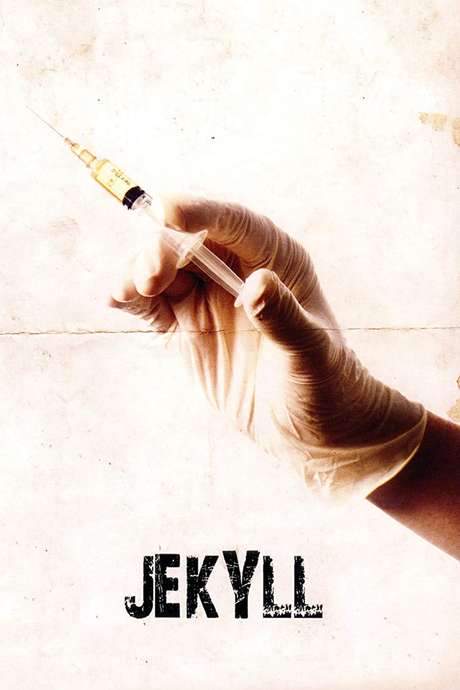
A group of medical students watches Dr. Knute Lanyon perform brain surgery at Our Lady of Pain and Suffering Hospital in Los Angeles, a turning point that sets off a cascade of impossible demands. The hospital’s most powerful patron, Hubert Howes, the world’s richest man, views a recording of the procedure from his bed and presses for a daring proposal: a total transplant that would replace every organ at once. Howes threatens to blow up the hospital if his plan isn’t carried out, turning the operating room into a high-stakes battleground. The hospital overseer and Jekyll’s future father-in-law, Dr. Carew, makes his opposition crystal clear—no marriage to Mary unless Jekyll agrees to follow Howes’s command.
In the charity ward, Mary visits, frustrated that she missed their lunch date because he was absorbed in his work. [Dr. Knute Lanyon] flirts with her, mixing professional interest with personal tension, while Ivy Venus, a patient who also works at a nightclub, flirts with Jekyll and invites him to her world beyond the hospital walls. The atmosphere pulses with desire and danger as Jekyll’s life begins to braid with a second, more reckless impulse.
Back in his lab, Jekyll prepares two white powders on a square mirror, intent on controlling his experiments. The strain weighs on him; he drops the powders, nods off, and inhales the drug by accident. In an instant, he awakens with a surge of wild confidence and a new alter ego rising from within. The transformation is instantaneous and complete, a shift that reshapes his fate and the fate of everyone around him. Now driven by a different persona, he steals a car and heads to Ivy’s nightclub, where she performs on stage. Ivy leads him to a private room backstage, and the two share a charged moment that marks the birth of a dangerous duality—an inner conflict that will pull him toward things he never imagined.
The days that follow become a volatile mix of ambition, passion, and escalating risk. Jekyll’s attempts to dispose of the drug fail again and again, only upping the stakes as his alternate self embraces opportunities for mischief and sensation that Jekyll would never dare to pursue. He secures a research grant and is invited to a ceremony in London, a prize that could fund his experiments and, perhaps, Ivy’s affection. Hyde, sensing a chance to push boundaries, finds Ivy at an arcade and, for a moment, seems to swerve toward a life without limits. Ivy tries to reconcile her loyalties, telling him she prefers Jekyll to Hyde, but when Hyde reveals that they are the same man, her belief shatters; in frustration, Hyde wrecks an arcade game, and Ivy is electrocuted in the chaos.
Hyde flies from Los Angeles to London, boarding a plane after a tense confrontation at the airport, while Ivy survives and travels by train, vowing revenge. The London ceremony becomes a fever dream of spectacle and superstition. During the event, George Chakiris accepts the award on Jekyll’s behalf while the remaining vial of the drug is announced as donated. Hyde swings down from the balcony, seizes the microphone, and sings, turning the room into a maelstrom of startled awe and growing fear. The revelation that Jekyll and Hyde are the same man excites Mary, who is drawn to the unpredictable new personality, while Ivy’s wish for vengeance intensifies the clash of affections around him.
The chaos spills into the foggy streets as Hyde flees the crowd, chased by an amused and frightened audience. He vanishes at the edge of a building, plummeting into a moment that collapses the illusion of control. When Jekyll awakens, he insists that the drugs exposed the two halves of his split personality, but the truth feels less like science and more like fate. Mary, torn between her steadfast love for the doctor and the dangerous allure of Hyde, agrees to a complicated arrangement that would bind both women to the evolving equation of Jekyll’s life. Ivy, revived and resolute, makes her own pact with the future, intent on shaping the outcome to her own ends.
As the tale nears its final beat, the living and the dead seem to murmur around the living man. The skeletal corpse of Robert Louis Stevenson rolls over in his grave, as if to remind the audience that the boundaries between invention and reality, science and myth, are never as firm as they appear. The story leaves us with a haunting sense that the patient, the doctor, and the woman who loves them all are bound together by an experiment that cannot be undone, a chemistry of desire, risk, and consequence that threads through the hospital, the nightclub, the ceremony, and beyond.