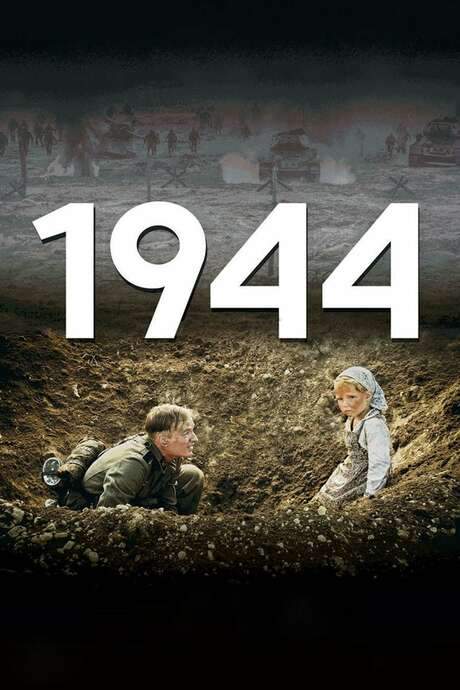

















The year is 1944, and war has arrived. The conflict unfolds from the Blue Hills to the Sõrve Peninsula, seen through the experiences of Estonian soldiers forced to choose sides and fight against those they once considered brothers. The brutal realities of war impact not only the soldiers but also their families, who face difficult choices and profound consequences amidst the chaos and uncertainty of the Eastern Front.
Find where to stream, rent, or buy 1944 (2015) in the US with current JustWatch availability, up-to-date pricing, and platform listings for subscription, rental, and digital purchase options.
Warning: spoilers below!
Haven’t seen 1944 yet? This summary contains major spoilers. Bookmark the page, watch the movie, and come back for the full breakdown. If you're ready, scroll on and relive the story!
Trace every key event in 1944 (2015) with our detailed, chronological timeline. Perfect for unpacking nonlinear stories, spotting hidden connections, and understanding how each scene builds toward the film’s climax. Whether you're revisiting or decoding for the first time, this timeline gives you the full picture.
Last updated: February 24, 2026 at 14:14
Find frequently asked questions about the 1944 (2015) timeline, including chronological order, nonlinear jumps, cause-and-effect links, and scene sequence clarifications. This timeline FAQ helps explain when key events happen, how moments connect, and why the story unfolds in that specific order.
Estonia was occupied by both Nazi Germany and the Soviet Union during WWII. Many Estonians were conscripted or volunteered into both the Waffen-SS (fighting with Germany) and the Red Army (fighting with the Soviets). The film shows this tragic irony, Estonians forced to kill each other while their homeland remained under foreign control. This reflects the historical reality of Estonia being caught between two totalitarian powers.
The opening scene establishes this conflict by showing Estonian soldiers on opposing sides facing each other.
The political officer represented Soviet military discipline, which demanded unconditional obedience. When Jüri questioned the order to execute sixteen-year-old Estonian boys, the officer viewed this as insubordination and a threat to unit morale. In the brutal context of the Eastern Front, questioning a direct order, especially regarding prisoners, was seen as an act of potential mutiny that could not be tolerated.
Earlier tension between Jüri and the political officer over his friendship with Aino foreshadowed this conflict.
The sixteen Estonian boys were captured wearing German uniforms during the Moonsund operation. The political officer ordered Jüri to execute them all, viewing them as enemy combatants despite being fellow Estonians. Jüri's refusal to carry out this order led to his death. The fate of the boys themselves is left ambiguous in the film, they represent the tragic reality of Estonians forced into opposing armies.
The scene where the boys are captured emphasizes their youth and confusion, highlighting the moral impossibility of the order.
The political officer represented Soviet ideological loyalty, which viewed personal relationships with civilians, especially those with connections to enemy soldiers, as a dangerous breach of discipline. Aino was the sister of Karl Tammik, a German-side soldier whose letter Jüri carried. The officer saw Jüri's friendship as emotional weakness and potential disloyalty to the Soviet cause.
The officer's hostility first appears when Jüri delivers the letter, foreshadowing his later violent reaction.
Jüri initially delivered Karl's letter to Aino after finding it on Karl's body. After Jüri was killed, a comrade found the same letter on Jüri's body and, during a leave, personally traveled to Tallinn to deliver it to Aino. The letter's journey, first carried by Jüri, then by his comrade, becomes a symbol of human connection surviving the chaos of war.
The letter appears twice in the narrative, first with Jüri and then found on his body after death.
Despite being on opposing sides, Jüri recognized the letter as a personal matter that transcended the conflict. By delivering the unposted letter to Aino, he performed a small act of humanity, connecting a family separated by war. This decision reflects the film's theme that personal connections can endure even amid ideological division.
The discovery of the letter on Karl's body is presented as a meaningful moment that triggers Jüri's decision.
The Moonsund operation was a real Soviet military campaign in late 1944 to capture the islands between Estonia's mainland and Saaremaa, particularly the Sõrve Peninsula. In the film, this operation marks the shift from the Tannenberg Line battles to the final fighting on Saaremaa, where Jüri's unit engages German forces and where the climactic events occur.
Timeline transition from July to November 1944 signals the changing front lines.
After the officer shot Jüri for questioning the execution order, one of Jüri's comrades immediately shot the officer in retaliation. This act represented a spontaneous uprising against the brutal discipline that had just cost Jüri his life. It demonstrates how the officer's abuse of power triggered violent backlash among the soldiers, continuing the film's exploration of cycles of violence.
The tension between the officer and unit members builds throughout the story.
The opening battle shows Estonian Waffen-SS soldiers defending the Tannenberg Line against a massive Soviet offensive in July 1944. Despite propaganda efforts, including Hitler photographs, the German forces are overwhelmed by Red Army numbers and forced to retreat. The battle ends in Soviet victory, with both sides burying their dead in a mass grave.
The mass grave and the letter discovery establish the film's themes of death and connection.
The ending is tragic because the protagonist Jüri, who tried to maintain his humanity by delivering the letter and questioning an immoral order, is killed by his own political officer. His death represents the futility experienced by characters trapped between occupying forces. The cycle of violence continues even after his death, and only the letter's delivery offers a glimmer of hope amid the bleakness.
The meta notes emphasize the film's bleak tone and hopeless atmosphere throughout.
Discover curated groups of movies connected by mood, themes, and story style. Browse collections built around emotion, atmosphere, and narrative focus to easily find films that match what you feel like watching right now.
War stories where the real enemy is the impossible choice. If you were gripped by the impossible moral choices and fraternal conflict in 1944, explore other movies about war's ethical toll. This collection features intense, bleak stories that question the very nature of loyalty and humanity amidst the chaos of combat.
These narratives follow characters caught in situations where traditional notions of good and evil collapse. The plot is driven by ethical quandaries, often pitting brother against brother or forcing soldiers to commit atrocities for survival, leading to a pervasive sense of tragedy and the futility of violence.
These films are grouped together because they share a focus on the psychological and moral devastation of war rather than its heroic spectacle. They create a similar viewing experience through their bleak tone, heavy emotional weight, and exploration of themes like fratricide, loyalty, and the loss of innocence.
Raw and somber films depicting the brutal truths of past conflicts. For viewers who appreciated the raw and brutal realism of 1944, this list features similar movies based on true events. Discover other somber and intense historical dramas that do not shy away from depicting the grim realities of war and political conflict.
These films are typically straightforward in their chronological storytelling, focusing on the cascading consequences of large-scale conflict on individuals and families. The narrative is driven by the relentless pressure of external events, leading characters through a series of harrowing ordeals towards an often tragic conclusion.
These movies are connected by their commitment to a grim, realistic portrayal of historical suffering. They share a high-intensity, somber mood, a steady pace that emphasizes the weight of events, and a focus on the devastating impact of political and military conflict on ordinary people.
Don't stop at just watching - explore 1944 in full detail. From the complete plot summary and scene-by-scene timeline to character breakdowns, thematic analysis, and a deep dive into the ending - every page helps you truly understand what 1944 is all about. Plus, discover what's next after the movie.
Read a complete plot summary of 1944, including all key story points, character arcs, and turning points. This in-depth recap is ideal for understanding the narrative structure or reviewing what happened in the movie.
Discover the characters, locations, and core themes that shape 1944. Get insights into symbolic elements, setting significance, and deeper narrative meaning - ideal for thematic analysis and movie breakdowns.