
















Plot Explained Spoilers guaranteed!
Plot Explained

Browse by genre

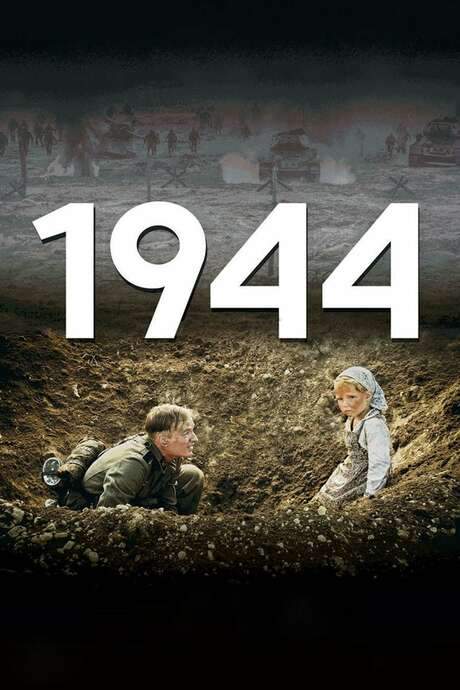
1944 (2015) movie poster

Characters & Themes

1944 (2015) Characters, Setting & Themes Explained

Release, runtime and language
2015 · 100 mins · Estonian
JustWatch #29,673 10
Directed by
Elmo Nüganen
Starring
Ivo Uukkivi, Kaspar Velberg, Jaak Prints, Kristjan Üksküla, Rain Simmul, Tõnu Oja

The year is 1944, and war has arrived. The conflict unfolds from the Blue Hills to the Sõrve Peninsula, seen through the experiences of Estonian soldiers forced to choose sides and fight against those they once considered brothers. The brutal realities of war impact not only the soldiers but also their families, who face difficult choices and profound consequences amidst the chaos and uncertainty of the Eastern Front.

On this page (7)
  1. 1 Where to watch
  2. 2 Characters explained (3)
  3. 3 Where & when it takes place
  4. 4 Themes & meaning (3)
  5. 5 Character & meaning questions
  6. 6 Movie threads
  7. 7 Every angle

Where to watch

Where to Watch 1944 (2015)

Where can you watch 1944? Stream, rent or buy it in the US, including on Midnight Pulp, Fawesome and Hoopla: current JustWatch availability with up-to-date prices.

Streaming availability powered by JustWatch

3 main characters · contains spoilers

1944 Characters Explained: Who Is Who

The main characters of 1944 (2015), heroes and villains: what drives them, how they change over the course of the story and what each of them reveals about the film's bigger ideas.

  • Jüri Jõgi (Kristjan Üksküla)

    A Red Army Estonian fighter who grapples with loyalty to his unit and the humanity of civilians. He seeks connection beyond the front by delivering an unposted letter to Karl's sister, Aino. His principled stance is brutally tested when the political officer executes him.

    • 🪖 Estonian
    • 🇪🇪 Red Army
    • 💔 Loyal
    • ✉️ Letter
  • Karl Tammik (Kaspar Velberg)

    An Estonian soldier serving with German forces who becomes linked to the fate of his sister through the unposted letter. He embodies the war's divided loyalties, caught between brothers-in-arms and family ties as the front shifts.

    • 🪖 Estonian
    • 🇪🇪 German forces
    • 💔 Family ties
    • ✉️ Letter
  • Aino Tammik (Maiken Pius)

    Karl's sister in Tallinn who comes to learn of her brother's fate through letters carried across the front. Her story highlights how ordinary lives intersect with war and how distance is bridged by small acts of communication.

    • 👩 Estonian
    • 🇪🇪 Family
    • 💌 Letter
    • 🏷️ Connection

Last updated: February 17, 2026 at 17:05

Was this helpful?

Setting

Where and When Does 1944 Take Place?

The setting of 1944 (2015): the year and time period, the places and locations, and how they shape the characters, the mood and the tension of the story.

Time period

1944

The narrative spans mid-1944 on the Eastern Front. It opens in July with a fierce contest along the Tannenberg Line as the Red Army pushes westward. By November, the Moonsund operation and Soviet capture of Tallinn alter the balance for Estonian soldiers on both sides. The period captures rapid shifts in fortunes and the human cost of war in the Baltic states.

Location

Tannenberg Line, Tallinn, Sõrve Peninsula, Moonsund operation

The action unfolds across key Estonian locations in 1944 during the Eastern Front. The Tannenberg Line becomes the main battlefield as German and Estonian troops hold off the Red Army's advance and civilians flee in droves. Civilians and soldiers alike are drawn into brutal combat, leaving behind mass graves of the fallen. The campaign spills from the front lines to Tallinn and the Sõrve Peninsula during the Moonsund operation, highlighting the war's reach into daily life.

  • 🗺️ Warfront
  • 🇪🇪 Baltic region
  • 💔 Civilian suffering

Last updated: February 17, 2026 at 17:05

Was this helpful?

3 major themes

1944 Meaning: Themes & Message Explained

What is 1944 (2015) really about? The emotional, social and philosophical themes the film keeps returning to, its symbolism and the message beneath the surface.

  • Frontlines

    The film centers on brutal frontline combat at the Tannenberg Line and later on the Sõrve Peninsula, illustrating how war's violence dominates life and forces decisions that test loyalty and humanity.

  • Letters

    Unposted letters found or delivered across enemy lines connect people across the front. They reveal personal stories and humanity that survive despite orders and hostilities.

  • Loyalties

    Estonian soldiers fight on opposing sides, and a political officer's strict orders collide with individual conscience, leading to tragedy and moral ambiguity in the name of duty.

Last updated: February 17, 2026 at 17:05

Was this helpful?

Character & theme questions

1944 Characters & Meaning: Your Questions Answered

The questions people ask about 1944 (2015): who the characters really are, their relationships, what the symbols mean, where it takes place and what the movie is really about. Each answer contains spoilers.

Q1

Where does the story take place?

The story unfolds across key Estonian locations during World War II's Eastern Front. Primary settings include the Tannenberg Line, which serves as the main battlefield, along with Tallinn and the Sõrve Peninsula. These locations represent the war's reach from front lines to civilian areas, showing how the conflict penetrates daily life throughout the Baltic region.

  • estonia
  • tannenberg line
  • tallinn
  • sõrve peninsula
  • baltic front
Q2

When does the story take place?

The narrative is set in 1944 during the height of fighting on the Eastern Front. It begins in July with intense battles along the Tannenberg Line as the Red Army pushes westward, and continues through November when the Moonsund operation and Soviet capture of Tallinn shift the balance of power.

  • 1944
  • eastern front
  • july 1944
  • november 1944
  • world war 2
Q3

What are the main settings in the movie?

The primary settings are the Tannenberg Line, where brutal combat occurs as German and Estonian troops defend against the Red Army advance, and the Sõrve Peninsula during the Moonsund operation. Civilians flee through these war zones while soldiers engage in combat that leaves mass graves across the region. The story also includes Tallinn, showing how the war impacts both front lines and rear areas.

  • tannenberg line
  • moonsund operation
  • front lines
  • civilian escape
Q4

What is the Frontlines theme about?

The Frontlines theme examines how war's violence dominates every aspect of life, forcing impossible decisions that test loyalty and humanity. It illustrates the relentless battlefield combat at the Tannenberg Line and later on the Sõrve Peninsula, showing how military conflict shapes the characters' choices and destroys lives.

  • combat
  • battlefield
  • tannenberg line
  • military conflict
  • loyalty test
Q5

What is the Letters theme about?

The Letters theme centers on unposted letters that travel across enemy lines, connecting people separated by the front. These letters reveal personal stories and maintain humanity despite military orders and hostilities. The letters serve as a poignant reminder of individual lives caught within the larger machinery of war.

  • letters
  • communication
  • humanity
  • connection across front
  • personal stories
Q6

What is the Loyalties theme about?

The Loyalties theme explores the tragic situation of Estonian soldiers fighting on opposing sides of the conflict. It shows how political officers' strict orders collide with individual conscience, creating moral ambiguity where soldiers must choose between duty and humanity. This theme highlights the tragedy of fraternal conflict among people who share the same homeland.

  • divided loyalties
  • estonian soldiers
  • moral dilemma
  • brother against brother
  • political officer
Q7

Who is Jüri Jõgi?

Jüri Jõgi is an Estonian soldier serving in the Red Army. He grapples with the tension between loyalty to his unit and compassion for civilians. Seeking human connection beyond the front lines, he attempts to deliver an unposted letter to the sister of a soldier fighting for the Germans, embodying the film's exploration of individual conscience versus military duty.

  • jüri jõgi
  • red army
  • estonian soldier
  • conscience
  • civilian compassion
Q8

Who is Karl Tammik?

Karl Tammik is an Estonian soldier serving with German forces. He represents the war's divided loyalties, caught between his brothers-in-arms and family ties as the front shifts across his homeland. His fate becomes intertwined with his sister Aino through letters that travel across the enemy lines, symbolizing how families are divided by the conflict.

  • karl tammik
  • german forces
  • estonian soldier
  • family
  • divided loyalties
Q9

Who is Aino Tammik?

Aino Tammik is Karl's sister, living in Tallinn during the war. She represents ordinary civilians whose lives are deeply affected by the conflict. Through letters carried across the front, she learns of her brother's fate, highlighting how the war connects front-line events to the civilian world through small acts of communication.

  • aino tammik
  • civilian
  • tallinn
  • family connection
  • wartime life
Q10

What are the main themes explored in the movie?

The movie explores three interconnected themes: Frontlines (the domination of war and violence over daily life), Letters (human connection preserved through correspondence across enemy lines), and Loyalties (the moral complexity of Estonians fighting each other on opposing sides). These themes combine to show the tragic irony of a people divided by foreign powers.

  • themes
  • war
  • divided homeland
  • human connection
  • moral complexity
Q11

Why do Estonian soldiers fight on opposing sides?

The movie depicts Estonians forced to fight on both sides of the Eastern Front in 1944. This reflects the historical reality where Estonia was caught between Nazi Germany and the Soviet Union. The film explores how ordinary people were divided by these occupying forces, leading to the tragic situation of brothers fighting brothers while both foreign powers vied for control of the Baltic region.

  • estonian soldiers
  • german army
  • red army
  • occupation
  • baltic states history
Q12

What is the significance of the Tannenberg Line?

The Tannenberg Line serves as the story's primary battlefield, representing the last major defensive position where German and Estonian troops attempted to halt the Red Army's advance westward. Its significance lies in the brutal fighting that occurred there and the massive casualties that marked this pivotal moment in Estonia's wartime history.

  • tannenberg line
  • defensive line
  • red army advance
  • battle
  • military position

Movie threads

More Movies Like 1944, by Mood & Story

Curated lists built around what makes 1944 tick: the same mood, the same kind of story or the same emotional payoff. Each list explains why these movies belong together.

Morally devastating war films like 1944

War stories where the real enemy is the impossible choice. If you were gripped by the impossible moral choices and fraternal conflict in 1944, explore other movies about war's ethical toll. This collection features intense, bleak stories that question the very nature of loyalty and humanity amidst the chaos of combat.

  • somber
  • harrowing
  • tragic
  • brutal
  • thought-provoking
  • grim
  • Tone: bleak, grim, tragic
  • Pacing: steady, deliberate
Why these movies?

The story pattern: These narratives follow characters caught in situations where traditional notions of good and evil collapse. The plot is driven by ethical quandaries, often pitting brother against brother or forcing soldiers to commit atrocities for survival, leading to a pervasive sense of tragedy and the futility of violence.

Why they belong together: These films are grouped together because they share a focus on the psychological and moral devastation of war rather than its heroic spectacle. They create a similar viewing experience through their bleak tone, heavy emotional weight, and exploration of themes like fratricide, loyalty, and the loss of innocence.

Unflinching historical dramas like 1944

Raw and somber films depicting the brutal truths of past conflicts. For viewers who appreciated the raw and brutal realism of 1944, this list features similar movies based on true events. Discover other somber and intense historical dramas that do not shy away from depicting the grim realities of war and political conflict.

  • grim
  • brutal
  • harrowing
  • somber
  • suspenseful
  • tragic
  • Tone: somber, brutal, bleak
  • Pacing: steady, immersive
Why these movies?

The story pattern: These films are typically straightforward in their chronological storytelling, focusing on the cascading consequences of large-scale conflict on individuals and families. The narrative is driven by the relentless pressure of external events, leading characters through a series of harrowing ordeals towards an often tragic conclusion.

Why they belong together: These movies are connected by their commitment to a grim, realistic portrayal of historical suffering. They share a high-intensity, somber mood, a steady pace that emphasizes the weight of events, and a focus on the devastating impact of political and military conflict on ordinary people.

Every angle

1944 (2015) Explained: Plot, Timeline & Characters

Everything about 1944 in one place: what happens in the plot summary, the timeline in chronological order, the characters and meaning and a spoiler-free summary. What's After the Movie adds the cast, box office and post-credit scenes.

Coming soon on iOS and Android

The Plot Explained Movie Summary App

Plot summaries, endings explained and timelines on your phone. Catch up on any movie in minutes, save your favorites and never miss a twist again.

Be the first to know when we launch. Your email stays private, always.

Learn more about the app