











Plot Explained Spoilers guaranteed!
Plot Explained

Browse by genre

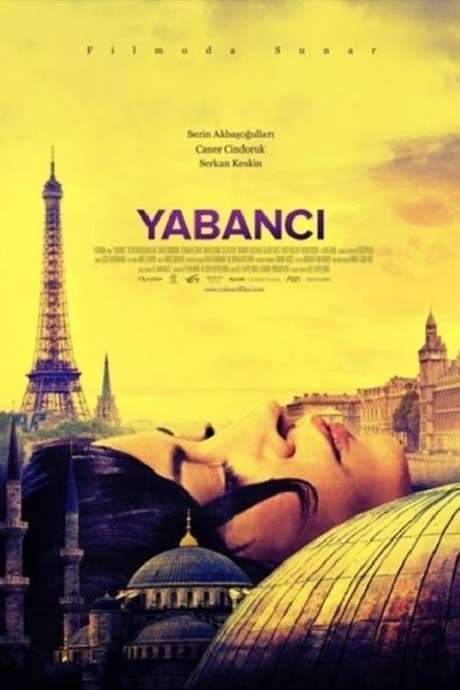
Yabancı (2012) movie poster

Characters & Themes

Yabancı (2012) Characters, Setting & Themes Explained

Release, runtime and language
2012 · 96 mins · Turkish
JustWatch #10,616 12
Directed by
Filiz Alpgezmen
Starring
Serkan Keskin, Caner Cindoruk, Selen Uçer, Guzide Balcı, Ozan Uygun, Rafi Emeksiz

After her father's death, Ozgur, a young woman raised in Paris as the daughter of Turkish refugees, returns to Istanbul to fulfill his final wish: to be buried in his homeland. However, due to the political circumstances surrounding the September 12 military coup, her father’s citizenship is in question, creating an unexpected challenge. Ozgur’s journey to honor his memory leads her to encounter relatives and strangers, and a significant connection with Ferhat, forcing her to confront her heritage and modern-day Turkey.

On this page (7)
  1. 1 Where to watch
  2. 2 Characters explained (2)
  3. 3 Where & when it takes place
  4. 4 Themes & meaning (3)
  5. 5 Character & meaning questions
  6. 6 Movie threads
  7. 7 Every angle

Where to watch

Where to Watch Yabancı (2012)

Where can you watch Yabancı? Stream, rent or buy it in the US, including on Amazon Prime Video, Amazon MX Player and Amazon Prime Video Free: current JustWatch availability with up-to-date prices.

Streaming availability powered by JustWatch

2 main characters · contains spoilers

Yabancı Characters Explained: Who Is Who

The main characters of Yabancı (2012), heroes and villains: what drives them, how they change over the course of the story and what each of them reveals about the film's bigger ideas.

  • Özgür (Sezin Akbaşoğulları)

    A young woman deeply disconnected from life, a stranger to herself. Raised in Paris by parents who fled after the coup, she carries the weight of exile and loss. Her journey to Istanbul to bury her father becomes a test of memory, home, and belonging.

    • 🌍 Identity
    • 🧭 Exile
    • 🏛️ Bureaucracy
  • Ferhat (Caner Cindoruk)

    A young man from the same lost generation created by the coup, Ferhat is moved by Özgür's story. He channels his empathy into practical help, forming a bond that sustains her through bureaucratic and emotional hurdles. His determination contrasts with Özgür's initial detachment, gradually drawing her into action.

    • 🤝 Ally
    • 🌆 City Life
    • 💪 Resilience

Last updated: January 08, 2026 at 08:29

Was this helpful?

Setting

Where and When Does Yabancı Take Place?

The setting of Yabancı (2012): the year and time period, the places and locations, and how they shape the characters, the mood and the tension of the story.

Time period

Location

Paris, Istanbul

Özgür grows up in Paris, the daughter of exiles after the 1980 coup. The story opens with her father's death in Paris and takes her to Istanbul to bury him. The film uses Paris and Istanbul as contrasts—one a city of refuge, the other a maze of bureaucracy and memory.

  • 🌍 Paris
  • 🏙️ Istanbul

Last updated: January 08, 2026 at 08:29

Was this helpful?

3 major themes

Yabancı Meaning: Themes & Message Explained

What is Yabancı (2012) really about? The emotional, social and philosophical themes the film keeps returning to, its symbolism and the message beneath the surface.

  • Bureaucracy

    The central obstacle to Özgür's burial dossier reveals how official procedures shape personal fate after political upheaval. The film shows forms, offices, and the slow grind of red tape. The bureaucratic maze becomes a crucible for identity, forcing Özgür to navigate loyalty to family and homeland.

  • Identity

    Özgür's journey is a search for roots and belonging. Raised away from Turkey, she grapples with where she truly belongs. The encounter with Ferhat, and the memory of her grandmother, push her to confront the past and redefine herself.

  • Generations

    The film shows how legacies of political upheaval ripple through generations. Hüseyin's death initiates the quest, while the grandmother's preservation of her father's house keeps memory alive. A family gathering and cultural rites highlight how tradition anchors identity amid exile.

Last updated: January 08, 2026 at 08:29

Was this helpful?

Character & theme questions

Yabancı Characters & Meaning: Your Questions Answered

The questions people ask about Yabancı (2012): who the characters really are, their relationships, what the symbols mean, where it takes place and what the movie is really about. Each answer contains spoilers.

Q1

Why was Ozgur raised in Paris instead of Turkey?

Ozgur was raised in Paris because her parents were exiles who fled Turkey after the 1980 military coup. As political refugees, they settled in France to escape persecution, and Ozgur grew up disconnected from her Turkish roots, making her return to Istanbul a journey of confronting both her family history and cultural identity.

  • ozgur
  • paris
  • exile
  • 1980 coup
  • refugees
Q2

What is Istanbul like in the movie?

Istanbul in the film is portrayed as a maze of bureaucracy and memory, contrasting sharply with Paris as a city of refuge. The city represents both her homeland and a challenging landscape of official procedures, where Ozgur must navigate complex paperwork to fulfill her father's wish of being buried in Turkey.

  • istanbul
  • bureaucracy
  • setting
  • official procedures
Q3

How does the 1980 military coup affect the story?

The September 12 military coup of 1980 is the foundational trauma of the story. It forced Ozgur's parents into exile in Paris, shaped her identity as someone raised abroad, and creates the central obstacle: her father's citizenship is in question due to the political circumstances, preventing a simple burial.

  • 1980 coup
  • september 12
  • politics
  • citizenship
  • exile
Q4

Who is Ferhat and what role does he play?

Ferhat is a young man who, like Ozgur, belongs to the lost generation created by the coup. He is moved by her story and becomes her practical helper, guiding her through bureaucratic hurdles. His determination contrasts with Ozgur's initial detachment, and their connection becomes a source of emotional support throughout her journey.

  • ferhat
  • character
  • support
  • generation
  • coup
Q5

How does bureaucracy shape the story?

Bureaucracy is central to the film's themes, showing how official procedures determine personal fate after political upheaval. The obstacle of her father's citizenship creates a maze of forms and offices that Ozgur must navigate, making the bureaucratic process itself a crucible for her identity and belonging.

  • bureaucracy
  • red tape
  • documents
  • identity
  • procedures
Q7

How does the film handle generational trauma?

The film shows how legacies of political upheaval ripple through generations. Hüseyin's death initiates the quest, while the grandmother's preservation of her father's house keeps memory alive. Family gatherings and cultural rites highlight how tradition anchors identity amid exile, connecting the personal and political.

  • generations
  • family
  • trauma
  • memory
  • tradition
Q8

What is the significance of Paris and Istanbul as contrasting settings?

Paris and Istanbul represent two opposing worlds in the film: Paris is a city of refuge and safety, while Istanbul represents both homeland and a labyrinth of bureaucracy. This contrast drives Ozgur's internal conflict between the life she knew in exile and the heritage she must now confront.

  • paris
  • istanbul
  • contrast
  • settings
  • refugee
Q9

Why does Ozgur's father want to be buried in Turkey?

Ozgur's father, Hüseyin, wished to be buried in his homeland despite having lived in exile for decades. This desire reflects the film's theme of belonging and the importance of returning to one's roots, even if life took him far from Turkey. His final wish becomes Ozgur's journey toward understanding her own connection to her heritage.

  • father
  • burial
  • hometown
  • wish
  • roots
Q10

What role does the grandmother play in the story?

The grandmother serves as a link to the past and a keeper of memory. She has preserved Hüseyin's house, keeping his memory alive within the family. Through her, Ozgur discovers a tangible connection to her father and her heritage, as the grandmother represents the continuity of family and tradition despite exile and loss.

  • grandmother
  • family
  • memory
  • house
  • tradition
Q11

What is the emotional tone of the movie?

The film has a melancholic tone that reflects Ozgur's sadness and disconnection. However, it is not bleak, as her developing relationship with Ferhat and the discovery of her father's preserved home provide a glimmer of hope. The ending is bittersweet, combining the likely failure to bury her father conventionally with meaningful personal discoveries.

  • melancholy
  • tone
  • emotional
  • hopeful
  • bittersweet

Movie threads

More Movies Like Yabancı, by Mood & Story

Curated lists built around what makes Yabancı tick: the same mood, the same kind of story or the same emotional payoff. Each list explains why these movies belong together.

Movies about heritage and bureaucracy like Yabancı

Personal quests for identity collide with impersonal systems. If you liked Yabancı, explore more films about characters navigating complex bureaucracies and rediscovering their cultural heritage. These movies often feature a slow, contemplative pace and bittersweet emotions, centered on themes of identity and family legacy.

  • bureaucratic frustration
  • contemplative
  • rootless
  • solemn
  • emotionally resonant
  • introspective
  • Tone: melancholic, contemplative
  • Pacing: slow, deliberate
Why these movies?

The story pattern: The narrative follows a protagonist, often an outsider or returnee, who must navigate a complex and frustrating bureaucratic system to achieve a personal goal, frequently related to family or identity. This external struggle mirrors and intensifies their internal journey of self-discovery, forcing confrontations with history, culture, and personal grief.

Why they belong together: These films are grouped by their shared focus on the intersection of the deeply personal (grief, identity) with the impersonally systemic (government, legalities). They share a melancholic, contemplative mood, a slow pacing that allows for reflection, and a tone that balances frustration with moments of human connection.

Bittersweet homecoming dramas like Yabancı

Journeys home are fraught with grief, memory, and unexpected connections. Find movies similar to Yabancı that explore the heavy emotional weight of returning home after a loss. These films share a melancholic tone, slow pacing, and a bittersweet ending, focusing on grief, legacy, and reconnecting with one's roots.

  • grief and loss
  • introspective
  • melancholic
  • solemn
  • hopeful
  • emotionally resonant
  • Tone: melancholic, bittersweet
  • Pacing: slow, reflective
Why these movies?

The story pattern: The plot revolves around a physical and emotional return, triggered by a death or crisis. The protagonist, often isolated, navigates complex family dynamics and grapples with intergenerational trauma. The pace is slow, allowing for deep reflection, and the resolution typically offers a mix of closure and lingering sadness, acknowledging the pain of the past while finding a fragile hope in new connections.

Why they belong together: This thread connects films through their specific emotional palette: a heavy, melancholic tone, a slow-burn narrative focused on internal conflict, and a conclusively bittersweet feeling. They prioritize emotional resonance and contemplative character studies over fast-paced action.

Every angle

Yabancı (2012) Explained: Plot, Timeline & Characters

Everything about Yabancı in one place: what happens in the plot summary, the timeline in chronological order, the characters and meaning and a spoiler-free summary. What's After the Movie adds the cast, box office and post-credit scenes.

Coming soon on iOS and Android

The Plot Explained Movie Summary App

Plot summaries, endings explained and timelines on your phone. Catch up on any movie in minutes, save your favorites and never miss a twist again.

Be the first to know when we launch. Your email stays private, always.

Learn more about the app