Plot Explained Spoilers guaranteed!
Plot Explained

Browse by genre

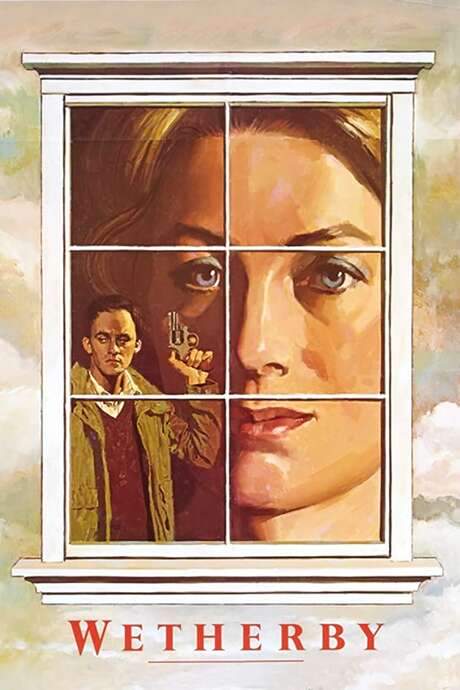
Wetherby (1985) movie poster

Timeline

Wetherby (1985) Timeline Explained – Every Event in Order

Release, runtime and language
1985 · 102 mins · English
Loading streaming availability…
Directed by
David Hare
Starring
Ian Holm, Judi Dench, Vanessa Redgrave, Alan Rickman, Tom Wilkinson, Tim McInnerny

In the small suburb of Wetherby, the sudden and inexplicable death of an enigmatic young man who has just arrived sparks a chain reaction, drawing out hidden desires and long‑suppressed tensions among the town’s residents, turning an otherwise ordinary community into a backdrop for violence and an unsolved mystery.

On this page (6)
  1. 1 Where to watch
  2. 2 Events in order (14)
  3. 3 Timeline questions answered
  4. 4 Movie threads
  5. 5 Movies like Wetherby
  6. 6 Every angle
Loading streaming availability…

14 events in order · contains spoilers

Wetherby Timeline: Events in Chronological Order

Every key event of Wetherby (1985) in order, scene by scene, with when and where it takes place. Use it to untangle flashbacks, time jumps and parallel storylines, to refresh your memory before the sequel or to find the exact scene you are thinking of.

  1. Jean and Marcia as teenagers (1953)

    Jean Travers and her lifelong friend Marcia are shown as teenagers in 1953, their bond hinting at quiet hopes beyond the town's expectations. The scene hints at the longing and limits that will shape Jean's later choices. It establishes memory, perception, and the gap between wish and reality.

    When
    1953
    Where
    Essex, England
  2. Engagement to Jim Mortimer (1953)

    Jean becomes engaged to airman Jim Mortimer, envisioning a stable future. The engagement embodies a hopeful path, even as distance and duty press in. This moment anchors Jean's early capacity to hope for companionship.

    When
    1953
    Where
    Essex, England
  3. Jim Mortimer leaves for active service (1953)

    Jim Mortimer leaves for active service in Southeast Asia, pulling Jean into a long-distance longing. The separation sows hope and uncertainty about their future together. The departure foreshadows the fragility of dreams in a changing world.

    When
    1953
    Where
    Essex, England
  4. Jim Mortimer's murder in Malaya (1950s)

    Jim Mortimer is murdered in a gambling den during anti-imperial uprisings in British Malaya. The brutal death ends Jean's dreams of a conventional life and becomes a memory that haunts her. The event anchors the film's exploration of lost possibilities and guilt.

    When
    1950s
    Where
    British Malaya
  5. Dinner party at Jean's cottage (present day)

    Jean hosts a dinner with married friends, seeking sociability while masking her own loneliness. The room becomes charged as repressed feelings surface and old traumas begin to surface. John Morgan's unexpected arrival unsettles the table and the conversation.

    When
    present day
    Where
    Jean's cottage, Wetherby
  6. Morgan's suicide in the kitchen (present day)

    The next morning, Morgan places a gun in his mouth and shoots himself at the kitchen table. The intimate space becomes a threshold to deep secrets, propelling the narrative into interwoven past and present. The act launches the central mystery of his motive.

    When
    the morning after the dinner party
    Where
    Jean's cottage kitchen
  7. Police inquest into Morgan's death (present day)

    Police investigate Morgan's death and reveal he was not an invited guest, raising questions about how he arrived there. The inquest unveils hidden relationships and unspoken grievances that the narrative will later dissect. It establishes the puzzle-like structure of the story.

    When
    present day
    Where
    Wetherby, West Yorkshire
  8. Karen Creasy arrives from the funeral (present day)

    Karen Creasy, a peculiar former acquaintance of Morgan, is delivered from the funeral to Jean's doorstep by Mike Langdon. She insinuates herself into Jean's life, staying for weeks and unsettles the household with her aloofness. Her presence reframes the investigation from a distance.

    When
    present day
    Where
    Jean's cottage, Wetherby
  9. Karen resists emotional involvement (present day)

    Karen declares she hates emotional entanglements and resents Jean's attempts to get close. She remains aloof and hostile to Morgan's memory, underscoring the film's theme of emotional boundaries. Her attitude fuels tension and secrecy around the suicide.

    When
    present day
    Where
    Jean's cottage
  10. Morgan's Essex years and obsession (past)

    Flashbacks reveal Morgan's obsession with Karen during their student years at the University of Essex. He pursues a relationship she rebuffs, hinting at the origins of his fixation and possible motive for his later suicide. These fragments illuminate the emotional currents behind the present tragedy.

    When
    1960s-1970s
    Where
    University of Essex
  11. Karen taunts Jean and departs (present day)

    Karen taunts Jean by suggesting there may be a link between Morgan's suicide and Jean's actions, then quits Wetherby. The moment leaves Jean with unresolved guilt and questions about responsibility. It crystallizes the film's tension between appearance and hidden truth.

    When
    present day
    Where
    Jean's cottage, Wetherby
  12. Thatcherism and social malaise (present day)

    Jean discusses the country under Thatcherism with Stanley Pilborough, reflecting on unhappy marriages and dwindling hope. The conversation places personal heartbreak within a broader political and social climate. It deepens the sense of desolation that threads through the story.

    When
    present day
    Where
    Jean's cottage, Wetherby
  13. Mike Langdon's confession about Chrissie (present day)

    Mike Langdon confesses that his relationship with his mistress Chrissie has failed and that she returns to her husband. The confession underscores a town-wide restlessness and echoes the film's recurring theme of fragile relationships. It adds another personal strand to the inquest’s web.

    When
    present day
    Where
    Jean's cottage / local police
  14. Jean's acceptance of her life (final)

    Jean accepts she cannot reclaim the life she might have had, but resolves to make the best of what she has in the here and now. The narrative resolves with a quiet, guarded dignity, choosing presence over longing. It marks a personal triumph over despair within the film's puzzle-like memory structure.

    When
    present day
    Where
    Jean's cottage

Last updated: October 09, 2025 at 14:47

Was this helpful?

Timeline questions answered

Wetherby Timeline Explained: Your Questions Answered

When does it happen, and why in that order? The questions people ask about the chronology of Wetherby (1985): time jumps, flashbacks, cause and effect between scenes and the correct order of events, each answered with spoilers.

Q1

Why does John Morgan commit suicide at Jean Travers' cottage?

John Morgan takes his own life at Jean's cottage the morning after the dinner party. The film reveals through flashbacks that Morgan was obsessively in love with Karen Creasy during their university days at Essex, but Karen rejected him outright. This rejection appears to have haunted Morgan for years, contributing to his decision to move to Yorkshire and ultimately end his life. The precise motivation remains ambiguous, as the film suggests multiple possible factors including his unrequited love, general despair, and possibly a desire to insert himself into a world where he felt he belonged.

  • john morgan suicide
  • karen creasy
  • rejection
  • obsession
  • university of essex
Q2

How did John Morgan end up at Jean's dinner party if he wasn't invited?

Morgan was not an invited guest. He simply wandered into the dinner party with other guests who assumed he was an acquaintance of Jean's, while Jean herself assumed her friends had brought him along. This misunderstanding meant no one at the party actually knew who Morgan was or why he was there, creating the awkward situation that later led to the tragic events.

  • dinner party
  • mistaken identity
  • guests
  • john morgan arrival
Q3

What was John Morgan's connection to Karen Creasy?

Morgan and Karen were students together at the University of Essex in the 1960s-1970s. During that time, Morgan became obsessed with Karen, pursuing her romantically, but Karen rejected him completely. This rejection appears to have been a defining trauma in Morgan's life, potentially motivating his later move to Yorkshire and his suicide. Karen's cold, emotionally distant behavior after Morgan's death suggests she either genuinely felt nothing for him or has buried those memories.

  • university of essex
  • student years
  • rejection
  • obsession
  • past relationship
Q4

Why is Karen Creasy so emotionally distant and hostile toward Jean?

Karen arrives at Jean's home after Morgan's funeral and remains remote, testy, and emotionally unavailable for weeks. She explicitly states she hates emotional entanglements and resents Jean's attempts to connect with her. This hostility appears to be both a defense mechanism regarding her past with Morgan and a general emotionally detached stance. When she finally leaves, she taunts Jean by suggesting Jean may bear some responsibility for Morgan's suicide, possibly indicating guilt or a desire to project blame onto others.

  • karen creasy
  • emotional distance
  • hostility
  • defense mechanism
  • guilt
Q5

What happened to Jean's fiancé Jim Mortimer?

Jean was engaged in 1953 to Jim Mortimer, an airman who departed for active service in Southeast Asia. He was later murdered in a gambling den during anti-imperial uprisings in British Malaya. This brutal death ended Jean's dreams of a conventional married life and became a memory that haunts her throughout the film. His fate echoes the film's themes of lost possibilities, the fragility of hope, and the long shadows cast by roads not taken.

  • jim mortimer
  • engagement
  • malaya
  • murder
  • southeast asia
  • 1953
Q6

Why does Karen taunt Jean and suggest she might be responsible for Morgan's suicide?

When Karen finally leaves Wetherby, she taunts Jean by suggesting she wonders what role Jean might have played in Morgan's death, implying it may not have been a simple suicide. This accusation appears designed to unsettle Jean and create doubt, though whether there's any truth to it remains ambiguous. It may reflect Karen's own guilt about rejecting Morgan, her desire to deflect responsibility, or simply her bitter nature. The accusation haunts Jean and adds another layer to the mystery surrounding Morgan's motives.

  • karen taunt
  • accusation
  • responsibility
  • guilt
  • manipulation
Q7

What does the film reveal about Thatcher-era Britain through Jean's conversations?

Through discussions with Stanley Pilborough, Jean reflects on the country under Thatcherism, exploring themes of unhappy marriages, dwindling hope, and social malaise. The film uses this political backdrop to frame the personal heartbreak experienced by the characters, suggesting that the broader climate of economic and social change contributed to feelings of restlessness, isolation, and despair within the community. This context helps explain the underlying tensions that surface in Wetherby.

  • thatcherism
  • social malaise
  • 1980s britain
  • marriages
  • hopelessness
Q8

Why does Jean accept her life by the film's end?

By the film's conclusion, Jean shifts from mourning the life she might have led with Jim Mortimer to embracing the imperfect present she has. Through confronting Morgan's suicide, examining her past, and witnessing the various relationships around her, she comes to terms with her loneliness and recognizes the need to make the best of what exists rather than dwelling on what never was. This acceptance represents a quiet, guarded dignity, a personal triumph over despair within the film's melancholic structure.

  • acceptance
  • present
  • closure
  • personal growth
  • moving on
Q9

Why does the film structure Morgan's suicide as an unsolved mystery?

The film deliberately presents Morgan's suicide as a puzzle with missing pieces, reflecting the jigsaw-puzzle structure David Hare intended. Through interlocking flashbacks and multiple perspectives, the narrative reveals fragments about Morgan's past, his connection to Karen, and how he came to be at Jean's cottage. However, the complete picture never fully emerges, suggesting that some mysteries, especially those involving human motivation and despair, cannot be fully solved. This ambiguity reinforces the film's themes of uncertainty, repression, and the limits of understanding.

  • puzzle structure
  • mystery
  • motivation
  • ambiguity
  • reveals
Q10

What is the significance of the TV commentator played by Alan Rickman?

Alan Rickman appears as a TV commentator whose archival footage runs alongside the narrative. The film uses this media element to emphasize how media, memory, and rumor intertwine to shape public perception of a single devastating act, the suicide. This commentary thread underscores the film's exploration of how communities process tragedy and how stories become distorted through retelling, adding another layer to the investigation of what really happened and why.

  • alan rickman
  • tv commentator
  • media
  • perception
  • rumor

Movie threads

More Movies Like Wetherby, by Mood & Story

Curated lists built around what makes Wetherby tick: the same mood, the same kind of story or the same emotional payoff. Each list explains why these movies belong together.

Movies about community secrets like Wetherby

A shocking incident forces a seemingly peaceful town or group to confront its hidden truths. Explore films similar to Wetherby, where a shocking event exposes the hidden lives of a community. If you liked the way Wetherby uses a mysterious death to explore repressed emotions and failed relationships in a small town, you'll find more haunting dramas here about secrets and collective trauma.

  • unsettling
  • somber
  • reflective
  • claustrophobic
  • psychological
  • secretive
  • Tone: melancholic, unsettling, reflective
  • Pacing: slow, deliberate
Why these movies?

The story pattern: The narrative typically begins with a disruptive event—a death, a crime, or a stranger's arrival—that shatters the status quo. The story then unfolds through multiple perspectives, revealing how each character is connected to the event and to each other's hidden pasts. The central conflict is internal and interpersonal, as characters are forced to grapple with guilt, shame, and long-suppressed truths.

Why they belong together: These films are grouped together because they share a core structure: using a community as a microcosm and a catalyst event to explore universal themes of secrecy, loneliness, and the gap between public appearances and private despair. They prioritize atmosphere and character revelation over straightforward plot.


Slow burn melancholic dramas like Wetherby

Deliberate, reflective dramas that delve into profound loneliness and the weight of the past. Find movies with a similar slow, melancholic vibe to Wetherby. If you appreciated its heavy emotional weight, reflective atmosphere, and complex exploration of loneliness and past trauma, this list features other character-driven dramas with a somber, bittersweet feel.

  • melancholic
  • lonely
  • meditative
  • somber
  • reflective
  • bittersweet
  • Tone: melancholic, bittersweet, somber
  • Pacing: slow, meditative
Why these movies?

The story pattern: Stories in this thread are character studies first and foremost. They unfold slowly, often employing flashbacks or non-linear storytelling to piece together a character's emotional history. The central journey is one of quiet reckoning, as protagonists confront their isolation, grief, or mistakes, moving toward a state of resigned understanding rather than dramatic change.

Why they belong together: These films are united by a specific combination of mood, pacing, and thematic focus. They share a melancholic tone, slow pacing that allows for deep reflection, and a serious exploration of heavy themes like loneliness and regret. The viewing experience is immersive and emotionally resonant rather than thrilling or plot-heavy.

If you liked this

Movies Like Wetherby

Similar movies to Wetherby: the same genre, themes or kind of story. Each one comes with its own plot summary, timeline and ending explained.

Browse all movie summaries

Every angle

Wetherby (1985) Explained: Plot, Timeline & Characters

Everything about Wetherby in one place: what happens in the plot summary, the timeline in chronological order, the characters and meaning and a spoiler-free summary. What's After the Movie adds the cast, box office and post-credit scenes.

Coming soon on iOS and Android

The Plot Explained Movie Summary App

Plot summaries, endings explained and timelines on your phone. Catch up on any movie in minutes, save your favorites and never miss a twist again.

Be the first to know when we launch. Your email stays private, always.

Learn more about the app