




















Plot Explained Spoilers guaranteed!
Plot Explained

Browse by genre

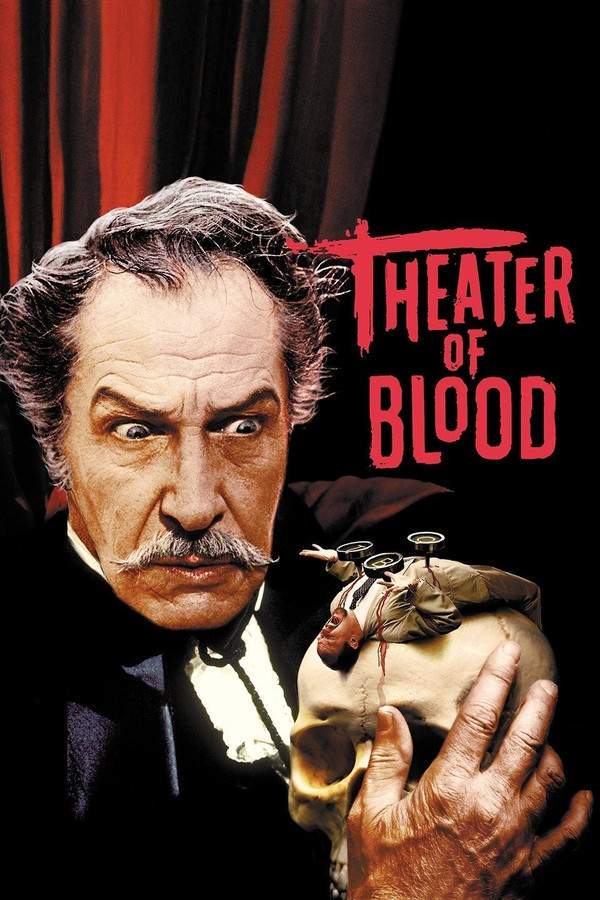
Theater of Blood (1973) movie poster

Timeline

Theater of Blood (1973) Timeline Explained – Every Event in Order

Release, runtime and language
1973 · 104 min · English
JustWatch #17,152 2
Directed by
Douglas Hickox
Starring
Robert Morley, Diana Rigg, Arthur Lowe, Coral Browne, Harry Andrews, Ian Hendry

A renowned actor, Edward Lionheart, seeks retribution against the London theatre critics who savaged his recent performances and denied him a prestigious award. Driven to despair, he begins systematically targeting them, staging his revenge by recreating murders from Shakespearean plays. As the body count rises, a desperate struggle for survival ensues, with only one critic left to potentially reveal the truth behind the gruesome events.

On this page (6)
  1. 1 Where to watch
  2. 2 Events in order (15)
  3. 3 Timeline questions answered
  4. 4 Movie threads
  5. 5 Movies like Theater of Blood
  6. 6 Every angle

Where to watch

Where to Watch Theater of Blood (1973)

Where can you watch Theater of Blood? Stream, rent or buy it in the US, including on Amazon Prime Video, FlixFling and fuboTV: current JustWatch availability with up-to-date prices.

Streaming availability powered by JustWatch

15 events in order · contains spoilers

Theater of Blood Timeline: Events in Chronological Order

Every key event of Theater of Blood (1973) in order, scene by scene, with when and where it takes place. Use it to untangle flashbacks, time jumps and parallel storylines, to refresh your memory before the sequel or to find the exact scene you are thinking of.

  1. Award Ceremony Humiliation

    Edward Kendal Sheridan Lionheart suffers significant humiliation at the hands of the Theatre Critics Guild during an awards ceremony. After a series of harsh critiques, he becomes distraught and is presumed to have taken his own life by leaping into the Thames.

    Where
    Thames River
  2. Survival Among Vagrants

    Contrary to the beliefs of those around him, Lionheart survives the leap. Finding refuge among a community of vagrants, he begins plotting his vengeance against the critics who scorned him.

    When
    Two years later
  3. Quest for Vengeance Begins

    On the Ides of March, Lionheart embarks on a twisted quest for revenge against the critics who failed to appreciate his talent. He adopts a gruesome method of killing inspired by the fatal outcomes of Shakespearean plays.

    When
    Ides of March
  4. First Victim: George Maxwell

    Lionheart's first target is critic George Maxwell, who meets a brutal end orchestrated by a group of vagrants. This killing mirrors the assassination of Julius Caesar as Lionheart recites Maxwell's harsh review before the act.

  5. Hector Snipe's Gruesome Fate

    Hector Snipe becomes the second critic to fall. He is impaled with a spear and his body is dragged to George Maxwell's funeral, echoing the tragic fate of Hector in 'Troilus and Cressida'.

  6. Horace Sprout Decapitated

    The third critic, Horace Sprout, finds himself the victim of a nighttime attack, resulting in his decapitation. This act reflects the violent demise of Cloten from 'Cymbeline', demonstrating Lionheart's unyielding vengeance.

  7. Trevor Dickman's Heart Ripped Out

    Lionheart strikes again, this time targeting Trevor Dickman. In a bloody scene reminiscent of Shylock’s actions in 'The Merchant of Venice', Lionheart removes Dickman's heart in reprisal for his cruel critiques.

  8. Death of Oliver Larding

    Critic Oliver Larding meets a tragic end when he is drowned in a barrel of wine. This fate mirrors that of George Plantagenet, Duke of Clarence, reflecting the brutal themes found in 'Richard III'.

  9. Peregrine Devlin's Narrow Escape

    Lionheart cleverly lures Peregrine Devlin into a fencing gymnasium as part of his revenge plot. Although he severely wounds Devlin, he ultimately spares his life for the moment, further heightening the tension.

    Where
    Fencing Gymnasium
  10. Solomon Psaltery's Downfall

    Critic Solomon Psaltery’s jealousy leads him to commit an unforgivable act by murdering his wife, Maisie. This treachery draws parallels to the themes found in 'Othello', leading to his ultimate imprisonment, despite Lionheart not killing him.

  11. Electrocution of Miss Chloe Moon

    Miss Chloe Moon, another critic, faces a shocking end as she is electrocuted. This grim act is reminiscent of the fate of Joan of Arc in 'Henry VI, Part 1', underscoring the brutality of Lionheart’s revenge.

  12. Meredith Merridew's Grotesque Death

    Flamboyant critic Meredith Merridew meets a bizarre and grotesque end as he is force-fed pies made from his own toy poodles. He chokes to death, echoing the tragic demise of Queen Tamora from 'Titus Andronicus'.

  13. Edwina's Involvement

    In a startling twist, Lionheart's devoted daughter, Edwina, becomes involved in the revenge plot. She kidnaps Devlin and brings him to the theater to confront her father, exposing her deep loyalty and tragic fate.

    Where
    Theater
  14. Chaos and Misfortune

    The confrontation escalates as Lionheart threatens to blind Devlin with heated daggers. However, when the torture device malfunctions, chaos breaks out, resulting in a vagrant accidentally killing Edwina with her father's award.

    Where
    Theater
  15. Tragic Climax and Death

    In a heart-wrenching climax, Lionheart, grief-stricken over his daughter's death, carries her body to the rooftop and recites Lear's final monologue. As the roof collapses, he is engulfed in flames, leading to his tragic demise.

    Where
    Rooftop

Last updated: November 16, 2024 at 18:16

Was this helpful?

Timeline questions answered

Theater of Blood Timeline Explained: Your Questions Answered

When does it happen, and why in that order? The questions people ask about the chronology of Theater of Blood (1973): time jumps, flashbacks, cause and effect between scenes and the correct order of events, each answered with spoilers.

Q1

Why does Edward Lionheart target the theater critics for revenge?

Edward Lionheart seeks vengeance because the Theatre Critics Guild publicly humiliated him during an awards ceremony and denied him a prestigious award. After years of scathing reviews that dismissed his Shakespearean performances, this final betrayal drives him to despair and ultimately to murder. His revenge is both personal (retribution for his own humiliation) and theatrical (using the very Shakespeare plays the critics dismissed).

Foreshadowing: The film hints at his fragile ego early on, as his reactions to negative reviews appear disproportionate and obsessive.

  • edward lionheart
  • revenge
  • critics
  • theater
  • humiliation
  • awards ceremony
Q2

How did Edward Lionheart survive after jumping into the Thames?

Lionheart faked his suicide by leaping into the Thames, but he survived the jump. Rather than returning to his former life, he chose to disappear and lived among a community of vagrants for two years while planning his revenge. This survival allows him to operate in secret and gather support from the homeless population who become his unwitting accomplices.

Foreshadowing: The initial reports of his death are based on assumptions rather than evidence of a body.

  • edward lionheart
  • thames
  • suicide
  • survival
  • vagrants
Q3

Why does Lionheart kill the critics using methods from Shakespeare plays?

As a Shakespearean actor, Lionheart uses the murdered plots from the plays he performed as his revenge methodology. Each killing mirrors a death from Shakespeare's works, Maxwell dies like Caesar, Snipe like Hector, Sprout like Cloten, and so on. This theatrical approach allows him to transform his revenge into a final, grand performance while thumbing his nose at the critics who dismissed his artistic abilities.

Foreshadowing: Before each killing, he recites the critic's scathing review, connecting the literary references to their specific judgments.

  • shakespeare
  • murders
  • revenge
  • theater
  • methodology
  • plays
Q4

What is the significance of the Ides of March in the film?

Lionheart begins his revenge campaign on the Ides of March (March 15th), the date Julius Caesar was assassinated in Shakespeare's play. This date is deliberately chosen to mirror his first victim, George Maxwell, who is killed in a manner echoing Caesar's assassination. The Ides of March establishes the thematic framework for the entire revenge scheme.

Foreshadowing: The date choice signals that Lionheart is thinking in deliberate, theatrical patterns from the very beginning.

  • ides of march
  • julius caesar
  • revenge
  • start
  • date
Q5

Why does Lionheart spare Peregrine Devlin during the Romeo and Juliet reenactment?

Lionheart lures Devlin to a fencing gymnasium and wounds him severely but chooses not to kill him at that moment. The exact reason is not explicitly stated, but it appears he wants Devlin to suffer more or save him for a more significant theatrical finale. Devlin survives to become the sole remaining critic who witnesses Lionheart's ultimate downfall.

Foreshadowing: The attack on Devlin is notably less lethal than the previous murders, suggesting he is being kept alive for a specific purpose.

  • peregrine devlin
  • spared
  • romeo juliet
  • fencing gymnasium
  • survives
Q6

How does Edwina help her father's revenge plot?

Edwina, Lionheart's devoted daughter, actively participates in the revenge scheme by kidnapping Peregrine Devlin and bringing him to the theater for the final confrontation. Her involvement demonstrates her extreme loyalty to her father and her willingness to embrace his murderous mission. She serves as his essential accomplice in the climactic scene.

Foreshadowing: Earlier scenes hint at her deep attachment to her father and her bitterness toward the critics who ruined his career.

  • edwina
  • kidnap
  • devlin
  • theater
  • daughter
  • help
Q7

How does Edwina die and what is the symbolic meaning?

During the chaotic confrontation at the theater, one of Lionheart's vagrant accomplices accidentally kills Edwina by striking her with the very award that symbolized her father's humiliation. This tragic death mirrors Cordelia's fate in King Lear, the faithful daughter who is killed despite her loyalty. The symbolic parallel reinforces the Shakespearean tragedy playing out in Lionheart's life.

Foreshadowing: The theatrical setting and the King Lear references foreshadow a tragic ending for the father-daughter relationship.

  • edwina death
  • cordelia
  • king lear
  • award
  • accident
  • tragedy
Q8

Why doesn't Lionheart kill Solomon Psaltery?

Lionheart does not kill Solomon Psaltery because Psaltery's own jealousy leads him to murder his wife Maisie. This act, which mirrors the treachery in Othello, results in Psaltery's imprisonment. Lionheart considers justice served through the critic's own moral corruption, choosing to let the legal system and Psaltery's conscience punish him rather than staging a theatrical death.

Foreshadowing: Psaltery's jealous nature is established earlier, making his downfall feel like a natural consequence of his character.

  • solomon psaltery
  • imprisonment
  • jealousy
  • wife murder
  • othello
Q9

Why does Lionheart recite the critics' reviews before killing them?

Before each murder, Lionheart hauntingly recites the specific scathing review the critic wrote about his performance. This ritual serves multiple purposes: it reminds both the victim and the audience exactly why they are being punished, it connects each death to its Shakespearean parallel, and it allows Lionheart to perform his revenge as one final theatrical masterpiece. The reviews become the justification for execution.

Foreshadowing: This pattern is established with the first victim and continues throughout, showing Lionheart's need for narrative closure.

  • reviews
  • recite
  • critics
  • murders
  • performance
  • justification
Q10

How does Edward Lionheart die at the end of the film?

After Edwina dies in the theater, Lionheart carries her lifeless body to the rooftop and delivers King Lear's final monologue as his final performance. In the chaotic aftermath, the roof collapses and he is engulfed in flames, dying in a pyre of his own making. This tragic end mirrors the fiery destruction of King Lear's world and completes his transformation into a tragic Shakespearean hero.

Foreshadowing: The King Lear references throughout the film, especially regarding Edwina as Cordelia, foreshadow this tragic climax.

  • lionheart death
  • rooftop
  • king lear
  • monologue
  • fire
  • collapse
Q11

What is the significance of Devlin reviewing Lionheart's final performance?

Even as Lionheart dies in the flames, critic Peregrine Devlin cannot resist evaluating the performance, giving Lionheart a tempered but favorable review. This darkly comedic ending underscores the film's central irony: the critics' obsession with judgment persists even in the face of death. It also reflects the film's critique of detached, insensitive criticism that values artistry over human life.

Foreshadowing: Devlin's survival throughout the film, while other critics die, positions him as the sole witness to deliver this final evaluation.

  • devlin
  • review
  • final performance
  • critic
  • death
  • comedy

Movie threads

More Movies Like Theater of Blood, by Mood & Story

Curated lists built around what makes Theater of Blood tick: the same mood, the same kind of story or the same emotional payoff. Each list explains why these movies belong together.

Movies about artistic revenge like Theater of Blood

Stories where creative obsession fuels a meticulous and theatrical quest for revenge. If you enjoyed the elaborate, Shakespearean vengeance in Theater of Blood, you'll appreciate these movies. This collection features similar stories of scorned artists and performers who turn their creative talents into weapons for revenge, delivering a mix of dark comedy and grotesque justice.

  • vengeful
  • theatrical
  • macabre
  • cynical
  • melodramatic
  • grotesque
  • Tone: dark, cynical, melodramatic
  • Pacing: steady, methodical
Why these movies?

The story pattern: These narratives typically follow a scorned artist or expert who methodically targets those who wronged them. The revenge is not just violent but performative, often referencing their field of expertise. The plot unfolds steadily, with each act of vengeance feeling like a staged scene, leading to a climax that underlines the tragic futility or bitter success of their mission.

Why they belong together: Movies in this thread are united by their core premise: artistic obsession weaponized for revenge. They share a darkly comedic tone, a steady, methodical pacing as plans are executed, and a high-intensity, emotionally heavy atmosphere rooted in themes of madness, justice, and the grotesque.

Grotesque black comedy horror movies like Theater of Blood

A blend of high melodrama, grotesque violence, and cynical, dark humor. Fans of the macabre humor and melodramatic horror in Theater of Blood will find more to love here. This selection highlights films that masterfully blend grotesque violence with a cynical, darkly comedic tone, creating a uniquely unsettling and entertaining viewing experience.

  • macabre
  • grotesque
  • melodramatic
  • cynical
  • theatrical
  • dark humor
  • Tone: dark, macabre, cynical
  • Pacing: steady, atmospheric
Why these movies?

The story pattern: Stories in this thread often involve a descent into madness or a grand, destructive scheme, but the execution is infused with a sense of the absurd. The narrative doesn't shy away from heavy themes or brutal acts, yet it frames them with a stylized, almost operatic flair that invites a morbid chuckle alongside the shock.

Why they belong together: These films are grouped by their unique tonal blend. They share a dark core but lighten it with macabre wit and melodramatic presentation. The pacing is often steady, allowing the bizarre atmosphere to sink in, and the intensity is high, derived from both the visceral content and the unsettling contrast between horror and humor.

If you liked this

Movies Like Theater of Blood

Similar movies to Theater of Blood: the same genre, themes or kind of story. Each one comes with its own plot summary, timeline and ending explained.

Browse all movie summaries

Every angle

Theater of Blood (1973) Explained: Plot, Timeline & Characters

Everything about Theater of Blood in one place: what happens in the plot summary, the timeline in chronological order, the characters and meaning and a spoiler-free summary. What's After the Movie adds the cast, box office and post-credit scenes.

Coming soon on iOS and Android

The Plot Explained Movie Summary App

Plot summaries, endings explained and timelines on your phone. Catch up on any movie in minutes, save your favorites and never miss a twist again.

Be the first to know when we launch. Your email stays private, always.

Learn more about the app