Year: 1960
Runtime: 72 mins
Language: English
Director: Roger Corman
A uproarious comedy about Seymour, a downtrodden florist who falls for his gorgeous co‑worker Audrey. While working in a seedy flower shop he cultivates a bizarre, talking plant that insists on being fed human flesh and blood, dragging him into a series of darkly comic mishaps.
Warning: spoilers below!
Haven’t seen The Little Shop of Horrors yet? This summary contains major spoilers. Bookmark the page, watch the movie, and come back for the full breakdown. If you're ready, scroll on and relive the story!
Read the complete plot breakdown of The Little Shop of Horrors (1960), including all key story events, major twists, and the ending explained in detail. Discover what really happened—and what it all means.
In a run-down florist on Skid Row, Gravis Mushnick [Mel Welles] runs a struggling shop with two workers, Audrey Fulquard [Jackie Joseph] and Seymour Krelborn [Jonathan Haze]. The neighborhood’s bleak vibe seeps into the business, and the storefront rarely catches the eye of passersby. When Seymour botches a floral arrangement for a dentist, Dr. Farb, Mushnick loses patience and fires him. Desperate to keep his job, Seymour reveals a mysterious plant he’s been nurturing from seeds he claims came from a “Japanese gardener” on Central Avenue, a specimen he names Audrey Jr. [Charles B. Griffith], the plant’s strange vitality thrilling Audrey.
Mushnick is unconvinced at first, but Seymour insists that Audrey Jr.’s odd charm could draw in crowds, so Mushnick gives him one week to revive the shop. The plant refuses ordinary plant food; it seems to crave something darker. One fateful prick of Seymour’s finger proves the truth: Audrey Jr. feeds on blood, and after Seymour’s accidental injury, the plant surges in size and power. As the plant feeds on Seymour’s blood, the shop’s revenues spike because curious customers flock to witness this eerie marvel. Mushnick even begins to treat Seymour with a gruff familiarity, calling him his son in front of customers, a strange dynamic that hints at budding dependence.
Audrey Jr. not only feeds; it speaks, issuing demands for more sustenance. Torn between fear and obligation, Seymour begins a perilous cycle of murder to supply the plant. After a bleak moment on the railroad tracks, Seymour knocks out a drunken man who is killed by a passing train, and the guilty impulse to hide grows heavier. He tries to bury the body in a yard, but the plan keeps nearly collapsing under scrutiny. Driven by guilt and the plant’s relentless hunger, Seymour eventually feeds the remains to Audrey Jr., and Mushnick, returning to the shop with cash in hand, quietly witnesses this disturbing ritual. The sight shakes him, yet the next day business surges as crowds continue to gather, drawn by the marvel and fear surrounding the plant.
Mushnick contemplates going to the police, but the day’s line of customers makes him hesitate, despite knowing something terrible is unfolding. The tension between keeping the secret and the cost of exposure weighs on him, and Seymour, increasingly unwell, becomes more entangled in Audrey Jr.’s demand-driven world. When Dr. Farb threatens to expose the fiasco and ruin Seymour’s chance at redemption, the increasingly desperate youth defends himself and kills Farb, feeding Farb’s body to Audrey Jr. The police—Sergeant Joe Fink [Wally Campo] and Officer Frank Stoolie [Jack Warford]—begin to investigate the disappearances, narrowing their watch toward Mushnick’s shop as the plant’s appetite grows.
Audrey Jr. climbs to towering heights, its buds swelling with ominous promise. A strange advance arrives in the form of a trophy from the Society of Silent Flower Observers of Southern California, signaling that Audrey Jr. will be honored when its buds bloom. While Seymour and Audrey go on a tentative date, Mushnick remains behind to guard the shop against any further danger. Into this fragile balance steps Kloy Haddock, a robber who pretended to be a customer earlier, hoping to cash in on the plant’s fame. Mushnick traps him with a feint, convincing Haddock that the real fortune lies where Audrey Jr. is kept, and the plant consumes Haddock in a brutal display of its power. The night’s events deepen Seymour’s dread, and he resists Audrey Jr.’s hypnotic pull, attempting to sever his ties to the plant’s brutal needs.
The finale approaches during a sunset gathering at the shop, where Seymour is to receive the trophy and Audrey Jr.’s buds are expected to open. As the crowd watches in awe, four buds reveal the faces of Audrey Jr.’s victims, and Sergeant Fink alongside Officer Stoolie realize the terrifying truth: Seymour is the killer behind the disappearances. In a desperate bid to escape, Seymour flees the shop with the officers on his heels, but he outmaneuvers them and returns to the empty space where Audrey Jr. once stood. There, he lashes out at the plant, blaming it for destroying his life, yet Audrey Jr. is unmoved and only hungers for more. The plant, in turn, pleads to be fed, and Seymour, driven to the edge, climbs into Audrey Jr.’s maw with a kitchen knife, intending to end the monstrous partnership once and for all.
That night, Audrey Jr. withers, and a final bud opens to reveal Seymour’s face, signaling a grim end to the tragedy. He screams in a final, haunted line that reverberates through the shop and the memory of those who witnessed the nightmare:
I didn’t mean it!
Last Updated: October 09, 2025 at 12:41
Discover curated groups of movies connected by mood, themes, and story style. Browse collections built around emotion, atmosphere, and narrative focus to easily find films that match what you feel like watching right now.
Hilariously bleak tales of well-meaning people sinking into monstrous acts.If you liked the darkly funny crime spiral in The Little Shop of Horrors, you'll enjoy these films. They feature similar stories of hapless protagonists dragged into murder and mayhem, mixing satirical humor with bleak outcomes. These are movies where the comedy is as sharp as the descent is tragic.
The narrative pattern typically involves a protagonist who commits a small, often accidental crime that rapidly escalates, forcing them into more serious and morally compromising acts. The arc is a downward spiral, where initial success or relief is quickly overshadowed by paranoia, guilt, and the inevitable consequences, often ending in ruin.
These films are grouped by their shared high-concept blend of comedy and crime. They maintain a fast pace and high intensity driven by the protagonist's escalating predicament, while a darkly comic tone ensures the journey is as entertaining as it is morally unsettling.
Playful B-movie horror where humor and grotesque creatures collide.Fans of the campy monster fun in The Little Shop of Horrors will love these movies. They share a similar B-movie charm, blending horror tropes with satirical comedy and bizarre creatures. Discover similar films where the horror is playful, the pace is quick, and the tone is gleefully macabre.
Stories in this thread often feature a unique, sometimes sentient, monster or threat that disrupts the life of a hapless protagonist. The narrative is driven by the chaos the creature causes, leading to a series of comedic and horror-tinged set pieces. The focus is on the absurd situation rather than deep character development.
These movies are united by their specific tonal mix: high-energy camp, macabre humor, and a focus on monstrous premises. They share a fast pace, straightforward plots, and a medium emotional weight, ensuring the experience is thrilling without being overly heavy, perfect for a fun, spooky watch.
Don't stop at just watching — explore The Little Shop of Horrors in full detail. From the complete plot summary and scene-by-scene timeline to character breakdowns, thematic analysis, and a deep dive into the ending — every page helps you truly understand what The Little Shop of Horrors is all about. Plus, discover what's next after the movie.
Track the full timeline of The Little Shop of Horrors with every major event arranged chronologically. Perfect for decoding non-linear storytelling, flashbacks, or parallel narratives with a clear scene-by-scene breakdown.
Discover the characters, locations, and core themes that shape The Little Shop of Horrors. Get insights into symbolic elements, setting significance, and deeper narrative meaning — ideal for thematic analysis and movie breakdowns.
Get a quick, spoiler-free overview of The Little Shop of Horrors that covers the main plot points and key details without revealing any major twists or spoilers. Perfect for those who want to know what to expect before diving in.
Visit What's After the Movie to explore more about The Little Shop of Horrors: box office results, cast and crew info, production details, post-credit scenes, and external links — all in one place for movie fans and researchers.
Discover movies like The Little Shop of Horrors that share similar genres, themes, and storytelling elements. Whether you’re drawn to the atmosphere, character arcs, or plot structure, these curated recommendations will help you explore more films you’ll love.
The Little Shop of Horrors (1960) Scene-by-Scene Movie Timeline
The Little Shop of Horrors (1960) Movie Characters, Themes & Settings
The Little Shop of Horrors (1960) Spoiler-Free Summary & Key Flow
Movies Like The Little Shop of Horrors – Similar Titles You’ll Enjoy
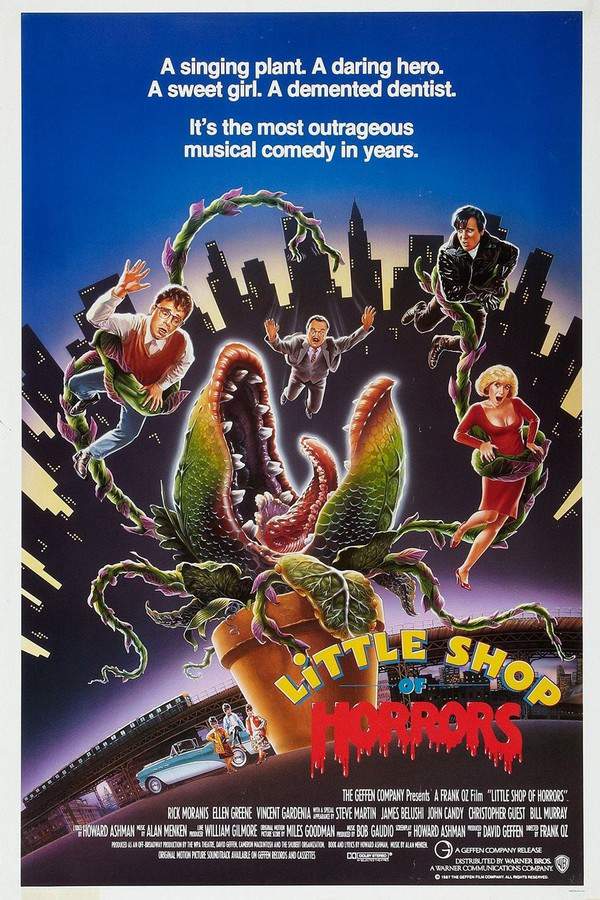
Little Shop of Horrors (1986) Plot Summary & Ending Explained
Little Monsters (2019) Full Movie Breakdown
Scare Package (2019) Full Movie Breakdown
Satan’s Little Helper (2004) Spoiler-Packed Plot Recap
Psychos in Love (1987) Ending Explained & Film Insights
My Friends The Plants (2021) Full Movie Breakdown
Horror Hospital (1973) Ending Explained & Film Insights
The Monster (1925) Spoiler-Packed Plot Recap
The Bowery Boys Meet the Monsters (1954) Movie Recap & Themes
Torture Garden (1967) Movie Recap & Themes
House of Horrors (1946) Spoiler-Packed Plot Recap
Die, Monster, Die! (1965) Plot Summary & Ending Explained
The Comedy of Terrors (1963) Story Summary & Characters
Please Don’t Eat My Mother! (1973) Detailed Story Recap
The Body Shop (1972) Plot Summary & Ending Explained