Year: 1980
Runtime: 117 min
Language: English
Director: Taylor Hackford
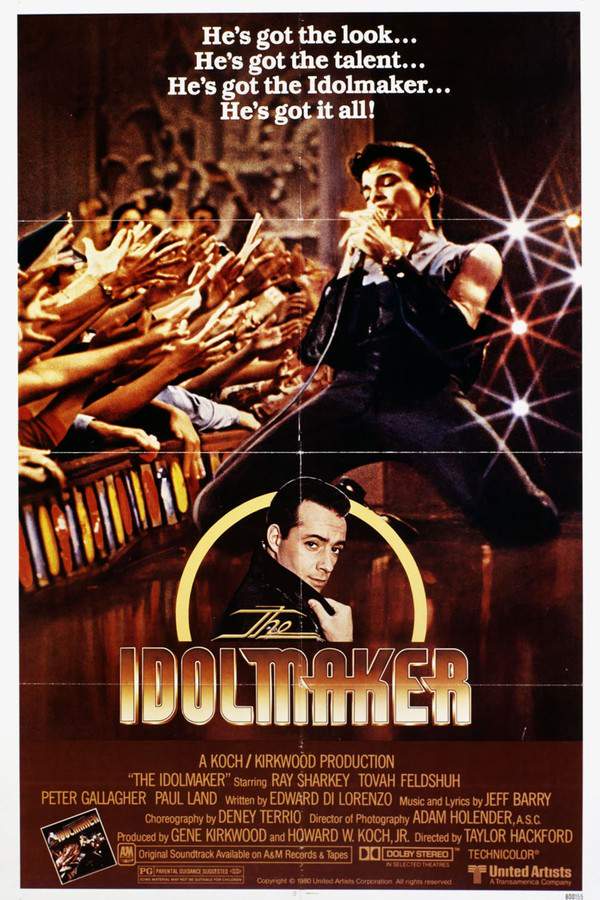
In 1950s America, music mogul Vincent Vacarri believes teen idols are manufactured, not born. He discovers talented newcomer Tomaso and transforms him into Tommy Dee, convincing him to abandon his saxophone for a career as a pop star. As Vacarri’s protégés compete for fame, the ruthless world of manufactured pop idolatry is revealed, exposing a dangerous game fueled by vanity and ambition where appearances often overshadow genuine talent.
Warning: spoilers below!
Haven’t seen The Idolmaker yet? This summary contains major spoilers. Bookmark the page, watch the movie, and come back for the full breakdown. If you're ready, scroll on and relive the story!
Read the complete plot breakdown of The Idolmaker (1980), including all key story events, major twists, and the ending explained in detail. Discover what really happened—and what it all means.
In the sweltering summer of 1959, the dreams of Vincent “Vinnie” Vacarri, who is working as a waiter at his family’s cherished restaurant in the Bronx, come alive again. Surrounded by the familiar hustle and bustle, his longtime confidant and talented piano accompanist Gino “G.G.” Pilato brings exciting news of an upcoming recording session at a prestigious studio run by a fearsome mobster. Vinnie’s aspirations to become a singer-songwriter feel like a distant fantasy, especially as he confides in his mother about his insecurities regarding his looks and charm. However, witnessing the captivating saxophone performances by Tomaso DeLorusso at a nearby New Jersey nightclub ignites a newfound conviction in Vinnie. He believes he can elevate Tommy to a star.
Over the following months, Vinnie dedicates himself to nurturing Tommy’s talents under the stage name “Tommy Dee,” co-producing his debut album. As Tommy begins to gain recognition, Vinnie’s focus shifts toward securing a $10,000 loan from his estranged father, Frank, who has chosen wealth and transient relationships over family bonds. Though Vinnie’s approach is met with skepticism, he remains tenacious, even managing to persuade the influential disc jockey Walt Bennett to play Tommy’s debut single, “Here Is My Love.” When that doesn’t generate enough buzz, Vinnie resorts to a generous bribe to increase visibility.
With Tommy’s fame growing, Vinnie seizes the opportunity to persuade Brenda Roberts, the fashionable editor of Teen Scene magazine, to feature Tommy on their cover. As Tommy’s follow-up single “Sweet Little Lover” premieres on National Bandstand, he opts for an intimate connection with his audience rather than relying on rehearsed choreography. Amid the joys at the family restaurant, Vinnie’s frustration surfaces as he lashes out at a waiter and worries about Tommy’s reluctance to take acting lessons. Brenda, observing the scene unfold, becomes increasingly concerned for Tommy amidst the whirlwind surrounding him.
As events unfold, Vinnie makes a significant gesture towards his father by presenting a check as a symbol of his gratitude for the loan. The elder’s words of wisdom serve as a mixture of practical guidance and caution, urging Vinnie to stay grounded while also capitalizing on his investments by solidifying contracts with Tommy and broadening their clientele. Following this, Vinnie meets with Phil Delano, a major agent from I.A.A., committing to securing a movie role for Tommy.
With his father’s advice echoing in his mind, Vinnie begins to mentor busboy Guido Bevaloqua, renaming him “Caesare” and carefully fostering his talent to alleviate any jealousy from Tommy. As Caesare prepares for his first performance at a small club, Tommy offers encouragement, but Vinnie decides to prioritize Caesare’s development over co-headlining with his friend.
However, when Caesare steps onto the stage, anxiety overwhelms him, resulting in an early exit before finishing his number, provoking curiosity about whether he is truly ready for the spotlight. Outside, Vinnie reassures him that he will not abandon him as he grapples with his nerves. Following this rough start, Vinnie launches an inventive marketing campaign to promote Caesare across town, amplifying interest in him.
As Caesare’s next show approaches, Tommy’s irritation reaches a boiling point, prompting him to seek a role in a TV series that Vinnie had rejected him for. Their once-fruitful collaboration now stands on shaky ground, with both men facing respect issues as they rehearse.
In a bold moment, Caesare takes the stage, only to be overwhelmed by enthusiastic fans who rush to him during his performance of “Baby.” Despite the chaos, he perseveres, showcasing his determination to succeed. As Vinnie strolls through the streets of his youth, a wave of fatigue envelops him, but a heartfelt connection with his mother’s wisdom reignites his passion. He decides to return to the family restaurant where it all began.
Over time, Vinnie grows more confident in his abilities and invites Brenda to witness his artistic journey. Although she initially declines, fate brings them back together onstage, where Vinnie performs a deeply felt song titled “I Believe It Can Be Done.” His heartfelt rendition, coupled with Brenda’s approving nod, breathes new life into Vinnie’s ambitions, propelling him forward with purpose and affirmation.
Last Updated: November 18, 2024 at 20:14
Discover curated groups of movies connected by mood, themes, and story style. Browse collections built around emotion, atmosphere, and narrative focus to easily find films that match what you feel like watching right now.
Movies exploring the ambitious creators who manufacture celebrity from behind the curtain.If you liked The Idolmaker's inside look at manufacturing pop idols, you'll enjoy these other movies about the ambitious creators behind famous performers. This list features similar dramas and biopics exploring the music industry, mentorship, and the volatile relationship between a manager and their protégé.
Stories typically follow a figure with a vision—a manager, agent, or producer—as they discover a talented individual and meticulously craft their public persona. The central conflict arises from the tension between artistic authenticity and commercial appeal, the power struggle between creator and creation, and the moral compromises made in the pursuit of fame.
These films are grouped by their shared focus on the 'architect' of fame rather than just the famous person. They share a thematic exploration of ambition, creative control, and the often-ruthless business of show business, delivered with a mix of aspirational drive and tense, behind-the-scenes drama.
Character-driven journeys of ambition set against a specific, evocative period backdrop.Find movies with a nostalgic, ambitious vibe like The Idolmaker. These similar films feature driven characters in period settings, blending hopeful drama with the tension of pursuing big dreams, perfect for fans of aspirational rise stories.
The narrative follows a linear, straightforward arc of a protagonist overcoming obstacles to achieve their goals. The specific period setting (like 1950s America) is integral to the mood, providing a nostalgic filter through which the story of ambition, vanity, and eventual personal validation is told. The ending typically affirms the protagonist's journey.
This thread groups films based on a coherent mix of tone (hopeful), pacing (steady), and a specific mood blend of ambition, drive, and nostalgia. The shared experience is an emotionally engaging, not overly heavy, period piece about chasing success that leaves the viewer feeling optimistic.
Don't stop at just watching — explore The Idolmaker in full detail. From the complete plot summary and scene-by-scene timeline to character breakdowns, thematic analysis, and a deep dive into the ending — every page helps you truly understand what The Idolmaker is all about. Plus, discover what's next after the movie.
Track the full timeline of The Idolmaker with every major event arranged chronologically. Perfect for decoding non-linear storytelling, flashbacks, or parallel narratives with a clear scene-by-scene breakdown.
Discover the characters, locations, and core themes that shape The Idolmaker. Get insights into symbolic elements, setting significance, and deeper narrative meaning — ideal for thematic analysis and movie breakdowns.
Get a quick, spoiler-free overview of The Idolmaker that covers the main plot points and key details without revealing any major twists or spoilers. Perfect for those who want to know what to expect before diving in.
Visit What's After the Movie to explore more about The Idolmaker: box office results, cast and crew info, production details, post-credit scenes, and external links — all in one place for movie fans and researchers.
Discover movies like The Idolmaker that share similar genres, themes, and storytelling elements. Whether you’re drawn to the atmosphere, character arcs, or plot structure, these curated recommendations will help you explore more films you’ll love.
The Idolmaker (1980) Scene-by-Scene Movie Timeline
The Idolmaker (1980) Movie Characters, Themes & Settings
The Idolmaker (1980) Spoiler-Free Summary & Key Flow
Movies Like The Idolmaker – Similar Titles You’ll Enjoy
A Star Is Born (1954) Story Summary & Characters
I Used to Be Famous (2022) Spoiler-Packed Plot Recap
Vitus (2007) Ending Explained & Film Insights
Tommy (1975) Movie Recap & Themes
The Artist (2011) Full Movie Breakdown
Rock Star (2001) Detailed Story Recap
Fame (2009) Ending Explained & Film Insights
The Identical (2014) Full Movie Breakdown
Milli Vanilli (2023) Story Summary & Characters
Girl You Know It's True (2024) Complete Plot Breakdown
Svengali (1983) Full Summary & Key Details
The In Crowd (1988) Ending Explained & Film Insights
The Matinee Idol (1928) Detailed Story Recap
Make Me a Star (1932) Ending Explained & Film Insights
The Star Maker (1995) Story Summary & Characters