Plot Explained Spoilers guaranteed!
Plot Explained

Browse by genre

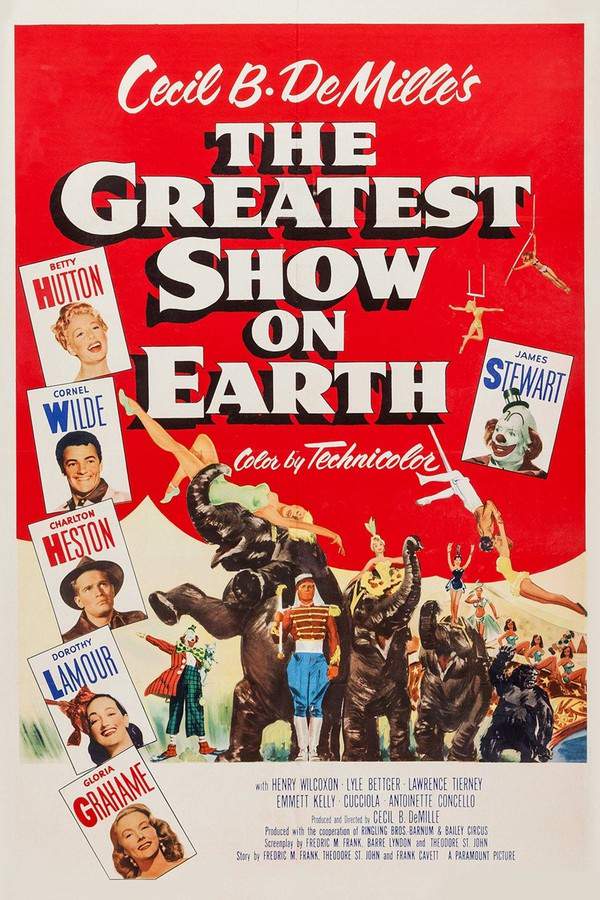
The Greatest Show on Earth (1952) movie poster

Plot Summary

The Greatest Show on Earth (1952) Plot Summary Explained

Release, runtime and language
1952 · 152 min · English
Loading streaming availability…
Starring
Charlton Heston, Betty Hutton
Budget
$4M

A dazzling world of wonder unfolds as the curtains rise on the Ringling Bros.-Barnum and Bailey Circus. This spectacular film explores the passionate and dramatic lives of those who work behind the scenes of the greatest show on Earth. Love, jealousy, and adventure intertwine within the vibrant atmosphere of the big top, revealing the complex relationships and rivalries that drive the thrilling spectacle.

On this page (6)
  1. 1 Where to watch
  2. 2 What happens: full plot
  3. 3 Plot questions answered
  4. 4 Movie threads
  5. 5 Movies like The Greatest Show on Earth
  6. 6 Every angle
Loading streaming availability…

Full plot summary · contains spoilers

What Happens in The Greatest Show on Earth: Full Plot Summary

The whole story of The Greatest Show on Earth (1952) explained, from the opening scene to the final frame: every key event, every twist and what it all adds up to. Read it as a quick recap before the sequel, to check a scene you missed, or to finally understand what really happened.

In the 19th century, P. T. Barnum and his tailor father Philo work for the Hallett family, and Barnum falls for their daughter, Charity. The two exchange letters while Charity attends finishing school, and they reunite as adults, marry, and raise two daughters, Caroline and Helen, in New York City. Their life is modest, and while Charity finds contentment in their home, Barnum quietly craves something more.

When a shipping-clerk job is lost after the company goes bankrupt due to a typhoon, Barnum secures a bank loan by using the former employer’s lost ships as collateral. He opens Barnum’s American Museum in downtown Manhattan, filled with wax figures and curiosities. With ticket sales sluggish, Caroline and Helen suggest adding something more lively, and Barnum introduces “freak” performers like Lettie Lutz, the bearded lady, and Charles Stratton, the dwarf, which rapidly boosts attendance but also sparks protests and scathing reviews from critics such as James Gordon Bennett Sr. The venture is renamed Barnum’s Circus, and the ambitious impresario hires playwright Phillip Carlyle to help generate publicity. Phillip is secretly drawn to Anne Wheeler, an African‑American trapeze artist, though he keeps his feelings hidden. He also arranges for Barnum and the troupe to meet Queen Victoria, a high‑stakes show of prestige.

Barnum persuades the acclaimed Swedish singer Jenny Lind to tour America with him as her manager. Her American debut is a triumph, and during her performance Phillip’s parents glimpse him holding hands with Anne; he releases her hand and continues. As Barnum wins favor with aristocratic patrons, he gradually distances himself from the troupe, urging them to work without him. The ensemble, feeling sidelined and targeted by prejudice, resolves to stand up for themselves and each other (This Is Me). When Phillip and Anne attend the theater with Phillip’s parents, they are chastised for “parading around with the help,” and Phillip tries to reassure Anne that they can be together, though she says society will never fully accept them (Rewrite the Stars).

Meanwhile, Charity stays home with the girls as Barnum’s tour with Lind unfolds, and she begins to feel isolated. On tour, Lind becomes romantically attracted to Barnum; he rejects her advances, and she retaliates with a kiss at the end of her last show, a moment captured by the press in Never Enough (Reprise).

Back home, Barnum returns to find his circus aflame after a confrontation between protesters and the troupe. Phillip rushes into the burning building to save Anne, only to realize she has already escaped, and he suffers serious injuries before Barnum pulls him to safety. The next day, Bennett reveals that the culprits have been caught and that Lind has cancelled her tour in the wake of the scandal. Barnum’s mansion is foreclosed, and Charity, discovering the kiss, scolds Barnum for letting ambition drive a wedge between them and takes their daughters to her parents’ house.

Devastated, Barnum retreats to a local bar, where his troupe finds him and reminds him that they remain a family. Inspired, he resolves to rebuild the show and not let ambition blind him again, singing From Now On as a pledge to his crew and his family. Phillip awakens in a hospital with Anne by his side, and he offers his share of the profits to help Barnum reconstitute the circus as a full partnership. Barnum accepts and reshapes the enterprise into an open‑air tent circus to cut costs. The new format proves a tremendous success, with Phillip stepping into the ringmaster role while Barnum shifts his focus toward his loved ones. In a final flourish, Barnum leaves the show early on an African bush elephant to attend Caroline and Helen’s ballet recital, proving that, after the storms of fame, family remains his true devotion. The revived circus triumphs as a shared dream realized, with the sense of spectacle and heart that defines their story.
Last updated: October 09, 2025 at 15:36

Was this helpful?

Plot questions answered

The Greatest Show on Earth Plot Explained: Your Questions Answered

The questions people ask most about The Greatest Show on Earth (1952): what happens in the confusing scenes, why the characters do what they do, the twists, hidden details and what the ending means. Each answer contains spoilers.

Q1

Why did Barnum use the lost ships as collateral for his bank loan?

When the shipping company went bankrupt due to a typhoon that sank its cargo ships, Barnum lost his job. He cunningly used the former employer's lost ships as collateral to secure a bank loan, essentially betting on ships that no longer existed. This deceitful move provided him the capital to open his American Museum, though it was a risky financial gamble built on deception.

  • bank loan
  • shipping company
  • typhoon
  • deception
  • collateral
Q2

Why did Barnum add the bearded lady and dwarf to his museum?

After opening Barnum's American Museum with wax figures and curiosities, ticket sales were sluggish. His daughters Caroline and Helen suggested adding something more lively to attract crowds. Barnum then hired Lettie Lutz, the bearded lady, and Charles Stratton, the dwarf, which dramatically increased attendance and transformed the museum into a sensational attraction.

  • Lettie Lutz
  • Charles Stratton
  • bearded lady
  • dwarf
  • museum
  • attraction
Q3

Why did Phillip Carlyle keep his relationship with Anne Wheeler hidden?

Phillip Carlyle, a playwright hired as Barnum's publicist, was secretly drawn to Anne Wheeler, an African-American trapeze artist. However, he concealed his feelings because of the severe racial prejudice of the era. When Phillip's parents saw them holding hands at a theater performance, they rebuked him for 'parading around with the help,' making clear how unacceptable such a relationship was to high society.

  • Phillip Carlyle
  • Anne Wheeler
  • trapeze artist
  • racial prejudice
  • forbidden love
Q4

Why did Barnum distance himself from his circus troupe as he gained success?

As Barnum won favor with aristocratic patrons and gained prestige through his association with Queen Victoria and Jenny Lind, he gradually began pulling away from his troupe. He urged the performers to work without him, essentially sidelining the very people who helped build his empire. This growing rift was driven by his ambition to be accepted by high society, causing tension and resentment among his performers.

  • aristocratic patrons
  • Queen Victoria
  • Jenny Lind
  • troupe
  • ambition
  • alienation
Q5

Why did Jenny Lind kiss P.T. Barnum and cause a scandal?

During her American tour managed by Barnum, Swedish singer Jenny Lind developed romantic feelings for him. Despite his rebuffing of her advances, she kissed him at the end of her final show, and the press captured the moment. The photograph triggered a damaging public scandal that led to Lind cancelling her tour and damaged Barnum's reputation, while also fueling Charity's jealousy.

  • Jenny Lind
  • kiss
  • scandal
  • press
  • tour
  • reputation
Q6

What caused the fire at Barnum's circus?

The fire erupted during a confrontation between protesters and the circus troupe. The performers, feeling sidelined and targeted by prejudice, resolved to stand up for themselves. During the chaos, the circus caught fire, endangering everyone inside. Phillip rushed into the burning building to save Anne, suffering serious injuries before Barnum pulled him to safety.

  • fire
  • protest
  • Phillip Carlyle
  • Anne Wheeler
  • injuries
  • confrontation
Q7

Why did Charity take their daughters and leave Barnum?

After Barnum returned from the tour, Charity discovered the press photograph of Jenny Lind kissing him. Confronting Barnum, she scolded him for letting ambition drive a wedge between their family. With their mansion foreclosed and the scandal fresh, Charity took their daughters Caroline and Helen to her parents' house, determined to protect them from the fallout of Barnum's choices.

  • Charity
  • daughters
  • Jenny Lind kiss
  • mansion
  • foreclosure
  • separation
Q8

What inspired Barnum to rebuild the circus after everything was lost?

After the fire, mansion foreclosure, and his family's departure, Barnum retreated to a bar in despair. However, his troupe found him and reminded him that they remain a family regardless of setbacks. This loyalty inspired Barnum to resolve not to let ambition blind him again and to rebuild the show with his crew, leading to the emotional number 'From Now On.'

  • troupe loyalty
  • fire
  • foreclosure
  • bar
  • redemption
  • rebuilding
Q9

Why did Barnum leave the circus to attend his daughters' ballet recital?

In the final moments of the film, Barnum leaves the show early, riding away on an African bush elephant to attend Caroline and Helen's ballet recital. This choice symbolizes his redemption arc, he prioritized family over constant fame and ambition. The moment reinforces that family remained his true devotion despite all the storms of success he weathered.

  • Caroline
  • Helen
  • ballet recital
  • elephant
  • family
  • ambition
  • redemption
Q10

Why did Barnum convert to an open-air tent circus?

After the fire and financial setbacks, Barnum needed to cut costs. He transformed the circus operation into an open-air tent format, which was significantly cheaper than maintaining his previous venue. This business pivot proved tremendously successful, allowing the show to tour more flexibly while Phillip Carlyle took over as ringmaster and Barnum shifted focus toward his family.

  • open-air tent
  • cost cutting
  • partnership
  • Phillip Carlyle
  • ringmaster
  • success
Q11

Why did Phillip Carlyle offer to become a full partner in the circus?

After Phillip awoke in the hospital following the fire rescue attempt, he offered his share of the profits to help Barnum reconstitute the circus as a full partnership. This gesture represented his commitment to Anne, the troupe, and his belief in the collaborative dream. Barnum accepted, and the new partnership structure transformed the circus into a shared enterprise.

  • Phillip Carlyle
  • hospital
  • partnership
  • profits
  • Anne Wheeler
  • collaboration
Q12

What was the significance of Barnum's meeting with Queen Victoria?

Phillip arranged for Barnum and his troupe to meet Queen Victoria, which became a high-stakes show of prestige. The royal audience legitimized Barnum's circus in the eyes of European elites and aristocratic society. This prestigious connection boosted the circus's profile and helped Barnum gain the acceptance he desperately sought among high society.

  • Queen Victoria
  • London
  • royalty
  • prestige
  • elite
  • legitimacy

Movie threads

More Movies Like The Greatest Show on Earth, by Mood & Story

Curated lists built around what makes The Greatest Show on Earth tick: the same mood, the same kind of story or the same emotional payoff. Each list explains why these movies belong together.

Spectacular Dramas of Ambitious Worlds like The Greatest Show on Earth

Stories where grand spectacle and personal ambition collide with heartfelt drama. Looking for movies like The Greatest Show on Earth? This collection features similar films where the drama of show business, grand ambition, and spectacular settings create a hopeful and sentimental viewing experience. If you enjoyed the blend of public spectacle and heartfelt personal stories, you'll find more captivating dramas here.

  • spectacular
  • dramatic
  • hopeful
  • sentimental
  • romantic
  • ambitious
  • Tone: hopeful, sentimental
  • Pacing: steady, character-driven
Why these movies?

The story pattern: These narratives typically follow creators or performers striving for greatness in a visually spectacular field. The plot intertwines professional challenges and public triumphs with personal subplots involving romance, jealousy, and the struggle for acceptance, building towards a redemptive and uplifting conclusion that reaffirms the value of family or community.

Why they belong together: Movies are grouped here for their shared focus on ambitious worlds, a mix of professional drama and personal sentiment, and a consistently hopeful tone. They offer a medium-intensity, steady-paced experience that balances spectacle with emotional character arcs.

Hopeful Journeys of Community and Redemption like The Greatest Show on Earth

Ensemble stories where found families overcome prejudice and find triumph together. If you liked the themes of family devotion and underdog triumph in The Greatest Show on Earth, explore these movies about communities overcoming adversity. These stories share a hopeful tone, medium emotional weight, and a focus on redemption and the strength found in coming together.

  • hopeful
  • sentimental
  • dramatic
  • heartfelt
  • underdog
  • family
  • Tone: hopeful, heartfelt
  • Pacing: steady, linear progression
Why these movies?

The story pattern: The narrative follows an ensemble cast as they navigate external challenges like social prejudice and internal tensions like rivalry. Through steady pacing, the story builds through dramatic events toward a climactic resolution that heals divisions and solidifies the group's bond, resulting in a happy and emotionally satisfying ending.

Why they belong together: These films are connected by their emphasis on community dynamics, the theme of the underdog triumphing against the odds, and a heartfelt, hopeful emotional core. They provide a moderately complex, steady-paced experience that is ultimately uplifting.

If you liked this

Movies Like The Greatest Show on Earth

Similar movies to The Greatest Show on Earth: the same genre, themes or kind of story. Each one comes with its own plot summary, timeline and ending explained.

Browse all movie summaries

Every angle

The Greatest Show on Earth (1952) Explained: Plot, Timeline & Characters

Everything about The Greatest Show on Earth in one place: what happens in the plot summary, the timeline in chronological order, the characters and meaning and a spoiler-free summary. What's After the Movie adds the cast, box office and post-credit scenes.

Coming soon on iOS and Android

The Plot Explained Movie Summary App

Plot summaries, endings explained and timelines on your phone. Catch up on any movie in minutes, save your favorites and never miss a twist again.

Be the first to know when we launch. Your email stays private, always.

Learn more about the app