Plot Explained Spoilers guaranteed!
Plot Explained

Browse by genre

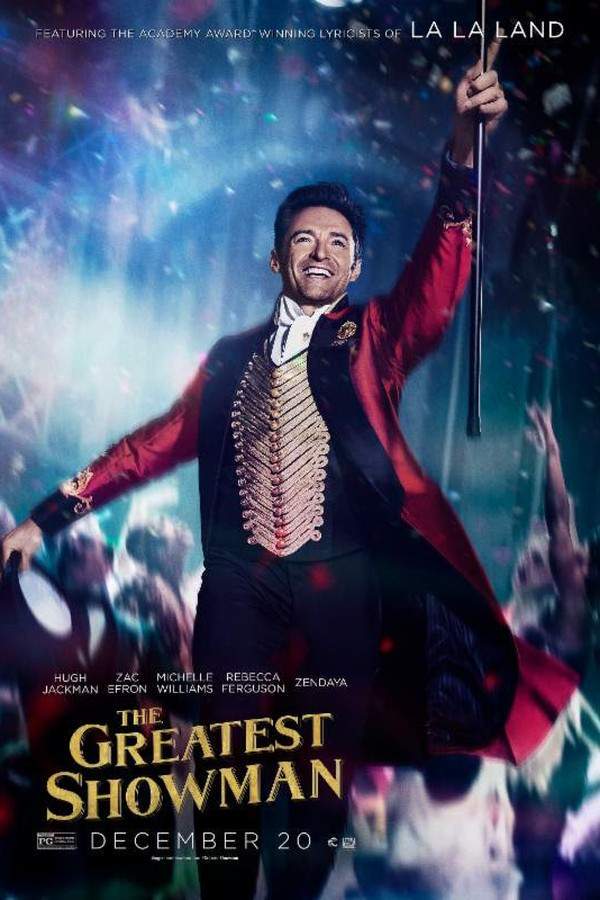
The Greatest Showman (2017) movie poster

Plot Summary

The Greatest Showman (2017) Plot Summary & Ending Explained

Release, runtime and language
2017 · 105 min · English
Echo score 68
JustWatch #446 110
Directed by
Michael Gracey
Starring
Rebecca Ferguson, Yahya Abdul-Mateen II, Hugh Jackman, Michelle Williams, Zendaya, Diahann Carroll
Budget
$84M

Driven by ambition and a talent for spectacle, P.T. Barnum rises from poverty to build a dazzling circus in 19th-century America. He assembles an extraordinary collection of performers – including an acrobat, a bearded lady, and a tightrope walker – offering them a stage and a chance to shine. Barnum's innovative and extravagant show quickly becomes a global sensation, forever changing the landscape of entertainment and captivating audiences worldwide.

On this page (7)
  1. 1 Where to watch
  2. 2 What happens: full plot
  3. 3 Plot questions answered
  4. 4 How it ends
  5. 5 Movie threads
  6. 6 Movies like The Greatest Showman
  7. 7 Every angle

Where to watch

Where to Watch The Greatest Showman (2017)

Where can you watch The Greatest Showman? Stream, rent or buy it in the US, including on HBO Max, Amazon Video and Apple TV Store: current JustWatch availability with up-to-date prices.

Streaming availability powered by JustWatch

Full plot summary · contains spoilers

What Happens in The Greatest Showman: Full Plot Summary

The whole story of The Greatest Showman (2017) explained, from the opening scene to the final frame: every key event, every twist and what it all adds up to. Read it as a quick recap before the sequel, to check a scene you missed, or to finally understand what really happened.

P. T. Barnum, portrayed by Hugh Jackman, captivates audiences with his circus production in "The Greatest Show". The performance transitions to a flashback of Barnum's childhood, showing his close relationship with his father, Philo, played by Will Swenson. Together, they catered to the Hallett family's needs, which introduced young Barnum to their daughter, Charity, played by Michelle Williams. Despite Benjamin's warning to stay away from her, Barnum’s love for Charity flourishes, leading them to maintain correspondence even when Charity leaves for finishing school.

As their love grows, they ultimately marry and start a family in New York City, where they raise two daughters, Caroline, played by Austyn Johnson, and Helen, played by Cameron Seely. However, Barnum becomes consumed by a desire for more than their modest life, feeling that he has let Charity down by not providing a more extravagant existence.

After a series of unfortunate events including losing his job at a shipping company, Barnum takes a daring step by securing a $10,000 loan from a bank, cleverly using his former employer's lost ships as collateral. This money goes toward the establishment of Barnum's American Museum, which features wax models but struggles initially until Barnum decides to showcase live performers.

He recruits a diverse group of "freaks", such as the bearded lady, Lettie Lutz (Keala Settle), and other unique talents that draw large crowds. However, their unconventional nature attracts criticism from elite society, led by the harsh reviews from critic James Gordon Bennett, played by Paul Sparks. Despite this, Barnum is determined and rebrands his venture as "Barnum's Circus", standing up to societal norms and defending the rights of his performers.

With newfound success, Barnum buys the mansion he and Charity played in as children and tries to elevate his family’s status, which backfires. His daughter Caroline faces mockery in ballet class, and Barnum’s aspirations keep him from truly connecting with his family. In an attempt to gain respectability, he partners with playwright Phillip Carlyle, played by Zac Efron, who is secretly enamored with trapeze artist Anne Wheeler, played by Zendaya.

As Barnum makes a pivotal decision to bring in the renowned singer, Jenny Lind, played by Rebecca Ferguson, he finds himself entangled in both success and personal turmoil. Barnum quickly realizes that he is distancing himself from his original troupe and family, culminating in a rift at a critical performance where the troupe is relegated to the gallery.

As public disapproval of Barnum's circus escalates, Charity grows increasingly isolated due to her husband's focus on fame. Carlyle's relationship with Anne hits a snag when social pressures mount, leading to emotional struggles for both characters. During an important tour with Lind, romantic tensions brew, and when Barnum rejects her advances, it leads to a fallout that threatens his career and personal life.

In a climactic moment, misfortune befalls Barnum as his circus is set ablaze in a conflict, leaving him devastated. What follows is a heartfelt acknowledgment of what truly matters: his family and his troupe. With newfound clarity and support from Carlyle and Wheeler, Barnum creatively rebuilds the circus, ultimately understanding that the greatest show is not just about spectacle, but about love, acceptance, and community.

He re-launches the circus as an open-air tent near the docks, a vibrant testament to resilience and a profound reconnection with his roots, allowing him the chance to focus on those he loves most. The story culminates in a triumphant celebration of diversity and belonging, encapsulated in the uplifting reprise of “The Greatest Show”.
Last updated: November 02, 2024 at 12:42

Was this helpful?

Plot questions answered

The Greatest Showman Plot Explained: Your Questions Answered

The questions people ask most about The Greatest Showman (2017): what happens in the confusing scenes, why the characters do what they do, the twists, hidden details and what the ending means. Each answer contains spoilers.

Q1

Why does P.T. Barnum take out a loan to start his museum?

Barnum loses his job at the shipping company and decides to take a bold financial step. He secures a $10,000 loan from a bank, cleverly using his former employer's lost ships as collateral. This money funds the establishment of Barnum's American Museum, which initially features wax models before he pivots to live performers to attract larger crowds.

Foreshadowing: Earlier in the film, Barnum's dissatisfaction with his modest lifestyle drives his ambition for something bigger.

  • loan
  • bank
  • museum
  • finances
  • ambition
Q2

Why does Barnum bring Jenny Lind into his circus?

Barnum partners with playwright Phillip Carlyle and makes a pivotal decision to bring in renowned singer Jenny Lind. His goal is to gain respectability and elevate his circus's status, hoping that a famous European performer will help him transition from circus entertainer to respected showman. However, this decision ultimately creates distance between Barnum and his original troupe.

Foreshadowing: Barnum's earlier purchase of the mansion and attempt to elevate his family's status shows his desire for social acceptance.

  • jenny lind
  • singer
  • partnership
  • respectability
  • fame
Q3

Why does Barnum's circus catch fire?

In a devastating turn of events, Barnum's circus is set ablaze during a conflict. This catastrophe forces Barnum to confront the consequences of his ambitions and realize what truly matters in life. The fire represents the lowest point in Barnum's journey, but it ultimately leads him to reconnect with his family and troupe.

Foreshadowing: The escalating public disapproval and Barnum's growing distance from his original performers hint at the impending disaster.

  • circus fire
  • destruction
  • disaster
  • tragedy
Q4

Why does Barnum's relationship with his family fall apart?

Barnum becomes consumed by his ambition to provide a more luxurious life for his family. He buys a mansion to elevate their status, but this decision backfires, his daughter Caroline faces mockery in ballet class, and Barnum's obsession with fame keeps him from truly connecting with Charity and his daughters. His focus on achieving respectability through Jenny Lind further isolates him from his family.

Foreshadowing: Barnum's early dissatisfaction with modest living sets the stage for his gradual withdrawal from family life.

  • family
  • charity
  • caroline
  • isolation
  • ambition
Q5

Why does Jenny Lind leave Barnum?

During an important tour with Lind, romantic tensions develop between her and Barnum. When Barnum rejects her advances, it leads to a public fallout that threatens both his career and personal life. This incident, combined with his growing distance from his original troupe, marks a turning point in Barnum's downfall.

Foreshadowing: Barnum's ambition to gain respectability through Lind was always precarious, depending on maintaining a certain public image.

  • jenny lind
  • rejection
  • fallout
  • career
Q6

Why does Carlyle have trouble being with Anne Wheeler?

Phillip Carlyle, a playwright, is secretly enamored with trapeze artist Anne Wheeler. However, their relationship faces obstacles due to social pressures, Anne, as a performer in Barnum's circus and likely a person of color, would face significant discrimination from elite society. These external pressures create emotional struggles for both characters throughout the film.

Foreshadowing: The film's themes of discrimination against circus performers establish the social barriers facing Carlyle and Anne.

  • carlyle
  • anne
  • wheeler
  • relationship
  • social barriers
Q7

Why is Barnum's daughter mocked at ballet class?

When Barnum buys a mansion to elevate his family's status, his daughter Caroline attends a ballet class. However, she faces mockery from her peers, likely due to her association with her father's circus and the 'freak' performers. This incident highlights the class prejudice and social stigma Barnum is trying to escape but cannot fully overcome.

Foreshadowing: Barnum's aspiration for respectability is constantly challenged by society's perception of his profession.

  • caroline
  • mockery
  • ballet
  • social class
  • discrimination
Q8

Why does Barnum decide to rebuild the circus after the fire?

After the circus burns down, Barnum experiences a moment of clarity about what truly matters, his family and his troupe. With support from Carlyle and Wheeler, he realizes that the greatest show is not about spectacle alone, but about love, acceptance, and community. He re-launches the circus as an open-air tent near the docks, focusing on connection rather than social status.

Foreshadowing: The fire serves as the catalyst that forces Barnum to abandon his pursuit of respectability and return to his roots.

  • rebuild
  • circus
  • fire
  • family
  • community
  • resilience
Q9

Why does the critic James Gordon Bennett target Barnum?

As Barnum's circus gains popularity, it attracts harsh criticism from elite society, led by influential critic James Gordon Bennett. The criticism stems from prejudice against Barnum's unconventional performers, whom society brands as 'freaks.' Bennett's harsh reviews represent the broader societal rejection of Barnum's inclusive vision for entertainment.

Foreshadowing: The recruitment of 'freaks' like Lettie Lutz immediately draws backlash from respectable society.

  • critic
  • james gordon bennett
  • reviews
  • discrimination
  • society
Q10

Why does Barnum partner with Phillip Carlyle?

Barnum partners with playwright Phillip Carlyle in an attempt to gain legitimacy and elevate his circus to a更高 level. Carlyle brings theatrical expertise and connections to the upper class. However, Carlyle is secretly involved with trapeze artist Anne Wheeler, which adds emotional complexity to the partnership and ultimately leads Carlyle to support Barnum's original troupe.

Foreshadowing: Carlyle's interest in Anne suggests he may be more sympathetic to the outcasts Barnum employs.

  • phillip carlyle
  • partnership
  • playwright
  • theater
  • legitimacy

Ending explained

What Happens at the End of The Greatest Showman?

How The Greatest Showman (2017) ends, in short: the final scene, the last twist and what it means for the characters. The full ending explained, with every spoiler, lives on its own page.

Read the full ending explained

The film concludes with P.T. Barnum facing the consequences of his relentless pursuit of success. After the circus is set ablaze by angry protesters, Barnum's world is turned upside down—his circus and museum are destroyed, and he is left in ruins. Despite the devastation, Barnum's character undergoes a transformation; instead of chasing fame at any cost, he chooses to rebuild the circus as a traveling show, returning to his original dream of creating a place where everyone—regardless of their appearance—could belong. This act of rebuilding symbolizes his growth, emphasizing family, acceptance, and the true meaning of success. As the circus rises again, Barnum passes the leadership to Phillip Carlyle, a young protégée, signifying his shift in priorities from ambition to family and community. He then steps back to focus on his loved ones, finding fulfillment in honest connections rather than superficial fame.

The story also touches on the romantic and racial themes through the relationship between Barnum and Jenny Lind, and Phillip and Anne. While the film suggests that Barnum's obsession leads to heartbreak and failure, the real history shows that the tour was profitable and less dramatic, with Lind ending it on good terms. The ending’s depiction of reconciliation and unity—highlighted by the powerful anthem "This Is Me"—underscores the film’s core message: everyone, no matter their differences, deserves acceptance and respect. In the end, Barnum's journey is about understanding what truly matters—family, friendship, and embracing one’s uniqueness—making the ending both hopeful and inspiring.

The Greatest Showman ending explained in full

Movie threads

More Movies Like The Greatest Showman, by Mood & Story

Curated lists built around what makes The Greatest Showman tick: the same mood, the same kind of story or the same emotional payoff. Each list explains why these movies belong together.

Triumphant Spectacle Musicals like The Greatest Showman

Big, bombastic stories where ambition and song overcome adversity. If you loved The Greatest Showman's energetic songs and celebration of ambition, find more movies like it here. These uplifting musicals combine spectacular performances with heartfelt stories of triumph, perfect for viewers seeking inspiring and joyful cinema.

  • uplifting
  • energetic
  • spectacular
  • triumphant
  • inspiring
  • heartfelt
  • Tone: hopeful, triumphant
  • Pacing: fast, energetic
Why these movies?

The story pattern: These stories typically follow an ambitious protagonist who faces social or personal challenges, using their creative vision to build something spectacular. The narrative is driven by a series of musical set pieces that escalate the stakes, leading to a climactic triumph that validates their dreams and unites their community.

Why they belong together: They are grouped by their use of music as a central narrative engine, a consistently hopeful tone despite dramatic hurdles, and a focus on visual and emotional spectacle that culminates in a rousing, crowd-pleasing finale.

Found Family Stories with Outsiders like The Greatest Showman

Misfits and outsiders band together to find acceptance and belonging. Seeking more movies like The Greatest Showman about misfits finding their tribe? This thread gathers stories where characters on the fringes of society form a powerful found family, exploring themes of acceptance and belonging against the odds.

  • heartfelt
  • melancholic
  • triumphant
  • acceptance
  • belonging
  • inspiring
  • Tone: heartfelt, hopeful, melancholic
  • Pacing: steady, character-driven
Why these movies?

The story pattern: The plot revolves around assembling a diverse group of characters who are initially defined by their differences or societal rejection. Through shared struggle and mutual support, they transform from a collection of individuals into a unified family, confronting external opposition while strengthening their internal bonds.

Why they belong together: These films share a core emotional journey from isolation to belonging, a thematic focus on challenging social prejudice, and a heartfelt, often melancholic-yet-hopeful tone that celebrates the power of chosen community over biological ties.

If you liked this

Movies Like The Greatest Showman

Similar movies to The Greatest Showman: the same genre, themes or kind of story. Each one comes with its own plot summary, timeline and ending explained.

Browse all movie summaries

Every angle

The Greatest Showman (2017) Explained: Plot, Ending, Timeline & Characters

Everything about The Greatest Showman in one place: what happens in the plot summary, the timeline in chronological order, the characters and meaning, the ending explained and a spoiler-free summary. What's After the Movie adds the cast, box office and post-credit scenes.

Coming soon on iOS and Android

The Plot Explained Movie Summary App

Plot summaries, endings explained and timelines on your phone. Catch up on any movie in minutes, save your favorites and never miss a twist again.

Be the first to know when we launch. Your email stays private, always.

Learn more about the app