




Plot Explained Spoilers guaranteed!
Plot Explained

Browse by genre

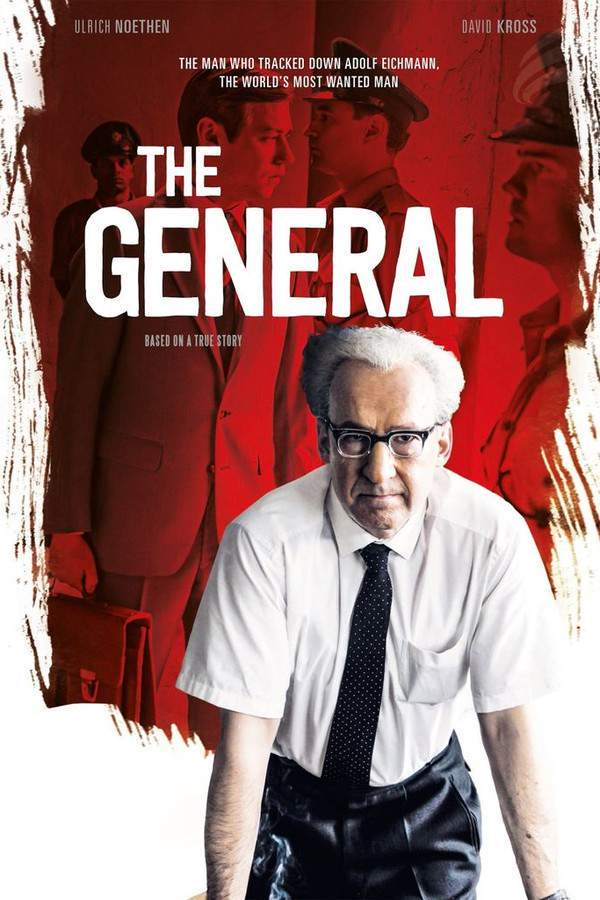
The General (1998) movie poster

Characters & Themes

The General (1998) Characters, Setting & Themes Explained

Release, runtime and language
1998 · 124 min · German
Directed by
John Boorman
Starring
Brendan Gleeson, Adrian Dunbar

In post-war Germany, Jewish prosecutor Fritz Bauer is determined to bring Nazi war criminals to justice. His investigation reveals a complex network of deceit, leading him to Adolf Eichmann, who has fled to Argentina. Bauer then collaborates with the Mossad to capture the notorious figure responsible for orchestrating genocide, initiating a tense pursuit across international borders.

On this page (8)
  1. 1 Where to watch
  2. 2 Characters explained (4)
  3. 3 Where & when it takes place
  4. 4 Themes & meaning (4)
  5. 5 Character & meaning questions
  6. 6 Movie threads
  7. 7 Movies like The General
  8. 8 Every angle

Where to watch

Where to Watch The General (1998)

Where can you watch The General? Stream, rent or buy it in the US, including on Fawesome, Pluto TV and Tubi TV: current JustWatch availability with up-to-date prices.

Streaming availability powered by JustWatch

4 main characters · contains spoilers

The General Characters Explained: Who Is Who

The main characters of The General (1998), heroes and villains: what drives them, how they change over the course of the story and what each of them reveals about the film's bigger ideas.

  • Martin Cahill (The General)

    played by Brendan Gleeson

    A charismatic yet ruthless Dublin gangster who climbs from the poverty of the 1950s to become a feared criminal mastermind. He orchestrates daring robberies, manipulates allies and enemies alike, and uses intimidation to bend the city’s institutions to his will. His arrogance and willingness to risk violence ultimately draw deadly consequences.

    • 💼 Gangster
    • 🧠 Strategist
    • 💥 Violent
  • Inspector Ned Kenny

    played by Adrian Dunbar

    Cahill’s Garda nemesis, a determined police officer who clashes with the gangster over evictions, robberies, and the pursuit of justice. He embodies law, order, and persistence, repeatedly opposing Cahill’s schemes even as his own career becomes entwined with the city’s crime-ridden landscape.

    • 🕵️‍♂️ Detective
    • ⚖️ Authority
    • 🏁 Rivalry
  • Noel Curley

    A close associate of Cahill, involved in planning and executing large-scale heists. He shares Cahill’s appetite for risk and success, contributing to the gang’s rise while remaining a secondary, though essential, partner in the criminal enterprise.

    • 🧩 Partner
    • 💰 Criminal
  • Gary

    A gang member implicated in disturbing acts within the gang, including the troubling accusation against his daughter. Cahill’s decision to handle threats with violence demonstrates the brutal, immoral decisions that sustain their criminal empire.

    • 🧍‍♂️ Gang member

Last updated: October 04, 2025 at 08:08

Was this helpful?

Setting

Where and When Does The General Take Place?

The setting of The General (1998): the year and time period, the places and locations, and how they shape the characters, the mood and the tension of the story.

Time period

1950s-1990s

The narrative spans Cahill’s youth in the 1950s through the height of his criminal career in the 1980s, culminating in his 1994 assassination. It juxtaposes mid-20th-century poverty with late-20th-century urban development and organized crime dynamics in Ireland. The timeline traces long-standing tensions between the Gardaí, paramilitary groups, and criminals within a changing Dublin.

Location

Rathmines, Harold's Cross, Dublin, Russborough House, County Wicklow, Ireland

The story unfolds across Dublin’s south side, centering on Rathmines with the rundown Hollyfield Buildings as Cahill’s upbringing backdrop. It moves from cramped tenement streets to demolition sites where Dublin Corporation reshapes the city, fueling conflict and unrest. The film also takes the audience to Harold’s Cross for major robberies and to Russborough House in County Wicklow for the Beit paintings theft, illustrating the city and countryside as a single crime landscape.

  • 🏙️ Dublin city
  • 🏚️ Run-down housing
  • 🏛️ Historic estates
  • 🗺️ Irish crime history

Last updated: October 04, 2025 at 08:08

Was this helpful?

4 major themes

The General Meaning: Themes & Message Explained

What is The General (1998) really about? The emotional, social and philosophical themes the film keeps returning to, its symbolism and the message beneath the surface.

  • Power & Violence

    Cahill builds power through fear, coercing rivals and institutions alike. His willingness to deploy violence—whether in bank jobs, car bombs, or brutal interrogations—drives the plot and reveals how crime can mimic state power. The film shows how charisma and ruthlessness enable a crime boss to influence both criminals and police.

  • Crime & Surveillance

    The Gardaí’s Tango Squad and undercover operations track Cahill’s moves, illustrating a cat-and-mouse dynamic between law enforcement and criminals. Surveillance, informants, and strategic misdirections create a tense atmosphere where every stakeout and raid could topple the gang or seal their fate. The story probes whether victory for law enforcement comes at moral cost.

  • Greed & Heists

    The gang’s audacious robberies — from the bank cashing to O’Connor’s jewellery factory and the Beit paintings — showcase how wealth drives risk and escalation. Each score tightens Cahill’s grip on power while widening the divide with rivals, the IRA, and the police. The pursuit of fortune becomes a hallmark that defines the group’s fate.

  • Legacy & Consequences

    The violence leaves a heavy social footprint, fueling reprisals and public backlash against the criminals and the authorities. The assassination of Cahill marks the end of one era of crime in Dublin and the start of a lingering myth around 'The General.' Community harm, police corruption rumors, and ongoing conflict shadow the legacy of his actions.

Last updated: October 04, 2025 at 08:08

Was this helpful?

Character & theme questions

The General Characters & Meaning: Your Questions Answered

The questions people ask about The General (1998): who the characters really are, their relationships, what the symbols mean, where it takes place and what the movie is really about. Each answer contains spoilers.

Q1

Where is the film set?

The film takes place primarily in Dublin, Ireland, focusing on the south side of the city including Rathmines and Harold's Cross. Key locations include the rundown Hollyfield Buildings where Cahill grows up, urban areas undergoing demolition as Dublin Corporation reshapes the city, and Russborough House in County Wicklow, where the famous Beit paintings are stolen. The setting illustrates Dublin as a unified landscape of crime spanning both city and countryside.

  • dublin
  • ireland
  • rathmines
  • harolds cross
  • russborough house
  • setting
Q2

What time period does the story cover?

The narrative spans from Cahill's youth in the 1950s through the height of his criminal career in the 1980s, concluding with his assassination in 1994. This timeframe juxtaposes mid-20th-century poverty with late-20th-century urban development and organized crime dynamics in Ireland, tracing tensions between the Gardaí, paramilitary groups, and criminals within a changing Dublin.

  • 1950s
  • 1960s
  • 1970s
  • 1980s
  • 1990s
  • time period
  • post-war ireland
Q3

Who is Martin Cahill?

Martin Cahill, known as 'The General,' is a charismatic yet ruthless Dublin gangster who rises from the poverty of 1950s Dublin to become a feared criminal mastermind. He orchestrates daring robberies, manipulates both allies and enemies, and uses intimidation to bend the city's institutions to his will. His arrogance and willingness to deploy violence ultimately draw deadly consequences, leading to his 1994 assassination.

  • martin cahill
  • the general
  • gangster
  • dublin criminal
  • boss
Q4

Who is Inspector Ned Kenny?

Inspector Ned Kenny is Cahill's primary Garda nemesis, a determined police officer who repeatedly clashes with the gangster over evictions, robberies, and the pursuit of justice. He embodies law and order, leading the Gardaí's Tango Squad in surveillance operations against Cahill. Kenny represents the persistent pursuit of law enforcement against organized crime, even as his own career becomes entangled with Dublin's crime-ridden landscape.

  • inspector ned kenny
  • garda
  • police
  • tango squad
  • law enforcement
Q5

What does the film say about power and violence?

The film explores how Cahill builds power through fear, coercing both rivals and institutions. His willingness to deploy violence, whether in bank jobs, car bombs, or brutal interrogations, reveals how crime can mimic state power. The narrative demonstrates how charisma and ruthlessness enable a crime boss to influence both criminals and police, portraying violence as a tool for control and dominance.

  • power
  • violence
  • crime
  • control
  • intimidation
  • dominance
Q6

How does the film portray the relationship between crime and surveillance?

The film illustrates a tense cat-and-mouse dynamic between law enforcement and criminals through the Gardaí's Tango Squad and undercover operations. Surveillance, informants, and strategic misdirections create an atmosphere where every stakeout and raid could topple Cahill's gang or seal their fate. The story probes whether victory for law enforcement comes at a moral cost, examining the ethical compromises required to catch a criminal mastermind.

  • surveillance
  • tango squad
  • garda
  • police
  • undercover
  • informants
Q7

What role do robberies and heists play in the story?

The gang's audacious robberies, including bank cashing, O'Connor's jewellery factory, and the Beit paintings theft, showcase how wealth drives risk and escalation in Cahill's criminal enterprise. Each successful score tightens his grip on power while widening the divide with rivals, the IRA, and the police. The pursuit of fortune becomes the defining hallmark that shapes the group's fate, illustrating how criminal ambition feeds on itself.

  • robbery
  • heist
  • beit paintings
  • criminal enterprise
  • wealth
  • escala
Q8

What legacy does Martin Cahill leave behind?

The violence leaves a heavy social footprint, fueling reprisals and public backlash against both criminals and authorities. Cahill's assassination in 1994 marks the end of one era of Irish crime and the beginning of a lingering myth around 'The General.' Community harm, police corruption rumors, and ongoing conflict shadow the legacy of his actions, portraying a world where ambition leads to destruction without redemption.

  • legacy
  • consequences
  • assassination
  • myth
  • dublin crime
  • ira
Q9

How does the film portray Dublin as a crime landscape?

The film presents Dublin as a unified crime landscape spanning both urban and rural settings. From the cramped tenement streets of Rathmines to the historic estates of County Wicklow, the city becomes a single entity where criminal activity thrives. The contrast between the poverty of post-war Dublin and the opulence of properties like Russborough House illustrates the class divisions that fuel criminal ambition.

  • dublin
  • crime landscape
  • ireland
  • city
  • urban
  • rural
  • class divide
Q10

What is the Tango Squad?

The Tango Squad is the Gardaí's specialized undercover unit tasked with tracking Martin Cahill's criminal activities. Operating throughout the 1980s and early 1990s, they conduct surveillance, gather intelligence, and attempt to infiltrate Cahill's organization. Their operations represent the state's persistent effort to bring a seemingly untouchable criminal to justice, illustrating the challenges and moral complexities of fighting organized crime in Ireland.

  • tango squad
  • garda
  • undercover
  • surveillance
  • police unit
  • investigation

Movie threads

More Movies Like The General, by Mood & Story

Curated lists built around what makes The General tick: the same mood, the same kind of story or the same emotional payoff. Each list explains why these movies belong together.

Historical Justice Pursuits like in The General

Stories of determined figures pursuing justice when the system is compromised. For viewers who admired the determined quest for justice in The General, this collection features movies where individuals take on powerful, hidden evils from the past. These films share a tense, gritty atmosphere and a focus on the heavy moral burden of pursuing truth in a world that would rather forget.

  • tense
  • determined
  • gritty
  • procedural
  • morally complex
  • historical
  • Tone: dark, tense, determined
  • Pacing: steady, procedural
Why these movies?

The story pattern: The narrative pattern follows a solitary or small group of protagonists uncovering a buried historical crime or conspiracy. They face institutional resistance, personal danger, and ethical dilemmas, leading to a tense cat-and-mouse game that often hinges on clandestine international operations or fragile alliances.

Why they belong together: Movies are grouped here for their shared focus on a dogged, procedural pursuit of justice against a dark historical backdrop. They create a cohesive experience through their tense pacing, heavy emotional weight, and portrayal of individuals operating in morally gray areas to achieve a semblance of accountability.
Bleak Crime Downfalls like in The General

Unflinching chronicles of criminal ambition leading to an inevitable, violent end. If you appreciated the grim, fatalistic portrayal of a criminal's life in The General, this section collects movies with a similar brutal honesty. These stories follow a linear but intense path of ambition, violence, and inevitable collapse, offering no easy morals or happy endings.

  • grim
  • brutal
  • fatalistic
  • oppressive
  • violent
  • gritty
  • Tone: dark, bleak, oppressive
  • Pacing: steady, relentless
Why these movies?

The story pattern: These narratives typically follow a linear, chronological path charting the protagonist's ascent in the criminal underworld through increasingly audacious acts. The complexity arises from rival factions and internal betrayals. The arc is consistently downward, culminating in a bleak ending that underscores the futility and destruction inherent in the criminal life.

Why they belong together: These films are grouped by their shared, unflinching commitment to a dark tone and a fatalistic narrative structure. The similarity lies in the heavy, oppressive mood, the steady pacing of one criminal act after another, and the ultimate conclusion that such a path leads only to ruin.

If you liked this

Movies Like The General

Similar movies to The General: the same genre, themes or kind of story. Each one comes with its own plot summary, timeline and ending explained.

Browse all movie summaries

Every angle

The General (1998) Explained: Plot, Timeline & Characters

Everything about The General in one place: what happens in the plot summary, the timeline in chronological order, the characters and meaning and a spoiler-free summary. What's After the Movie adds the cast, box office and post-credit scenes.

Coming soon on iOS and Android

The Plot Explained Movie Summary App

Plot summaries, endings explained and timelines on your phone. Catch up on any movie in minutes, save your favorites and never miss a twist again.

Be the first to know when we launch. Your email stays private, always.

Learn more about the app