Year: 1931
Runtime: 90 mins
Language: English
Director: John Francis Dillon
A daring reporter sets out to expose the Chicago underworld. Lee, a fresh Southern youngster, lands a job at The Press and is assigned a story on local gangsters. His sensational article names the criminals, triggers a police raid, and leaves him badly injured and hospitalized, forcing him to confront the violent world he sought to reveal.
Warning: spoilers below!
Haven’t seen The Finger Points yet? This summary contains major spoilers. Bookmark the page, watch the movie, and come back for the full breakdown. If you're ready, scroll on and relive the story!
Read the complete plot breakdown of The Finger Points (1931), including all key story events, major twists, and the ending explained in detail. Discover what really happened—and what it all means.
Breckenridge “Breck” Lee, Richard Barthelmess, arrives in a big city with a clear, hopeful aim: to make a name for himself as a newspaperman. He lands a position at The Press and is soon tasked with a straightforward, high-stakes assignment—uncover the existence of a newly opened gambling parlor. Not long after, the casino’s owner, the wily Clark Gable as Louis J. Blanco, tries to buy his silence with a fat bribe. Lee refuses the offer, choosing instead to publish a revealing report about the casino. The raid that follows proves the story’s impact, but it comes at a brutal cost: Lee is mugged, beaten, and left for dead, winding up in the hospital with his prospects—and his pride—shattered.
Upon his discharge, Lee’s personal world becomes as strained as his professional one. He longs to marry his fellow reporter Marcia Collins, a bright and hopeful partnership that feels almost within reach, yet his modest salary and mounting medical bills keep the dream out of reach. When he pleads for a raise with City Editor Frank Carter, played by Robert Elliott, he faces a firm no. The newspaper’s hierarchy—also including Managing Editor Ellis Wheeler, Oscar Apfel—maps out the limits of Lee’s ambition, and his frustration grows as he watches his wage stagnate while his hospital debt piles up.
In a bold if perilous pivot, Lee returns to Blanco with a calculated proposition: he will stop investigating the organization in exchange for a substantial fee. Blanco pays, and the money changes hands with a smooth confidence that unsettles Marcia, who suspects something darker behind Lee’s sudden windfall. Lee tries to project calm, insisting on his integrity, but the lure of real money and real influence begins to skew his judgment. The once-idealistic reporter starts to entertain the possibility of leveraging his position, and his temper tightens into a sharper, more calculating edge. He resolves to widen the bribe-taking, hoping to secure a larger cut by exploiting the gang’s operations rather than exposing them.
As Lee’s appetite for control grows, he learns that Number One—the elusive head of the syndicate—intends to open a new gambling house that will expand the criminal network. He confronts Blanco with the threat of exposure, demanding an even bigger share of the graft. The warning comes quickly: if he prints this new information, his life will be in grave danger. The risk heightens the tension in the newsroom and in Lee’s own conscience, which has begun to fray under the weight of compromising choices.
Meanwhile, Lee’s professional peril strains his relationship with Marcia. She remains supportive, but her trust frays as Lee’s deals with Blanco become more brazen. Into this maelstrom steps Charles “Breezy” Russell, a fellow reporter whose own ambitions are tied to his ability to impress—and perhaps win—the heart of Marcia. Breezy’s plan to publish a sensational gambling story of his own—intended to dazzle Marcia and prove his worth—puts Lee’s precarious balance even more at risk. The newsroom becomes a battlefield of competing loyalties: to truth, to money, and to the people who depend on them to deliver both.
In a moment of resolve, Lee decides to leave the city with Marcia, hoping to start anew away from the corrupting pull of the gambling world. He sees a path to redemption, a chance to reclaim the honesty that first drew him to journalism. Yet Breezy acts first, publishing his own version of the gambling truth to capture Marcia’s admiration and prove he can outwit Lee. The morning after this publication, Lee goes to a bank to retrieve the money he believes will secure a fresh start, a tangible symbol of his turn away from the life that pulled him in. He is followed by shadowy henchmen, and the confrontation ends in violence: Lee is killed before he can escape the consequences of his choices.
The story closes on a haunting note. At Lee’s funeral, he is presented posthumously as a hero—a public memory that glosses over the complexity of his actions and the moral compromises that led him there. Marcia, aware of the truth behind the money and the deals, remains quiet, choosing memory over confession. Her silence suggests the uneasy lesson at the heart of the tale: ambition, power, and the lure of easy money can pull a bright, earnest mind into a web from which escape becomes perilous, and the line between upholding the truth and chasing a payoff can blur until it’s almost impossible to tell where one ends and the other begins.
Last Updated: October 09, 2025 at 12:30
Discover curated groups of movies connected by mood, themes, and story style. Browse collections built around emotion, atmosphere, and narrative focus to easily find films that match what you feel like watching right now.
Stories where ambition leads to fatal ethical compromises in a corrupt world.If you liked The Finger Points, explore more movies like it about characters whose ambition leads to tragic moral collapse. These similar crime dramas and thrillers capture the grim, hopeless feeling of fighting a corrupt system from within, often ending in a bleak and fatalistic way.
Narratives in this thread typically follow a protagonist—often a journalist, lawyer, or ordinary person—who enters a corrupt world with good intentions. The plot methodically charts their descent as they are forced into moral compromises, leading to personal ruin or death. The story structure is often a linear, inevitable march towards tragedy.
Movies are grouped here because they share a dark, cynical tone, high emotional stakes, and a focus on the internal conflict of a character losing their moral compass. They create a consistent, anxious mood of futility and explore the theme of the individual being crushed by systemic corruption.
High-stakes journalistic or police investigations that unravel dangerous conspiracies.Find movies similar to The Finger Points in this collection of gritty investigative thrillers. These films share a high-tension narrative about exposing crime and corruption, featuring a steady pace, a dark tone, and strong violence as the investigator confronts a dangerous underworld.
The narrative pattern involves a single-minded investigator pursuing a story or case that puts them in escalating danger. The plot is driven by the procedural steps of the investigation, which steadily raises the stakes and tension. The conflict is external—against a powerful, violent antagonist—and the physical threat to the protagonist is a constant source of anxiety.
These movies are united by their focus on a high-tension investigation, a gritty and realistic setting, and the presence of organized crime or systemic corruption as the primary antagonist. They deliver a consistent experience of suspense, danger, and a sobering look at the cost of seeking the truth.
Don't stop at just watching — explore The Finger Points in full detail. From the complete plot summary and scene-by-scene timeline to character breakdowns, thematic analysis, and a deep dive into the ending — every page helps you truly understand what The Finger Points is all about. Plus, discover what's next after the movie.
Track the full timeline of The Finger Points with every major event arranged chronologically. Perfect for decoding non-linear storytelling, flashbacks, or parallel narratives with a clear scene-by-scene breakdown.
Discover the characters, locations, and core themes that shape The Finger Points. Get insights into symbolic elements, setting significance, and deeper narrative meaning — ideal for thematic analysis and movie breakdowns.
Get a quick, spoiler-free overview of The Finger Points that covers the main plot points and key details without revealing any major twists or spoilers. Perfect for those who want to know what to expect before diving in.
Visit What's After the Movie to explore more about The Finger Points: box office results, cast and crew info, production details, post-credit scenes, and external links — all in one place for movie fans and researchers.
Discover movies like The Finger Points that share similar genres, themes, and storytelling elements. Whether you’re drawn to the atmosphere, character arcs, or plot structure, these curated recommendations will help you explore more films you’ll love.
The Finger Points (1931) Scene-by-Scene Movie Timeline
The Finger Points (1931) Movie Characters, Themes & Settings
The Finger Points (1931) Spoiler-Free Summary & Key Flow
Movies Like The Finger Points – Similar Titles You’ll Enjoy
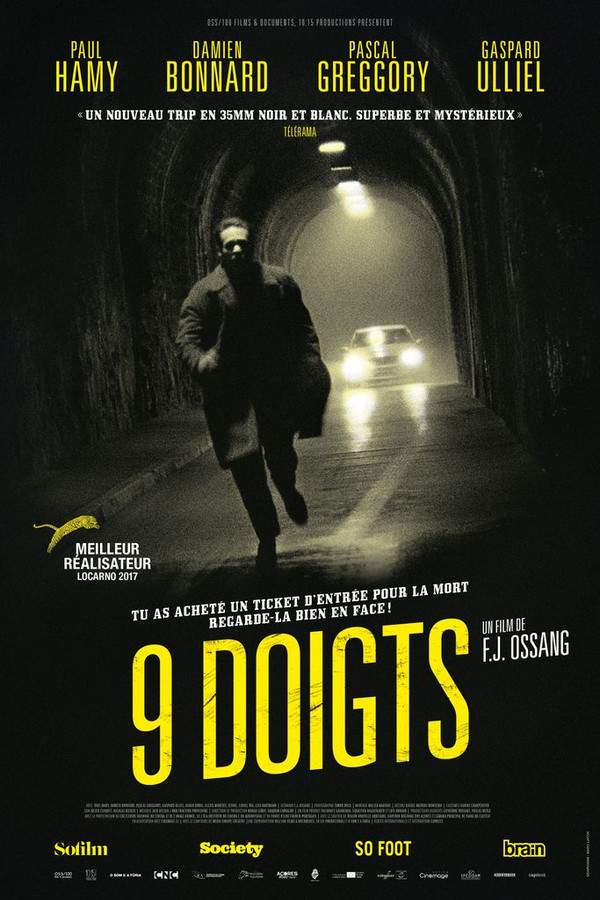
9 Fingers (2018) Detailed Story Recap
Finger Print (2005) Full Movie Breakdown
Finger Man (1955) Detailed Story Recap
The Captive City (1952) Full Summary & Key Details
Crime, Inc. (1945) Complete Plot Breakdown
The Underworld Story (1950) Full Summary & Key Details
Chicago Syndicate (1955) Spoiler-Packed Plot Recap
Fingers (1978) Plot Summary & Ending Explained
The Avenging Hand (1936) Film Overview & Timeline
Dirty Fingers (1973) Story Summary & Characters
The Bloody Hands of the Law (1973) Ending Explained & Film Insights
Chicago Deadline (1949) Full Summary & Key Details
The Touch of the Night (1962) Complete Plot Breakdown
The Headline Woman (1935) Full Movie Breakdown
The Big Risk (1960) Plot Summary & Ending Explained