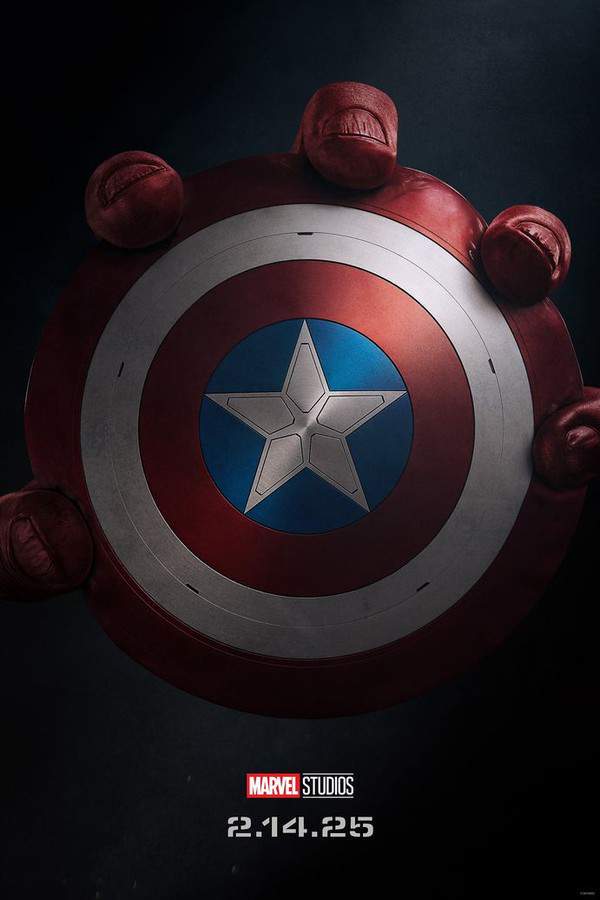
Sam Wilson, Anthony Mackie faces the difficult question of whether the shield belongs to him as he prepares for a life beyond the Falcon suit. The opening image shows him ironing a shirt, the Captain America shield resting on his bed, a visual reminder that the world expects a hero, but the shield feels like it belongs to someone else. As the title card fades in, the story jumps into a globe-spanning set of threads. In Tunisia, Falcon breaches a hijacked aircraft in a high-stakes extract: a prisoner named Captain Vasant is being held by a violent organization called LAF, while First Lieutenant Torres and ground support prepare for a tense rescue. In a swift, kinetic assault, Falcon uses his wings as a shield, calls on Redwing to assist, and pursues the criminals across cliffside terrain as helicopters sweep in. The mission ends with the capture of Vasant, but not before the leader slips away and another hostage is left behind. The action is brisk, technical, and grounded in the reality of a world where the old ideal of a single superhero may no longer fit.
Back in Tunis, Torres processes the mission and shares a cigarette and banter with Sam, who muses about the advanced tech in the Falcon suit and the looming question of who will fill Captain America’s empty mantel. The news cycle is already turning toward a new movement—the Flag Smashers—extremists who think life was better during the Blip and who promise to restore that time. Sam and Torres trade data, and Torres wonders whether Captain America’s body might be out there somewhere in space, a speculation that Sam dismisses as fantasy before heading to Washington, D.C.
In the nation’s capital, Sam gives a public speech about Steve Rogers before a broad audience that includes James Rhoades (War Machine) and the Secretary of Defense. He places the shield in a museum display, a ceremonial nod to the old symbol even as the room acknowledges that a new era is dawning. The scene makes clear that Sam is wrestling with the weight of legacy, the public’s expectations, and his own sense of purpose. Later, in a hotel, a Young Man and his companions come and go as an older man is escorted away; a broken memory surfaces as the Winter Soldier era briefly returns to the present. The Winter Soldier’s fractured history returns to the surface in a therapy session where Sebastian Stan plays Bucky Barnes; the Winter Soldier’s name is invoked, and the therapist gently presses him on his memories and his path to peace. The therapy session lands on a personal note: Bucky recounts a name crossed off his list of amends—a senator linked to HYDRA—but with the caveat that his memories aren’t all clean. The doctor urges him to cultivate relationships and pursue a path to serenity.
In Brooklyn, Bucky–the man who once lived as an instrument of death–diffuses a tense argument, takes a man named Yori Nakajima to a restaurant, and tries to bridge a personal gap with a seeming stranger who reminds him of a painful past. A memory surfaces for Bucky when he notices a plate of red bean mochi and recalls the death of a child in a hotel, the nightmare resurfacing in his mind. The fact of the matter is that Bucky is living with the specter of his past, while Sam’s life is anchored in his family and his community.
On the coast in Delacroix, Louisiana, Sam reconnects with family, the Wilson seafood business, and Sara, his sister. Sara greets Sam and his nephews at the harbor and reveals that the family’s business is struggling; a loan is discussed but the bank refuses, and Sara remains wary of Sam’s offer of cash. The family’s vessel and history anchor Sam’s sense of responsibility as his sister’s concerns about debt, the family’s legacy, and the future tug at him. The scene sits adjacent to a memory-laden dinner conversation that hints at a different life Sam could lead if he chooses to step away from the suit for good.
The romance of Bucky’s day with Yori is interrupted when a startling memory returns, and Bucky leaves with a heavy heart. Sam’s lunch with Sara becomes a mix of tenderness and realism around money, family, and the pressure to help without overstepping. In a tense parallel, the Flag Smashers’ movement grows more urgent as a bank loan is denied and the group’s message—one world, one people—begins to circulate in the background, foreshadowing a larger conflict yet to come. In Switzerland, Torres’s investigative work leads to a violent encounter with a powerfully enhanced operative who bolts from a building carrying loot. The episode closes on a somber note: the public’s hunger for strong leadership remains unsatisfied, and the world’s heroes remain uncertain about who should lead them into a new era. The final image of Episode 1 is a quiet one—the camera lingers on a news report in which the Secretary of Defense calls for a new hero while a mid-credits absence hints at a story still to unfold, and the last shot lands on a lingering symbol: the shield, once again at the center of a national conversation.
Episode 2: The Star-Spangled Man
John Walker, a recently promoted army captain, returns to his old life and tries to balance the weight of expectations with a sense of personal desire. A high school locker-room scene introduces Walker as a man wrestling with responsibility and the fear of failure. His conversation with a loved one in a private moment precedes a public appearance where he signs autographs, poses with toy replicas, and speaks about his source of inspiration—Steve Rogers—while a crowd watches him with a mix of reverence and doubt. In a private apartment, Bucky Barnes sits in silence, watching the scene unfold with guarded skepticism.
Sam is shown weighing the new Captain America figure against his own sense of what is right. He and Bucky argue about whether Walker should or should not hold the shield, and Sam’s focus on the Flag Smashers deepens. The trio—Sam, Bucky, and Torres—pursues a lead that takes them to Munich, where the Redwing drone helps locate a covert group disposing of vaccines. The pursuit is messy and dangerous, with a hostage emerging as a potential lever for a larger fight. A second Captain America—new and different in design—arrives to assist in the fight, a moment that both complicates and intensifies the conflict. The Marines have to work through a difficult moral problem: can they work with a rival Captain America in order to stop a greater danger?
As the team recovers, Sam and Bucky debate the merits and risks of taking the shield back from Walker. It’s a tense, uneasy alliance—one built on necessity rather than trust. The pair confronts a group of “Flag Smashers” who seem oddly capable, and a truth emerges: the gang has vowed to continue their mission no matter what, even if it means using or becoming violent. A new ally is introduced: Isaiah, a Black super-soldier who was once a distant rumor from Bucky’s past; Isaiah is angry at his treatment and reveals that he was imprisoned for 30 years, subject to brutal experiments. Sam’s frustration boils over as he learns—and now challenges—the political and racial dynamics at play. Bucky’s own sense of purpose comes into question, and the two men realize that a direct confrontation with the Flag Smashers will require them to confront painful, complicated truths about what it means to be a symbol of justice in a world that doesn’t always deserve it.
Episode 3
A plan drafted in a prison cell becomes reality as Zemo makes his move. Sam and Bucky, with Zemo in tow, travel to Madripoor with a single aim: locate the scientist Wilfred Nagel, the man behind the serum that gave rise to super-soldier power. Zemo’s spycraft and cunning help them infiltrate a pirate haven, and a night club scene introduces them to Selby, an informant who intimately knows Madripoor’s underworld. The trio must navigate a dangerous web of criminals and allies as Zemo’s plan unfolds: he wants to break out the super-soldier serum’s bearers in order to destroy the source of the serum, and he wants Sam and Bucky to go along with the plan.
In a Riga, Latvia, a GRC Resettlement camp and a hospice scene heighten the stakes as Karli Morgenthau, the leader of the Flag Smashers, visits the bedside of a dying friend named Donya Madani. Her empathy softens into a grim resolve, and her plan to push her movement forward becomes more ominous. Zemo’s agenda expands as the pair travels to Madripoor, where Sam and Bucky encounter a world of power brokers and bar fights. The Smiling Tiger, the city’s most infamous tavern, becomes a crucible for a new confrontation that uses deception and subterfuge as tools. The trio learns that the Power Broker is a single, controlling force behind Madripoor’s decentralized chaos—a truth that offers a possible route to Nagel’s location.
Selby delivers critical information about Nagel: the serum’s developer worked first for HYDRA and later for the CIA, under orders from the Power Broker. Nagel claims to have created twenty vials of the serum, all of which were stolen by Karli Morgenthau—an assertion that complicates Sam and Bucky’s view of Karli’s cause. A key moment arrives when Selby is killed in a shootout that reveals the stakes and consequences of their mission. Sharon Carter makes a dramatic reappearance in Madripoor, revealing a life lived off the grid since Civil War. She agrees to help them, albeit with a clear warning about the danger that follows those who cross the Power Broker. Together, the four navigate a dangerous lab, and Nagel describes his work and recruitment by both HYDRA and the CIA. The lab is destroyed during an ensuing confrontation, and Zemo makes a dramatic return to form, donning his purple mask to take down the lab’s assassins. The escape ride with Sharon and Sam becomes a new turning point in their alliance as they race toward safety.
Karli waits outside a GRC depot with her team, reflecting on their choices in Madripoor. Meanwhile in Bratislava, Walker and Hoskins discuss the mission’s costs and moral costs. They are watching as Karli moves to widen her assault on the GRC’s control of society.
Episode 4
A flashback pulls us back to Wakanda, where Bucky’s mind is tested by Ayo and the Dora Milaje. In a private moment around a fire, Ayo activates the Winter Soldier program within Bucky, but the control fails to take hold, allowing him to break free from Hydra’s conditioning. The present-day action shows Bucky wrestling with his status as a shadow of his former self, constrained by a new reality in which Karli Morgenthau’s movement grows stronger, and Zemo’s presence is still felt. Sam and Bucky reunite with Zemo at their safehouse, where a heated debate about Karli’s tactics leads to a tense exchange about their plan and the path ahead.
Sharon Carter continues to maneuver behind the scenes, pledging to use every lever at her disposal to secure justice for Donya Madani and the people Karli’s movement claims to defend. The team discovers that a funeral for Donya is imminent, and Karli intends to use it to bolster her movement’s legitimacy. Zemo, seeking to locate Donya’s funeral and the truth behind her death, remains a key voice in how to stop the super-soldier serum’s spread. The funeral becomes a battlefield as Walker, Hoskins, Sam, Bucky, and Zemo converge, and the moment exposes the fragility of trust in a world where heroism requires difficult compromises. Karli’s rhetoric—“One World, One People”—begins to sound hollow as the movement’s violence escalates, and a shocking line from Karli—“They weren’t innocent. They were roadblocks in my journey and I’d kill them again if I had to”—reveals the depth of her conviction. The confrontation at Donya’s funeral ends in tragedy and chaos as Karli’s forces overpower the security around the ceremony, forcing a brutal showdown in which Zemo helps to destroy one of the last serum vials, and Walker’s pride again becomes a dangerous flaw. The scene ends with retribution in a broader sense: the Power Broker demands Nagel’s serum, Karli reassesses her strategy, and the team retreats, with Zemo’s escape and a Wakandan intervention signaling a new shift in who can be trusted.
In the aftermath, Karli’s group—Kari and the remaining soldiers—are pursued across the continent. A Wakandan patrol led by Ayo arrives to reclaim Zemo, and this new threat to Karli’s plans intensifies the conflict. In the background, a Wakandan artifact in Bucky’s path foreshadows a larger arc about alliances and power. The episode concludes with the trio’s plan to keep moving, while Zemo’s fate is sealed—the Dora Milaje take him into custody and send him away to the Raft, and the Power Broker’s hold over Madripoor remains a looming question.
Episode 5
The next chapter opens with Walker grappling with the consequences of his actions and the public’s perception of his heroism. He insists that the man he killed was the wrong target, and Bucky’s steady counsel urges him to surrender the shield but not his dignity. The argument escalates into a physical confrontation that ends with Walker’s arm broken and the shield handed to Sam, who chooses to keep it for the moment, while Walker is subjected to a formal court-martial process. The narrative threads tie the personal with the political as the public and government react to Walker’s behavior, and Valentina Allegra de Fontaine (Julia Louis-Dreyfus) makes a calculated move to manipulate Walker’s ambitions by presenting him with a new strategic purpose.
Sam is informed of Donya Madani’s murder, and Torres relays a chain of events that leaves a void in the Flag Smashers’ operation. The group’s leadership fractures under pressure as Zemo and Bucky contemplate moving Karli out of harm’s way; Sam’s loyalty to his own code keeps him aligned with his given mission, even as the pressure to act becomes almost unbearable. Isaiah Bradley—an iconic Black superhero who has endured years of institutional neglect—emerges full-force in a powerful sequence that reminds Sam that the shield’s history is complicated and deeply personal for those who have suffered for it. Isaiah’s words—telling Sam that no self-respecting Black man would want to be Captain America—land with a heavy weight, and Sam responds by revealing that he has chosen to bear the shield in honor of what it represents for others.
The episode’s climax centers around a confrontation at the GRC’s facility and Karli Morgenthau’s decision to escalate the movement’s violence. The world watches as Sam, Bucky, and Sharon Carter—who has emerged as a dangerous wildcard—race to stop Karli while Walker’s legal consequences play out and devolve into a public-relations disaster as the world’s perception of Captain America continues to fragment. The ending hints at a broader scale of conflict: a covert strike on the Flag Smashers’ operations, a reconfigured power dynamic in the U.S. administration, and an uncertain future in which the shield’s symbolism continues to polarize the nation.
Episode 6
The final act opens with Karli Morgenthau narrating the movement’s latest plan as a nationwide lockdown at the GRC center in Manhattan commences. Sam, now in full Falcon armor, arrives by air to support Bucky and Sharon in a high-stakes assault that frees hostages and stops Karli’s plan to seize control of the political process. The episode features a dramatic confrontation with the mercenary Batroc, a veteran of many skirmishes, and a tense, morally charged exchange with Karli as she tries to broker a dangerous, high-stakes deal with the world’s rule-makers.
Sharon Carter’s dual role as ally and agent of the Power Broker comes into sharper focus as she flips between allegiance and survival. She reveals herself to be the Power Broker’s ally—an act that shocks Sam and Bucky and reframes the entire conflict. The team’s effort to rescue hostages culminates in a dramatic sequence that tests Sam’s leadership and his resolve to fight for a world that accepts him as Captain America without the serum’s edge. In a moving moment, Sam launches Redwing to locate the hostages and preserves the hostages’ lives, deftly turning the battlefield into a stage for a new kind of heroism.
The fallout from the battle takes shape in Washington as Val reveals a new role for Walker, whose public image has splintered. He becomes the U.S. Agent, a new identity with a cautionary path ahead. Zemo’s fate is settled with the Dora Milaje, who remand him to the Raft, and Bucky inherits a new burden: a path to atonement that is less about vengeance and more about serving the people he has harmed. In Baltimore, Sam presents the shield to Isaiah Bradley, who rejects it with a sorrowful, hard-won wisdom, urging Sam to accept that being a symbol carries a heavy cost. The two men come to an understanding about their shared responsibility to the community, and Sam returns to Louisiana with his sister and the family business steadying on the horizon.
In Madripoor, Sharon’s double life continues as she negotiates a dangerous future with Batroc and the Power Broker in the shadows. The season ends with a quiet, intimate moment as Sam and his sister Sara, joined by Bucky, work on repairing the family boat side-by-side, a symbol of the work it takes to repair a damaged world. Sam embraces his role as a leader who can fight hard for justice without needing the serum, while Bucky learns to carry the weight of his past and look toward a path of meaningful amends. The final image is one of renewal: the shield rests again in Sam’s hands as he begins to build a future rooted in community, family, and the hard-won understanding that true heroism is a daily choice.
Captain America and the Winter Soldier ends with a delicate balance of victory and responsibility. Sharon Carter is granted an apology and a pardon, ready to re-enter her old division as Agent Carter, while the Power Broker’s machinations hint at a larger, more ambiguous conspiracy in a world where the line between ally and foe is never clear. The legacy of Steve Rogers lingers over a world that has changed in his absence, and the story closes by reaffirming that true heroism is not about a single symbol but about people choosing to stand up for others, every day, in small and large ways.