Plot Explained Spoilers guaranteed!
Plot Explained

Browse by genre

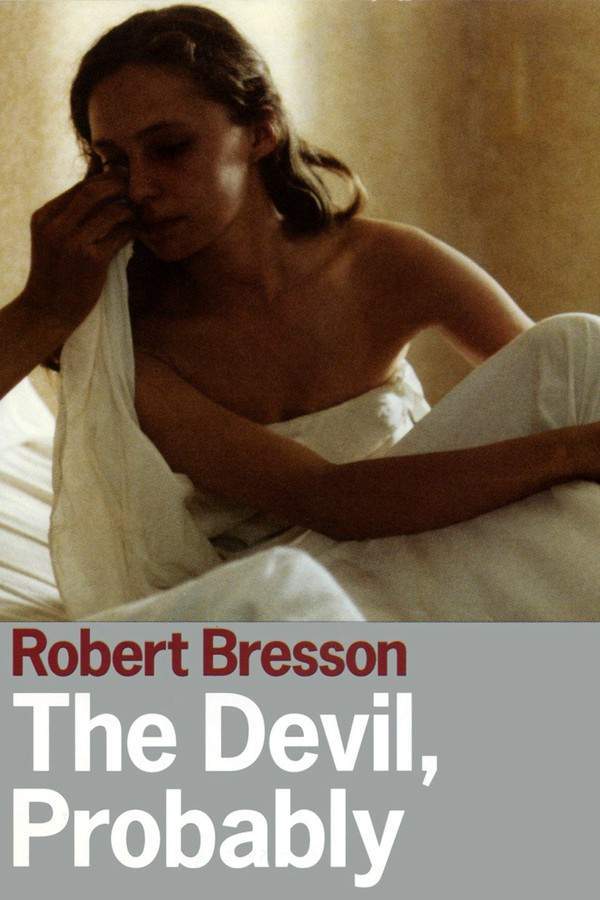
The Devil, Probably (1977) (2012) movie poster

Timeline

The Devil, Probably (1977) (2012) Timeline Explained – Every Event in Order

Release, runtime and language
2012 · 95 min · French
Loading streaming availability…
Directed by
Robert Bresson
Budget
$1M

Following the sudden death of Charles, a disillusioned young man embarks on a haunting and introspective journey. Through a series of poignant vignettes, the film explores his struggles with existential crises, failed relationships, and a desperate search for meaning in a seemingly purposeless world. Ultimately, he faces a tragic reckoning with his own mortality and the fragility of life.

On this page (5)
  1. 1 Where to watch
  2. 2 Events in order (10)
  3. 3 Timeline questions answered
  4. 4 Movie threads
  5. 5 Every angle
Loading streaming availability…

10 events in order · contains spoilers

The Devil, Probably (1977) Timeline: Events in Chronological Order

Every key event of The Devil, Probably (1977) (2012) in order, scene by scene, with when and where it takes place. Use it to untangle flashbacks, time jumps and parallel storylines, to refresh your memory before the sequel or to find the exact scene you are thinking of.

  1. Opening Headlines

    The film begins with two contradictory newspaper headlines announcing the death of Charles. This sets the tone for the story, indicating that his life and choices will be examined in depth.

    Where
    Père Lachaise Cemetery
  2. Introduction to Charles

    The audience is introduced to Charles, a disillusioned student living in Paris. He grapples with feelings of alienation and detachment from society, establishing a deep sense of inner turmoil.

    Where
    Paris
  3. Strained Relationships

    Charles's interactions with his girlfriend, Alberte, and his friends highlight his inability to connect with others. They are depicted as unable to comprehend the depth of his struggles, amplifying his feelings of isolation.

  4. Despair in Politics and Religion

    Charles seeks solace in left-wing politics and religion but finds them inadequate for his needs. This search for meaning further deepens his discontent and sense of purposelessness.

  5. Sexual Disconnection

    His sexual experiences, including those with Alberte and other acquaintances, leave him feeling empty. This further emphasizes his emotional disconnect and inability to form genuine intimacy.

  6. Failed Psychoanalysis

    Charles undergoes psychoanalysis in hopes of repairing his nihilistic outlook on life. However, this process only intensifies his feelings of despair, leaving him feeling even more lost.

  7. Increasing Alienation

    As the film progresses, Charles begins to observe the world around him with a growing sense of horror and unease. He becomes increasingly critical of societal values and norms, deepening his disconnection.

  8. Conversation on the Bus

    During a pivotal conversation on a bus, a passenger questions the state of humanity, asking who truly leads society. This moment symbolizes Charles's inner anguish and reflects his despair over the human condition.

    Where
    On a bus
  9. Focus on Suicide

    Charles’s thoughts become increasingly fixated on suicide as a means of escape from his anguish. He contemplates various ways to end his suffering, further illustrating his tragic mindset.

  10. Agreement with Valentin

    In a final act of desperation, Charles makes an arrangement with his drug-addicted friend, Valentin, to end his life using a handgun. This marks a critical point in his unraveling and commitment to his bleak choice.

Last updated: February 04, 2025 at 09:32

Was this helpful?

Timeline questions answered

The Devil, Probably (1977) Timeline Explained: Your Questions Answered

When does it happen, and why in that order? The questions people ask about the chronology of The Devil, Probably (1977) (2012): time jumps, flashbacks, cause and effect between scenes and the correct order of events, each answered with spoilers.

Q1

Why did Charles reject politics, religion, and psychoanalysis?

Charles searched for meaning in these institutions but found them fundamentally inadequate. Politics and religion offered collective meaning, but Charles felt they were empty performances that masked human cruelty rather than addressing it. Psychoanalysis promised self-understanding but only intensified his awareness of his own nihilism, leaving him more horrified by the human condition rather than reconciled to it.

Foreshadowing: The film opens with the grim certainty of Charles's death, establishing that none of these searches will provide salvation.

  • meaning
  • nihilism
  • existential crisis
  • disillusionment
  • society
Q2

What did the conversation about 'the devil probably' mean for Charles?

When a passenger asks 'Who made this mockery of humanity?' and another responds 'The devil probably,' it crystallizes Charles's worldview. The phrase becomes an ironic acceptance of the world's inherent corruption - not literally blaming Satan, but acknowledging that humanity's suffering stems from forces beyond individual control. This moment validates his sense that existence itself is fundamentally flawed.

Foreshadowing: This conversation occurs after Charles has already tried and failed to find meaning through politics, religion, and relationships, marking his complete resignation.

  • bus conversation
  • devil probably
  • humanity
  • meaninglessness
  • satire
Q3

Why couldn't Charles form genuine connections with Alberte or his friends?

Charles's alienation was so profound that even intimate relationships felt like performances. His friends and girlfriend represented the very society he found abhorrent - people who could still find meaning in politics, careers, and love despite the apparent futility of existence. His inability to connect wasn't about others failing him but about his complete emotional detachment from ordinary human experience.

Foreshadowing: Early scenes establish Charles as fundamentally apart from those around him, watching life rather than participating in it.

  • alberte
  • michel
  • albert
  • edwige
  • isolation
  • emotional detachment
Q4

What was Charles's relationship with Valentin and why did he ask him for a gun?

Valentin was a drug-addicted friend who lived on the margins of society, making him one of the few people Charles respected because he at least rejected mainstream values. Charles approached Valentin to arrange his suicide because Valentin could obtain a handgun without questions - but more importantly, Valentin embodied the discarded portion of society that Charles saw as honest about life's meaninglessness. Their shared nihilism created a strange bond.

Foreshadowing: Charles's previous failed attempts at connection (politics, religion, psychoanalysis, relationships) all involved mainstream institutions; Valentin represents the opposite extreme.

  • valentin
  • suicide
  • gun
  • addiction
  • friendship
  • nihilism
Q5

Why did Charles become fixated on suicide as the only option?

Charles's fixation emerged from a logical conclusion: if nothing in the world holds meaning and all attempts to find purpose fail, continued existence becomes absurd. His suicide wasn't impulsive but intellectual - he saw death as the only dignified response to a world he found fundamentally repugnant. The horror he felt watching humanity's casual cruelty made survival feel like complicity.

Foreshadowing: His increasing observation of the world's 'horror' in the middle chapters directly precedes his suicide planning.

  • suicide
  • death
  • nihilism
  • despair
  • meaninglessness
Q6

Why does the film open with Charles already dead in the cemetery?

The opening establishes that Charles's story is being examined in retrospect, with the outcome known from the start. This structure allows the film to explore how a seemingly intelligent, young man arrived at such a desperate conclusion. The flashbacks from his friends' perspectives investigate whether they could have intervened - though the film suggests his path was essentially inevitable given his philosophical stance.

Foreshadowing: The two contradictory newspaper headlines in the opening suggest conflicting interpretations of Charles's life and death.

  • flashback
  • structure
  • pere lachaise
  • opening
  • cemetery
Q7

What does 'The Devil, Probably' mean as the title?

The title refers directly to the bus conversation where a stranger answers 'The devil probably' to the question of who leads humanity. Charles adopts this phrase as his worldview - not literally believing in Satan, but accepting that the world's suffering stems from some fundamental corruption beyond individual remedy. The 'probably' adds fatalistic resignation: things are likely bad and likely beyond saving.

Foreshadowing: The title appears before the character does, hinting that this philosophical statement defines Charles's entire journey.

  • title
  • devil probably
  • meaning
  • satire
  • fatalism
Q8

Why were Charles's sexual experiences with Alberte and others empty?

Charles approached intimacy as another failed avenue for connection, finding that physical pleasure couldn't substitute for genuine meaning. Even with Alberte, who genuinely cared for him, Charles couldn't overcome his fundamental sense that human connection was ultimately futile. Sex became another reminder of the gap between human animal instincts and the intellectual awareness of existence's absurdity.

Foreshadowing: The pattern of failed pursuits - politics, religion, psychoanalysis - extends to relationships, reinforcing Charles's conclusion that nothing works.

  • alberte
  • sex
  • intimacy
  • disconnection
  • relationships

Movie threads

More Movies Like The Devil, Probably (1977), by Mood & Story

Curated lists built around what makes The Devil, Probably (1977) tick: the same mood, the same kind of story or the same emotional payoff. Each list explains why these movies belong together.

Movies about existential despair and alienation like The Devil, Probably (1977)

Stories of profound alienation and the crushing weight of a meaningless world. If you were captivated by the profound existential crisis in The Devil, Probably, this list features similar films that explore nihilism, alienation, and the search for meaning. Discover other slow-paced, heavy dramas where characters confront the emptiness of modern life and grapple with deep philosophical despair.

  • existential
  • melancholic
  • oppressive
  • philosophical
  • alienated
  • nihilistic
  • Tone: bleak, melancholic, philosophical
  • Pacing: slow, contemplative, deliberate
Why these movies?

The story pattern: Narratives in this thread often follow a character's introspective descent as they reject traditional systems of meaning—be it politics, religion, or love. The plot is typically driven by internal crisis rather than external action, unfolding through vignettes or a slow, deliberate pace that mirrors the protagonist's aimless and ultimately tragic journey.

Why they belong together: These films are grouped together for their shared focus on the mood of existential dread. They share a bleak tone, heavy emotional weight, and a contemplative pacing that allows the audience to sit with the character's despair, creating a cohesive experience of philosophical melancholy.

Bleak films about disillusioned youth like The Devil, Probably (1977)

Haunting studies of young protagonists succumbing to overwhelming despair. For viewers seeking more movies like The Devil, Probably that explore the tragic side of youth, this collection features stories of young protagonists grappling with disillusionment and psychological crisis. Find similar character-driven dramas about failed relationships, a search for meaning, and a descent into despair.

  • disillusioned
  • tragic
  • psychological turmoil
  • alienated youth
  • failed relationships
  • fragile
  • Tone: bleak, tragic, psychologically intense
  • Pacing: slow, character-driven, vignette-based
Why these movies?

The story pattern: The narrative pattern follows a young protagonist's psychological unraveling. Often beginning from a point of potential, the story charts their failed attempts to connect with others and find a place in the world, resulting in a downward spiral. The structure may use flashbacks or a reflective frame to underscore the inevitability of the tragic outcome.

Why they belong together: This thread connects films through a specific character archetype—the disillusioned youth—and the emotional journey of their collapse. They share a bleak ending feel, high intensity derived from psychological turmoil, and a focus on the fragility of a young life overwhelmed by the world's demands.

Every angle

The Devil, Probably (1977) (2012) Explained: Plot, Timeline & Characters

Everything about The Devil, Probably (1977) in one place: what happens in the plot summary, the timeline in chronological order, the characters and meaning and a spoiler-free summary. What's After the Movie adds the cast, box office and post-credit scenes.

Coming soon on iOS and Android

The Plot Explained Movie Summary App

Plot summaries, endings explained and timelines on your phone. Catch up on any movie in minutes, save your favorites and never miss a twist again.

Be the first to know when we launch. Your email stays private, always.

Learn more about the app