





Plot Explained Spoilers guaranteed!
Plot Explained

Browse by genre

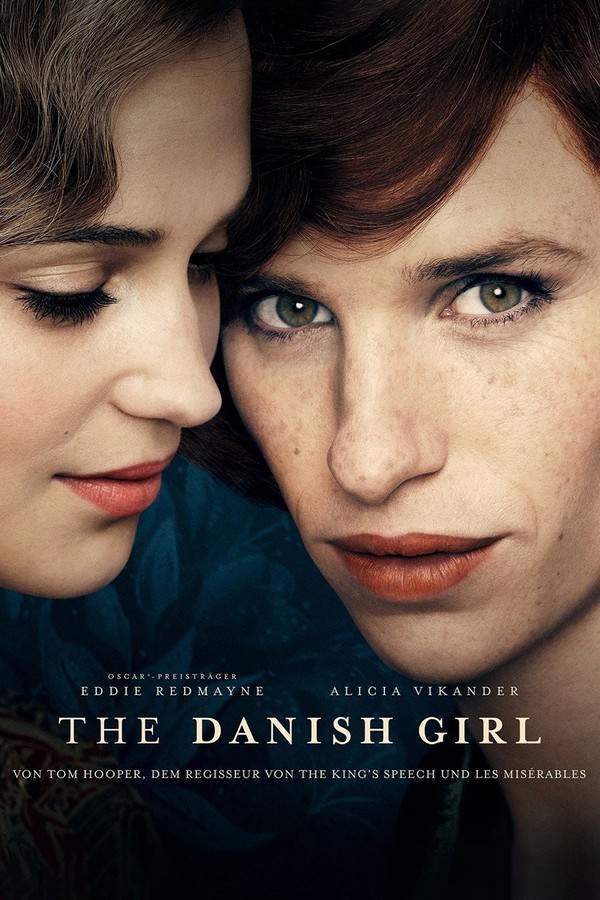
The Danish Girl (2015) movie poster

Timeline

The Danish Girl (2015) Timeline Explained – Every Event in Order

Release, runtime and language
2015 · 119 min · English
Directed by
Tom Hooper
Starring
Amber Heard, Ben Whishaw, Eddie Redmayne, Alicia Vikander

Set in 1920s Denmark, this story explores the complex relationship of a couple as one of them embarks on a journey of self-discovery. The wife asks her husband to paint her as a woman, leading to a profound exploration of gender identity and acceptance. As they navigate the evolving artistic and personal landscape, their bond is tested and transformed, revealing a tender portrayal of love and the courage to embrace one's true self.

On this page (7)
  1. 1 Where to watch
  2. 2 Events in order (14)
  3. 3 Timeline questions answered
  4. 4 The book behind the movie
  5. 5 Movie threads
  6. 6 Movies like The Danish Girl
  7. 7 Every angle

Where to watch

Where to Watch The Danish Girl (2015)

Where can you watch The Danish Girl? Stream, rent or buy it in the US, including on Amazon Video, Apple TV Store and Fandango At Home: current JustWatch availability with up-to-date prices.

Streaming availability powered by JustWatch

14 events in order · contains spoilers

The Danish Girl Timeline: Events in Chronological Order

Every key event of The Danish Girl (2015) in order, scene by scene, with when and where it takes place. Use it to untangle flashbacks, time jumps and parallel storylines, to refresh your memory before the sequel or to find the exact scene you are thinking of.

  1. Art Exhibition

    The film opens with a montage showcasing stunning landscapes, transitioning into a painting admired by Gerda Wegener. At this art exhibition, a patron comments on Gerda's artwork, suggesting it doesn't compare to her husband Einar's talents, highlighting the couple's artistic dynamics.

    When
    1926
    Where
    Copenhagen, Denmark
  2. A Lighthearted Evening

    After the exhibition, Gerda and Einar walk home, laughing and playful despite a passerby’s admonition to be quieter. Their joyful banter showcases the affectionate and light-hearted nature of their relationship, providing a glimpse into their domestic life.

    When
    1926
    Where
    Copenhagen, Denmark
  3. Morning Routine

    The next day, Gerda immerses herself in painting a male portrait, while Einar visits a ballet class to encourage their friend Oona. Einar’s intention to allow Gerda to focus underscores their supportive relationship, even as he mirrors her artistic struggles.

    When
    1926
    Where
    Copenhagen, Denmark
  4. Intimacy and Creativity

    As Gerda paints, the emotional intimacy between the couple deepens. Einar's meticulous approach to a new painting and Gerda’s focus on their intimate bond illustrate the complexity of their relationship as it intertwines love with creativity.

    When
    1926
    Where
    Copenhagen, Denmark
  5. A New Model

    Gerda faces an artistic dilemma when she lacks a model and persuades Einar to dress in women's stockings and shoes. This moment not only serves as a playful exploration of their relationship but also becomes a pivotal starting point for Einar's transformation into Lili.

    When
    1926
    Where
    Copenhagen, Denmark
  6. The Birth of Lili

    Encouraged by their friend Oona, Einar embraces the name Lili as he models for Gerda's paintings. This moment marks the beginning of Einar's journey into understanding and embracing his new identity, creating a rift between his roles as a husband and an artist.

    When
    1926
    Where
    Copenhagen, Denmark
  7. Struggles with Identity

    As Gerda kisses Einar, she realizes he has been secretly wearing her undergarments, revealing his growing identity conflict. The subsequent morning, Gerda sketches Einar's likeness as androgynous, symbolizing the blending of their identities and capturing Einar's internal turmoil.

    When
    1926
    Where
    Copenhagen, Denmark
  8. A Playful Gathering

    During a social gathering, Gerda reminisces about Einar’s past admiration for her, while he becomes increasingly aware of his evolving identity. The playful yet poignant dynamics of their relationship are tested as Einar begins to lean more into his femininity.

    When
    1926
    Where
    Copenhagen, Denmark
  9. Transformation at the Party

    Einar tries on makeup and a wig to attend a party as Lili, capturing the attention of Henrik, who becomes fascinated by her. This transformation signifies Einar's burgeoning acceptance of his identity as Lili, complicated by the newfound romantic tension with Henrik.

    When
    1926
    Where
    Copenhagen, Denmark
  10. A Complicated Love Triangle

    As Einar embraces his identity as Lili, Gerda finds herself navigating a complicated love triangle with Hans, a childhood friend who expresses romantic interest in her. This emotional entanglement amplifies the tension in Gerda and Einar's relationship, as they redefine their boundaries.

    Where
    Paris, France
  11. Seeking Help

    Realizing the complexities of Einar’s identity, they consult a doctor who proposes radical surgical options for Einar's transition. This pivotal moment is filled with both apprehension and hope as Gerda supports Einar's desire to fully embrace Lili.

    Where
    Paris, France
  12. Operations and Identity

    As Lili eagerly anticipates her identity transformation through surgery, the relationship with Gerda becomes strained and complicated. Despite the joy of embracing her true self, Lili's recovery from the surgery brings unexpected challenges and emotional turmoil.

    Where
    Paris, France
  13. A Heartbreaking Conclusion

    In the aftermath of surgery, Lili's joy turns to sorrow when recovery takes a tragic turn. Gerda and Hans reflect on their memories in Denmark, encapsulating the emotional weight of loss and the beauty of Lili’s self-discovery.

    Where
    Denmark
  14. Symbolic Farewell

    The film concludes with a poignant moment as Gerda and Hans stand amid Einar’s beloved trees, where Gerda’s scarf drifts away. This moment serves as a powerful symbol of Lili’s liberation and the bittersweet acceptance of their intertwined journeys.

    Where
    Denmark

Last updated: November 08, 2024 at 00:15

Was this helpful?

Timeline questions answered

The Danish Girl Timeline Explained: Your Questions Answered

When does it happen, and why in that order? The questions people ask about the chronology of The Danish Girl (2015): time jumps, flashbacks, cause and effect between scenes and the correct order of events, each answered with spoilers.

Q1

Why did Einar first dress as a woman?

Gerda needed a model for her painting but couldn't find one, so she asked Einar to put on women's stockings and shoes to help her finish the portrait. While modeling, their friend Oona suggested he should be called Lily, which sparked something in Einar. This moment of playful crossdressing became the catalyst for Einar to explore his true identity as Lili.

Foreshadowing: Earlier, Gerda mentioned that men are often intimidated by the gaze of a woman, hinting at Einar's complex relationship with masculinity.

  • einar wegener
  • lili
  • gerda wegener
  • first dress
  • model
  • stockings
Q2

How did Einar's identity shift to Lili?

After the initial crossdressing moment, Einar began secretly wearing Gerda's undergarments, revealing his internal struggle with gender identity. Gerda discovered this and, rather than rejecting him, painted androgynous sketches of him. As Einar embraced Lili more publicly, he found increasing fulfillment in expressing his feminine identity, eventually choosing to live as Lili full-time.

Foreshadowing: Gerda's sketch of Einar while he slept depicted an androgynous figure, foreshadowing his eventual transformation.

  • einar
  • lili
  • identity
  • transformation
  • gender
Q3

Why did Lili want to undergo surgery?

Lili felt that wearing women's clothing and presenting as a woman wasn't enough to express her true self. She experienced intense gender dysphoria and believed that transitioning physically through surgery was necessary to fully become who she truly was. The film portrays this as a deeply personal need for authenticity rather than a choice.

Foreshadowing: Einar's discomfort with his identity became increasingly apparent throughout the film, particularly at social events where he felt trapped in his male presentation.

  • lili
  • surgery
  • transition
  • gender dysphoria
  • self-identity
Q4

What happened to Lili after the surgery?

Lili underwent the surgery to physically transition, experiencing both hope and joy at finally embracing her true self. However, the recovery took a tragic turn, and Lili died as a result of complications from the operation. The film portrays this outcome with bittersweet tone, celebrating her self-discovery while acknowledging the tragic cost.

Foreshadowing: The doctor warned of significant risks associated with the radical surgery, planting seeds of the tragic outcome.

  • lili
  • surgery
  • death
  • outcome
  • complications
Q5

Why did Gerda support Einar's transformation?

Gerda loved Einar deeply and chose to stand by him throughout his journey of self-discovery. Initially, she approached Lili as a creative subject for her art, but her support evolved into unconditional acceptance. Even as Einar became Lili and their marriage transformed, Gerda remained devoted, understanding that this was about Lili's authentic self rather than a rejection of their relationship.

Foreshadowing: Gerda's early reaction to discovering Einar wearing her undergarments was not horror or rejection, but rather an artistic curiosity and acceptance.

  • gerda
  • einar
  • lili
  • support
  • love
  • marriage
Q6

Who was Henrik and what was his role?

Henrik was a man at the party where Einar first appeared as Lili. He became fascinated by Lili and they shared a romantic connection. This moment was significant for Einar/Lili because it was the first time someone saw and was attracted to her as a woman, validating her identity and deepening her understanding of who she was meant to be.

Foreshadowing: The party transformation was the first time Einar presented publicly as Lili, marking a crucial step in her journey.

  • henrik
  • party
  • lili
  • attraction
  • validation
Q7

Who was Hans Axgil in the story?

Hans Axgil was a childhood friend of Einar's who reconnected with Gerda in Paris. He developed romantic feelings for Gerda, creating a complicated love triangle. Hans represented an alternative path for Gerda, a life with someone who could love her without the complexity of her husband's transition. He ultimately remained with Gerda after Lili's death, providing her companionship.

Foreshadowing: Hans's appearance in Paris coincided with Einar's increasing absence as Lili, highlighting the strain in their marriage.

  • hans axgil
  • gerda
  • love triangle
  • childhood friend
  • paris
Q8

What was the significance of Einar's tree painting?

Einar was working on a meticulous painting of five trees in the woods near their town. This painting represented his connection to nature and his careful, methodical nature as an artist. In the final scene, Gerda and Hans stand among these same trees, making the painting a symbol of Einar's legacy and the enduring beauty of his artistic vision.

Foreshadowing: The tree painting appears early in the film, establishing Einar's artistic voice before his transformation.

  • trees
  • painting
  • art
  • einar
  • legacy
Q9

What did the drifting scarf symbolize at the end?

In the final scene, Gerda's scarf drifts away from her as she and Hans stand among Einar's beloved trees. This symbolizes Lili's liberation, her spirit finally free from the constraints of her physical body and the societal limitations she faced. It's a bittersweet image of freedom through death, representing both loss and ultimate self-actualization.

Foreshadowing: The scarf moment occurs as Gerda reflects on her memories with Einar, connecting past and present.

  • scarf
  • ending
  • symbolism
  • liberation
  • freedom
Q10

Why is the film set in 1926?

The film is set in 1926 Copenhagen and Paris, a period when discussions of gender identity were virtually unheard of in mainstream society. This historical setting highlights the courage it took for Lili to pursue her true self, as she faced limited medical understanding and social acceptance. The era also allowed the film to explore themes of artistic expression and bohemian freedom.

Foreshadowing: The title card's specific date establishes the historical context that makes Lili's journey both groundbreaking and tragic.

  • 1926
  • copenhagen
  • paris
  • historical setting
  • context

Movie threads

More Movies Like The Danish Girl, by Mood & Story

Curated lists built around what makes The Danish Girl tick: the same mood, the same kind of story or the same emotional payoff. Each list explains why these movies belong together.

Movies about identity and self-discovery like The Danish Girl

Tender stories about embracing one's true self against all odds. If you were moved by Lili's journey in The Danish Girl, you'll find similar stories of personal transformation here. These films explore complex themes of identity, acceptance, and the courage to live authentically, often within the context of close relationships. Discover more movies like The Danish Girl that handle these topics with sensitivity and depth.

  • introspective
  • heartbreaking
  • hopeful
  • soulful
  • intimate
  • contemplative
  • Tone: bittersweet, tender, melancholic
  • Pacing: slow, contemplative
Why these movies?

The story pattern: Stories in this thread follow a character's arduous but liberating journey to align their external life with their internal truth. The central conflict is often internal and societal, with the narrative unfolding through deeply personal moments of realization, struggle, and, ultimately, acceptance, testing and transforming their closest bonds.

Why they belong together: These films are grouped by their shared focus on a core identity journey. They possess a similar emotional weight, a bittersweet tone balancing pain and liberation, and a slow, intimate pacing that allows the viewer to fully immerse themselves in the character's experience.


Bittersweet love stories tested by change like The Danish Girl

Relationships that evolve or unravel as one partner undergoes a profound change. Explore more movies like The Danish Girl that depict a powerful love story challenged by a profound personal journey. These films show how relationships adapt, strain, or transform when one partner's identity or path shifts dramatically. If you appreciated the complex dynamic between Gerda and Lili, you'll find similar emotionally resonant stories here.

  • heartbreaking
  • tender
  • melancholic
  • intimate
  • soulful
  • contemplative
  • Tone: bittersweet, heartbreaking, hopeful
  • Pacing: slow, intimate
Why these movies?

The story pattern: The narrative pattern revolves around a stable relationship that is thrown into flux by a pivotal change—be it illness, self-discovery, or a new passion. The story examines whether love can survive the loss of a shared past identity and adapt to a new reality, often culminating in a redefined, bittersweet connection rather than a simple happy ending.

Why they belong together: These movies share a core thematic concern with the durability of love in the face of fundamental personal change. They are united by a heavy emotional weight, a slow, intimate pacing that explores relational nuances, and a consistently bittersweet tone that acknowledges both loss and the beauty of enduring support.

If you liked this

Movies Like The Danish Girl

Similar movies to The Danish Girl: the same genre, themes or kind of story. Each one comes with its own plot summary, timeline and ending explained.

Browse all movie summaries

Every angle

The Danish Girl (2015) Explained: Plot, Timeline & Characters

Everything about The Danish Girl in one place: what happens in the plot summary, the timeline in chronological order, the characters and meaning and a spoiler-free summary. What's After the Movie adds the cast, box office and post-credit scenes.

Coming soon on iOS and Android

The Plot Explained Movie Summary App

Plot summaries, endings explained and timelines on your phone. Catch up on any movie in minutes, save your favorites and never miss a twist again.

Be the first to know when we launch. Your email stays private, always.

Learn more about the app