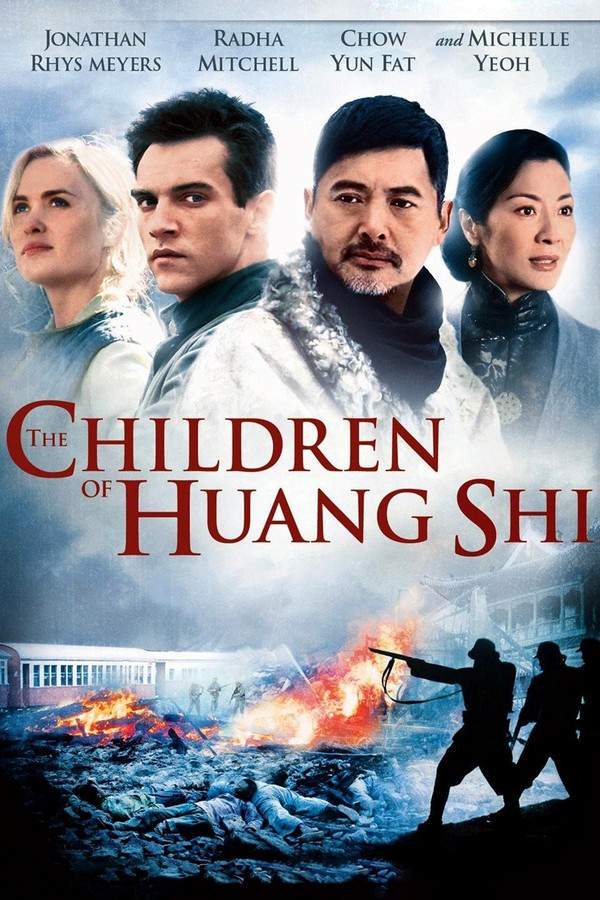
The Children of Huang Shi
Year: 2008
Runtime: 125 min
Language: English
Director: Roger Spottiswoode
During the 1930s in China, a British journalist, an American nurse, and a Chinese resistance leader find themselves united by a shared purpose. They begin a dangerous mission to locate and rescue sixty orphaned children amidst the chaos of war. The journey takes them through difficult terrain, testing their resolve and revealing the strength of their bond as they confront adversity and discover the true meaning of love and responsibility.
Where to Watch The Children of Huang Shi?
Find where to stream, rent, or buy The Children of Huang Shi (2008) in the US with current JustWatch availability, up-to-date pricing, and platform listings for subscription, rental, and digital purchase options.






Warning: spoilers below!
Haven’t seen The Children of Huang Shi yet? This summary contains major spoilers. Bookmark the page, watch the movie, and come back for the full breakdown. If you're ready, scroll on and relive the story!
Timeline – The Children of Huang Shi (2008)
Trace every key event in The Children of Huang Shi (2008) with our detailed, chronological timeline. Perfect for unpacking nonlinear stories, spotting hidden connections, and understanding how each scene builds toward the film’s climax. Whether you're revisiting or decoding for the first time, this timeline gives you the full picture.
Last updated: March 08, 2025 at 15:50
The Children of Huang Shi (2008) Timeline Questions Answered – Chronology FAQ
Find frequently asked questions about the The Children of Huang Shi (2008) timeline, including chronological order, nonlinear jumps, cause-and-effect links, and scene sequence clarifications. This timeline FAQ helps explain when key events happen, how moments connect, and why the story unfolds in that specific order.
Why does George Hogg decide to stay at the orphanage instead of returning to the war?
Hogg initially wants to leave the orphanage and return to the front lines to document the war atrocities. However, after spending time with the 56 boys and witnessing their desperate situation, including severe food shortages and the grandmother's revelation of maggot-ridden rice, he feels a sense of responsibility toward them. Lee Pearson also persuades him to stay temporarily, and through his acts of teaching, fixing lights, and caring for the children, he forms a genuine bond that makes him choose to remain.
Why do the boys at the orphanage attack Hogg on his first night?
The boys attack Hogg because they perceive him as a threat. Having lived through war trauma and abandonment, they are naturally suspicious of strangers. When Hogg enters their living space, they instinctively react with violence, mistaking him for a potential danger or intruder. Lee Pearson intervenes by threatening to withdraw her essential supplies, which forces the boys to accept her authority and tolerate Hogg's presence.
The boys' initial hostility reflects the trauma they have endured from losing their parents and living through war.
How does Hogg manage to get food and seeds from Mrs. Wang?
Hogg approaches Mrs. Wang, a wealthy local merchant, and proposes a barter arrangement for food and seeds. Although Mrs. Wang prefers cash transactions, Hogg proves his value by demonstrating genuine agricultural knowledge, he understands farming techniques and crop cultivation. This convinces her that investing in the orphanage would be worthwhile, and she agrees to provide supplies in exchange for his expertise and labor.
Why do Hogg and the orphans need to escape through the Liu Pan Shan mountains?
Hogg and the children flee because Nationalist forces threaten to conscript the boys into military service. Fearing for their lives and determined to protect them, Hogg leads the group on a dangerous three-month journey spanning 900 kilometers through the snow-covered Liu Pan Shan mountains toward the Mongolian desert, where they can live safely away from conscription and warfare.
The threat of conscription was introduced earlier when Nationalist forces began pressuring the orphanage.
How does Hogg earn the trust of the orphanage boys?
Hogg earns the boys' trust through patience and practical acts of care. After the initial attack, Lee suggests he demonstrate usefulness by helping treat the boys for lice using flea powder, this medical act shows he wants to help them. He then mends broken lights, refurbishes their learning space, and takes on the role of their teacher. These tangible efforts gradually convince the boys that he is there to help, not harm them.
Why does George Hogg die of tetanus and was it foreshadowed?
Hogg dies from tetanus in 1945 after sustaining an infection, which was foreshadowed earlier in the film when Lee Pearson warns him about the dangers of his wounds becoming infected. The disease kills him despite his efforts to save the orphans, making his death tragic but meaningful, he successfully rescues and relocates all 56 boys to safety before succumbing to the illness.
Lee explicitly tells Hogg that his wounds could become infected and kill him, foreshadowing his eventual death.
How does Chen Hansheng rescue Hogg from the Japanese?
Chen Hansheng, a Chinese communist resistance fighter played by Chow Yun-fat, saves Hogg when he is about to be executed by Japanese soldiers. Hansheng intercepts the execution and rescues the British journalist, taking him to safety in the war-torn ruins of Nanjing. This rescue sets up their relationship and leads Hogg to the rebel camp where he meets Lee Pearson.
Why does Lee Pearson leave the orphanage for several months?
Lee Pearson, the American nurse portrayed by Radha Mitchell, informs Hogg that she needs to leave the orphanage for several months to handle important business related to the operation's logistics. She entrusts Hogg with caring for the 56 boys during her absence, which becomes the pivotal moment that solidifies his commitment to staying at the orphanage permanently.
What happens to the surviving orphans at the end of the film?
The film concludes with brief interview footage of some surviving orphans who recount their experiences during the Rape of Nanjing and reflect on the impact George Hogg had on their lives. Their testimonies serve as a poignant reminder of the resilience and hope that emerged from the tragedy, showing that Hogg's sacrifice enabled them to survive and carry forward his legacy.
Why do the Japanese soldiers execute the Chinese refugees in Nanjing?
The Japanese soldiers execute Chinese refugees as part of the systematic brutality during the Rape of Nanjing in 1938. Hogg witnesses this mass execution while documenting the war, photographing the horror as Japanese forces round up and kill civilians. This brutal event motivates Hogg to continue reporting on the atrocities and ultimately leads to his capture and near-execution.
How does the vegetable garden help the orphanage?
The vegetable garden becomes a symbol of hope and sustainability for the orphanage. After securing seeds and supplies from Mrs. Wang, Hogg works with the boys to cultivate vegetables and even plant sunflowers. The garden provides a reliable food source, improving nutrition and ending the starvation crisis. It also gives the children a sense of purpose and pride in contributing to their community's survival.
Why does Hogg accidentally reveal the hiding spot to the Japanese?
While hiding with Chen Hansheng in war-torn buildings, Hogg witnesses the execution of two fellow journalists, his colleagues. Overcome with emotional shock and trauma from seeing his friends killed, Hogg inadvertently slips and reveals their hiding location. This triggers a firefight in which Hogg is wounded, leading to his eventual rescue and journey to the orphanage.
Hogg's emotional breakdown reflects the psychological toll of witnessing wartime atrocities.

Explore Movie Threads
Discover curated groups of movies connected by mood, themes, and story style. Browse collections built around emotion, atmosphere, and narrative focus to easily find films that match what you feel like watching right now.
Movies about wartime rescue missions like The Children of Huang Shi
Ordinary people undertake extraordinary missions to save lives amidst chaos.If you were moved by the perilous journey to save the orphans in The Children of Huang Shi, you'll find similar stories here. This collection features movies about humanitarian aid, rescue operations, and protecting the innocent during times of war, showcasing bravery and compassion in the face of overwhelming adversity.











Narrative Summary
The narrative pattern involves an outsider or group entering a conflict area with one purpose, only to have their mission transformed by a direct encounter with human suffering. They then embark on a dangerous, against-the-odds quest to transport a group of non-combatants to safety, facing external threats and internal doubts along the way.
Why These Movies?
Movies are grouped here because they share a central plot of a high-stakes rescue mission set against the backdrop of war. They combine the tension and violence of the setting with a powerful, hopeful drive centered on preservation of life and dignity, creating a specific type of intense yet uplifting drama.
Movies about found family in adversity like The Children of Huang Shi
Groups of strangers bond deeply through shared trauma to become a new family.For viewers who appreciated the powerful theme of found family in The Children of Huang Shi, this list highlights similar films. Discover stories where characters from different backgrounds are united by crisis, forming deep, familial bonds while navigating a journey filled with danger, sacrifice, and ultimately, a bittersweet sense of hope.

Like Dandelion Dust
2009

We Are Family
2010

Family Sins
2004

The Search
1948

Boys on the Side
1995

So B. It
2017

Born to Love
1931

My Favorite Season
1993

Two Is a Family
2016

Bad Hurt
2016

After This Our Exile
2006

Return to Seoul
2022

Daughter from Danang
2002

Wounded Game
1977

For a Lost Soldier
1992
Narrative Summary
The emotional journey begins with isolation and danger, forcing a collection of lonely or lost characters to rely on each other. Through a series of challenges, they learn to trust, protect, and care for one another, building a new community. The story arc typically culminates in a victory of spirit and connection, but acknowledges the sacrifices made along the way, resulting in a deeply felt, bittersweet resolution.
Why These Movies?
These films are grouped by their central emotional arc: the creation of a 'found family' under dire circumstances. They balance the heaviness of their setting with the uplifting power of human connection, resulting in a specific tonal mix of somber resilience and heartfelt hope that defines the viewing experience.
Unlock the Full Story of The Children of Huang Shi
Don't stop at just watching - explore The Children of Huang Shi in full detail. From the complete plot summary and scene-by-scene timeline to character breakdowns, thematic analysis, and a deep dive into the ending - every page helps you truly understand what The Children of Huang Shi is all about. Plus, discover what's next after the movie.
The Children of Huang Shi Summary
Read a complete plot summary of The Children of Huang Shi, including all key story points, character arcs, and turning points. This in-depth recap is ideal for understanding the narrative structure or reviewing what happened in the movie.

Characters, Settings & Themes in The Children of Huang Shi
Discover the characters, locations, and core themes that shape The Children of Huang Shi. Get insights into symbolic elements, setting significance, and deeper narrative meaning - ideal for thematic analysis and movie breakdowns.


Similar Movies to The Children of Huang Shi
Discover movies like The Children of Huang Shi that share similar genres, themes, and storytelling elements. Whether you’re drawn to the atmosphere, character arcs, or plot structure, these curated recommendations will help you explore more films you’ll love.

Shanghai Triad
1995

The Taking of Tiger Mountain
2015

The Flowers of War
2011

Pavilion of Women
2001

Empire of the Sun
1987

Air Strike
2018

Shaolin
2011

The Chinese Widow
2017

The Warlords
2007

China Cry
1990

Sons of the Good Earth
1965

China Doll
1958

City of Life and Death
2009

Children of Troubled Times
1935

China Sky
1945
Explore More About Movie The Children of Huang Shi
The Children of Huang Shi (2008) Plot Summary & Movie Recap
The Children of Huang Shi (2008) Scene-by-Scene Movie Timeline
The Children of Huang Shi (2008) Spoiler-Free Summary & Key Flow
Movies Like The Children of Huang Shi – Similar Titles You’ll Enjoy
Shanghai Triad (1995) Ending Explained & Film Insights
The Taking of Tiger Mountain (2015) Movie Recap & Themes
The Flowers of War (2011) Movie Recap & Themes
Pavilion of Women (2001) Movie Recap & Themes
Empire of the Sun (1987) Full Summary & Key Details
Air Strike (2018) Complete Plot Breakdown
Shaolin (2011) Ending Explained & Film Insights
The Chinese Widow (2017) Full Movie Breakdown
The Warlords (2007) Movie Recap & Themes
China Cry (1990) Spoiler-Packed Plot Recap
Sons of the Good Earth (1965) Full Movie Breakdown
China Doll (1958) Complete Plot Breakdown
City of Life and Death (2009) Ending Explained & Film Insights
Children of Troubled Times (1935) Detailed Story Recap
China Sky (1945) Full Summary & Key Details