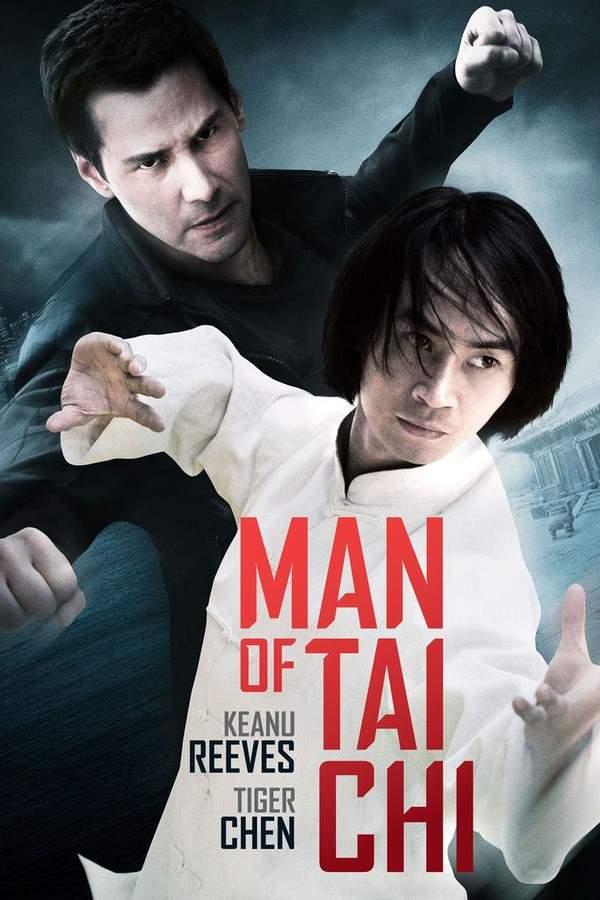
Prince Tsoi, Hwang Jang-Lee, sits atop the Ching regime with a cold, calculated cruelty, using his lethal Lohan Fist to stamp out Ming rebels who forever plot to assassinate him. Into this tense world steps Shao Hai, Mang Hoi, a naïve kung fu scholar who scrapes by as a janitor at a local Shaolin Temple. The temple is no bastion of solemnity; its monks joke, bicker, and occasionally bully Shao Hai, painting a rough portrait of life among the monks rather than a serene dojo. Shao Hai shares a home with his adoptive Aunt, and his martial education comes from his drunken master Uncle, Chin Yuet-Sang, a former head monk whose swagger and quirks bring a dash of humor and grit to the tale.
One day, the prince himself visits the temple. From a hidden vantage above the courtyards, Shao Hai spots incognito rebel assassins closing in on Prince Tsoi and shouts a warning to take cover. The guards spring into action, foiling the ambush, and Prince Tsoi, momentarily grateful, acknowledges Shao Hai’s quick reflexes—a gratitude that is soon tangled with suspicion and manipulation. What begins as a stroke of luck quickly mutates into a dangerous power play: the prince’s outward courtesy masks a strategy to bend Shao Hai to his purposes, elevating the young man’s status while steering him toward the prince’s broader political games.
Seeking knowledge of the prince’s art, Shao Hai’s uncle steers him toward a dangerous request: to spy on Prince Tsoi to uncover the hidden form behind the national figure. When Shao Hai reveals that the prince practices the Lohan style, the plan takes shape. The prince, wary of Shao Hai’s real loyalties, still agrees to teach him the legendary form, seeing a potential pawn in a larger game aimed at exposing the underground resistance. Before long, Shao Hai absorbs both the Lohan Fist and Buddhist Fist, his skill growing with startling speed.
The moment of reckoning arrives when masked rebel assassins infiltrate the palace to kill Prince Tsoi. Shao Hai’s newfound prowess lets him repel the attackers and even kill one of them in the process. But the man he unmasks after the combat is not just a nameless foe—it is his own Aunt, the very relative who raised him. The revelation shatters Shao Hai’s world, forcing a painful realization that he has been on the wrong side all along. He seeks guidance from his Uncle, who in turn decides to align Shao Hai with the rebellion, much to the chagrin of Shao Hai’s Aunt, who had believed in the prince’s vision.
The prince’s advisers warn that Shao Hai’s growing mastery could become a significant threat, while Prince Tsoi himself resolves to pull Shao Hai back into his orbit by any means necessary. As the chase intensifies, Shao Hai and his Uncle disappear into the forest, where the elder mentor trains his nephew in countering the Lohan Fist with the Five Elements Buddha’s Palm techniques. This sacred training marks a turning point: Shao Hai ascends from a naïve student to a disciplined fighter, guided by the Buddhist palm’s philosophy and power.
With the river of loyalty torn and rewritten, Shao Hai embraces a new path—one carved in secret rebellion and tempered by rigorous practice. The forest becomes a crucible where he hones the precise balance of offense and defense, the heavy tempo of his strikes echoing the weight of his awakening. As the final confrontation looms, the two forces—Prince Tsoi’s calculated ambition and Shao Hai’s evolving mastery—are poised for an inevitable clash. Shao Hai stands prepared, not just to duel for his life, but to defend the loyalties that have, at last, begun to settle into a clearer conscience and a sharper, more principled resolve.