Year: 2015
Runtime: 92 min
Language: English
Director: Chris Sparling
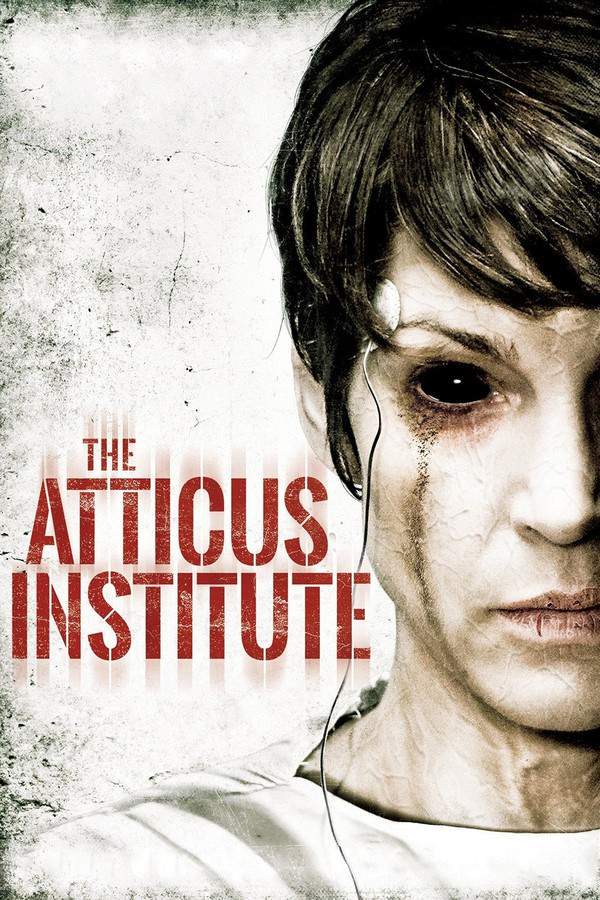
During the 1970s, Dr. Henry West’s The Atticus Institute studied individuals possessing unusual abilities. Their research took an unexpected turn with Judith Winstead, whose powers surpassed all previous subjects, drawing the interest of the U.S. Department of Defense. As the Institute and the government attempted to harness her gifts, a disturbing truth emerged: Judith’s abilities were fueled by malevolent forces. A desperate effort to weaponize her power resulted in a devastating outcome, demonstrating the inherent danger of attempting to control forces beyond human comprehension.
Warning: spoilers below!
Haven’t seen The Atticus Institute yet? This summary contains major spoilers. Bookmark the page, watch the movie, and come back for the full breakdown. If you're ready, scroll on and relive the story!
Read the complete plot breakdown of The Atticus Institute (2015), including all key story events, major twists, and the ending explained in detail. Discover what really happened—and what it all means.
The cinematic narrative unfolds in a documentary-style format, intricately blending authentic footage of significant events with insightful interviews from those closely connected to them.
In the early 1970s, Dr. Henry West (William Mapother), a trailblazing researcher, established the Atticus Institute in rural Pennsylvania, fueled by an unwavering desire to uncover concrete evidence of the supernatural, particularly in areas such as extrasensory perception. Despite West and his devoted team’s relentless pursuits, each subject displaying seemingly remarkable capabilities ultimately turns out to be a charlatan, causing morale within the team to plunge as they face a string of disheartening failures.
Their fortunes dramatically shift with the introduction of Judith Winstead (Rya Kihlstedt), who is brought to the institute by her sister, Margaret, deeply worried about Judith’s increasingly unpredictable behavior. Initial assessments reveal that Judith possesses an astonishing range of abilities, which only intensifies as the team employs innovative techniques to evaluate her powers.
As Judith’s capabilities evolve at an alarming pace, the atmosphere within the institute grows increasingly tense. Colleagues of the staff begin to encounter a series of strange and unexplainable occurrences outside the institute, leading them to conjecture that Judith may be somehow warping their reality. Many staff members ultimately resign, eager to escape the unsettling energy she exudes.
With the situation spiraling beyond control, West’s team seeks the expertise of the United States military to navigate the escalating crisis. Under military guidance, they conduct a new series of experiments, resulting in Judith showcasing an extraordinary range of abilities, including telekinesis and pyrokinesis.
In a shocking turn, Judith has a violent reaction during a spectral photography experiment, leading to a groundbreaking realization: during her seizures, a cloud-like entity is observed momentarily leaving her body. This discovery forces the team to reassess their understanding of Judith’s powers, ultimately concluding that they stem from demonic possession.
As military control over the institute tightens under the pretext of national security, a disastrous chain reaction unfolds. Authorities soon recognize Judith’s extraordinary powers as a potential asset against the Soviet Union amid the Cold War, leading them to subject her to an escalating series of inhumane experiments, despite Dr. West’s fervent protests. In a desperate attempt to harness her capabilities, the military resorts to methods like electroshock therapy, trying to subdue the demon within her and compel it to assist them, despite the catastrophic toll these tests inflict on Judith. However, these efforts ultimately falter, propelling the military to explore a radical solution: an exorcism conducted by a priest linked to Judith’s body. Initially, this process seems promising, yet Judith erupts with fury, seriously injuring the priest and breaking free from the electrodes, only to be thrown into a violent seizure.
As the team struggles to reattach the equipment, the demon retaliates against Dr. West through the soldier’s body, wreaking havoc within the facility and incapacitating everyone present. When the cameras flicker back on, Judith appears liberated from the demon’s grip, returned to her true self yet still restrained in an observation cell. Panic ensues as she takes in the devastation around her. The demon then makes its entrance, having completely consumed Dr. West’s soul, and stands before Judith’s cell, mocking her while she pleads for assistance. In a horrifying climax, West uses telekinesis to crush Judith’s heart, departing with an eerie calmness into the shadows.
The film concludes with a chilling epilogue: Judith’s body was buried in an undisclosed location following an autopsy, marking her case as the only officially recognized instance of possession by the United States government. Dr. West vanished on October 23, 1976, and was declared legally dead in 1982, remaining untraceable for over four decades.
Last Updated: November 19, 2024 at 12:22
Discover curated groups of movies connected by mood, themes, and story style. Browse collections built around emotion, atmosphere, and narrative focus to easily find films that match what you feel like watching right now.
When rational authority attempts to weaponize forces it cannot comprehend.If you liked The Atticus Institute's chilling tale of a research facility confronting a demonic force, you'll find similar dread in these movies. This list features stories where scientific curiosity or government experiments collide with supernatural horror, leading to bleak outcomes and psychological torment.
Stories in this thread typically begin with a premise of rational inquiry or technological ambition. A group of experts, often in a controlled environment like a lab or base, encounters something inexplicable. Their attempts to study, contain, or exploit this power are met with escalating, malevolent resistance, culminating in a failure that proves the fundamental folly of their enterprise.
These movies are grouped by their shared theme of rational authority being dismantled by the supernatural. They blend a pseudo-documentary or grounded aesthetic with intense horror, creating a unique brand of fear rooted in the collapse of science and order. The pacing is often steady, building dread methodically towards a bleak conclusion.
Stories where confined settings amplify a slow-building sense of inescapable horror.For viewers who appreciated the oppressive, confined atmosphere of The Atticus Institute, this list features movies with a similar feel. These titles use limited settings and a steady pace to build a powerful sense of paranoid dread, often involving psychological torment and sinister forces in a contained environment.
The narrative pattern involves characters in a restricted space—a research facility, a secluded house, an isolated outpost—facing a threat that grows from within. The pacing is steady, focusing on the gradual erosion of safety and sanity. Tension mounts through a series of unsettling discoveries, leading to a climax where escape seems impossible and the threat proves overwhelming.
These films are united by their mastery of atmosphere. They prioritize a slow-building, palpable sense of dread over jump scares, using their confined worlds to create feelings of claustrophobia and paranoia. The emotional journey is one of escalating psychological torment, making the viewer complicit in the characters' growing despair.
Don't stop at just watching — explore The Atticus Institute in full detail. From the complete plot summary and scene-by-scene timeline to character breakdowns, thematic analysis, and a deep dive into the ending — every page helps you truly understand what The Atticus Institute is all about. Plus, discover what's next after the movie.
Track the full timeline of The Atticus Institute with every major event arranged chronologically. Perfect for decoding non-linear storytelling, flashbacks, or parallel narratives with a clear scene-by-scene breakdown.
Discover the characters, locations, and core themes that shape The Atticus Institute. Get insights into symbolic elements, setting significance, and deeper narrative meaning — ideal for thematic analysis and movie breakdowns.
Get a quick, spoiler-free overview of The Atticus Institute that covers the main plot points and key details without revealing any major twists or spoilers. Perfect for those who want to know what to expect before diving in.
Visit What's After the Movie to explore more about The Atticus Institute: box office results, cast and crew info, production details, post-credit scenes, and external links — all in one place for movie fans and researchers.
Discover movies like The Atticus Institute that share similar genres, themes, and storytelling elements. Whether you’re drawn to the atmosphere, character arcs, or plot structure, these curated recommendations will help you explore more films you’ll love.
The Atticus Institute (2015) Scene-by-Scene Movie Timeline
The Atticus Institute (2015) Movie Characters, Themes & Settings
The Atticus Institute (2015) Spoiler-Free Summary & Key Flow
Movies Like The Atticus Institute – Similar Titles You’ll Enjoy
The Dark Hours (2005) Full Movie Breakdown
The Dead Center (2019) Story Summary & Characters
The Skeptic (2009) Complete Plot Breakdown
The Conjuring: The Devil Made Me Do It (2021) Film Overview & Timeline
The Faculty (1998) Full Movie Breakdown
The Devil Inside (2012) Film Overview & Timeline
The Institute (2017) Complete Plot Breakdown
The Vatican Tapes (2015) Movie Recap & Themes
The Manitou (1978) Spoiler-Packed Plot Recap
Possessed (2000) Complete Plot Breakdown
The Attic Expeditions (2001) Ending Explained & Film Insights
Dr. Rage (2005) Full Movie Breakdown
Antidote (2021) Movie Recap & Themes
The Power (1968) Film Overview & Timeline
Something Weird (1967) Ending Explained & Film Insights