Plot Explained Spoilers guaranteed!
Plot Explained

Browse by genre

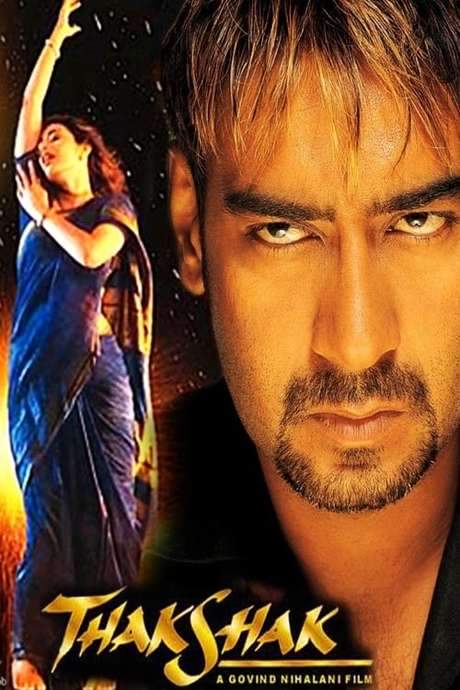
Thakshak (1999) movie poster

Timeline

Thakshak (1999) Timeline Explained – Every Event in Order

Release, runtime and language
1999 · 161 mins · Hindi
Directed by
Govind Nihalani
Starring
Ajay Devgn, Tabu, Rahul Bose, Govind Namdeo, Vineet Kumar, A.K. Hangal

Nahar Singh (Amrish Puri) protects boss Jodhabhai’s heirs and wants his son Ishaan (Ajay Devgan) to continue the duty. Ishaan, allied with Jodhabhai’s son Sunny (Rahul Bose), falls for Suman Dev (Tabu), who testifies that Sunny’s car was at a homicide scene. When Sunny forces Ishaan to choose, he backs Suman. After Nahar is killed, Ishaan is the prime suspect.

On this page (5)
  1. 1 Events in order (12)
  2. 2 Timeline questions answered
  3. 3 Movie threads
  4. 4 Movies like Thakshak
  5. 5 Every angle

12 events in order · contains spoilers

Thakshak Timeline: Events in Chronological Order

Every key event of Thakshak (1999) in order, scene by scene, with when and where it takes place. Use it to untangle flashbacks, time jumps and parallel storylines, to refresh your memory before the sequel or to find the exact scene you are thinking of.

  1. Heirs groomed for a crime-ridden empire

    In the glittering but brutal world of Mumbai's construction empire, Ishaan and Sunny are groomed to take the reins. Their bond is strong, with Ishaan's quiet, steady presence anchoring Sunny's flamboyant, reckless streak. The family business is built on violence and unlawful activities that shape their early years.

    Where
    Mumbai
  2. A powerful bond that keeps the empire in balance

    Ishaan's restrained strength complements Sunny's energy, creating a fragile equilibrium within the family business. Their dynamic helps the crime network stay cohesive as both men navigate privilege and danger. The city and the boardrooms become the theatre where this alliance plays out.

    Where
    Mumbai
  3. Ishaan meets Suman; love blooms

    Ishaan encounters Suman, an idealistic young woman, and the city reveals a gentler side of life beyond crime. Their budding romance offers Ishaan a glimpse of a future that rejects violence. Suman's convictions become a counterpoint to the empire's brutality.

    Where
    Mumbai
  4. Love challenges the family world

    As Ishaan's love for Suman grows, the conflict between affection and violence intensifies. He begins to question the legitimacy of the crime soaked empire and wonders if a different path is possible. The romance sharpens his awareness of the costs of power.

    Where
    Mumbai
  5. Torn between loyalty and escape

    Ishaan longs to withdraw from the world of crime, yet loyalty to his father and Sunny keeps him bound to the business. The tug of duty and tradition pulls him deeper into the criminal operation. The tension mounts as the empire's violence remains his reality.

    Where
    Family estate
  6. A gruesome massacre pulls him deeper into crime

    Ishaan is involuntarily drawn into a brutal massacre, a turning point that hardens his resolve while sinking him further into the empire's machinery. The act leaves a chilling mark on his conscience and reveals the cost of loyalty to power. He realizes the violence he helped fuel is more than a personal failure; it is a societal wound.

    Where
    Massacre site
  7. Haunting image of a ruined girl

    The memory of a young girl disabled by the violence haunts Ishaan, forcing him to confront the human cost of the empire's power. He struggles to reconcile his loyalty with his dawning sense of right and wrong. The personal guilt begins to overshadow the glamour of wealth.

  8. Clash with father and oath bound ally Sunny

    Ishaan's resolve to withdraw clashes with Nahar Singh's pragmatism; their plan to build power and legalize crime with that power. Sunny's refusal to release him from the loyalty oath deepens the rift between them. The family circle fractures as the empire's foundations tremble.

    Where
    Nahar Singh's residence
  9. Arrest marks a turning point

    The tension erupts into legal trouble as Ishaan is arrested, thrusting him and the family into a public reckoning. The arrest tests loyalties and exposes cracks within the crime-riven empire. The city watches as power begins to shift hands.

    Where
    Police station
  10. Nahar Singh is murdered

    Amid the chaos, Nahar Singh is murdered, delivering a devastating blow to Ishaan and the family. The act alters the balance of power and forces a harsh reckoning with the past. Ishaan must face the consequences of his entanglement with violence.

    Where
    Family estate
  11. Moral reckoning deepens

    With the patriarch dead and the empire destabilized, Ishaan confronts a brutal choice between personal loyalty and a higher duty to society and truth. The lines blur as the cost of crime becomes impossible to ignore. His sense of self hangs in the balance.

  12. The final choice

    Ishaan is forced to decide between loyalty to his family and a broader allegiance to truth and justice. The film centers on this crucible moment and the uncertain future that follows his decision. The conclusion tests whether love, loyalty, and power can coexist with conscience.

Last updated: February 17, 2026 at 19:57

Was this helpful?

Timeline questions answered

Thakshak Timeline Explained: Your Questions Answered

When does it happen, and why in that order? The questions people ask about the chronology of Thakshak (1999): time jumps, flashbacks, cause and effect between scenes and the correct order of events, each answered with spoilers.

Q1

Why does Ishaan choose Suman over Sunny?

Ishaan chooses Suman because her moral compass and love represent a way out of the violent crime world he's been trapped in. When Sunny forces him to make a choice between his loyalty oath and his relationship with Suman, Ishaan realizes that staying with Sunny means remaining complicit in the empire's brutality. Suman offers him a path toward a cleaner life, which is something he's been yearning for throughout the film. The decision also marks his rejection of the criminal legacy his father built.

Foreshadowing: Earlier scenes show Ishaan questioning the empire's violence and being haunted by the disabled girl from the massacre, foreshadowing his eventual break from that world.

  • ishaans choice
  • sunny loyalty
  • crime world
  • escape
  • moral compass
Q2

Who kills Nahar Singh?

Nahar Singh is murdered, though the exact perpetrator isn't explicitly detailed in the provided summary. The murder occurs amid the chaos following Ishaan's arrest and his choice to stand with Suman. This killing devastates the family and destabilizes the empire's power structure. The murder appears to be connected to the internal politics and violent power struggles within the crime organization.

Foreshadowing: The mounting tension between Nahar's pragmatic approach to power and Sunny's stubborn loyalty oath creates internal fractures that hint at the empire's vulnerability.

  • nahar singh death
  • murder
  • crime empire
  • power struggle
Q3

Why is Ishaan arrested?

Ishaan is arrested, likely due to his involvement in the criminal activities of the family empire and possibly the massacre he was pulled into. The arrest represents a public reckoning that exposes the cracks within the crime-ridden empire. It also marks a turning point in the story, forcing Ishaan to confront the consequences of his entanglement with violence.

Foreshadowing: His deepening involvement in the brutal massacre and his father's criminal operations set the stage for legal consequences.

  • arrest
  • police
  • crime
  • legal consequences
  • massacre
Q4

Why does Sunny demand loyalty from Ishaan despite his desire to leave?

Sunny represents the old guard's philosophy of unconditional loyalty to the crime empire and to family bonds. He refuses to release Ishaan from the oath because doing so would weaken the family's criminal network and break the code of silence that keeps their power intact. Sunny's refusal also stems from his own inability to imagine a life outside the crime world. The oath is both a personal bond and a mechanism to keep the empire's machinery functioning.

Foreshadowing: Their early dynamic shows Ishaan as the stabilizing force while Sunny is reckless, yet both are bound by the same loyalty code.

  • sunny
  • loyalty oath
  • crime family
  • bond
  • betrayal
Q5

What triggers Ishaan's moral crisis about the crime world?

Ishaan's moral crisis is triggered by two key events: his romance with Suman and his involvement in a brutal massacre. Suman's idealistic nature exposes him to a life beyond crime, making him question the legitimacy of their empire. The massacre, particularly the haunting image of a young girl disabled by the violence, directly confronts him with the human cost of their criminal activities. These experiences compound his growing discomfort with his father's pragmatism about wielding power through violence.

Foreshadowing: The narrative builds gradually: his meeting Suman, the massacre scene, and the haunting image of the injured girl all work together to shatter his moral composure.

  • moral crisis
  • guilt
  • massacre
  • conscience
  • questioning violence
Q6

Why does Nahar Singh want to legalize the family's criminal activities?

Nahar Singh's pragmatism drives him to seek legal legitimacy for their crime empire as a way to secure long-term power and protect the family's future. By legalizing their operations, he aims to transform their violent business into a legitimate enterprise that can survive without constant threat of prosecution. This vision represents his attempt to evolve the empire and ensure its continuity across generations, even if it means maintaining the same ruthless approach to power.

Foreshadowing: The tension between Nahar's forward-thinking pragmatism and Sunny's traditional loyalty creates the central family conflict.

  • nahar singh
  • legalize crime
  • power
  • pragmatism
  • legitimacy
Q7

What is Suman Dev's testimony about?

Suman Dev testifies that Sunny's car was present at a homicide scene, directly implicating Sunny in a violent crime. This testimony becomes a crucial turning point because it forces Ishaan to choose between protecting Sunny (and by extension, his family) or standing by the woman he loves. Suman's willingness to testify against Sunny reflects her strong moral compass and aversion to violence, even when it means going against the powerful family she loves Ishaan.

Foreshadowing: The contrast between Suman's moral convictions and the empire's violent code has been established from their first meeting.

  • suman testimony
  • homicide
  • crime scene
  • sunny car
  • evidence
Q8

Why does the image of the disabled girl haunt Ishaan?

The disabled girl represents the innocent human collateral damage of the crime empire's violence. Being involuntarily pulled into the massacre and witnessing its aftermath shatters Ishaan's ability to compartmentalize his involvement in the family business. The image becomes a constant reminder that the wealth and power he enjoys come at a devastating human cost. This haunting guilt is what drives his desire to escape the criminal world and seek a life with Suman.

Foreshadowing: Ishaan's direct involvement in the brutal massacre is the pivotal event that transforms his abstract unease into concrete moral horror.

  • massacre
  • guilt
  • disabled girl
  • innocent victim
  • remorse
Q9

What final choice does Ishaan face at the end of the film?

At the end, Ishaan faces the ultimate choice between personal loyalty to his family and a broader duty to society and truth. With his father murdered and the empire destabilized, he must decide whether to continue protecting the criminal legacy or break away completely. The film leaves him at this crossroads, where choosing truth means sacrificing his former life, relationships, and possibly his freedom. This decision tests whether love, loyalty, and power can coexist with conscience.

Foreshadowing: The entire narrative builds toward this moment, with each event, his romance, the massacre, his arrest, his father's death, preparing him for this final moral reckoning.

  • final choice
  • loyalty vs truth
  • moral duty
  • sacrifice
  • conscience
Q10

How does the family's construction empire operate illegally?

The family's construction empire is built on violence and unlawful activities, using their legitimate business as a front for criminal operations. The empire functions through a network of muscle, fear, and strategic violence that allows them to secure contracts, eliminate opposition, and maintain control over Mumbai's construction industry. Nahar Singh wields power through this violent machinery, while grooming Ishaan and Sunny to continue the legacy. The illegal activities provide the wealth and influence that sustains their privileged lifestyle.

Foreshadowing: The entire narrative is set against this backdrop of crime disguised as legitimate business, with Mumbai's skyline symbolizing their violent achievements.

  • construction empire
  • crime syndicate
  • illegal activities
  • mumbai
  • violence
Q11

Why does Ishaan want to withdraw from the family's criminal operations?

Ishaan wants to leave the crime world primarily because of his growing moral conscience and his love for Suman. His exposure to Suman's idealistic worldview shows him that life without violence is possible. Additionally, his involuntary involvement in the brutal massacre and the haunting image of the disabled girl create overwhelming guilt. He realizes the human cost of their operations is too high, and he dreams of a future where he doesn't have to compromise his morality to maintain wealth and power.

Foreshadowing: From their first meeting, Suman represents the antithesis of the empire's values, making his attraction to her inevitable and his desire to change unavoidable.

  • leave crime
  • escape
  • new life
  • moral awakening
  • suman influence

Movie threads

More Movies Like Thakshak, by Mood & Story

Curated lists built around what makes Thakshak tick: the same mood, the same kind of story or the same emotional payoff. Each list explains why these movies belong together.

Crime dramas about loyalty tests like Thakshak

When loyalty to a criminal family is pitted against personal morality and love. If you liked the moral conflict in Thakshak, explore other movies where protagonists in criminal organizations face a crisis of conscience. These films feature intense standoffs between duty and love, set against a backdrop of grim violence and emotional turmoil.

  • tense
  • brooding
  • morally conflicted
  • grim
  • unsettling
  • high stakes
  • Tone: dark, tense, morally conflicted
  • Pacing: steady, character-driven
Why these movies?

The story pattern: The narrative follows a character deeply embedded in a crime family who begins to question their allegiance. An external influence, often a romantic interest or a traumatic event, forces them to confront the moral bankruptcy of their world. The story builds steadily towards an inevitable choice, resulting in betrayal, loss, and a bittersweet resolution where the right decision comes at a great personal cost.

Why they belong together: Movies in this thread share a central theme of moral dilemma within a criminal context. They are grouped by their dark tone, heavy emotional weight, and focus on a protagonist's internal struggle, creating a consistently tense and brooding atmosphere.

Movies with a bleak bittersweet redemption like Thakshak

Choosing the right path leads to salvation, but only after profound loss. Fans of Thakshak's ending will appreciate these films where characters achieve a hard-won redemption at a great personal cost. These movies are emotionally heavy, featuring dark tones and steady pacing as protagonists make soul-wrenching choices for a better, lonelier future.

  • bittersweet
  • morally conflicted
  • grim
  • tragic
  • redemptive
  • heavy
  • Tone: dark, bittersweet, heavy
  • Pacing: steady, deliberate
Why these movies?

The story pattern: The journey centers on a character making a transformative ethical decision that aligns with their conscience but forces them to betray their former allies or family. This choice is typically catalyzed by a traumatic event and leads to the loss of their old identity and relationships. The ending provides a sense of moral victory but is overshadowed by grief and isolation, emphasizing the high price of doing the right thing.

Why they belong together: These films are connected by their emotionally heavy, dark atmosphere and a shared narrative arc of costly redemption. They deliver a specific feeling of bittersweet resolution where the protagonist's moral win is tempered by profound personal sacrifice.

If you liked this

Movies Like Thakshak

Similar movies to Thakshak: the same genre, themes or kind of story. Each one comes with its own plot summary, timeline and ending explained.

Browse all movie summaries

Every angle

Thakshak (1999) Explained: Plot, Timeline & Characters

Everything about Thakshak in one place: what happens in the plot summary, the timeline in chronological order, the characters and meaning and a spoiler-free summary. What's After the Movie adds the cast, box office and post-credit scenes.

Coming soon on iOS and Android

The Plot Explained Movie Summary App

Plot summaries, endings explained and timelines on your phone. Catch up on any movie in minutes, save your favorites and never miss a twist again.

Be the first to know when we launch. Your email stays private, always.

Learn more about the app