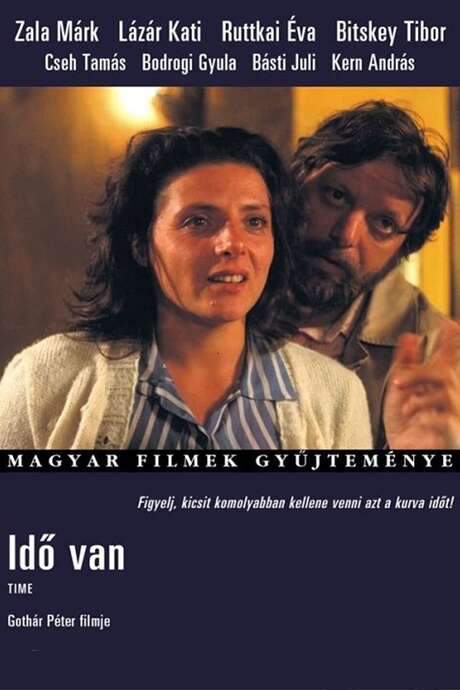
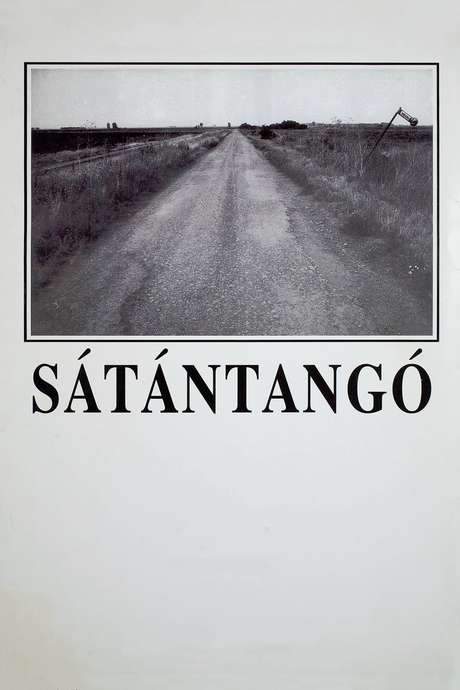
During Hungary’s second wave of collectivization in the 1960s, the rural life of the Széles family unfolds against a backdrop of shifting power and shared agricultural dreams. At the center is Széles István, a weathered, pragmatic farmer who, with his wife Juli, navigates a world where land, loyalty, and survival often collide. Their son is about to leave for the sea, a symbolic departure that hints at a longing for something beyond the village’s borders. Before he goes, István confesses that he recently attempted suicide, a secret that casts a long shadow over the family as they face an era of upheaval and expectation.
The narrative then leaps back in time to the 1930s, unfurling a layered portrait of István, Juli, and Fülöp Bánó, a left-leaning figure whose influence will reverberate through the generations. István, an aging farmer, marries Juli, who works as a servant for the powerful Balogh farm. Together they choose Fülöp Bánó as the godfather of their child, an alliance that foreshadows the tension between personal loyalties and collective pressures. On a New Year’s Eve, a reckless act—István accidentally topples the roof of Balogh’s pigpen into the house—forces István to bow before the consequences, even as the living room becomes a stage for a strange, humorous, but poignant moment of penitence before the pig and its litter. The grip of alcohol and anger tightens when the drunken Fülöp assaults his friend with a knife; Juli’s intervention only stirs more conflict, and the couple binds themselves to a vow never to hit each other again.
As the cubicle laborers’ strike shakes the countryside, István and Mihály Csere argue for breaking the movement’s momentum, revealing how hunger and desperation push peasants toward desperate choices. In the brick factory, workers—led by fear and anger—beat the perceived traitors and bind them to wheelbarrows, a stark image of the era’s brutal social discipline. Moments of domestic strain echo the larger turmoil: István strikes his wife again when she attempts to purchase a horse, while Juli’s quiet resilience anchors the family’s stubborn attachment to the land. Before the war, Mama Széles sprinkles salt on the fields—the old-fashioned belief that a little magic can guard the family’s soil from harm—demonstrating how superstition threads through practical farming life. When conscription looms, István falsely claims eight children, a bluff designed to avoid becoming a soldier, while Fülöp—who has four children—faces the requisition instead.
The war’s shadow intensifies after the conflict ends. Fülöp returns as a Communist agitator as estates are redistributed and new forms of collective farming emerge. The peasants interpret “common property” in ways that tempt them to seize grain from the granaries, even as Fülöp urges restraint and shared ownership. István and Mihály Csere ultimately steal back their own portion, a turning point that lands István in trouble with the authorities. At the police station, Mihály’s violence nearly leads to tragedy, and István, having done little to prevent the clash, is deported to a labor camp for 852 days in the early 1950s. Thanks to a fellow prisoner, József Bócza, Juli is allowed to visit István, and he reveals the harsher truths of the intervening years, including how Fülöp helped their son gain admission to university.
1956 brings another fever pitch: revolutionaries seize power for a moment, only to be confronted by a brutal counter-revolution. A gang captures the communists and executes several of them, while István’s advice in the face of violence—“This revolution is ours. The one with the gun is right. Strangers have never come to this village to hoe. They always come to take action”—becomes a chilling moment of moral compromise. The leaders commandeer a machine gun for István, but he refuses to shoot. The imprisoned men are marched to the church and threatened with execution; the counter-revolutionaries force the community to kneel, and Fülöp alone does not bend. The aftermath drives a wedge through the family, and István writes to his son in a bid to spare him from the truth of the village’s heartbreak.
Summer arrives with new tests. Juli falls ill under the fierce sun while the family tends the potato harvest, and the conversation between István and his son, known as Pista, hints at a future shaped by political-economic dreams. Pista’s yearning for a cooperative future brings him into contact with Fülöp’s radical vision, and István, pressed by his son’s insistence and by the memory of his own earlier choices, begins to see a path toward union. He travels to Budapest to see his son, who is there, and who shares a belief in the cooperative ideal, even as the old man remains wary of surrendering the land he has tilled with his own hands.
The turning point comes when Fülöp confronts István with a blunt accusation: the old man is a coward if he does not join the union, and a union would bring a world where people matter more than land. The pressure proves too great: István signs the papers necessary to join the cooperative, only to later take his own life, a final act that seals the tragedy of a family whose lives were defined by land and loyalty.
The film returns to the present, where István’s son—known here as Pista—narrates the closing scenes. He eventually reaches the sea, a symbolic culmination that reframes the long struggle: land, while central to his ancestors, no longer holds the same absolute sway. The sea stands as a quiet counterpoint to the soil, suggesting that the next generation, even as it carries the burden of the past, will chart its own course. In the final image, the land remains important, but the narrator’s voice frames it as part of a larger, more open horizon—one where the measure of a person lies not only in the soil they tend but in the choices they make and the paths they dare to follow.
> "This revolution is ours. The one with the gun is right. […] Strangers have never come to this village to hoe. They always come to take action,"
is echoed in the memory of a village that wrestled with power, and in a family’s struggle to reconcile duty, love, and the desire for a future beyond the fields.