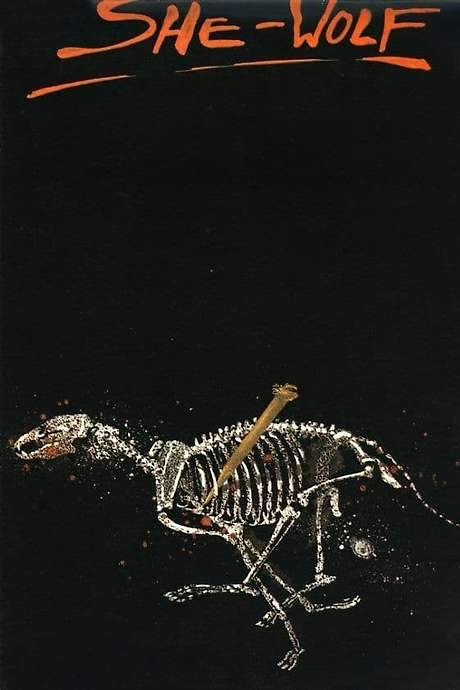
In Warsaw, a student known as the Italian, Iwona Petry, is on a steady pursuit for a new place to live, driven by the pull of independence and the pull of a city that feels both anonymous and alive. She is a free spirit, radiant in her confidence, and her arrival in the city quickly collides with a practical offer: a modest apartment that just happens to be available. The owner of the apartment is a man named Michał, Bogusław Linda, an anthropology professor whose life has a certain stubborn rhythm: work, study, and a lingering commitment to a fiancée named Anna, Agnieszka Wagner. The apartment deal is straightforward at first, but the moment the two cross paths beneath the quiet surface of a routine rental, the air between them thickens with unspoken currents. Their first encounter, in the empty rooms that will soon hold more than just their belongings, leads to a powerful and intimate moment—a violent, unguarded encounter that marks the beginning of a volatile dynamic.
Michał’s life is rooted in academia and a professional circle that includes his students and a young colleague named Jules, Pawe Deląg. Together they pull the Earth’s ancient history into the light, excavating a site where a remarkably well-preserved corpse lies hidden within the layers of time. The body belongs to a shaman from more than two thousand years ago, and it is found in a remarkable state, its skin tattooed with mystic designs and a pouch that hints at hallucinogenic mushrooms. In the sterile environment of the laboratory, the team studies the shaman, attempting to piece together how he died. The evidence is troubling: a fracture to the back of the skull suggests more than a simple accident, hinting that the death may have been an act designed to release the shaman’s spirit rather than to end his life in a routine way. What begins as a scholarly curiosity deepens into a speculative mystery about ritual, power, and the boundaries between life and death.
As the shaman’s discovery unsettles Michał, his obsession intensifies. The Italian, whose free spirit has captivated him, becomes the focal point of a relationship that grows increasingly unmoored from its original foundation. He begins to pull away from Anna, his fiancée and an architect who is the daughter of his boss, while his ties to his friends and colleagues fray under the pressure of his growing fixation. The laboratory sessions take on a new intensity as they, in a delirious state induced by the shaman’s spores, experiment with the ancient magic they have uncovered. The group’s attempt to resurrect the dead man becomes less about science and more about a reckless desire to bend fate to human will. In this moment of heightened awareness, Michał experiences a vision in which the shaman’s spirit speaks to him, revealing a brutal truth: the shaman was killed by a woman who sought to steal his magic power for herself.
With this revelation, Michał’s perception shifts. He defines himself as suddenly free and lucid, stepping back from the Italian and recalibrating his life by the light of the startling truth he has just uncovered. The balance of control tips, however, and the relationship he hoped to command becomes a mirror for his own insecurities and the intoxicating lure of power the shaman’s legacy represents. The Italian refuses to be controlled or subdued, and the tension between them grows into a collision course. The final act unfolds with brutal inevitability: in a shocking echo of the shaman’s own murder, the Italian strikes back, bludgeoning Michał to death and crushing the back of his skull, a brutal parallel to the ancient crime that opened this grim chain of events. In a final, disturbing turn, she consumes his brain, sealing a dark, almost ritualistic conclusion to a story about desire, domination, and the corrosive hunger for power.