Plot Explained Spoilers guaranteed!
Plot Explained

Browse by genre

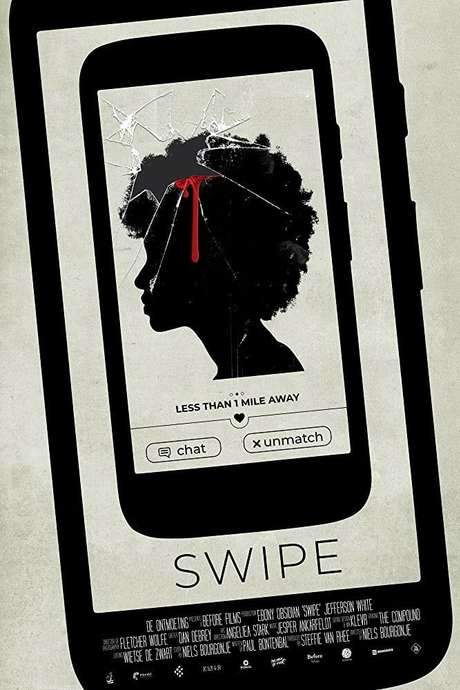
Swipe (2019) movie poster

Plot Summary

Swipe (2019) Plot Summary Explained

Release, runtime and language
2019 · 6 mins · English
Directed by
Niels Bourgonje
Starring
Ebony Obsidian, Jefferson White

A young woman is shocked to discover a mutual match on a dating app, despite having previously rejected him. As she begins to suspect the stranger is unnervingly close, she finds herself increasingly fearful for her safety and tries to understand how this improbable connection occurred.

On this page (4)
  1. 1 What happens: full plot
  2. 2 Plot questions answered
  3. 3 Movie threads
  4. 4 Every angle

Full plot summary · contains spoilers

What Happens in Swipe: Full Plot Summary

The whole story of Swipe (2019) explained, from the opening scene to the final frame: every key event, every twist and what it all adds up to. Read it as a quick recap before the sequel, to check a scene you missed, or to finally understand what really happened.

The film features performances by Ebony Obsidian and Jefferson White.

James is an introverted freshman who shares a dorm with Lance, a wealthy student who excels with women and prefers casual hookups. In a classroom where James is clearly the strongest student in a basic programming course, Lance initially pitches a light workload so no one else in the class has to work. But Lance soon shifts gears when he wants to build something bigger: a campus-wide app for hookups. He discovers that James has been coding since childhood, and he recruits him to create the ultimate hookup platform, a bold project that promises to pay for James’s transfer to an Ivy League school.

James takes over their dorm room, pouring long hours into the project—an app named Jungle that aims to connect people physically with no commitment or strings attached. The design philosophy is stark: no numbers or names are exchanged, and the result is guaranteed one-night encounters. The lure of the Ivy League payoff is strong, and James weighs the opportunity against the growing tension of the work he’s doing.

To shield himself from blame, James asks Lance to claim Jungle as his own. Meanwhile, a professor in their computer science class quietly excuses James from the usual workload, suggesting he’s constantly coding and therefore should be allowed to focus on Jungle. The dynamic shifts from collaboration to concealment, with James navigating the moral traps that come with creating a system built on fleeting connections.

When Christmas break arrives, the consequences of Jungle begin to surface in intimate, personal ways. James’s father brings a very young date—someone he found through Jungle—into the holiday home, while his mother, influenced by friends, starts to explore the app herself. James watches, torn between pride and concern, as his family’s traditional holiday rhythms collide with the anonymous world he helped create.

Seeking to understand the broader impact of his invention, James initiates a personal audit of past sexual and relationship experience, asking his grandparents and their friends to answer a questionnaire about what they’ve known and how they’ve connected in their own lives. The results—stirring and uncomfortable—underscore the real-world echoes of a digital scheme that treated human connections as transactions. When he discovers his mom has returned to Jungle, James swift acts to take down Jungle and other similar apps to halt the spread of this unbridled approach, at least for the moment.

Lance and his cohort soon catch wind of James’s intervention and press him to reignite the project, intensifying the pressure on him as a coder and as a person torn between loyalty and accountability. Back at campus, James hides from the scheming group in Hannah’s sorority house, where he’s told he can stay only if he builds a relationship-focused app for the sisters. He briefly returns to his dorm room, only to be intercepted by Lance and his crew, who coerce him to stay and get their app running again. A clever ruse involving a relaxing tea allows James to slip away and shelter once more among the sorority sisters.

The danger escalates when Lance leaks James’s involvement to the press, turning up the heat and forcing Hannah to confront the unfolding reality. James confesses that his aim in part was to connect with her, but Hannah reveals she never downloaded Jungle, and therefore the app failed to deliver what he hoped. This confession marks a turning point as James urges everyone to step away from the apps and seek true, real-world connections. In a final, hopeful moment, James admits his feelings for Hannah, and the two share a kiss, signaling a possible path forward beyond the tangled web of code and consequences.
Last updated: October 14, 2025 at 04:07

Was this helpful?

Plot questions answered

Swipe Plot Explained: Your Questions Answered

The questions people ask most about Swipe (2019): what happens in the confusing scenes, why the characters do what they do, the twists, hidden details and what the ending means. Each answer contains spoilers.

Q1

Why did James agree to build the Jungle app for Lance?

James agreed because Lance promised to pay for his transfer to an Ivy League school. James is an introverted freshman with exceptional coding skills, and this offer represented a life-changing opportunity for someone from his background. Additionally, Lance initially framed the project as something simple that wouldn't require much work.

Foreshadowing: Earlier in the film, Lance proposes an easy path for James in their programming class, showing how he first manipulates James with low-effort promises.

  • James
  • Lance
  • Jungle app
  • Ivy League
  • coding
  • motivation
Q2

How did Jungle's design ensure anonymous hookups?

Jungle was designed so that users never exchanged numbers or names. The app matched people purely for physical encounters with no commitment or strings attached. This guaranteed one-night stands while keeping participants completely anonymous to each other.

  • Jungle app
  • anonymous
  • hookup
  • dating app
  • design
Q3

Why did James ask Lance to claim Jungle as his own?

James asked Lance to take credit for Jungle to shield himself from blame. As the creator of an app designed for anonymous, potentially exploitative encounters, James wanted plausible deniability. He knew the app could cause harm, so having Lance as the public face allowed James to distance himself from the ethical consequences.

  • James
  • Lance
  • blame
  • credit
  • Jungle app
  • anonymity
Q4

Why did the computer science professor excuse James from assignments?

The professor noticed that James was constantly coding and believed he was working on a legitimate project. This allowed James to skip regular classwork while the professor essentially gave him permission to focus on Jungle. The professor's leniency unintentionally enabled James to dedicate all his time to building the hookup app.

  • professor
  • assignments
  • coding
  • Jungle
  • class
  • excuse
Q5

What did James discover when he surveyed his grandparents about relationships?

When James asked his grandparents and their friends to answer a questionnaire about their past sexual and relationship experiences, he found the results stirring and uncomfortable. The survey revealed that his grandparents had complex romantic histories that didn't fit neatly into the transactional model his app promoted, showing the contrast between genuine long-term relationships and the anonymous encounters Jungle facilitated.

  • grandparents
  • survey
  • relationships
  • past experiences
  • Jungle app
Q6

Why did James decide to take down Jungle after Christmas break?

James took down Jungle when he discovered his mother had returned to the app after trying it during the holiday. This personal violation of his family's safety, seeing his mom participate in the anonymous hookup culture he created, finally motivated him to act. He also took down similar apps to stop the spread of this unbridled approach to relationships.

Foreshadowing: Earlier, James watched his dad bring a young date found through Jungle to the family home, foreshadowing how the app would directly impact his family.

  • Jungle app
  • delete
  • mother
  • family
  • consequences
  • Christmas break
Q7

Why did Lance leak James's involvement in Jungle to the press?

Lance leaked the information to pressure James into relaunching Jungle. When James removed the app and hid in Hannah's sorority house, Lance and his crew used the leak as a tactic to force James back into working on the project. The public exposure created more pressure and made it harder for James to escape his obligations.

  • Lance
  • leak
  • press
  • James
  • Jungle
  • pressure
  • expose
Q8

Why was Hannah angry when she confronted James about Jungle?

Hannah was angry because she learned James had created an app designed for anonymous, transactional hookups, and he had used it as a way to potentially connect with her. She revealed she never downloaded Jungle, so the app failed to deliver what he hoped. The revelation that he built a system for anonymous sex and then tried to use it to reach her felt manipulative and dishonest.

  • Hannah
  • Jungle
  • confrontation
  • angry
  • downloaded
  • app
  • James confession
Q9

What happens between James and Hannah at the end of the movie?

At the end, James confesses his genuine feelings for Hannah and they share a kiss. He urges everyone to stay off dating apps to force real-world connections instead of relying on digital matching. This moment marks his transition from using technology as a substitute for real intimacy to embracing authentic, personal relationships.

  • James
  • Hannah
  • kiss
  • confession
  • feelings
  • ending
  • real connection
Q10

How did Jungle affect James's family during Christmas break?

During Christmas break, James witnessed the app's impact on his family firsthand. His father brought home a very young date he found through Jungle, which disturbed James. Additionally, his mother, influenced by friends, started exploring the app herself. The holiday normally associated with family tradition became awkward as James watched his family engage with the anonymous dating world he created.

  • Christmas
  • family
  • Jungle app
  • father
  • mother
  • date
  • consequences

Movie threads

More Movies Like Swipe, by Mood & Story

Curated lists built around what makes Swipe tick: the same mood, the same kind of story or the same emotional payoff. Each list explains why these movies belong together.

Technology paranoia thrillers like Swipe

Stories where everyday technology becomes a source of profound anxiety and personal threat. If you liked the tense, tech-driven anxiety of Swipe, you'll find more movies like it here. These films explore similar themes of digital stalking, invasive apps, and the psychological terror that arises when technology blurs the line between convenience and danger, perfect for fans of modern psychological horror.

  • paranoid
  • anxious
  • unsettling
  • techno-thriller
  • psychological
  • tense
  • Tone: tense, unsettling, paranoid
  • Pacing: steady, building suspense
Why these movies?

The story pattern: These narratives typically follow a protagonist who discovers a dark side to a seemingly benign piece of technology. As they investigate, their initial curiosity turns to paranoia, leading them to uncover a systemic or personal threat that puts their safety, and often their sanity, at risk. The conflict is rooted in the intangible nature of the digital threat.

Why they belong together: They are grouped by their shared core premise: exploring the fear and anxiety generated by contemporary technology. They create a specific mood of unease by grounding their horror in realistic, relatable scenarios, making the terror feel both modern and plausible.

Slow burn psychological thrillers like Swipe

Thrillers where tension builds steadily from a single, unsettling premise. For viewers who enjoyed the steady, anxious build-up in Swipe, this collection features similar movies with a slow burn pace. These stories prioritize psychological tension over graphic violence, focusing on a character's growing fear and paranoia in situations that feel chillingly plausible.

  • slow burn
  • tense
  • anxious
  • psychological
  • unsettling
  • paranoid
  • Tone: tense, anxious, reflective
  • Pacing: steady, linear progression
Why these movies?

The story pattern: The narrative pattern involves a linear escalation of a central conflict. It begins with a minor but deeply unsettling discovery that challenges the protagonist's perception of safety. The plot progresses methodically, each new piece of evidence or event compounding the initial fear, leading to a climax that is often more about psychological resolution than physical confrontation.

Why they belong together: They are united by a specific pacing and tonal approach: a steady, deliberate build of tension that creates a sustained mood of anxiety. The similarity lies in the viewing experience—a feeling of creeping dread that is more psychological than visceral.

Every angle

Swipe (2019) Explained: Plot, Timeline & Characters

Everything about Swipe in one place: what happens in the plot summary, the timeline in chronological order, the characters and meaning and a spoiler-free summary. What's After the Movie adds the cast, box office and post-credit scenes.

Coming soon on iOS and Android

The Plot Explained Movie Summary App

Plot summaries, endings explained and timelines on your phone. Catch up on any movie in minutes, save your favorites and never miss a twist again.

Be the first to know when we launch. Your email stays private, always.

Learn more about the app