Plot Explained Spoilers guaranteed!
Plot Explained

Browse by genre

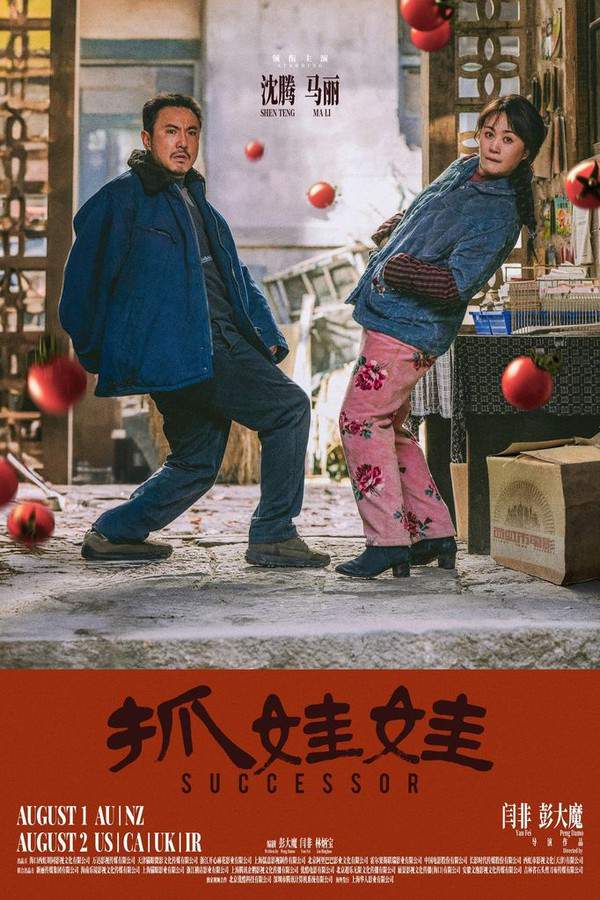
Successor (2024) movie poster

Plot Summary

Successor (2024) Plot Summary Explained

Release, runtime and language
2024 · 2 h 13 m · Chinese
Directed by
Da-Mo Peng, Fei Yan
Starring
Jian Liu, Teng Shen, Li Ma, Bing Jia, Xiang Wei, Yiming Zhang

In the small town of Slinky Town, the Ma family faces financial hardship. Parents Ma Chenggang and Chunlan work tirelessly but struggle to improve their situation, while their son, Ma Jiye, may hold the key to their future success. This heartwarming comedy-drama follows the Ma family as they navigate adversity and seek to rediscover hope and prosperity.

On this page (4)
  1. 1 What happens: full plot
  2. 2 Plot questions answered
  3. 3 Movie threads
  4. 4 Every angle

Full plot summary · contains spoilers

What Happens in Successor: Full Plot Summary

The whole story of Successor (2024) explained, from the opening scene to the final frame: every key event, every twist and what it all adds up to. Read it as a quick recap before the sequel, to check a scene you missed, or to finally understand what really happened.

Jiye Bochen Xiao is introduced as the younger son of Chenggang Ma Teng Shen and Chunlan Li Ma, born to a second wife, in a world where wealth and ritual mask a calculated plan to secure the family business. The film opens in 2017 with two teachers visiting Jiye’s house, and their shock at the apparent state of extreme poverty sets the stage for a deeper look into his origins through a series of revealing flashbacks. The plot follows a parent’s deliberate attempt to mold Jiye into a capable heir, even as the truth of his upbringing remains carefully hidden.

Chenggang Ma, a wealthy man in Xihong City, believes his eldest son is too spoiled to carry the family forward. To ensure a worthy successor, he shifts his attention to Jiye, the son of his second wife, Chunlan [Li Ma]. The name Jiye, meaning “Inherit the Business,” foreshadows the expectation that this child must grow into a version of the family’s legacy. Under this plan, the family relocates to an old family home, and Jiye is forced to abandon sweets, technology, and the luxuries of his former life. A professional nanny is hired to enforce the rigorous regime and even acts as Jiye’s grandmother, ensuring that every habit supports discipline and perseverance. The family maintains the illusion of poverty, not out of genuine need but as a deliberate scaffolding to cultivate hard work, knowledge, budgeting, physical fitness, and resilience.

To sustain the ruse, discreet staff are stationed across Xihong City to interact with Jiye at carefully chosen moments—buying vegetables, practicing English, and ensuring punctuality for school. Hidden doors and secret compartments throughout the house reveal the constant, watchful presence of those who manage his world, washing clothes, preparing meals, and monitoring him around the clock. The life Jiye leads is a tightly choreographed performance, designed to shape him into the heir his father envisions.

A dramatic turn arrives when Jiye is kidnapped by his older brother, Ma Jiye [Pengyuan Shi], who tries to spoil him with luxurious baths and extravagant gifts. After Jiye is rescued, the family discovers that he has secretly purchased a tablet and has been playing video games—an act that prompts a chastened yet furtive attempt to recover the money by scavenging hundreds of bottles from a Daxiang team soccer match, a nod to Shen’s earlier work Hello Mr. Billionaire and a reminder of the city’s interconnected cinematic world. Jiye also befriends Zhang Feifei [Jackie Li], whose presence adds another layer to his life outside the carefully curated household.

By 2024, Jiye is nearing the end of high school, in his senior year and preparing for the Gaokao, with the looming dream of Qingbei University. Despite the ongoing surveillance and the familiar bike that has carried him through years, he begins to openly question whether his destiny is truly his own. At school, his suspicions about control meet resistance, and on his way home he spots the nanny playing basketball. The family distracts him, and later they pretend that she has died, intensifying Jiye’s sense that the world around him is built on secrets.

Feifei Zhang shares another crucial truth: she has seen Jiye’s parents at their original, posh apartment, where their older brother still resides. Jiye confronts the illusion by visiting the space and confronting the family’s carefully constructed narrative. The plan surrounding the older brother is revealed as an effort to climb significant peaks, including a journey into the Himalayas, while Jiye’s own resolve is tested in a mix of endurance and rebellion. The Gaokao day becomes a turning point, and Jiye chooses to stray from the predetermined path by sketching a Dove on his answer sheet and leaving the examination hall early. He then descends into the underground planning room that holds the family’s childhood secrets. His father’s initial congratulations give way to anger as he berates Jiye for abandoning the long arc of the family project, while Jiye insists that he must chart his own future.

In the final stretch, Jiye runs toward a pond where a group of children play, while everyone else stands by—watching as his choice to govern his fate unfolds. The brother’s Himalayan ambition is juxtaposed with Jiye’s decision to redefine success on his own terms, a moment framed by the recurring image of bottles gathered from past endeavors and a marathon in Paris that mirrors his persistent, determined journey toward autonomy. The film closes on Jiye continuing to confront the future on his own terms, choosing to live with the consequences of his decisions rather than simply inheriting a legacy.

- Feifei Zhang’s arc adds a human touch to Jiye’s world, with Zhang Feifei Jackie Li entering as a tangible friend outside the family’s gaze.

- The unseen forces of Jiye’s upbringing—Ma Chenggang [Teng Shen], Chunlan [Li Ma], and the ever-present grandmother figure—shape the moral questions at the heart of the story.

- The Dove on the Gaokao sheet becomes a symbol of Jiye’s choice to seek freedom, even as the system attempts to keep him in place.

This reimagined, carefully observed tale blends family duty, wealth and power, and a young man’s pursuit of self-determination into a sprawling narrative that remains grounded in the characters’ intimate, human stakes.
Last updated: May 25, 2026 at 16:19

Was this helpful?

Plot questions answered

Successor Plot Explained: Your Questions Answered

The questions people ask most about Successor (2024): what happens in the confusing scenes, why the characters do what they do, the twists, hidden details and what the ending means. Each answer contains spoilers.

Q1

Why did Chenggang Ma raise Jiye in fake poverty?

Chenggang Ma believed his eldest son was too spoiled to become a worthy successor to the family business. To ensure a capable heir, he deliberately moved his second family, including Jiye, his son from a second wife, back to an old family home and staged poverty. The ruse was designed to cultivate discipline, hard work, budgeting skills, physical fitness, and resilience in Jiye, shaping him into someone capable of carrying the family legacy forward.

Foreshadowing: The name 'Jiye' means 'Inherit the Business,' foreshadowing the expectation placed on him from birth.

  • chenggang ma
  • fake poverty
  • successor
  • heir
  • family business
  • discipline
Q2

What was the purpose of the nanny acting as Jiye's grandmother?

The family hired a professional nanny specifically to pose as Jiye's grandmother and enforce a strict disciplinary regime. She supervised his daily habits, ensured he followed the rules against sweets and technology, and maintained the illusion of poverty. She also served as another layer of surveillance, reporting on Jiye's behavior and helping orchestrate the elaborate deception.

Foreshadowing: The nanny's presence was part of the meticulous control system established from Jiye's early childhood.

  • nanny
  • grandmother
  • surveillance
  • discipline
  • deception
  • control
Q3

How did Jiye discover his family's deception?

Jiye discovered the truth through multiple clues: he spotted his nanny playing basketball when she should have been elderly, his parents distracted him when he tried to pursue her, and they later pretended she had died. Most crucially, his friend Feifei Zhang revealed that she'd seen his parents at their original luxurious apartment. Jiye then visited the posh apartment and confronted the family's carefully constructed narrative.

Foreshadowing: The nanny's basketball game and fake death were desperate attempts to maintain the illusion as Jiye grew suspicious.

  • feifei zhang
  • discovery
  • truth
  • luxury apartment
  • deception
  • parents
Q4

What does Jiye's Dove drawing on the Gaokao mean?

The Dove drawing represents Jiye's choice to seek freedom and break from his family's predetermined path. Instead of answering the exam questions as planned, he sketched a Dove, the same imagery tied to his childhood memories of the underground planning room, and left the examination hall early. This act symbolized his rejection of the inheritance plan and his insistence on charting his own future.

Foreshadowing: The Dove connects to childhood memories that resurface when he discovers the secret underground room.

  • dove
  • gaokao
  • freedom
  • exam
  • rebellion
  • choice
  • autonomy
Q5

Why did the family keep the older brother hidden from Jiye?

The older brother lived in a separate posh apartment while the family maintained the fiction of poverty for Jiye. This separation ensured Jiye believed the family was truly struggling and wouldn't have access to the wealth and privileges that could undermine his disciplinary upbringing. The brother was part of a different plan, his own journey to climb significant peaks including the Himalayas, while Jiye was being groomed as the primary successor.

Foreshadowing: The brother's separate Himalayan ambition represents the contrasting paths each son was engineered to follow.

  • older brother
  • hidden
  • himalayas
  • succession
  • family plan
  • separation
Q6

What was the underground planning room?

The underground planning room was a hidden space beneath the family home containing documents, schedules, and records that revealed how Jiye's entire life had been engineered, from his diet and daily routines to his education and social interactions. It represented the culmination of his father's elaborate scheme to shape him into the perfect successor, with every aspect of his childhood meticulously documented and controlled.

Foreshadowing: Hidden doors and secret compartments throughout the house hinted at the constant surveillance surrounding Jiye.

  • underground room
  • planning
  • control
  • documents
  • surveillance
  • engineering
Q7

Why did Jiye leave the Gaokao exam early?

Jiye left the Gaokao early because he realized the entire exam was another predetermined step in his father's succession plan. Rather than continue following the path they'd laid out for him, including aiming for Qingbei University to eventually take over the family business, he chose to abandon the exam and pursue his own destiny. Drawing the Dove was his final act of rebellion against inherited control.

Foreshadowing: His earlier questions at school about whether his life was predestined marked the growing tension leading to this moment.

  • gaokao
  • exam
  • early
  • rebellion
  • predetermined path
  • future
Q8

What role did Feifei Zhang play in Jiye's discovery?

Feifei Zhang was Jiye's classmate and friend who provided the crucial evidence that exposed his family's lies. Unlike the staged interactions arranged by his family, Feifei's friendship was genuine, and she told Jiye she'd seen his parents at their original luxurious apartment. This revelation helped Jiye piece together the truth about the fake poverty and the family's elaborate deception.

Foreshadowing: Feifei's introduction in circa 2020 marked the first genuine human connection outside the family's controlled environment.

  • feifei zhang
  • friend
  • classmate
  • evidence
  • truth
  • revelation
  • betrayal
Q9

What does the ending mean when Jiye runs to the pond?

The pond scene represents Jiye's final rejection of his father's plan and his choice to define success on his own terms. While his brother pursues the Himalayas, a predetermined peak, Jiye runs toward a pond where children play freely, symbolizing his desire for a simple, authentic life untethered from the family business. He chooses to live with the consequences of his own decisions rather than simply inheriting a legacy.

Foreshadowing: This choice contrasts sharply with the brother's Himalayan ambition, which represents following the family's prescribed path.

  • pond
  • running
  • freedom
  • autonomy
  • self-determination
  • success
  • choice
Q10

What does the bottle collecting symbolize in the story?

The bottle collecting, first when Jiye scavenged hundreds of bottles from a soccer match to recover money from a broken tablet, and later during the Paris marathon, symbolizes his resourcefulness and the conditioning from his artificial upbringing. The recurring image of pausing for bottles demonstrates how past conditioning persists even as he seeks autonomy, showing the lasting impact of his childhood while he works to reclaim his own future.

Foreshadowing: The tablet incident in his early childhood was one of the first moments Jiye learned to generate value within his family's constraints.

  • bottles
  • collecting
  • paris marathon
  • childhood
  • conditioning
  • resourcefulness
  • persistence

Movie threads

More Movies Like Successor, by Mood & Story

Curated lists built around what makes Successor tick: the same mood, the same kind of story or the same emotional payoff. Each list explains why these movies belong together.

Absurdist family dramedies like Successor

Families navigating bizarre situations with humor and heart. Explore more movies like Successor that blend family drama with satirical absurdity. These films feature quirky characters in bizarre situations, balancing humor with heartfelt moments and often delivering bittersweet, hopeful conclusions.

  • satirical
  • absurd
  • heartwarming
  • quirky
  • reflective
  • hopeful
  • Tone: satirical, bittersweet, hopeful
  • Pacing: steady, character-driven
Why these movies?

The story pattern: These stories typically center on a family unit confronted by an absurd or highly unusual situation that tests their bonds. The narrative balances comedic elements stemming from the absurd premise with the genuine emotional consequences for the characters, often leading to a resolution that is both funny and poignant.

Why they belong together: They share a unique tonal blend of satire and sincerity, a steady pacing that allows for character development amidst the absurdity, and a medium emotional weight that is engaging without being overwhelming. The focus on family dynamics under strange duress is a common thread.

Deceptive coming-of-age stories like Successor

Young protagonists uncovering a hidden truth that defines their world. Discover more movies similar to Successor about young people on a path of self-discovery after a major deception is revealed. These stories explore themes of identity, parental control, and breaking free from illusions to find one's own purpose.

  • deceptive
  • self-discovery
  • paranoid
  • reflective
  • hopeful
  • confining
  • Tone: bittersweet, reflective, paranoid
  • Pacing: steady, revelatory
Why these movies?

The story pattern: The narrative follows a protagonist, often on the cusp of adulthood, who discovers that a fundamental aspect of their life or world is a carefully constructed illusion. This revelation forces a crisis of identity and a journey to uncover the truth, leading to liberation from the deception but often at a personal cost, resulting in a bittersweet sense of freedom.

Why they belong together: They are united by the core theme of a protagonist discovering a life-altering deception, a moderate narrative complexity driven by this central mystery, and a bittersweet emotional arc that balances the pain of betrayal with the hope of self-determination.

Every angle

Successor (2024) Explained: Plot, Timeline & Characters

Everything about Successor in one place: what happens in the plot summary, the timeline in chronological order, the characters and meaning and a spoiler-free summary. What's After the Movie adds the cast, box office and post-credit scenes.

Coming soon on iOS and Android

The Plot Explained Movie Summary App

Plot summaries, endings explained and timelines on your phone. Catch up on any movie in minutes, save your favorites and never miss a twist again.

Be the first to know when we launch. Your email stays private, always.

Learn more about the app