Plot Explained Spoilers guaranteed!
Plot Explained

Browse by genre

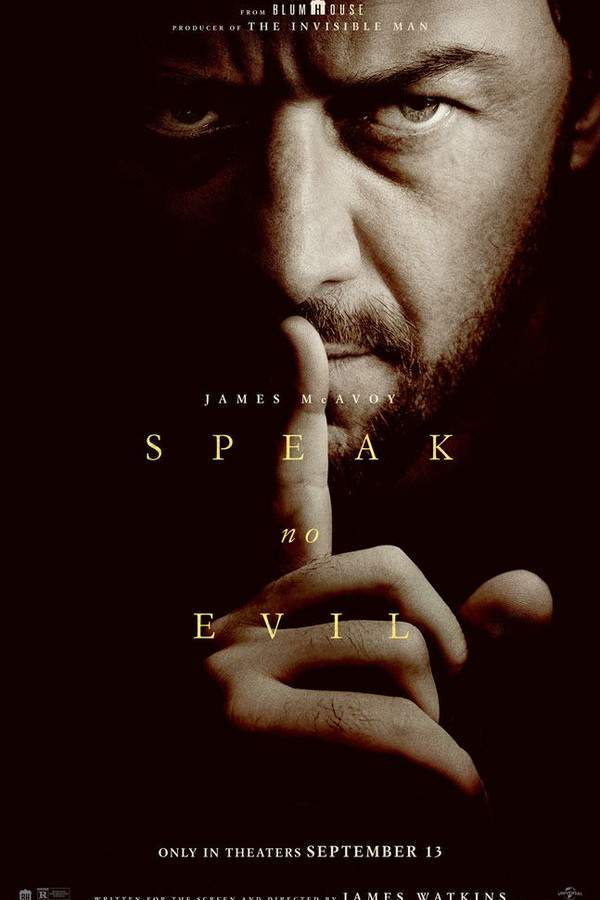
Speak No Evil (2022) movie poster

Plot Summary

Speak No Evil (2022) Plot Summary & Ending Explained

Release, runtime and language
2022 · 97 min · English
Echo score 74
Directed by
Christian Tafdrup
Starring
Hichem Yacoubi, Adrian Blanchard, Fedja van Huêt, Jesper Dupont, Karina Smulders, Lea Baastrup Rønne
Budget
$3.2M

During a vacation in Tuscany, a Dutch family befriends a Danish couple, and an invitation to their home in Denmark follows. What begins as a pleasant weekend retreat slowly descends into a disturbing ordeal. As the hosts’ behavior becomes increasingly bizarre and unsettling, the Danes find themselves unable to leave, and the veneer of politeness cracks to reveal a sinister undercurrent. The weekend becomes a tense exploration of social boundaries, trust, and the potential for darkness beneath a facade of warmth.

On this page (6)
  1. 1 What happens: full plot
  2. 2 Plot questions answered
  3. 3 How it ends
  4. 4 Movie threads
  5. 5 Movies like Speak No Evil
  6. 6 Every angle

Full plot summary · contains spoilers

What Happens in Speak No Evil: Full Plot Summary

The whole story of Speak No Evil (2022) explained, from the opening scene to the final frame: every key event, every twist and what it all adds up to. Read it as a quick recap before the sequel, to check a scene you missed, or to finally understand what really happened.

During their idyllic vacation in Tuscany, a Danish couple, Bjørn and Louise, are joined by their daughter, Agnes. They encounter a Dutch family, Patrick and Karin, and their son Abel, who was born with a rare condition known as congenital aglossia, which means he has no tongue. A few weeks later, the Danish family receives an invitation to visit the isolated countryside home of their Dutch friends, a proposition they eagerly accept.

After an exhausting eight-hour drive, they finally arrive. However, the initial days become increasingly uncomfortable for Louise as she observes passive-aggressive actions from their hosts. Patrick's blatant disregard for her vegetarianism, along with his harsh treatment of Abel, coupled with Karin's swearing, only intensifies her unease. The tensions rise further when Patrick invites Bjørn and Louise out for dinner, leaving the children under the supervision of a babysitter, Muhajid. Louise's anxiety peaks when Patrick, under the influence of alcohol, challenges her dietary choices and behaves inappropriately with his partner in front of them.

In a disheartening turn of events, after a troubling dinner filled with manipulation and loud music, which Louise finds distressing, Agnes attempts to sleep next to her parents, but is taken by Patrick to their bedroom. When Louise discovers Agnes next to a naked Patrick, she and Bjørn decide to leave, but not before Agnes expresses her distress over losing her beloved rabbit doll, Ninus. Upon returning to confront their hosts about their swift departure, Patrick and Karin manage to persuade them to stay, presenting a façade of disappointment.

As the two families engage in activities together, like working in the yard or grocery shopping, Bjørn begins to bond with Patrick, who reveals a troubling sense of identity and emotional suppression. Meanwhile, Louise discovers troubling truths about Patrick when she accidentally injures herself in the kitchen, exposing Patrick's lies about being a doctor; in reality, he is unemployed and disdainful of traditional work ethics.

Tensions erupt during a seemingly innocent dance performance from the children, revealing Patrick's abusive nature towards Abel, leading to a confrontation between the two couples. That evening, Bjørn stumbles upon a disturbing cabin filled with photographs of Patrick and Karin with other families, hinting at a sinister pattern of deceit and murder. As it dawns on him that his family could potentially be the couple's next targets, Bjørn discovers Abel’s lifeless body in the swimming pool.

In a desperate bid to escape with his family, Bjørn faces a dire situation when their car breaks down and they mistakenly trust Patrick, who manipulates them into believing he is coming to their aid. Tension escalates as Louise begins to question Patrick’s motives but is quickly overpowered. In a chilling turn, Muhajid arrives, restraining Louise while Karin horrifically cuts Agnes' tongue. In a final act of brutal betrayal, Patrick confronts Bjørn and Louise, chillingly stating:

> "Because you let me."

Bjørn and Louise are dragged into a gruesome fate involving stoning to death. As the haunting narrative closes, a now mute Agnes is left to play the role of Patrick’s and Karin’s daughter, as they set their sights on another unsuspecting family, continuing their cycle of terror.

Last updated: November 09, 2024 at 11:30

Was this helpful?

Plot questions answered

Speak No Evil Plot Explained: Your Questions Answered

The questions people ask most about Speak No Evil (2022): what happens in the confusing scenes, why the characters do what they do, the twists, hidden details and what the ending means. Each answer contains spoilers.

Q1

Why didn't the Danish family just leave after the first red flags?

The Danish family's inability to leave stems from a combination of social pressure and manipulation. Patrick and Karin strategically use emotional appeals, guilt-tripping, and false apologies to gaslight their guests. When Louise and Bjørn attempt to leave after discovering Agnes with a naked Patrick, the Dutch couple expresses mock disappointment and manipulates them into staying, claiming they would be disappointed if they left. This psychological control, combined with the isolated location and the families' initial friendship bond, makes escape feel impossible.

Foreshadowing: Early in the visit, Louise notices passive-aggressive behavior but convinces herself it's just cultural differences, establishing her pattern of rationalizing red flags.

  • leave
  • escape
  • manipulation
  • gaslighting
  • politness
Q2

What was the cabin with photographs about?

The cabin contained photographs of Patrick and Karin with other families they had previously befriended, revealing a disturbing pattern. This discovery confirms they systematically target unsuspecting families during vacations, building trust before luring them to their isolated home. The cabin serves as evidence of their predatory behavior, showing the Danish family was not the first victims.

Foreshadowing: The unusual attention Patrick and Karin pay to forming a quick bond with strangers during vacation hints at their calculated methodology.

  • cabin
  • photographs
  • pattern
  • prey
  • previous victims
Q3

Why do Patrick and Karin target families like Bjørn and Louise?

Patrick and Karin appear to be serial predators who befriend families on vacation specifically to victimize them. Their pattern suggests they seek out trusting, middle-class families who would be receptive to social invitations. The exact motivation remains ambiguous, but the ritualistic nature of their crimes (including taking the children) suggests psychological fulfillment through control and domination rather than mere financial gain.

Foreshadowing: Their son Abel has no tongue, which the film hints may have been deliberately inflicted as part of their pattern of acquiring 'children' who cannot speak against them.

  • target
  • families
  • predator
  • pattern
  • victims
Q4

What happened to Abel in the swimming pool?

Abel is found dead in the swimming pool after Bjørn discovers the cabin of photographs. While the film does not explicitly show his death, the circumstances strongly suggest Patrick and Karin killed him, likely to eliminate a witness or because Abel served his purpose in their scheme. His death serves as the moment Bjørn realizes his own family is in immediate danger.

Foreshadowing: Throughout the visit, Patrick displays violent behavior toward Abel, including slapping him during the dance performance, indicating a willingness to harm the boy.

  • abel
  • death
  • swimming pool
  • killed
  • pool
Q5

What does Patrick mean when he says 'Because you let me'?

Patrick's statement 'Because you let me' is his justification for the violence against the Danish family. It reflects his worldview that victims are complicit in their own victimization through their willingness to overlook red flags, maintain politeness despite discomfort, and trust blindly. This chilling line reveals Patrick sees himself not as a monster but as someone who simply 'allowed' what was always possible, the dark side of social politeness and trust.

Foreshadowing: Louise's repeated attempts to maintain civility and avoid conflict, even when clearly uncomfortable, establishes the film's theme of dangerous politeness.

  • because you let me
  • patrick
  • quote
  • meaning
  • justification
Q6

Why does Karin cut off Agnes' tongue?

Karin cuts Agnes' tongue as a brutal act of mutilation to ensure the child cannot warn others or scream for help. This mirrors what happened to Abel, who was born without a tongue, suggesting the couple may have deliberately caused his condition as part of their pattern of creating mute, dependent 'children' they can control. The cutting of Agnes' tongue ensures she becomes another silent victim like Abel.

Foreshadowing: Abel's congenital aglossia (born without a tongue) is introduced early as an unusual detail, making the parallel to Agnes' mutilation devastating in retrospect.

  • agnes
  • tongue
  • cut
  • mutilated
  • silent
Q7

Why did Louise and Bjørn leave Agnes with Patrick after the naked incident?

After discovering Agnes next to a naked Patrick, Louise and Bjørn initially decide to leave, but they still allow Agnes to sleep at the house under the supervision of the babysitter before their planned departure. Their judgment is compromised by exhaustion, denial, and the manipulation of their hosts. They rationalize that the situation was misinterpreted and that leaving immediately would be rude. This critical failure to remove their daughter from the dangerous environment directly enables the subsequent tragedy.

Foreshadowing: Louise's discomfort is visible throughout, yet she consistently prioritizes politeness over her instincts, making her vulnerable to manipulation.

  • trust
  • agnes
  • patrick
  • naked
  • left alone
Q8

Why is Louise's vegetarianism such a point of conflict with Patrick?

Patrick's relentless focus on Louise's vegetarianism serves as an early indicator of his controlling nature and disrespect for others' boundaries. He deliberately serves meat dishes to her and challenges her dietary choices aggressively during dinner. This isn't about food, it's about testing her limits and establishing dominance. His behavior foreshadows his willingness to violate other boundaries and demonstrates how he uses seemingly trivial issues to gauge and exercise control over his victims.

Foreshadowing: Patrick's dismissal of traditional work ethics and his lie about being a doctor establish his pattern of disregarding societal rules and boundaries.

  • vegetarian
  • meat
  • food
  • boundary
  • control
Q9

How did the car breakdown trap the Danish family?

When their car breaks down on the main road during their escape attempt, Bjørn is forced to call Patrick for help, a fatal mistake. Patrick uses this opportunity to manipulate them into waiting for him, buying time to catch up with the fleeing family. Rather than providing assistance, Patrick and Karin use the situation to corner them, demonstrating how their isolation and dependence on their hosts became a致命陷阱 (deadly trap).

Foreshadowing: The eight-hour drive to the isolated house established the family's complete dependence on Patrick and Karin for transportation.

  • car
  • breakdown
  • escape
  • trap
  • road
Q10

What is Muhajid's role in the story?

Muhajid is the babysitter hired by Patrick and Karin to watch the children during the adults' dinner outings. Despite being hired help, he ultimately assists in restraining Louise during the climactic violence, suggesting he may be another victim manipulated into compliance or a willing accomplice. His presence highlights how Patrick and Karin surround themselves with people who can be controlled or coerced.

Foreshadowing: Muhajid's appearance is brief but notable, he is present during key moments when children are under adult supervision, placing him in a position of trust that is betrayed.

  • muhajid
  • babysitter
  • role
  • helper
  • restrain
Q11

What does the ending imply about the cycle of terror?

The ending reveals that Patrick and Karin have taken Agnes as their daughter, dressing her in new clothes and preparing to target another unsuspecting family. This cyclic conclusion implies they will continue their pattern of predation, using Agnes as part of their deception. Agnes, now mute due to her severed tongue, is trapped in the same fate as Abel, unable to warn or escape. The bleak ending suggests evil operates endlessly through manipulation and the exploitation of human trust and politeness.

Foreshadowing: The discovery of previous victims' photographs in the cabin established this pattern would inevitably repeat.

  • ending
  • cycle
  • continue
  • another family
  • agnes
Q12

Why is the loss of Ninus the rabbit doll significant?

Ninus is Agnes' beloved comfort item that she loses during the chaotic departure attempt. The loss of Ninus becomes a symbolic moment, the children are being stripped of their innocence and security. Patrick and Karin later 'find' the doll and use it to further manipulate the family into staying, demonstrating their tactics of using emotional leverage (children's attachments) to maintain control.

Foreshadowing: The rabbit doll represents childhood innocence, which the film systematically destroys throughout the narrative.

  • ninus
  • rabbit
  • doll
  • innocence
  • loss

Ending explained

What Happens at the End of Speak No Evil?

How Speak No Evil (2022) ends, in short: the final scene, the last twist and what it means for the characters. The full ending explained, with every spoiler, lives on its own page.

Read the full ending explained

In the final moments of "Speak No Evil," Agnes manages to drug Paddy with the syringe she secretly kept, incapacitating him just as he becomes increasingly deranged and dangerous. Ben, Louise, and their children attempt to escape, but Paddy’s threats and violence aren’t over yet. In a desperate act of vengeance and justice, Ant, the young boy who has endured years of manipulation and abuse at Paddy’s hands, finally takes matters into his own hands. He kills Paddy by crushing his skull with a brick, ensuring he can never harm anyone again. This act of violence is the culmination of Ant’s long-standing trauma and his desire to protect the innocent, especially Agnes. Throughout the film, Paddy is portrayed as a deeply unsettling figure, a manipulative predator who has preyed on multiple families. The disturbing revelation that Paddy might have victimized young girls like Ciara, and that he sees Agnes as another target rather than a daughter, emphasizes the depth of his evil.

After Paddy’s death, the remaining characters are left to grapple with the aftermath of their ordeal. Agnes gains a new sense of safety, knowing her parents are willing to go to extreme lengths to keep her protected. Ben and Louise’s relationship is also tested and potentially strengthened, as they confront the terrifying reality of their experience. The ending suggests that Agnes, now aware of her parents' unwavering love and determination, may have a chance at a healthier future—one where she no longer relies on her toy for comfort. The film closes on a grim but hopeful note: the threat has been neutralized, but the scars of their traumatic experience linger, reminding us of the dark complexities behind human cruelty and the resilience needed to overcome it.

Speak No Evil ending explained in full

Movie threads

More Movies Like Speak No Evil, by Mood & Story

Curated lists built around what makes Speak No Evil tick: the same mood, the same kind of story or the same emotional payoff. Each list explains why these movies belong together.

Movies about the horror of politeness like Speak No Evil

Where civilized facades crack to reveal unbearable cruelty and control. If you liked the suffocating dread of Speak No Evil, explore more movies where social niceties mask a terrifying reality. This thread gathers psychological thrillers and horror films about toxic hospitality, violation of trust, and the dark consequences of being too polite to leave.

  • unsettling
  • claustrophobic
  • anxious
  • dreadful
  • psychological
  • oppressive
  • Tone: dark, unsettling
  • Pacing: slow burn
Why these movies?

The story pattern: Stories in this thread typically begin with a seemingly benign social interaction—a dinner party, a weekend visit, a new friendship—that steadily warps into a psychological trap. The plot revolves around the protagonists' growing discomfort and their internal struggle between maintaining civility and confronting the escalating threat, often leading to a feeling of profound powerlessness.

Why they belong together: These films are grouped by their shared focus on the psychological terror inherent in social conformity. They use a slow, methodical pacing to build dread from mundane interactions, creating a unique brand of horror that feels disturbingly close to real-life anxieties about fitting in and saying no.

Thrillers about families in danger like Speak No Evil

Ordernal families confronted with extreme evil, stripped of all agency. For viewers seeking the visceral fear of family endangerment found in Speak No Evil, this collection highlights thrillers and horror movies where ordinary parents and children face sinister forces. Discover similar stories of psychological torment, loss of agency, and the brutal cost of protecting your family.

  • dreadful
  • stressful
  • hopeless
  • disturbing
  • terrifying
  • heart-wrenching
  • Tone: bleak, tense
  • Pacing: steady, escalating
Why these movies?

The story pattern: The narrative follows a family as they are systematically stripped of their autonomy and safety by a manipulative or violent antagonist. The journey is one of escalating terror and despair, focusing on the parents' futile attempts to shield their children and the heartbreaking realization of their powerlessness, often culminating in a tragic outcome.

Why they belong together: These movies share a core theme of primal fear: the threat to one's family. They generate high tension and emotional weight by placing relatable characters in scenarios where traditional solutions fail, creating a profound sense of dread and vulnerability that resonates on a deeply emotional level.

If you liked this

Movies Like Speak No Evil

Similar movies to Speak No Evil: the same genre, themes or kind of story. Each one comes with its own plot summary, timeline and ending explained.

Browse all movie summaries

Every angle

Speak No Evil (2022) Explained: Plot, Ending, Timeline & Characters

Everything about Speak No Evil in one place: what happens in the plot summary, the timeline in chronological order, the characters and meaning, the ending explained and a spoiler-free summary. What's After the Movie adds the cast, box office and post-credit scenes.

Coming soon on iOS and Android

The Plot Explained Movie Summary App

Plot summaries, endings explained and timelines on your phone. Catch up on any movie in minutes, save your favorites and never miss a twist again.

Be the first to know when we launch. Your email stays private, always.

Learn more about the app