Aleksey Serebryakov provides the narration for a story that blends Cold War atmosphere with a tender, dog-centered odyssey. A man in black ferries a small cage from the Soviet Union to the U.S. president John F. Kennedy, bearing a gift for Caroline Kennedy: a stray dog named Pushok. The courier grows intimate with the Kennedys’ broader animal entourage and, through his recollections, invites the audience to see the dogs not just as curiosities of history but as witnesses to a remarkable period of exploration, courage, and curiosity.
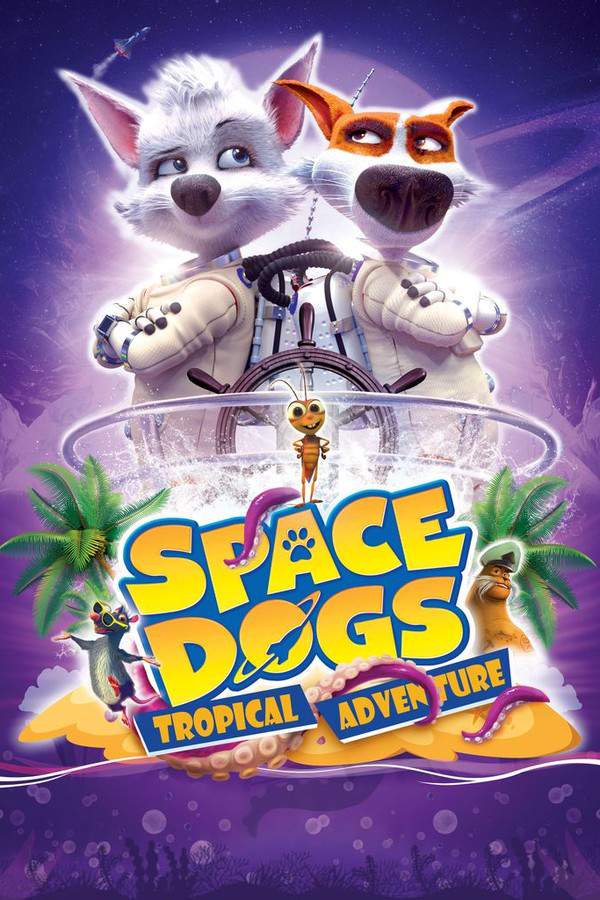
In a brisk, historically tinted prologue set in Moscow in 1960, a mysterious figure roams the streets, capturing dogs and whisking them away. A terrier mix named Strelka darts for safety, flanked by her friend Lenny the rat as chaos unfurls around them. A circus pig named Vova grows too large to pilot his rocket, forcing a canine replacement in Belka, a nimble Samoyed, who takes to the skies. Belka’s flight is imperfect from the start; she briefly loses control and veers off, eventually crashing into a payphone where Lenny is scavenging for coins. The crash jolts the group into a new circle of meetups: Belka and Strelka are joined by three other stray dogs—Bula the French bulldog, Mula the pug, and Pirate the wolf—before the next morning brings capture by the same strange man. The dogs are loaded onto a train bound for Baikonur, landing at a Soviet space program training center where they meet Kazbek, a German Shepherd who must decide which dogs will represent the program on the launch.
As the training unfolds, the competition tightens. Initially, Bula and Mula are the top picks, but on the final day Lenny edges ahead, with Belka and Strelka close behind. The order of flight selection solidifies: Lenny, then Belka, then Strelka. The trio is chosen to fly because Lenny is designated as the lead, while Belka and Strelka accompany him on the mission that would become history’s first animal spaceflight. The emotional arc deepens as the dogs press toward their moment of ascent, and the human handlers—led by Kazbek, who has secretly joined the mission—recognize the personal cost and the scientific ambition wrapped together in these journeys.
As the flight nears its climax, Strelka flirts with the aspirational pull of space—her mother’s stories whispering about Sirius watching from the stars. Kazbek, who has stowed away, appears to counsel Strelka about turning back, adding a layer of tenderness and risk to the mission. Suddenly, what the crew believes to be a peaceful voyage becomes perilous: a meteor shower lashes the spacecraft, and the rocket sustains damage. In a tense, life-or-death sequence, Belka seizes the cockpit, steering the craft back toward Earth while Strelka acts swiftly to smother the spreading fire. Kazbek’s confession of love for Belka punctuates a moment of daring loyalty and deep connection among the dogs, underscoring the film’s quiet throughline: courage often wears fur.
From the harshness of space to a hero’s welcome on Earth, the dogs’ odyssey culminates in a triumphant return. Belka, Strelka, and Lenny land safely, and the team’s success is celebrated, even as the scientist in charge warns that Soviet propaganda will not permit the world to know that a stowaway had joined the mission. The narrative thread with Pushok’s tale anchors the story in a broader moment of political theater: one dog, observing the world, witnesses the complexities of diplomacy and pride in equal measure. A dog who notices a Cosmonaut Patch on Pushok’s cushion becomes the lone believer among the Kennedy pets, inviting him to recount what followed, tying the thread back to the film’s framing device—the reporter’s cage and the curious gift intended for Caroline Kennedy.
Back in the Kennedys’ orbit, Strelka returns to live with her mother, while Venya, a dog in the circle, holds conferences to share what he has learned from the bid for space and survival. Belka becomes the star of the circus again, piloting a repaired rocket that gleams with the city’s wonder and crowd-pleasing precision. Kazbek and Belka join in a life together that seems to promise lasting peace after peril, a sentiment reinforced by the film’s gentle, hopeful cadence. The story closes with a respectful nod to authenticity: as the end credits roll, archival footage from the Soviet space program and its dogs offers a real-world counterpoint to the fiction, rooting the film’s emotional voyage in history and memory.
Throughout, the film maintains a calm, neutral tone that allows the dogs’ adventures to speak for themselves—acts of bravery, companionship, and resilience framed against the backdrop of a world watching and waiting for what comes next. The result is a nuanced portrait of animals stepping into the world’s grand stage, where their small, brave acts echo broader human aspirations. The closing image lingers on the idea that the bond between handler and animal can transcend borders and politics, leaving a hopeful note that, long after the rocket’s flame dies, their stories keep living on.