Plot Explained Spoilers guaranteed!
Plot Explained

Browse by genre

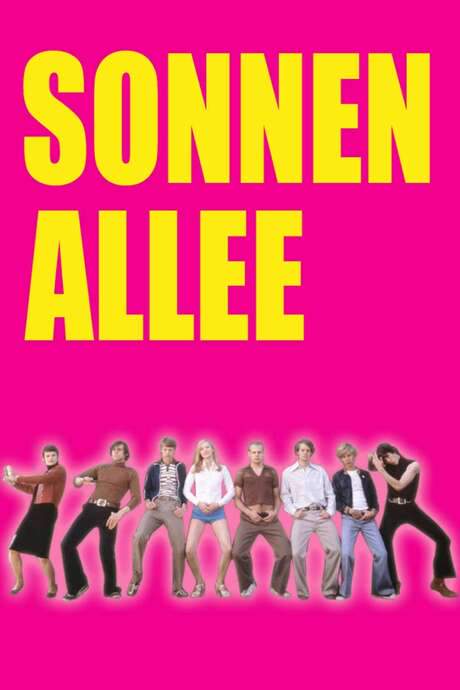
Sonnenallee (1999) movie poster

Plot Summary

Sonnenallee (1999) Plot Summary Explained

Release, runtime and language
1999 · 101 mins · German
Directed by
Leander Haußmann
Starring
Alexander Scheer, Katharina Thalbach, Detlev Buck, Alexander Beyer, Margit Carstensen, Patrick Güldenberg

Set on the east‑side of Berlin’s Sonnenallee, a handful of teenagers navigate school, family and love while living next to one of the few border crossings reserved for German citizens. Their pranks, the visits of West‑German relatives, and the presence of border guards expose the everyday absurdities of life in the GDR. Shortages loom; guards enforce.

On this page (6)
  1. 1 What happens: full plot
  2. 2 Plot questions answered
  3. 3 The book behind the movie
  4. 4 Movie threads
  5. 5 Movies like Sonnenallee
  6. 6 Every angle

Full plot summary · contains spoilers

What Happens in Sonnenallee: Full Plot Summary

The whole story of Sonnenallee (1999) explained, from the opening scene to the final frame: every key event, every twist and what it all adds up to. Read it as a quick recap before the sequel, to check a scene you missed, or to finally understand what really happened.

Alexander Scheer as Micha Ehrenreich is a 17-year-old growing up on the East Berlin edge of Sonnenallee in the early 1970s, where the allure of Western culture and contraband music tapes shapes his youth. When the neighborhood’s zealous policeman, Officer Horkefeld, confiscates a tape Micha just copied, the moment sparks a rare, quiet kind of awe as Micha catches a glimpse of Teresa Weißbach as Miriam stepping out of her building, leaving him spellbound and curious about life beyond the wall.

Shortly after, Heinz—Micha’s smuggler uncle from the West—visits and pushes him away from dreams of military service, pressing him to consider the political path he wants to follow. Later, at a disco, Micha musters the courage to dance with Miriam, only to see her brush him off for a West German guy, an affront that lands Miriam in trouble when the local authorities eject the West German from the club. The fallout is swift: Miriam is summoned to deliver a self-critical lecture at the next Free German Youth meeting as punishment for the Western contact that sparked the incident.

The next day at school, Mario Alexander Beyer tampers with a government slogan on the classroom wall, crafting a crude joke that soils the teacher’s expectations. When the truth surfaces, Micha deliberately claims responsibility, hoping to impress Miriam with a witnessed stand for personal conscience. The exchange leaves Mario frustrated, accusing Micha of “joining the system” just to win a girl’s admiration. At a black-market gathering, Mario connects with Sabrina, Elena Meißner as Sabrina, and feigns an interest in Sartre in order to sleep with her, painting a portrait of a youth negotiating identity in a world that demands caution.

A tense run-in with a neighbor, Mr. Fromm—a figure many tenants suspect as a Stasi agent—heightens the sense of surveillance, while Micha’s father, Hotte, reveals a farcical ruse: a stolen telephone has kept his family afloat by selling the illusion of illness. Miriam calls Micha, inviting him to visit, but a detour by Officer Horkefeld leaves Micha detained for more than ten hours because he cannot produce his ID.

That night, Mario hosts a chaotic party at home. The two friends retreat to the balcony to escape the crowds, where they are photographed by West observers peeing onto the border wall below. Miriam arrives to the unfurling chaos and leaves after encountering a high on life Micha who claims to have filled countless diaries with his feelings for her. The next day, the headmistress’s office hosts a stern confrontation: a Stasi agent informs the pair that the wall photos have reached the West German press, triggering serious consequences. Mario is expelled from school, and Micha loses his student stipend, forcing him to confront how his choices ripple outward.

Micha encounters Miriam again, and she reminds him of his promise to share his diaries with her. Faced with the truth of his own lies, Micha retreats home and begins to pen years’ worth of diary entries. Doris, Micha’s mother, hatches a bold plan to defect to the West using a stolen passport and makeup, only to falter at the border and turn away at the last moment. The city’s lights flicker as a nearby power outage—caused by a display of confiscated Japanese stereo equipment—throws the streets into darkness, a moment that also reveals Sabrina’s secret: she is pregnant.

In the chaos, Micha’s young friend Wuschel—carrying an illicit copy of Exile on Main St.—is spotted by Horkefeld near the border and is shot. The record miraculously stops the bullet, but the moment shatters Wuschel’s world. With his diary project nearing completion, Micha experiences a transformative realization about his political beliefs and renounces the plan to join the army. He confronts Mario at the recruitment station, and the two share a painful, honest moment, realizing their paths are diverging. The family learns that Heinz has died of lung cancer, a conclusion tied to the asbestos-truth in East German housing, and Doris is permitted back into the West for Heinz’s funeral before she quietly retrieves his ashes to bury them with their mother.

Micha finally returns to Miriam with the diaries, and the two share a quiet, intimate moment that hints at a fragile hope for the future. In Micha’s room, he and Wuschel listen to a new Exile on Main St. album, only to discover it’s a forgery. As the crowd outside gathers to listen to the western music, the border guard tower becomes an unexpected participant in the moment, and one soldier’s accidental gunfire turns into a shared joke for the onlookers. The film closes with a long black-and-white shot of the border gates opening and the street left in quiet, unoccupied aftermath, signaling a new era even as old divisions linger.
Last updated: October 09, 2025 at 11:06

Was this helpful?

Plot questions answered

Sonnenallee Plot Explained: Your Questions Answered

The questions people ask most about Sonnenallee (1999): what happens in the confusing scenes, why the characters do what they do, the twists, hidden details and what the ending means. Each answer contains spoilers.

Q1

Why was Micha detained for ten hours on his way to visit Miriam?

Micha was detained because Officer Horkefeld stopped him and asked for his ID, which Micha could not produce. Without proper identification documents, Micha was held at the police station for more than ten hours, preventing him from visiting Miriam that evening. This incident underscores how the East German regime used bureaucratic requirements to control and restrict citizens' movements.

Foreshadowing: The ID check was part of the increased surveillance that runs throughout the film, foreshadowing later confrontations with authority.

  • Micha detained
  • Officer Horkefeld
  • ID check
  • East German police
  • Sonnenallee
Q2

What happened to the photos of Micha and Mario urinating on the border wall?

The photos taken by West observers on the balcony were eventually published in West German press. When the Stasi discovered this, they immediately took action. Mario was expelled from school, and Micha lost his student stipend, effectively derailing his educational future. This event marks a turning point where youthful rebellion carries serious political consequences.

Foreshadowing: The party earlier in the film showed the boys' reckless behavior, which directly led to this moment of exposure.

  • balcony photos
  • West German press
  • Mario expelled
  • Micha student stipend lost
  • Stasi consequences
Q3

Why was Wuschel shot near the border and what saved him?

Wuschel was shot by Officer Horkefeld because he was caught carrying an illicit copy of the Rolling Stones album Exile on Main St. near the border, a highly forbidden Western product. The bullet was stopped by the record itself, which absorbed the impact and saved his life, though the album was destroyed. This dramatic moment illustrates how seriously the East German authorities treated any contact with Western culture.

Foreshadowing: Wuschel's smuggling of Western music tapes was established earlier when Micha first had his tape confiscated.

  • Wuschel shot
  • Exile on Main St
  • border shooting
  • Horkefeld
  • record saves life
Q4

Why did Micha start forging diary entries for Miriam?

When Miriam asked to read Micha's diaries, he realized he had never actually written any entries about his feelings for her. To maintain his image and avoid embarrassment, Micha began forging years' worth of diary entries, pretending they documented his deep emotions. This lie represents his broader struggle between authentic self-expression and performing the version of himself he thinks others want to see.

Foreshadowing: Earlier, Micha claimed responsibility for the classroom prank specifically to impress Miriam, showing his pattern of performing for her attention.

  • Micha diaries
  • Miriam
  • diary forgery
  • lying to Miriam
  • teenage performance
Q5

What was Micha's father Hotte's scheme with the telephone?

Micha's father Hotte stole a telephone and set up a fraudulent scheme pretending to be sick to receive government benefits. He used the stolen phone to maintain the illusion that his family had a sick member requiring special allowances. This farcical ruse kept the family afloat financially and highlights how ordinary East German citizens developed creative workarounds to survive chronic shortages.

Foreshadowing: The family dynamic of making do with limited resources is established early in the film through various shortages.

  • Hotte telephone scam
  • stolen telephone
  • East German benefits
  • family survival scheme
Q6

Why did Micha's mother Doris plan to defect to the West?

Doris devised a plan to escape to the West using a stolen passport and makeup to alter her appearance. However, she ultimately turned back at the border, unable to go through with it. This moment reveals the internal conflict faced by many East Germans, desperate for freedom but unable to abandon their lives, family, and homeland.

Foreshadowing: The family had been receiving Western influence through Uncle Heinz's visits, fueling Doris's desire to leave.

  • Doris defect
  • passport plan
  • border escape
  • East German emigration
Q7

What happened to Micha's uncle Heinz and why did he die?

Heinz, Micha's smuggler uncle from the West, died of lung cancer. His death was linked to the asbestos exposure common in East German housing. After his death, Doris was permitted to travel to the West for the funeral and managed to smuggle his ashes back in a coffee can to bury him with their mother. This event brings the family full circle, connecting personal loss to the broader health hazards of the GDR system.

Foreshadowing: Heinz's earlier visits exposed Micha to Western culture and warned him against joining the army.

  • Heinz death
  • lung cancer
  • asbestos
  • funeral ashes
  • East German housing health
Q8

Why was Mario expelled from school and what happened to Micha?

Mario was directly expelled from school because the balcony photos of him and Micha urinating on the border wall reached West German press. While Mario faced the harshest punishment, Micha also suffered consequences by losing his student stipend. This marked a significant turning point where their teenage pranks escalated into serious political repercussions that affected their future prospects.

Foreshadowing: The party scene showed the boys escaping to the balcony, ignoring the risks of being observed.

  • Mario expelled
  • school expulsion
  • Micha loses stipend
  • political consequences
  • border photos
Q9

When did Sabrina reveal she was pregnant and to whom?

Sabrina revealed her pregnancy to Mario during the city-wide power outage caused by the confiscated Japanese stereo equipment overload. This revelation came at a chaotic moment when the streets were dark and everyone was distracted by the blackout. The timing of her announcement heightened the stakes for Mario, who would soon need to make decisions about providing for his child.

Foreshadowing: Earlier, Mario had pretended to like Sartre to impress Sabrina, showing his initial shallowness about the relationship.

  • Sabrina pregnant
  • Mario
  • power outage pregnancy reveal
  • black market relationship
Q10

What was the truth about Mr. Fromm, the suspected Stasi agent?

Mr. Fromm, the neighbor whom many tenants suspected of being a Stasi informant, was revealed to actually work for a funeral company rather than the secret police. This discovery defuses the pervasive paranoia about surveillance that had haunted the building throughout the film, though the constant suspicion itself had already affected how characters behaved.

Foreshadowing: The tense encounters with Fromm throughout the film created an atmosphere of mistrust and careful behavior.

  • Mr Fromm Stasi
  • neighbor surveillance
  • funeral company
  • East German paranoia
  • suspected informant
Q11

Why did Micha renounce his plan to join the army?

As Micha completed his forged diary project, he experienced a genuine political awakening and realized he could not in good conscience join the National People's Army. He went to the recruitment station to confront Mario, who was planning to join to provide for his unborn child. This moment marks Micha's definitive break from the system he had thus far navigated through compliance and performance.

Foreshadowing: Earlier, Uncle Heinz had urged Micha not to join the army and to stay true to Western music and family loyalty.

  • Micha army
  • political awakening
  • Mario recruitment
  • renounce army
  • conscription GDR
Q12

What happens at the end of the film when the border gates open?

The film ends with a long black-and-white shot of the border gates opening, leaving the street quiet and unoccupied. This symbolic moment represents the fall of the Berlin Wall and the end of the division between East and West. However, the emptiness and quiet suggest ambivalence, the end of an era but also the loss of the only world these characters have known, leaving their futures uncertain.

Foreshadowing: The entire film builds toward this moment through the characters' yearning for Western freedom and their complicated relationship with the Wall.

  • Sonnenallee ending
  • Berlin Wall falls
  • border gates open
  • symbolic ending
  • GDR reunification

Movie threads

More Movies Like Sonnenallee, by Mood & Story

Curated lists built around what makes Sonnenallee tick: the same mood, the same kind of story or the same emotional payoff. Each list explains why these movies belong together.

Movies about youth and political oppression like Sonnenallee

Stories of young people finding joy and hope within restrictive political systems. If you liked Sonnenallee, you'll enjoy these other movies about young people navigating life, love, and rebellion in politically complex or restrictive settings. These stories capture the bittersweet mix of youthful hope and the realities of living under a watchful eye, often with a comedic or nostalgic touch.

  • hopeful
  • yearning
  • adolescent
  • tense
  • nostalgic
  • satirical
  • Tone: bittersweet, hopeful
  • Pacing: steady, character-driven
Why these movies?

The story pattern: Narratives typically follow a group of teenagers or young adults as they experience formative moments against a backdrop of political tension. The central conflict is often between the desire for personal freedom and the constraints of an authoritative system. While the external stakes can be high, the stories remain grounded in the personal, emotional journeys of the characters.

Why they belong together: These films are grouped together because they share a unique blend of the hopeful, energetic perspective of youth with the sobering context of political control. They balance the lightness of coming-of-age comedy with the weight of societal pressures, creating a specific and memorable bittersweet tone.

Movies with gentle political satire like Sonnenallee

Comedies that find humor in the ridiculous realities of bureaucratic and political systems. Find more movies with a comedic and satirical edge similar to Sonnenallee. These films focus on the absurd, everyday realities of living within restrictive systems, finding humor in bureaucracy, shortages, and rules, all while maintaining a steady, character-focused pace and a medium emotional intensity.

  • satirical
  • absurd
  • reflective
  • nostalgic
  • comedic
  • tense
  • Tone: satirical, bittersweet
  • Pacing: steady
Why these movies?

The story pattern: Stories in this thread are often episodic, built around a series of small incidents that collectively illustrate a larger, systemic absurdity. The plot is driven by characters reacting to and coping with the irrational demands of their environment. The climax is rarely a grand revolution but rather a moment of personal insight or a small, symbolic act of defiance.

Why they belong together: These movies share a specific comedic sensibility that arises from the contrast between the mundane desires of individuals and the bizarre logic of the systems they inhabit. The steady pacing and medium intensity create a relatable and often reflective viewing experience, where laughter is tinged with recognition.

If you liked this

Movies Like Sonnenallee

Similar movies to Sonnenallee: the same genre, themes or kind of story. Each one comes with its own plot summary, timeline and ending explained.

Browse all movie summaries

Every angle

Sonnenallee (1999) Explained: Plot, Timeline & Characters

Everything about Sonnenallee in one place: what happens in the plot summary, the timeline in chronological order, the characters and meaning and a spoiler-free summary. What's After the Movie adds the cast, box office and post-credit scenes.

Coming soon on iOS and Android

The Plot Explained Movie Summary App

Plot summaries, endings explained and timelines on your phone. Catch up on any movie in minutes, save your favorites and never miss a twist again.

Be the first to know when we launch. Your email stays private, always.

Learn more about the app