Growing up in 1970s suburban America, a young boy named Smith grapples with conflicting cultural influences. He loves the idealized world of American television, but his father strongly emphasizes Indian tradition. Torn between these opposing forces, Smith must find a way to reconcile his passions with his family's expectations and ultimately forge his own sense of identity and belonging.
Find where to stream, rent, or buy Growing Up Smith (2017) in the US with current JustWatch availability, up-to-date pricing, and platform listings for subscription, rental, and digital purchase options.
Warning: spoilers below!
Haven’t seen Growing Up Smith yet? This summary contains major spoilers. Bookmark the page, watch the movie, and come back for the full breakdown. If you're ready, scroll on and relive the story!
Read the complete plot breakdown of Growing Up Smith (2017), including all key story events, major twists, and the ending explained in detail. Discover what really happened, and what it all means.
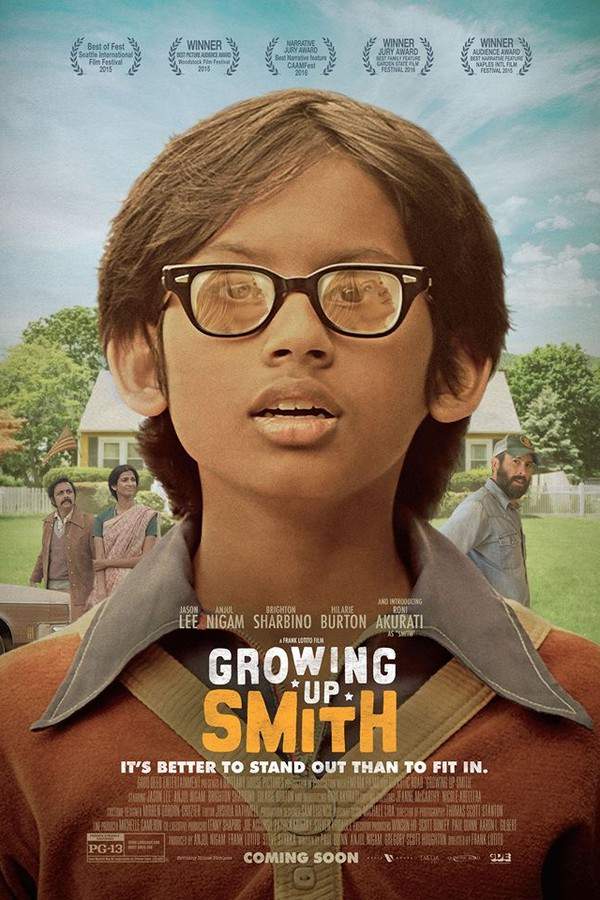
In the nostalgic and poignant coming-of-age film Growing Up Smith, we journey alongside a wide-eyed 10-year-old Indian boy named Smith as he explores the complexities of small-town American life in 1979. Struggling to reconcile their Indian heritage with the enticing allure of the American Dream, Smith's family grapples with cultural identity while he begins to carve out his own sense of self.
This curious protagonist dives into the forbidden pleasures of Kentucky Fried Chicken, in defiance of his family's strict vegetarian beliefs, and dons a Saturday Night Fever-inspired costume, while also confronting his parents over a humorous Halloween squash debate. Amidst these antics, Smith finds himself head over heels for the girl-next-door, Amy, and discovers an unlikely sense of heroism in her father, Butch, who embodies the quintessential all-American cowboy.
The adventure takes a turn when Smith joins Butch on a hunting outing, where tragedy strikes as Butch sustains an injury while chasing a deer. Smith's brave actions in the face of danger earn him local admiration, yet his bond with his father deteriorates under a cloud of jealousy. This tension is amplified when news arrives that Amy's family plans to move away, forcing her and her parents to confront their own turmoil.
On the brink of running away, Amy finds herself at a crossroads, prompting Smith to embark on a desperate bike ride to reunite with her. However, Butch intervenes just in time, altering the course of events. Back home, chaos erupts as Smith's parents catch his sister in a romantic encounter, igniting their fury and leading to an unexpected consequence: Smith's banishment back to India.
Years pass, and while Smith transforms into a successful neurosurgeon, mastering his craft, he also faces heartache as he loses his beloved wife to an unforeseen complication. With 19 years behind him filled with both triumph and tragedy, he returns to his hometown in America, where he reconnects with old friends, including Butch, only to discover that Amy has remained in her grandmother's house, now teaching fourth grade and navigating life as a single mother.
The film closes on a hopeful note as Smith rekindles his long-held wish to reunite with Amy, setting off once again on the trusty bike that has witnessed countless memories and misadventures, reminding us that sometimes, love and connection endure despite the passage of time.
Last updated: November 17, 2024 at 22:33
Explore frequently asked questions about Growing Up Smith (2017) with spoiler-rich answers covering the full plot summary, major story beats, character motivations, hidden details, and ending meaning. This movie summary FAQ helps explain confusing scenes, plot twists, and narrative decisions in clear, searchable detail.
Smith was banished to India after his parents discovered his sister in a romantic encounter with a boy. Their fury at this transgression resulted in Smith being punished by being sent back to India, separating him from his friends and Amy.
The tension between traditional Indian values and American cultural influences had been building throughout the film.
Smith's father became jealous because Smith formed a strong bond with Butch, the all-American cowboy next door. This relationship represented everything the father opposed about American culture, and seeing his son connect so deeply with this opposite figure threatened his grip on Smith's cultural identity.
Earlier scenes showed Smith embracing American customs like eating KFC and dressing like Tony Manero, which already created tension with his father's traditional values.
During the hunting trip, Butch was injured while chasing a deer. Smith showed bravery in the face of danger and managed to help Butch, which earned him local admiration and made him a town hero.
Smith's fascination with Butch as an all-American hero had been established earlier when he developed a crush on Amy and admired her father's cowboy lifestyle.
The film doesn't specify the exact reason Amy's family moved away, but the timing suggests it was a planned relocation that created emotional turmoil for both Smith and Amy, forcing them to confront their feelings before the separation.
The move was foreshadowed by the general uncertainty of their small-town life and the cultural tensions already present in the neighborhood.
Smith lost his beloved wife to an unforeseen medical complication. This devastating loss occurred sometime after he became a successful neurosurgeon in India, adding significant heartbreak to his adult life.
The film briefly mentions this tragedy as part of the bittersweet nature of Smith's journey through adulthood.
After being sent back to India as a child, Smith channeled his experiences and intelligence into mastering medicine. He eventually became a successful neurosurgeon, suggesting he found purpose and achievement through dedication to his craft despite the upheaval in his childhood.
Smith's journey from curious 10-year-old to accomplished professional showed his drive to succeed despite cultural displacement.
Smith returned to his hometown in America after 19 years, motivated by a desire to reconnect with his past, his old friends, and particularly Amy. The return represents his attempt to reclaim the connections and sense of belonging that were interrupted when he was banished as a child.
The film's ending emphasizes Smith's hope to reunite with Amy, showing that unresolved feelings from his childhood remained important to him.
During Halloween, Smith's family had a humorous debate over the proper use of squash for decoration. This scene illustrated the generational gap and differing cultural perspectives between Smith's immigrant parents and their Americanized surroundings.
This moment highlighted the ongoing cultural clash that defined Smith's childhood in suburban America.
Smith succumbed to the forbidden pleasure of eating Kentucky Fried Chicken as a symbolic act of rebellion against his family's strict traditions. This moment represented his pull toward American culture and his desire to fit in with his peers, even if it meant defying his parents' values.
This act of rebellion was an early example of Smith's internal struggle between his Indian heritage and his attraction to American customs.
Butch intervened when Smith was attempting a desperate bike ride to reunite with Amy, who was on the verge of running away. Butch's intervention altered the course of events, likely preventing a potentially dangerous situation for both children.
Butch had been established as the protective, all-American father figure throughout the film.
When Butch was injured during the hunting trip, Smith demonstrated unexpected bravery and managed to assist him in the dangerous situation. This act of courage earned Smith local admiration and made him a hero in the town's eyes.
Smith's admiration for Butch as an all-American hero had been building throughout his childhood.
When Smith returned after 19 years, he discovered that Amy had remained in her grandmother's house, where she was teaching fourth grade and navigating life as a single mother. She had stayed connected to their shared hometown despite the passage of time.
The film's hopeful ending suggests their childhood connection had lasting significance for both characters.
Discover curated groups of movies connected by mood, themes, and story style. Browse collections built around emotion, atmosphere, and narrative focus to easily find films that match what you feel like watching right now.
Warm and poignant stories of childhood shaped by cultural and family expectations.If you liked the bittersweet charm of Growing Up Smith, you'll enjoy these movies. This list features heartfelt stories about childhood, cultural identity, and family, all with a nostalgic, reflective, and ultimately hopeful feel similar to Smith's journey.
Narratives in this thread typically follow a young protagonist navigating the complexities of their upbringing, often caught between family traditions and the allure of a new culture. The journey involves moments of joy, conflict, and self-discovery, culminating in a personal reconciliation of their dual influences.
Movies are grouped here for their shared focus on the bittersweet emotions of childhood, the specific tension of cultural assimilation, and a reflective, warm tone. They balance family drama with a comedic touch, creating a poignant yet hopeful viewing experience.
Heartfelt dramas about families forging a new life while holding onto tradition.Find movies similar to Growing Up Smith that explore the themes of cultural identity and assimilation. These films often center on immigrant families, the generational gap, and the bittersweet journey of finding belonging in a new world while honoring the old.
The common narrative pattern involves a family unit, often with parents adhering to old-world values and children drawn to the customs of their new home. The central conflict arises from this cultural friction, driving character arcs about acceptance, understanding, and forging a unique, blended identity.
These films share a core thematic focus on cultural displacement and the quest for belonging. They consistently feature medium emotional weight, a steady pacing that allows for character development, and a tone that balances the melancholy of loss with the hope of new beginnings.
Don't stop at just watching - explore Growing Up Smith in full detail. From the complete plot summary and scene-by-scene timeline to character breakdowns, thematic analysis, and a deep dive into the ending - every page helps you truly understand what Growing Up Smith is all about. Plus, discover what's next after the movie.
Track the full timeline of Growing Up Smith with every major event arranged chronologically. Perfect for decoding non-linear storytelling, flashbacks, or parallel narratives with a clear scene-by-scene breakdown.
Discover the characters, locations, and core themes that shape Growing Up Smith. Get insights into symbolic elements, setting significance, and deeper narrative meaning - ideal for thematic analysis and movie breakdowns.