Plot Explained Spoilers guaranteed!
Plot Explained

Browse by genre

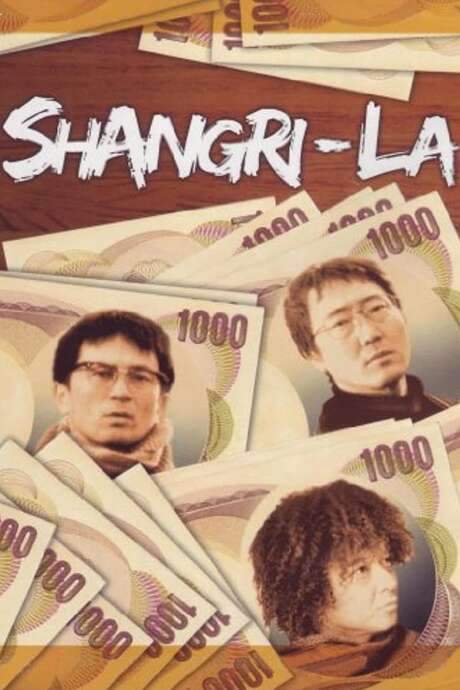
Shangri-La (2002) movie poster

Timeline

Shangri-La (2002) Timeline Explained – Every Event in Order

Release, runtime and language
2002 · 104 mins · Japanese
Loading streaming availability…
Directed by
Takashi Miike
Starring
Shigeru Muroi, Shirô Sano, Nao Ômori, Show Aikawa, Akaji Maro, Houka Kinoshita

The film follows a group of homeless people in Japan who encounter a man on the brink of suicide and help him with his financial troubles. Using street‑wise ingenuity, they devise a blackmail plot against a corrupt businessman whose bankruptcy filing left many jobless. The outsiders outsmart the very forces that cast them aside in a witty, uplifting caper.

On this page (6)
  1. 1 Where to watch
  2. 2 Events in order (13)
  3. 3 Timeline questions answered
  4. 4 Movie threads
  5. 5 Categories
  6. 6 Every angle
Loading streaming availability…

13 events in order · contains spoilers

Shangri-La Timeline: Events in Chronological Order

Every key event of Shangri-La (2002) in order, scene by scene, with when and where it takes place. Use it to untangle flashbacks, time jumps and parallel storylines, to refresh your memory before the sequel or to find the exact scene you are thinking of.

  1. Korijima declares bankruptcy, leaving Shosuke unpaid

    The wealthy Korijima of Uwazoko-ya declares bankruptcy, leaving Shosuke Umemoto's printing shop owed 10 million yen from a contract. This failure to pay pushes Shosuke's brother Chusuke deeper into debt to the loan shark Shoko, who is owed 9 million. The financial blow sets off the chain of events that follows.

    Where
    Uwazoko-ya
  2. Shosuke contemplates suicide but helps a homeless villager

    Shosuke contemplates killing himself in his car due to mounting debts, but interrupts the plan when a man from the nearby homeless village is injured by the Seiryu mob. He chooses to help the injured stranger, shifting from despair toward action. This act ties his fate to the village's subsequent schemes.

    Where
    Shosuke's car
  3. Homeless village plans a blackmail scheme

    Following the attack on the homeless village, its members organize a complex blackmail operation aimed at Korijima. They marshal the village's resources to leverage assets and influence power dynamics in the city. The plan marks a pivot from direct confrontation to calculated financial manipulation.

    Where
    Homeless village
  4. Liquidator seizes shop assets except Heidel printer

    A liquidator arrives at Shosuke's printing shop and confiscates nearly everything, sparing only Shosuke's father's Heidel printer. He leaves Shosuke with 1.3 million yen and schedules the office-supplies pickup for the evening of the 27th. The loss forces Shosuke to seek new funding or collaborate with the village.

    When
    Evening of the 27th
    Where
    Shosuke's printing shop
  5. Mayor borrows money from Shosuke

    The homeless village's Mayor borrows 600,000 yen from Shosuke to support their operations. This loan binds Shosuke more closely to the village's activities and their looming scheme. The money becomes a bargaining chip for later extortion.

    Where
    Homeless village
  6. Kuwata funds the Dango Construction shares purchase

    The village Deputy Kuwata, a former postal worker, provides funds to Okajima to buy 100 shares in Dango Construction, a company with ties to the Department of Public Works. This investment places the conspirators inside influential corporate networks and gives them financial leverage.

    Where
    City
  7. Kiyota the Hitman forgives debt for blank checks; forged drafts

    When Shoko demands repayment, the Mayor reveals himself as Kiyota the Hitman and convinces Shoko to forgive the debt in exchange for ten blank checks. Shosuke uses those checks to forge bank drafts using Dango's seal, then hides the drafts in a wallet at an ATM. The forgery accelerates the scheme's financial manipulation.

    Where
    City
  8. Wallet is found and a newspaper story is urged

    A man discovers the forged wallet, and the conspirators urge the newspapers to publish a story about the find to guarantee a reward. The publicity fuels investor uncertainty and contributes to volatility in Dango Construction's share price.

    Where
    City
  9. Mari lends money to fund the scheme

    Kiyota's former lover Mari, pregnant by another man, lends him money to help advance the scheme. Her financial support keeps the operation afloat amid personal risk and rising tension.

    Where
    City
  10. Seisuke and wife flee to the homeless village

    Seisuke and his wife abandon their children and elderly mother with Seisuke's brother and run away to the homeless village to avoid the liquidator's approach. The move consolidates the village's role in executing the plan.

    When
    Before the liquidator arrives
    Where
    Homeless village
  11. Heidel printer used to flood Korijima with flyers

    The village uses the Heidel printer to produce four-color flyers for a fake fresh fish festival, with back-side images exposing Korijima's large private assets discovered by Ume. They extort 20 million yen from Korijima in exchange for the flyers, plates, photos, and negatives.

    Where
    Homeless village printing operation
  12. Dango stock manipulation drives share price up

    Dango Construction's share price initially sinks, but news that the CEO has a young mistress boosts investor confidence and drives the price up again. The conspirators sell their shares at the peak to secure a sizable fortune.

    Where
    Stock market
  13. Village gives money to Shosuke and wife

    Rather than keeping the gains, the villagers decide to give all the money to Shosuke and his wife so they can pay their employees and return to life in the city. The gesture ties the community’s success back to Shosuke's family and their future.

    Where
    Homeless village

Last updated: October 09, 2025 at 15:27

Was this helpful?

Timeline questions answered

Shangri-La Timeline Explained: Your Questions Answered

When does it happen, and why in that order? The questions people ask about the chronology of Shangri-La (2002): time jumps, flashbacks, cause and effect between scenes and the correct order of events, each answered with spoilers.

Q1

Why does Shosuke decide to help the homeless man instead of completing suicide?

Shosuke was sitting in his car ready to kill himself with carbon monoxide when he hears a commotion nearby. A man from the homeless village has been attacked by the Seiryu mob for threatening to expose their illegal trash dumping. Shosuke's instinct to help overrides his despair, pulling him away from suicide. This act of compassion connects him to the village and becomes the catalyst for their collaborative scheme.

Foreshadowing: The film opens with Shosuke in his car, establishing his desperation before the intervention.

  • shosuke umemoto
  • suicide
  • homeless village
  • seiryu mob
  • change of heart
Q2

Who is the Mayor really and what is his connection to Kiyota the Hitman?

The Mayor of the homeless village is actually Kiyota the Hitman, a former loan shark known for his ruthlessness. When Shoko demands repayment of Chusuke's loan, the Mayor reveals his true identity to Shoko and convinces him to forgive the debt in exchange for ten blank checks. This revelation gives the group the tools they need to forge bank drafts.

Foreshadowing: The Mayor's mysterious background and authority within the village hint at a darker past.

  • mayor
  • kiyota hitman
  • shoko
  • loan shark
  • identity reveal
Q3

How does the homeless village's blackmail scheme against Korijima work?

The scheme has multiple layers. First, they use blank checks from Shoko to forge bank drafts with Dango Construction's seal, planting them in a wallet at an ATM to create press coverage about found drafts. Then, they use the Heidel printer to create flyers advertising a fake fresh fish festival, with the back side exposing photographs and negatives of Korijima's 8.3 billion yen in hidden private assets discovered by Ume. They demand 20 million yen in exchange for suppressing the flyers.

Foreshadowing: The liquidator spares the Heidel printer, a seemingly minor detail that becomes central to the plan.

  • blackmail
  • korijima
  • heidel printer
  • flyers
  • 20 million yen
  • extortion
Q4

What is the Heidel printer and why is it so important to the plan?

The Heidel printer is Shosuke's prized possession, inherited from his father. When the liquidator seizes his printing shop, the Heidel is the only item spared. The village uses this four-color printer to produce professional-looking flyers for a fake fresh fish festival. The quality of the printing allows the village to create convincing flyers that can expose Korijima's hidden assets with photographic evidence, making the blackmail credible.

Foreshadowing: The liquidator's decision to leave the Heidel printer seems like a small mercy but becomes the linchpin of the entire operation.

  • heidel printer
  • printing shop
  • liquidator
  • flyers
  • four-color printing
Q5

How do the conspirators manipulate Dango Construction's stock price?

The plan exploits stock volatility through information manipulation. Deputy Kuwata, a former postal worker, uses money to buy 100 shares in Dango Construction, a company with ties to the Department of Public Works. The conspirators then plant the forged wallet to generate newspaper coverage about found bank drafts, creating investor uncertainty that drives the share price down. When rumors spread about Korijima's hidden assets, the price drops further. However, positive news about the CEO's younger mistress causes a rally, allowing the conspirators to sell at the peak for profit.

Foreshadowing: The initial investment in Dango shares seems disconnected but becomes crucial to the financial payoff.

  • dango construction
  • stock manipulation
  • share price
  • investment
  • volatility
Q6

What are Korijima's 8.3 billion yen private assets and how are they discovered?

Korijima, the Uwazoko-ya businessman who declared bankruptcy, had secretly accumulated 8.3 billion yen in private assets despite his company's financial collapse. These hidden assets are discovered by Ume, a former private detective who now lives among the homeless villagers. This discovery becomes the village's main leverage in the blackmail scheme, as they threaten to expose these assets through the four-color flyers unless Korijima pays 20 million yen.

Foreshadowing: Ume's mysterious background as a former detective hints at his investigative skills.

  • korijima
  • 8.3 billion yen
  • hidden assets
  • ume
  • private detective
  • blackmail
Q7

Why does the village decide to give all their money to Shosuke and his wife?

After the successful stock manipulation and blackmail payout, the village collectively decides to give the entire windfall to Shosuke and his wife. Their reasoning is that Shosuke was the one who helped the village when he was in despair, and they want him to be able to pay his employees and return to a normal life in the city. This act represents the community's gratitude and their belief in fair distribution, though it also means the village's temporary unity disperses as characters return to their separate lives.

Foreshadowing: The ending reflects the film's bittersweet tone, the scheme succeeds financially but the community dissolves.

  • shosuke
  • village windfall
  • fair distribution
  • returning to city
  • community
Q8

What role does Mari play in supporting the blackmail scheme?

Mari is Kiyota the Hitman's former lover, now pregnant by a new man and living in the city while facing financial pressure. Despite her difficult circumstances, she lends money to support the village's scheme. Her financial contribution helps fund the operation and demonstrates the broader community's commitment to the plan, showing that even those with limited resources are willing to take risks for a chance at changing their circumstances.

Foreshadowing: Mari's pregnancy and financial struggles add personal stakes to the high-risk financial scheme.

  • mari
  • kiyota
  • pregnant
  • financial support
  • scheme funding
Q9

What is the purpose of the forged wallet planted at the ATM?

The forged wallet contains bank drafts that appear to have been made using blank checks from Shoko, bearing Dango Construction's seal. When a passerby discovers the wallet, the conspirators urge newspapers to publish stories about the found drafts to guarantee a finder reward. This generates media attention and creates investor uncertainty about Dango Construction, contributing to the stock price dropping. The planted wallet is a psychological manipulation tool to trigger market volatility they can exploit.

Foreshadowing: The wallet's discovery is orchestrated to maximize media attention and financial impact.

  • forged wallet
  • atm
  • bank drafts
  • dango construction
  • newspaper story
  • stock manipulation
Q10

Why does Shoko agree to forgive Chusuke's debt in exchange for blank checks?

Shoko is the loan shark who lent 9 million yen to Chusuke and demands repayment. When the Mayor reveals himself as Kiyota the Hitman, Shoko recognizes the name and agrees to forgive the debt out of fear, Kiyota's reputation as a hitman makes him too dangerous to cross. In exchange for forgiving Chusuke's debt, Shoko hands over ten blank checks, which Shosuke then uses to forge bank drafts for the scheme. This exchange provides both the debt relief and the tools needed for the financial manipulation.

Foreshadowing: The Mayor's ominous presence throughout the film hints at his dangerous background.

  • shoko
  • chusuke
  • loan shark
  • forgiven debt
  • blank checks
  • kiyota hitman

Movie threads

More Movies Like Shangri-La, by Mood & Story

Curated lists built around what makes Shangri-La tick: the same mood, the same kind of story or the same emotional payoff. Each list explains why these movies belong together.

Movies with clever capers like Shangri-La

Stories where the underestimated outsmart the powerful with wit and strategy. If you enjoyed the witty, strategic blackmail plot in Shangri-La, you'll like these movies where a found family of underdogs outsmarts the system. Discover similar stories of ingenious plans, collaborative triumphs, and clever outsiders turning the tables on corrupt forces.

  • ingenious
  • witty
  • tense
  • underdog
  • collaborative
  • strategic
  • Tone: hopeful, witty, tense
  • Pacing: steady, plot-driven
Why these movies?

The story pattern: The narrative typically centers on a disparate group of characters who unite around a common goal of taking down a corrupt institution or individual. The plot follows the meticulous planning and execution of their scheme, facing setbacks and escalating risks, culminating in a tense but ultimately triumphant climax that validates their intelligence and resourcefulness.

Why they belong together: Movies in this thread are grouped by their shared focus on clever, plot-driven narratives where intellect and teamwork overcome disadvantage. They blend a hopeful, witty tone with steady pacing and moderate complexity, delivering a satisfying mix of tension and collaborative triumph.


Bittersweet found family stories like Shangri-La

Hopeful stories where makeshift families find victory tinged with sacrifice. Fans of the makeshift community in Shangri-La will appreciate these movies about found families overcoming hardship. Explore similar films where a group of outsiders bands together, achieving a collaborative win that is emotionally resonant and bittersweet.

  • hopeful
  • bittersweet
  • desperate
  • collaborative
  • underdog
  • redemptive
  • Tone: hopeful, bittersweet, desperate
  • Pacing: steady, character-driven
Why these movies?

The story pattern: The journey begins with characters in desperate situations, isolated and struggling. They gradually come together, discovering strength in their shared vulnerability. Their collective action leads to a significant, hard-won success, but the ending acknowledges that some scars remain or the family unit may not last forever, blending triumph with a sense of poignant realism.

Why they belong together: These films are connected by their emotional core: the formation of a found family as a response to systemic neglect or personal crisis. They share a bittersweet ending feel and medium emotional weight, focusing on the redemptive power of community without shying away from the complexities of their circumstances.

Categories

Movie Lists Featuring Shangri-La

Shangri-La appears in these hand-built movie categories. Each one groups movies by a specific mood, theme or story type, with their plot summaries and endings explained.

View all movie categories

Every angle

Shangri-La (2002) Explained: Plot, Timeline & Characters

Everything about Shangri-La in one place: what happens in the plot summary, the timeline in chronological order, the characters and meaning and a spoiler-free summary. What's After the Movie adds the cast, box office and post-credit scenes.

Coming soon on iOS and Android

The Plot Explained Movie Summary App

Plot summaries, endings explained and timelines on your phone. Catch up on any movie in minutes, save your favorites and never miss a twist again.

Be the first to know when we launch. Your email stays private, always.

Learn more about the app