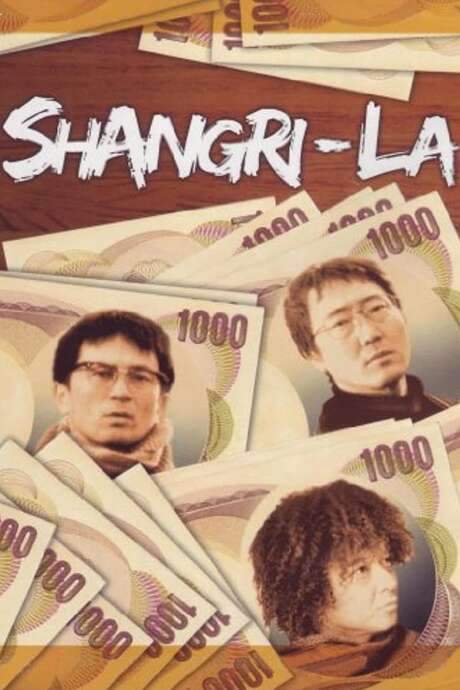
The film unfurls a tense web of debt and deceit after Korijima, a wealthy Uwazoko-ya businessman, declares bankruptcy, leaving a 10-million-yen contract unpaid to Shosuke Umemoto's printing shop and driving Shosuke's brother Chusuke toward an impossible loan with the loan shark Shoko. In a moment of despair, Shosuke contemplates ending his life in his car with carbon monoxide, but a sudden turn of fate pulls him away from that edge when he stops to help a wounded man from a nearby homeless village who has clashed with the Seiryu mob for threatening to expose their illegal trash dumping. In return, the villagers rally around him, pooling their resources to hatch a bold plan to blackmail Korijima and wrench some leverage from the world that abandoned them.
The plan twists through every corner of the village's makeshift economy. The liquidator arrives and strips Shosuke's shop of almost everything, sparing only his father's Heidel printer, while leaving him with a modest 1.3 million yen and a deadline for picking up the rest of the office supplies on the evening of the 27th. The Mayor borrows 600,000 yen from Shosuke, and the Deputy Kuwata—a former postal worker—hands the money to Mr. Okajima to buy 100 shares in Dango Construction, a company with close ties to the Department of Public Works. As Shoko demands repayment of Chusuke's loan, the Mayor secretly reveals himself to Shoko as Kiyota the Hitman Masumi Kiyota and convinces Shoko to forgive the debt while handing over ten blank checks, which Shosuke uses to forge bank drafts bearing Dango's seal. They abandon the forged drafts in a wallet at an ATM, and when a passerby finds it, the plan is to coax a newspaper story about the discovery to ensure the finder gets a reward and sow uncertainty among investors, driving the share price down.
Kiyota's former lover Mari Shigeru Muroi—a woman who, though still in the city, is financially pressed and now pregnant by a new lover—lends money to support the scheme, cementing the village's resolve. Seisuke Umemoto [Yuu Tokui] and his wife flee with their children and elderly mother to the homeless village to escape the looming foreclosure, hoping this new community will shelter them from the counting of days left on the liquidator's timetable. The plan hinges on the Heidel printer again, this time to produce four-color flyers advertising a “fresh fish festival” on the front while revealing, on the back, photographs and negatives of Korijima's 8.3-billion-yen private assets discovered by Ume, a former private detective now living among the villagers. The demand rises to 20 million yen, offered in exchange for the flyers, printing plates, photos, and negatives, a bargain that unsettles the stranglehold Korijima once held over them.
As the scheme unfolds, Dango Construction's stock responds to ever-shifting information. The share price tumbles when the counterfeit-yet-curious press coverage and the whispers of the private assets spread; yet fresh headlines about the CEO’s younger mistress boost investor confidence, causing a sudden rally in the stock. The conspirators capitalize on the volatility, buying shares while prices are depressed and selling once they rebound, turning the ruse into a lucrative windfall. In the end, the village decides to share their windfall with Shosuke and his wife, believing that a fair distribution will allow them to pay their employees and return to life in the city, while the community takes satisfaction in having turned a desperate situation into a hard-earned, if morally murky, victory.