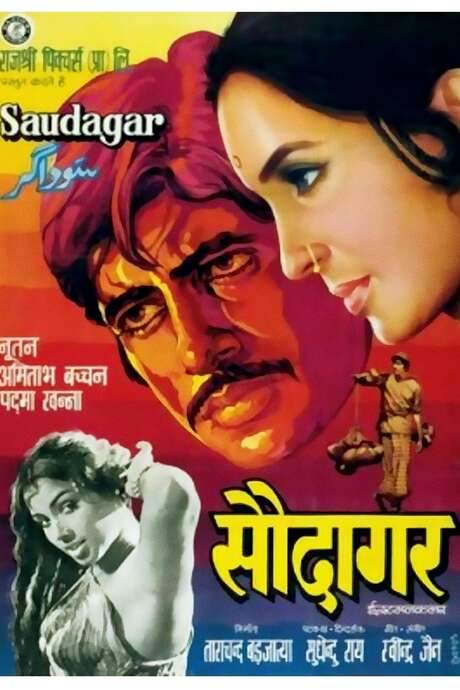
Saudagar
Year: 1973
Runtime: 131 mins
Language: Hindi
Director: Sudhendu Roy
Moti, a jaggery merchant, works with the skilled older woman Mahjubhi, whose jaggery is renowned. He loves a village girl but lacks the dowry her father demands, so he marries Mahjubhi while secretly saving to afford the marriage. He exploits Mahjubhi’s labor, eventually gathers enough money, divorces her on false infidelity claims, and weds the village girl. Returning to his trade, he suffers the loss of Mahjubhi’s prized jaggery.
Where to Watch Saudagar?
Find where to stream, rent, or buy Saudagar (1973) in the US with current JustWatch availability, up-to-date pricing, and platform listings for subscription, rental, and digital purchase options.


Streaming availability powered by 
Warning: spoilers below!
Haven’t seen Saudagar yet? This summary contains major spoilers. Bookmark the page, watch the movie, and come back for the full breakdown. If you're ready, scroll on and relive the story!
Timeline – Saudagar (1973)
Trace every key event in Saudagar (1973) with our detailed, chronological timeline. Perfect for unpacking nonlinear stories, spotting hidden connections, and understanding how each scene builds toward the film’s climax. Whether you're revisiting or decoding for the first time, this timeline gives you the full picture.
Last updated: October 05, 2025 at 11:41
Saudagar (1973) Timeline Questions Answered – Chronology FAQ
Find frequently asked questions about the Saudagar (1973) timeline, including chronological order, nonlinear jumps, cause-and-effect links, and scene sequence clarifications. This timeline FAQ helps explain when key events happen, how moments connect, and why the story unfolds in that specific order.
Why did Moti marry Majubhi instead of paying the mehar for Phoolbanu?
Moti could not afford the mehar (bride price) that Phoolbanu's father demanded. To avoid paying this amount, he devised a scheme to marry Majubhi, a widow who worked with him in his gur business. By marrying Majubhi, he could save the money he would have spent on mehar and use it later to pay Phoolbanu's father. This decision reveals Moti's exploitation of Majubhi's labor and emotional vulnerability for his own financial gain.
The story establishes early on that Moti is known for his business acumen and willingness to take shortcuts.
How was Moti able to divorce Majubhi?
After Moti saved enough money from the gur season, he divorced Majubhi by accusing her of having an illicit relationship with her respected brother-in-law. This was a false accusation made purely as a pretext to end the marriage. The community was shocked by this betrayal, and Majubhi cursed Moti as she left. The divorce was socially and legally achievable in that historical context through such false charges.
Why did Majubhi agree to marry Moti despite knowing his ulterior motive?
Majubhi was a widow who likely had limited marriage prospects in her community. When Moti proposed, she was initially surprised but eventually accepted the arrangement. While Moti's true intention was to use her to avoid paying mehar, Majubhi may have hoped for genuine companionship or believed the marriage could work. Her acceptance reflects the limited options available to widows in that social setting.
Why did Phoolbanu's father accept Moti after his divorce from Majubhi?
Phoolbanu's father had initially demanded mehar, which Moti couldn't pay. After divorcing Majubhi, Moti returned with enough money to pay the mehar. The father was satisfied with the payment and agreed to the marriage, apparently unconcerned about the circumstances of Moti's previous marriage or divorce. This reflects the era's emphasis on financial transactions over moral character in marriage arrangements.
The story shows that the father demanded mehar initially and Moti left to arrange the money.
Why was Phoolbanu so bad at making gur?
Phoolbanu came from a different background and had no experience in gur making, which is a specialized skill. Unlike Majubhi, who was renowned for hergur preparation, Phoolbanu lacked the training and expertise required for the trade. When the gur season arrived, her poor craftsmanship caused customers to desert Moti, directly impacting his business and income.
The story establishes Majubhi's gur as the key to Moti's reputation and business success.
Why did Moti beat Phoolbanu?
When Moti returned to find the gur burnt because Phoolbanu had left to bathe without tending to it, he flew into a fit of anger and beat her with a stick. This violent reaction stemmed from his frustration over the business losses, his mounting debt, and the collapse of his carefully constructed plans. The beating marked a low point in their marriage and revealed Moti's abusive nature under pressure.
Why did Phoolbanu leave for her father's home?
After Moti returned home with no sap one morning and admitted to Phoolbanu that he had abandoned his work, she realized the depth of his failure and despair. Seeing his broken state, she decided to return to her father's home, perhaps to seek support or to escape a failing household. Her departure reflects the deterioration of their marriage and Moti's complete collapse.
The story shows Moti's business declining and his mental state deteriorating.
Why did Moti go to Majubhi at the end of the movie?
After his business failed and Phoolbanu left, Moti realized his mistakes and the value of what he had lost. Desperate and broken, he went to Majubhi's house carrying date-nectar, asking her to make gur for him again. This was an admission of his failure and a humble request for help from the woman he had betrayed. It represented his attempt to rebuild his life and business with the only person who could truly help him.
The story builds toward Moti's self-realization after exploiting Majubhi's labor and reputation.
What does the ending mean - why did Phoolbanu and Majubhi hug?
In the final moment, Phoolbanu watches from a distance as Moti begs Majubhi for help. When the two women meet, they embrace and cry together. This hug represents shared understanding - both women have been hurt by the same man. It signifies forgiveness, shared humanity, and the enduring ties of community despite betrayal. However, the wounds remain unhealed, making it a bittersweet, unresolved ending rather than a complete reconciliation.
The story establishes the emotional connection between the two women through their shared suffering.
Why did Moti continue to spend money lavishly after marrying Phoolbanu?
After marrying Phoolbanu, Moti used the money he had earned through Majubhi's labor and took on additional debt to finance a luxurious lifestyle. This overspending reflected his desire to appear successful and enjoy the benefits of his marriage without regard for the financial consequences. His greed and poor financial management led to mounting debts and eventually the collapse of his business.
Why did Nadeer, the fish trader, want to marry Majubhi?
Nadeer was honest about his situation - he had small children who needed someone to care for them. He saw Majubhi as a capable woman who could manage his household and children. Unlike Moti, Nadeer treated Majubhi with courtesy and respect, offering her a stable life. Majubhi ultimately left for another village, seeking a steadier life away from Sultanganj.

Explore Movie Threads
Discover curated groups of movies connected by mood, themes, and story style. Browse collections built around emotion, atmosphere, and narrative focus to easily find films that match what you feel like watching right now.
Movies about moral reckoning and regret like Saudagar
Character-driven dramas about flawed choices and their heavy emotional consequences.If you liked the powerful themes of moral failure and regret in Saudagar, explore these similar movies. This list features character-driven dramas where protagonists face the heavy consequences of their exploitative choices, leading to bittersweet endings and a profound sense of remorse.

My Reputation
1946
Reputation
2024

Intermezzo: A Love Story
1939

The Root of All Evil
1947

Stealing Home
1988

Red Roses and Petrol
2008

No Looking Back
1998

A Friend’s Betrayal
1996

We Couldn't Become Adults
2021

The Loss of a Teardrop Diamond
2009

Unforgivable
2012

Kaleidoscope
1990

From the Terrace
1960

Sentimental Destinies
2000

Great Expectations
1998
Narrative Summary
The narrative pattern centers on a character's downward moral spiral, often exploiting trust or love for personal goals. The story then shifts to the slow, inevitable confrontation with the emotional wreckage they've created, exploring themes of remorse and the possibility, but not guarantee, of atonement.
Why These Movies?
Movies in this thread share a deeply melancholic tone and a focus on internal moral conflict. They feature steady pacing that allows for contemplation, medium emotional weight, and endings that are bittersweet, acknowledging the cost of past actions without offering easy forgiveness.
Powerful melodramas about exploitation and resilience like Saudagar
Emotional stories where personal bonds are tested by betrayal and survival.For viewers seeking movies with a similar feel to Saudagar, this list features poignant melodramas centered on themes of exploitation, betrayal, and quiet resilience. These stories often involve complex marital or domestic relationships, a steady narrative pace, and a deeply contemplative, somber mood.
Intermezzo: A Love Story
1939

The Naked Kitchen
2009

Expired
2008

Trouble with Sex
2005

Bare
2015

Bitter Harvest
1963

Ecstasy
1933

Bad for Each Other
1953

The Easiest Way
1931

Saturday Night and Sunday Morning
1960

No Greater Love
1995

This Is My Street
1964
Reputation
2024

Waterfront
1950
Saudagar
1973
Narrative Summary
These narratives often revolve around a central relationship built on an unequal footing—such as a marriage of convenience—where one character is taken advantage of. The plot unfolds the emotional exploitation and its fallout, highlighting the strength and dignity of the wronged party amidst a somber atmosphere.
Why These Movies?
These films are grouped by their shared focus on the theme of exploitation within intimate settings, a melancholic and somber mood, and a straightforward yet impactful narrative style. They deliver a medium-intensity emotional experience centered on moral conflict and the human capacity for endurance.
Unlock the Full Story of Saudagar
Don't stop at just watching - explore Saudagar in full detail. From the complete plot summary and scene-by-scene timeline to character breakdowns, thematic analysis, and a deep dive into the ending - every page helps you truly understand what Saudagar is all about. Plus, discover what's next after the movie.
Saudagar Summary
Read a complete plot summary of Saudagar, including all key story points, character arcs, and turning points. This in-depth recap is ideal for understanding the narrative structure or reviewing what happened in the movie.

Characters, Settings & Themes in Saudagar
Discover the characters, locations, and core themes that shape Saudagar. Get insights into symbolic elements, setting significance, and deeper narrative meaning - ideal for thematic analysis and movie breakdowns.


